


What makes wearable product manufacturing different?
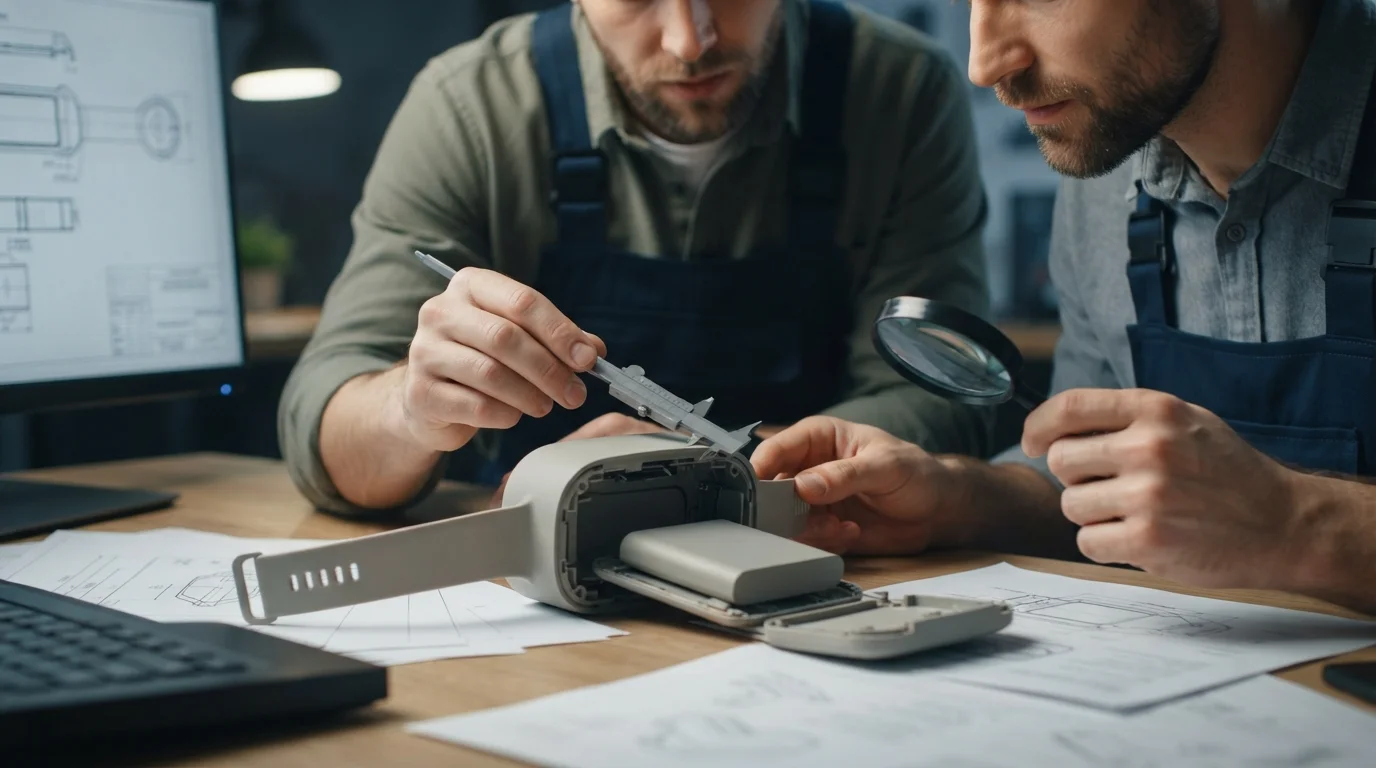
A wearable product sits at the intersection of mechanical packaging, ergonomics, electronics, and user experience. A housing that works on a bench may become uncomfortable on the wrist, unstable during movement, difficult to charge, or vulnerable to sweat and repeated handling. These issues should be treated as manufacturing requirements rather than cosmetic details.
| Design concern | Manufacturing question | Evidence to collect |
|---|---|---|
| Ergonomic fit | Does the shape stay comfortable and stable during normal movement? | Physical fit samples, user feedback, and revised CAD |
| Compact packaging | Can the battery, PCB, sensor, display, and connectors fit without creating assembly conflicts? | CAD clearance review and assembly trial |
| Repeated interfaces | Will buttons, charging contacts, clips, and covers survive repeated use? | Cycle checks and inspection criteria |
| Environmental exposure | How will the material and joint design respond to moisture, sweat, heat, cleaning, or impact? | Defined test conditions and material documentation |
| Aspetto | Can the chosen finish be reproduced on the visible surfaces and mating parts? | Approved cosmetic sample and finish specification |
The most important principle is to validate the features that are hard to change after tooling or production fixtures are committed. For a wearable, those features often include the fit against the body, the relationship between housing and band, the location of sensor openings, the feel of user controls, and the assembly of small components.
How should the manufacturing route be chosen?
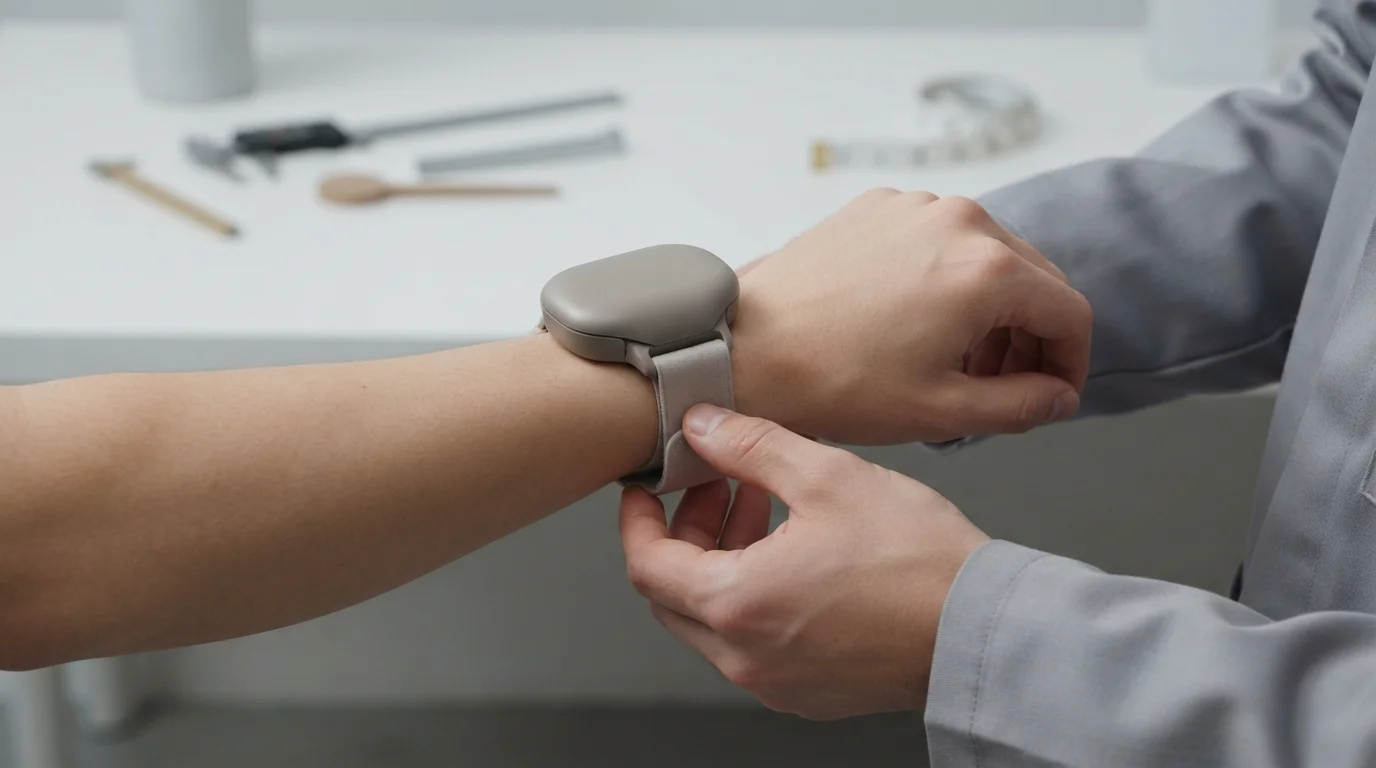
The manufacturing route should be selected by the question the current build needs to answer. A printed model may be ideal for shape and comfort. A machined or cast part may better represent a rigid functional housing. A molded part may be needed to assess the final material, surface, clips, and repeatability. Treating every build as a miniature production run can waste time; treating every build as a visual mockup can hide production risks.
| Development need | Possible route | Best question to answer |
|---|---|---|
| Early ergonomics | 3D-printed or manually finished prototype | Does the product feel stable, comfortable, and visually proportioned? |
| Functional fit | CNC-machined, printed, or cast functional parts | Do the PCB, battery, display, buttons, and fasteners assemble correctly? |
| Appearance review | Finished prototype or vacuum-cast batch | Do color, gloss, texture, and part interfaces meet the product direction? |
| Pilot validation | Low-volume molded, machined, or fabricated parts | Can the selected process produce consistent parts and a repeatable assembly? |
| Production scale-up | Production-intent tooling and controlled manufacturing | Can quality, cost, material behavior, and output remain stable at the planned volume? |
Teams that need early physical learning can use our wearable device prototyping reference as a related starting point, then choose the next process based on the remaining engineering risk. The goal is a clear transition between prototypes, not a claim that one process must be used for every stage.
Which materials and interfaces need early validation?
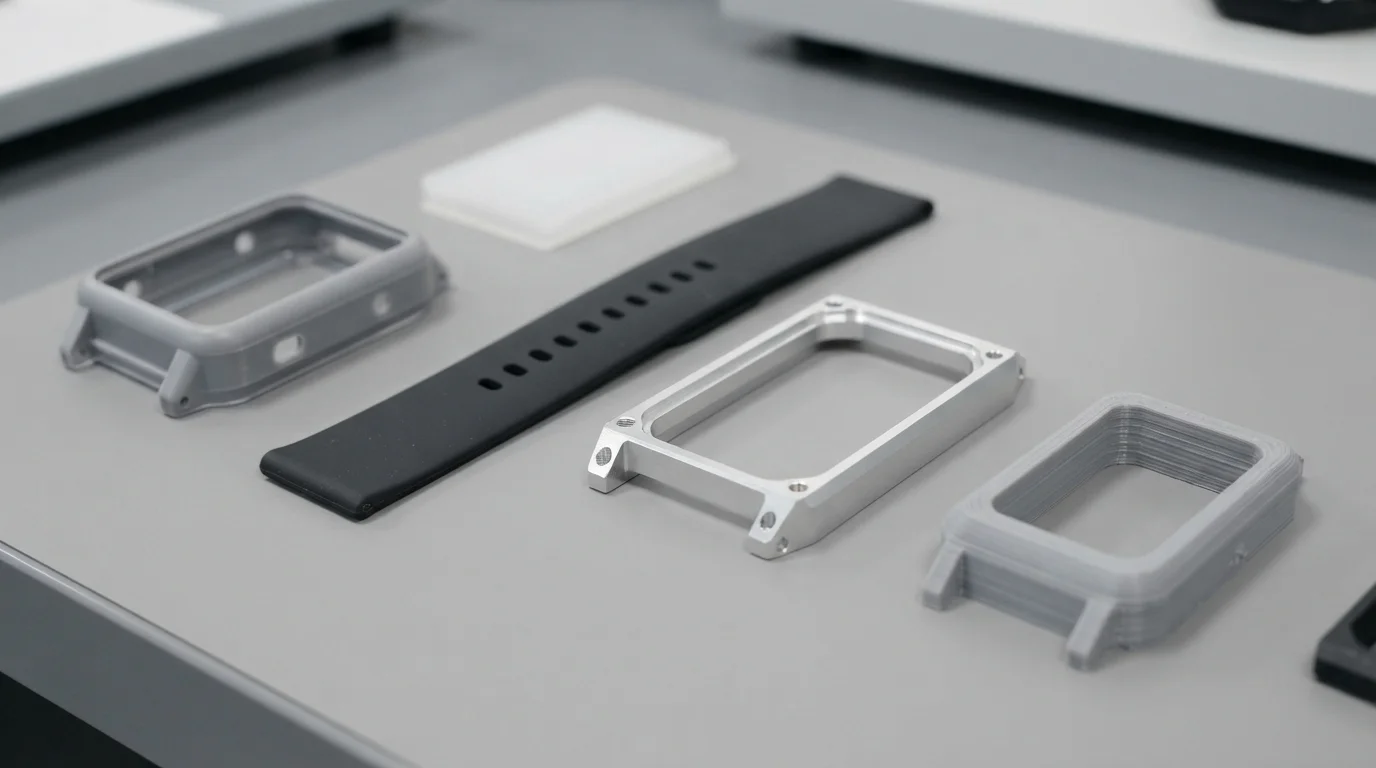
Wearable materials must be evaluated as part of a system. The rigid housing, flexible band, sensor window, gasket or adhesive, fasteners, and internal electronics all influence fit and reliability. A material that performs well in a rigid enclosure may not deliver the required comfort, flexibility, chemical resistance, or surface feel when it is worn repeatedly.
Rigid housings and structural parts
Plastic housings may support lightweight structures, integrated clips, bosses, and molded cosmetic surfaces. Aluminum or other metals may be considered when a rigid premium structure, thermal path, or durable exterior is important. The final choice should be based on the product requirements and the selected manufacturing process, not on prototype availability alone.
Soft components and user contact
Bands, pads, seals, and soft-touch features need their own design review. Check the transition between hard and soft materials, the attachment method, the edge condition, the cleaning environment, and the repeated bending or stretching expected in use. If a component touches the user, the project should also identify the applicable material and product requirements before production approval.
Small interfaces are large risks
Charging contacts, sensor windows, microphones, speakers, buttons, and display openings often have little design margin. They need clearances, alignment features, protection from accidental damage, and a practical assembly sequence. Validate these interfaces with real mating parts rather than relying only on an exterior CAD model.
Material and finish decisions also affect signal transparency, sealing concepts, grounding, assembly force, and cosmetic consistency. The appropriate choice must be verified against the complete device architecture and the applicable product specifications.
What should be checked before production?
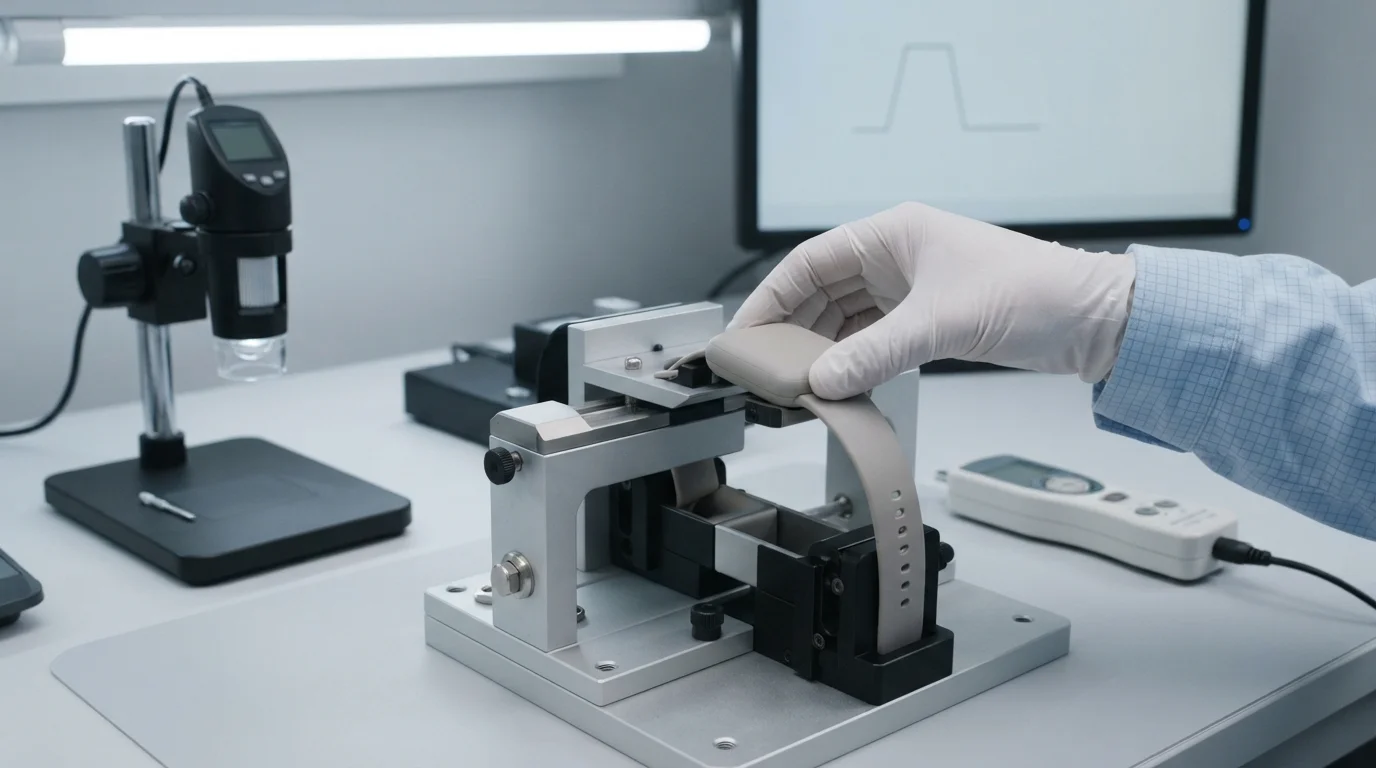
A wearable prototype is ready for a production discussion when it has generated evidence for the main product risks. A successful demonstration that the electronics turn on is not enough to prove that the housing, interfaces, materials, and assembly route are ready.
- Fit and movement: confirm comfort, stability, edge conditions, band attachment, and interaction during normal movement.
- Internal assembly: confirm the sequence for loading the PCB, battery, display, sensor, cable, fastener, and sealing elements.
- Interface alignment: check buttons, charging contacts, sensor openings, displays, microphones, and speakers with representative hardware.
- Material behavior: verify that the selected rigid and flexible materials match the expected mechanical, thermal, environmental, and visual requirements.
- Manufacturing repeatability: inspect multiple parts or a pilot group to identify variation in fit, finish, warpage, flash, burrs, or assembly force.
- Revision control: freeze the revision used for testing and record any change that could affect fit, process, or acceptance criteria.
When a project has a high-risk seal, cosmetic surface, or multi-material interface, make that risk visible in the validation plan. Do not hide it inside a general “final inspection” line. A supplier can only quote and control what the project has defined clearly.
How can a wearable product scale without losing fit?
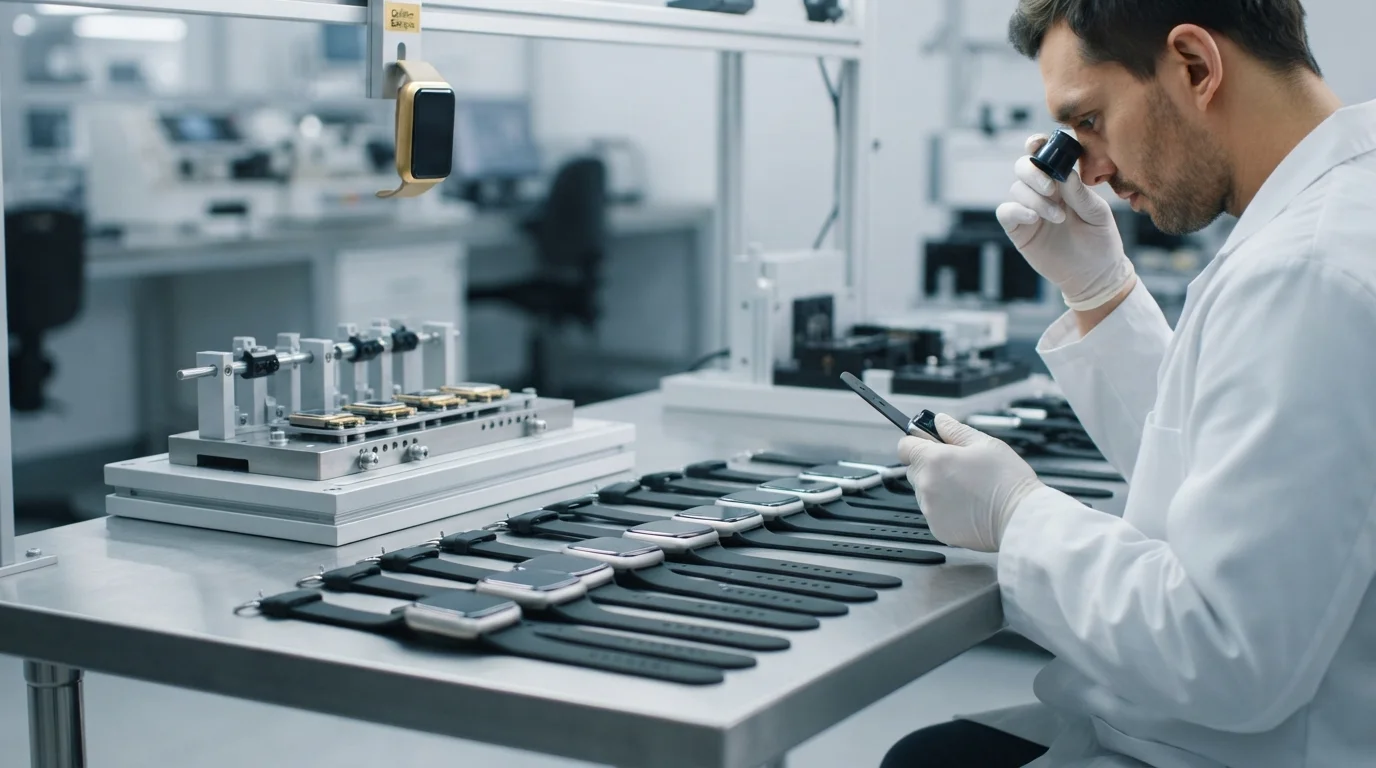
Scaling a wearable product means preserving the features that users notice while making the manufacturing process more repeatable. Those features may include the housing contour, button feel, band connection, visible gap, surface texture, charging alignment, and sensor position. A design that is comfortable in one hand-built sample can still show variation when materials, tooling, fixtures, or assembly operators change.
| Scale-up area | Control to establish |
|---|---|
| Geometria | Critical dimensions, mating conditions, and revision-controlled CAD or drawings |
| Cosmetica | Approved samples, visible-surface definitions, color or texture references, and defect limits |
| Assemblaggio | Loading sequence, fastening or joining method, work instructions, and functional checks |
| Materiali | Material grade, approved alternatives, supplier documentation, and storage conditions |
| Inspection | Critical-to-function checks, fit gauges or fixtures where needed, and inspection records |
Low-volume production can be a useful bridge when demand is uncertain or the design still needs market feedback. Our low-volume injection molding capability is one process to evaluate for repeatable plastic components, while machined or printed parts may remain more practical for other geometries or earlier builds. The final choice depends on quantity, design maturity, material, finish, and tooling strategy.
Scale-up should also protect the product’s design intent. If a change is made to reduce cost or simplify assembly, recheck the user-facing fit and function rather than assuming the change is neutral.
What should a manufacturer receive in the RFQ?
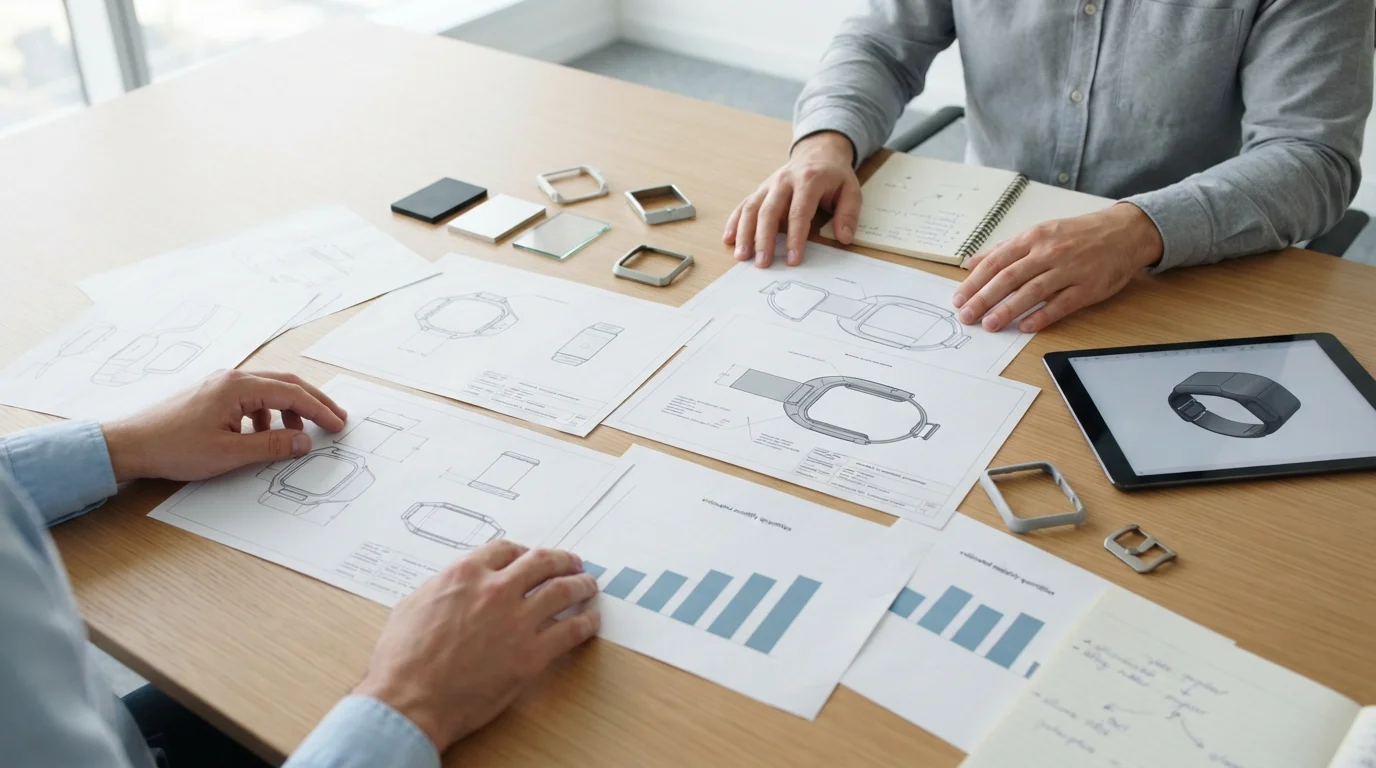
A wearable manufacturing RFQ should describe the product as an assembly, not only as a shell. This gives the supplier enough context to compare processes and identify risks before quoting.
| RFQ information | Recommended content |
|---|---|
| Product architecture | Housing CAD, band or attachment parts, PCB envelope, battery, display, sensors, connectors, and mating components |
| Use conditions | Movement, handling, cleaning, moisture, temperature, impact, and any skin-contact or environmental requirements |
| Manufacturing target | Prototype quantity, pilot quantity, expected production volume, target process, and desired production stage |
| Material and finish | Material preference, flexible-part requirements, color, texture, gloss, masking, and visible-surface expectations |
| Quality plan | Critical dimensions, fit checks, functional tests, cosmetic acceptance, sample requirements, and revision level |
| Commercial scope | Tooling, unit parts, finishing, assembly, inspection, packaging, and delivery assumptions separated clearly |
Include the question you want the supplier to answer: “Can this design be produced consistently?” is more useful than asking only for a unit price. If the design could be manufactured in more than one way, request a concise comparison of the risks, one-time costs, unit economics, and expected validation work.
Frequently Asked Questions
What is the first step in wearable product manufacturing?
Start by defining the user fit, internal electronics package, key interfaces, material requirements, expected quantity, and validation risks. These requirements determine which prototype and manufacturing route should be evaluated first.
Which process is best for a wearable product prototype?
The best process depends on the question being tested. 3D printing can support early form and fit work, machining can support precise functional parts, and molded or cast samples can better represent certain production materials and finishes.
How do manufacturers protect wearable product quality during scale-up?
They establish revision-controlled design data, approved material and cosmetic references, repeatable assembly steps, critical inspections, and functional checks. Multiple pilot parts or assemblies should be reviewed before committing to a larger run.
Can a wearable product use more than one manufacturing process?
Yes. A wearable may use printed or machined prototypes during development, molded plastic for a production housing, metal parts for structural or cosmetic elements, and separate flexible components. Each process should have a defined role and compatible interfaces.
Make the production decision from evidence
The strongest wearable product manufacturing decision connects user fit, internal packaging, materials, interfaces, process capability, and production volume. A prototype should reduce a known uncertainty; a pilot build should test repeatability; and a production release should be based on controlled design data and defined acceptance criteria.
Before requesting a final quote, assemble the current CAD, electronics reference, material and finish requirements, quantity forecast, validation plan, and revision history. If the product still has unresolved ergonomic or interface risks, keep the next build focused on those risks instead of committing prematurely to a production process.
For precision metal components used in a wearable assembly, the CNC machining service can be evaluated alongside the other routes. The correct combination depends on the product’s design and production stage; no single process should be selected solely because it was used for an earlier prototype.
For additional context, see the prototype-production guidance from Avery Dennison, the wearable design overview from Autodesk, and the enclosure-material considerations from DigiKey. These references provide general engineering context; the final requirements must be verified for the individual product.

