


For a broader view of product development across consumer industries, see our Consumer Products manufacturing solutions. This guide focuses on the decisions that make sporting goods prototypes useful for product designers, engineering teams, sourcing managers, and brands preparing for pilot production.
What should a sporting goods prototype prove?
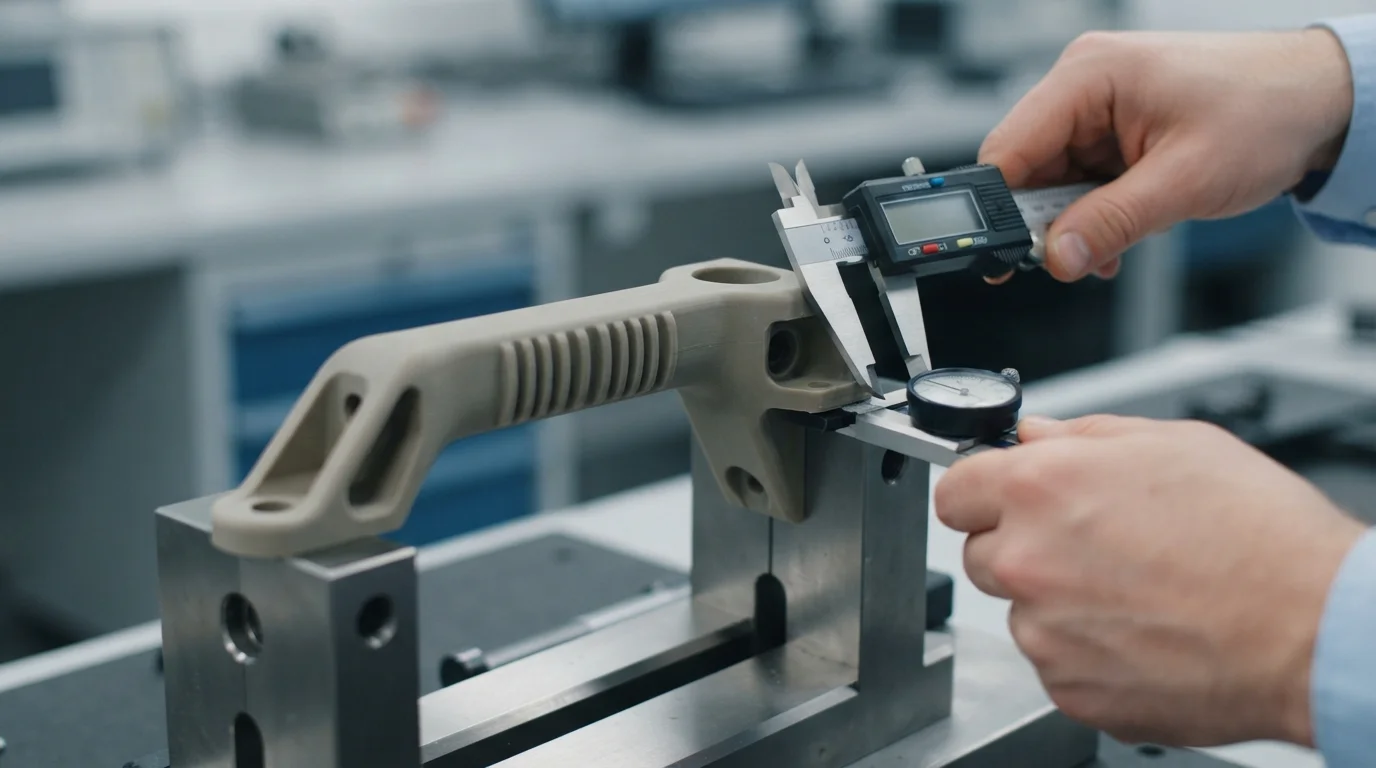
The right prototype answers a specific development question. A visual model can confirm proportions and styling, while a functional prototype can reveal whether a grip, enclosure, bracket, guard, or moving interface behaves as expected. Treating every prototype as a miniature final product often adds cost without producing better evidence.
Sporting goods are especially sensitive to performance and dimensional details. Autodesk describes sporting goods development as a discipline centered on performance, durability, fit, sizes, materials, and increasingly sustainable design decisions. Those requirements are a useful starting point for defining the prototype objective.
| Prototype objective | Questions to answer | Useful evidence |
|---|---|---|
| Form and fit | Do the proportions, clearances, contact areas, and interfaces feel correct? | Appearance model, ergonomic review, and dimensional check |
| Functional behavior | Does the part grip, flex, move, mount, or protect as intended? | Functional sample and controlled use test |
| Material direction | Does the material provide the needed stiffness, flexibility, surface feel, or impact response? | Material comparison samples and documented observations |
| Manufacturing feasibility | Can the geometry, finish, joining method, and tolerance be produced consistently? | DFM review, process sample, and updated drawings |
Define acceptance criteria before requesting parts. For example, the team may need to confirm handle comfort, mounting alignment, enclosure clearance, edge treatment, or repeatable movement. Clear criteria make prototype reviews more objective and prevent aesthetic feedback from hiding an unresolved performance risk.
How do fit and user interaction shape the design?
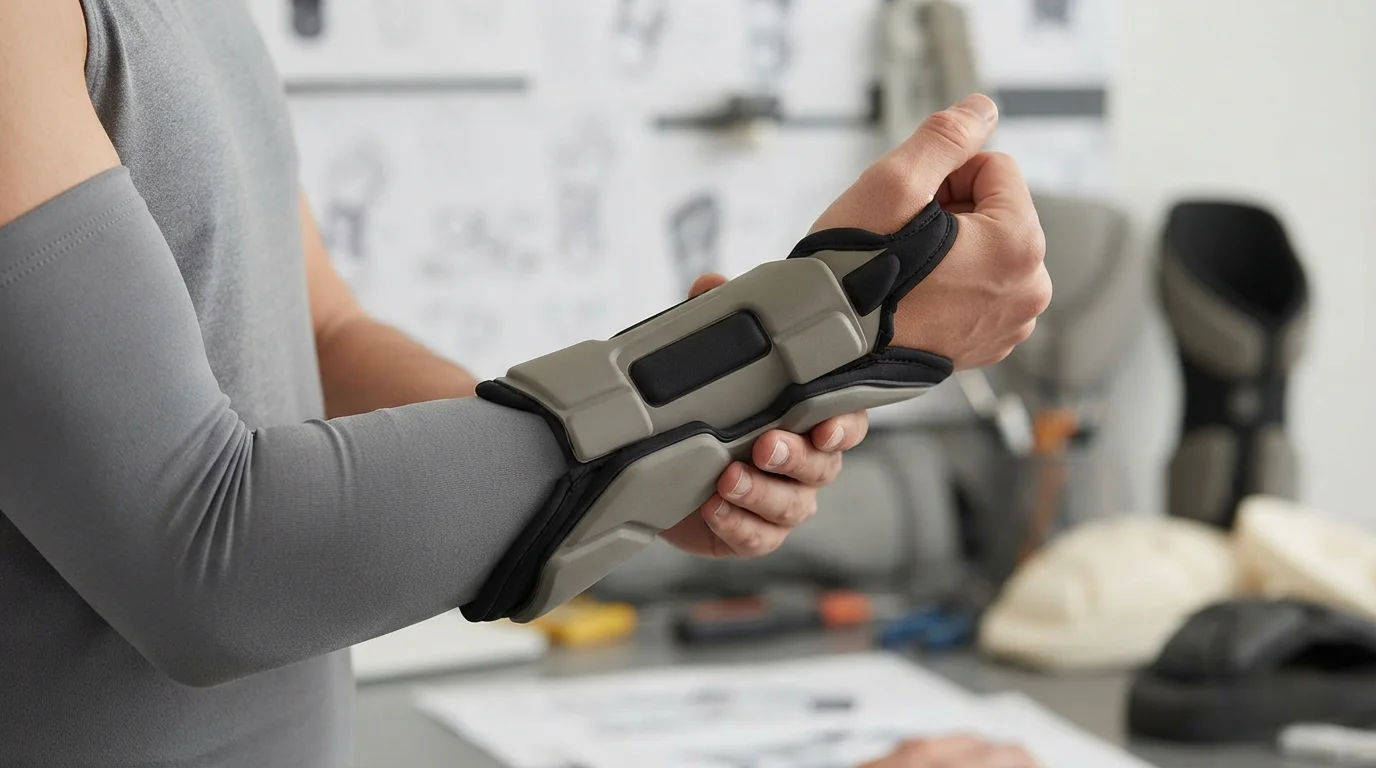
Sports products interact directly with the body, equipment, or environment. A product can be dimensionally accurate and still fail because it creates a pressure point, slips during use, restricts movement, or is difficult to adjust with gloves or wet hands. Prototyping should therefore include the user interaction, not only the isolated part.
Start with the surfaces that define contact: grips, straps, supports, guards, handles, shoe interfaces, adjustment points, and enclosure edges. Check the transition between hard and soft areas, the radius of exposed edges, the location of fasteners, and the clearance required for movement. If the product is used by different body sizes or in different positions, evaluate more than one representative user or test fixture.
Separate ergonomic questions from structural questions. A quick appearance model or 3D-printed sample may be enough to compare size and grip. A machined or reinforced prototype may be more appropriate when the team needs to evaluate load paths, mounting stiffness, or moving components. Keeping those purposes separate allows each iteration to remain focused and easier to interpret.
- Map the user contact points and expected motions.
- Identify areas exposed to impact, compression, bending, vibration, sweat, moisture, heat, or outdoor conditions.
- Prototype the adjustment and assembly interfaces, not just the visible shell.
- Record discomfort, interference, slippage, and difficult operations as design inputs.
For a project that needs a fast physical model before committing to a production route, our prototipazione rapida can be considered as part of the development plan.
Which materials and processes should be compared?
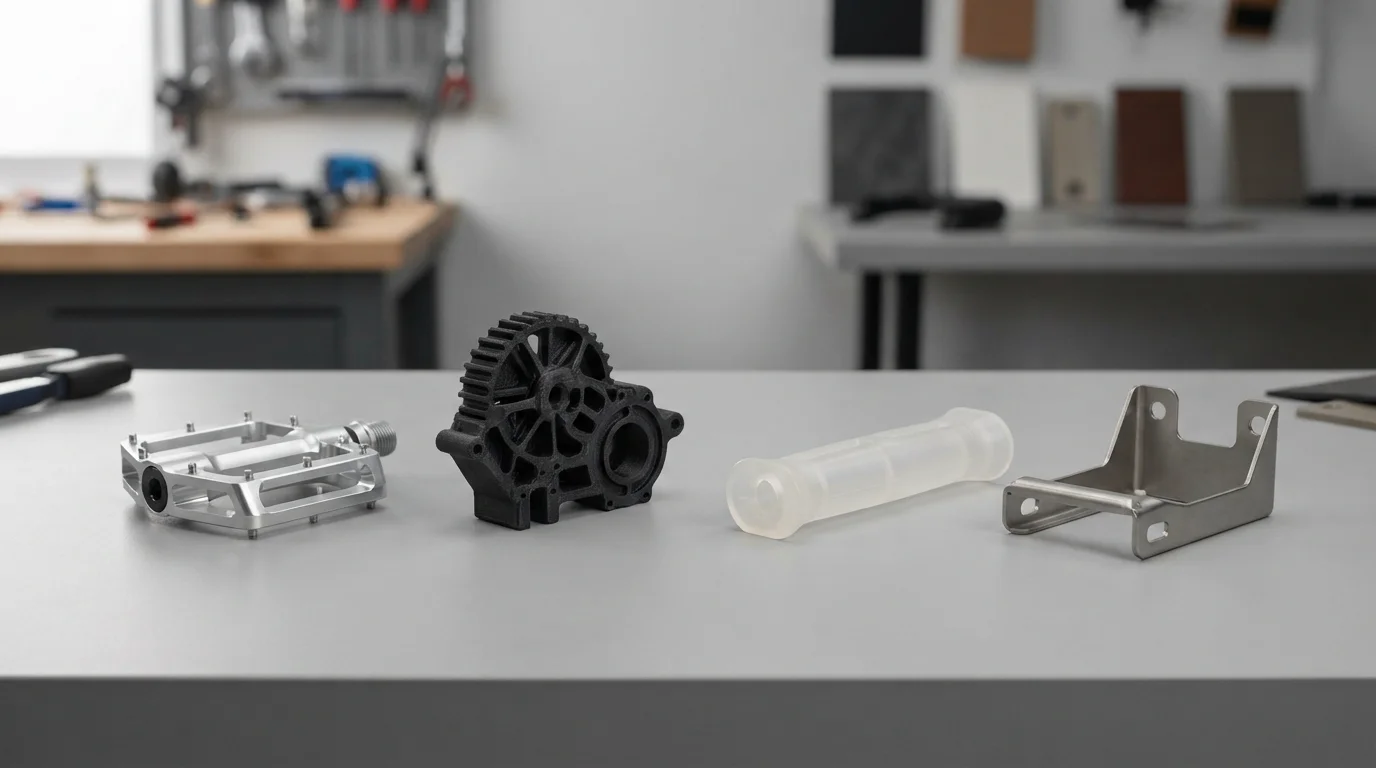
Process selection should follow the evidence the team needs. A prototype material does not have to be identical to the production material, but the difference must be understood. A rigid visual model may confirm shape while providing little information about impact or fatigue behavior. Conversely, a high-performance sample may be unnecessary when the only open question is whether a component fits inside the assembly.
Common options for sporting goods development include CNC machining for accurate and durable one-off parts, additive manufacturing for fast geometry and ergonomic iterations, sheet metal fabrication for brackets or formed structures, and molded or cast approaches when the product requires a polymer or elastomeric feel. The appropriate route depends on geometry, quantity, surface requirements, material behavior, and test purpose.
| Route | Useful when | Watch for |
|---|---|---|
| La lavorazione CNC | Testing accurate interfaces, rigid parts, metal components, or production-like dimensions | Tool access, wall thickness, internal features, and material cost |
| stampa 3D | Comparing shapes quickly, checking fit, creating lightweight forms, or iterating ergonomics | Layer direction, anisotropy, surface texture, and differences from production material |
| La fabbricazione della lamiera | Developing brackets, guards, frames, covers, or lightweight structural features | Bend allowances, corner conditions, joining, finishing, and flat-pattern accuracy |
| Molding or cast samples | Evaluating repeatable polymer surfaces, soft-touch behavior, or a path toward production parts | Tooling investment, draft, parting lines, shrinkage, and material availability |
La nostra CNC machining capability, 3D printing service, e sheet metal fabrication service represent different tools in that comparison. They should not be treated as interchangeable promises; the manufacturing partner should review the part geometry, material requirement, quantity, and intended test before recommending a route.
How should performance and durability be validated?
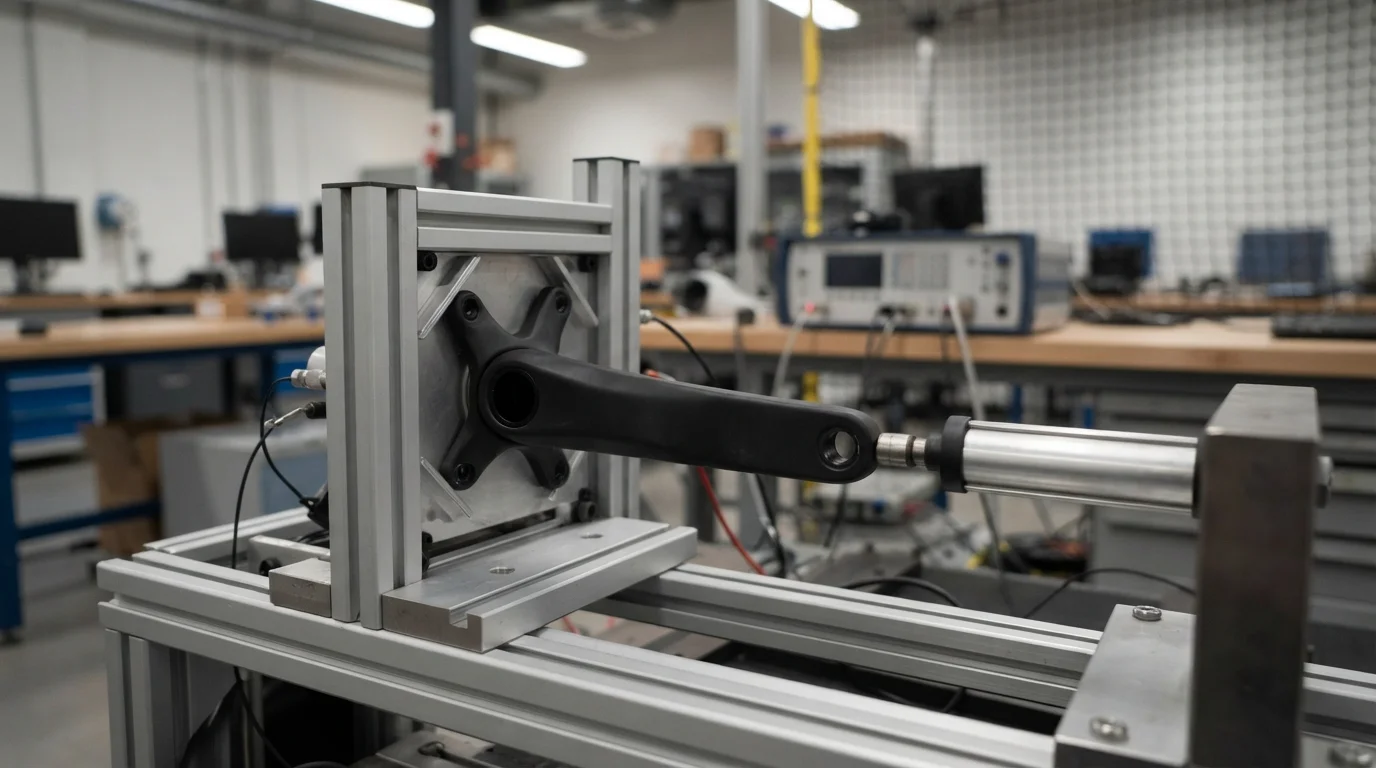
A prototype review is more valuable when the test condition resembles the product’s actual use. The team should describe the load, direction, frequency, duration, temperature, moisture exposure, and failure condition as clearly as possible. “Make it strong” is not a test requirement; “maintain alignment under a defined repeated load” is closer to an actionable engineering requirement.
Validation can progress in stages:
- Bench checks: inspect dimensions, interfaces, motion, fit, surface condition, and assembly sequence.
- Controlled functional checks: apply representative loads or movements using a repeatable fixture or procedure.
- Field or user evaluation: observe comfort, grip, adjustment, handling, and behavior in realistic use.
- Failure review: document cracking, permanent deformation, loosening, wear, delamination, surface damage, or user-reported problems.
- Design update: connect each finding to a drawing, CAD model, material, process, or assembly change.
Do not present a prototype test as certification or claim compliance with a sport-specific standard unless the required standard, laboratory, sample configuration, and result are verified. The purpose of early prototyping is to expose risk and improve the design; formal compliance work may require separate planning and qualified testing.
Use a validation matrix to keep decisions traceable. Each row can identify the feature, expected behavior, prototype version, test method, observation, disposition, and owner. This format is useful when a sporting product combines rigid components, flexible elements, hardware, electronics, or protective features that must be reviewed by different specialists.
When is a prototype ready for pilot production?
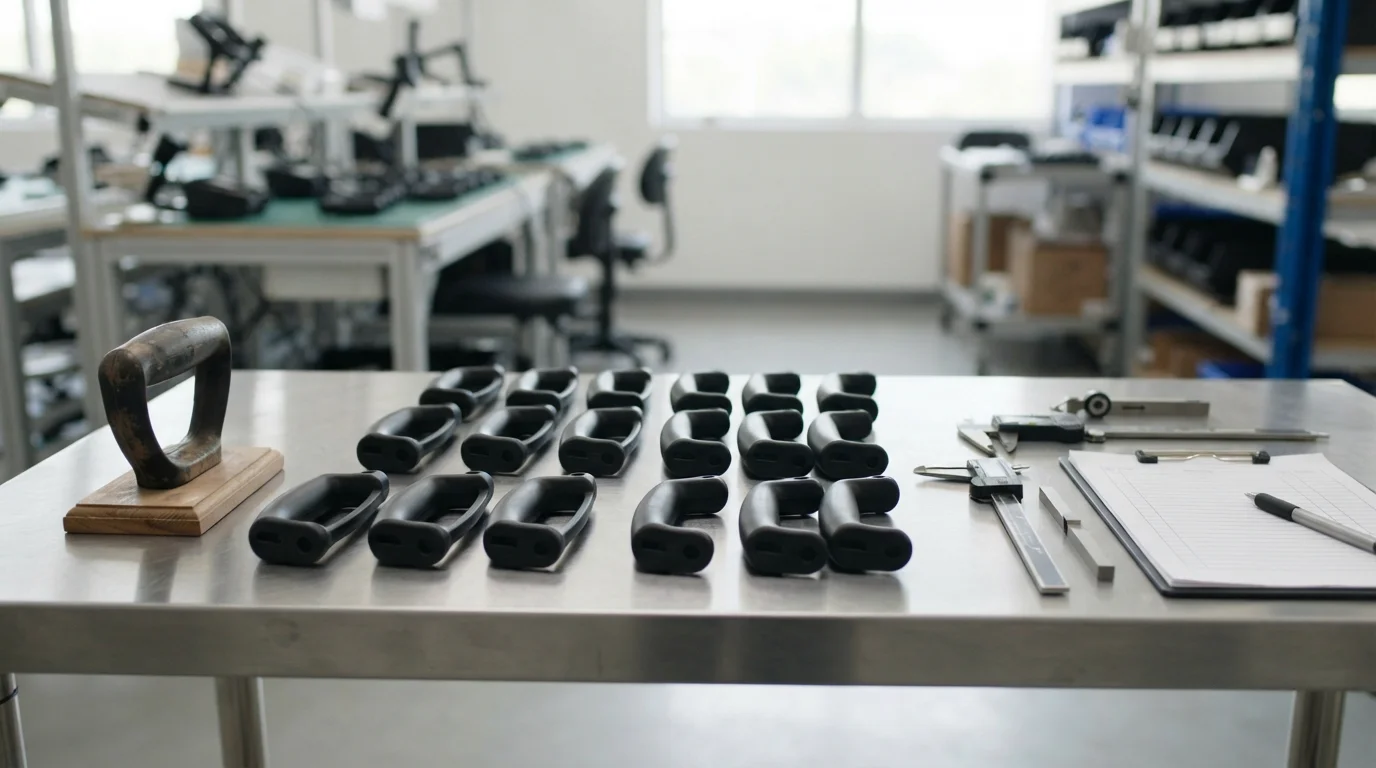
A prototype is ready to move toward pilot production when the major product risks are understood and the manufacturing method can reproduce the approved design. Visual approval alone is not enough. The team should know which dimensions are critical, which surfaces are cosmetic, what material or finish is required, how the product will be assembled, and how quality will be checked.
A practical readiness review covers five areas:
- Design: CAD, drawings, revision history, interfaces, and critical dimensions are aligned.
- Materiali: the selected material or an agreed equivalent is available and its relevant behavior is understood.
- Processo: the proposed route can produce the geometry, surface, joining features, and expected quantity.
- Assembly: fasteners, inserts, adhesives, hardware, and sequence are defined well enough for repeatable builds.
- Quality: the reference sample, inspection points, acceptance criteria, and change-control process are identified.
Move from a single prototype to a small set of consistent samples when repeatability matters. Comparing multiple parts can reveal variation in fit, finish, alignment, and assembly that a single approved unit cannot show. The result is a more useful decision about pilot tooling, low-volume production, or a further engineering iteration.
What should a sporting goods prototype RFQ include?
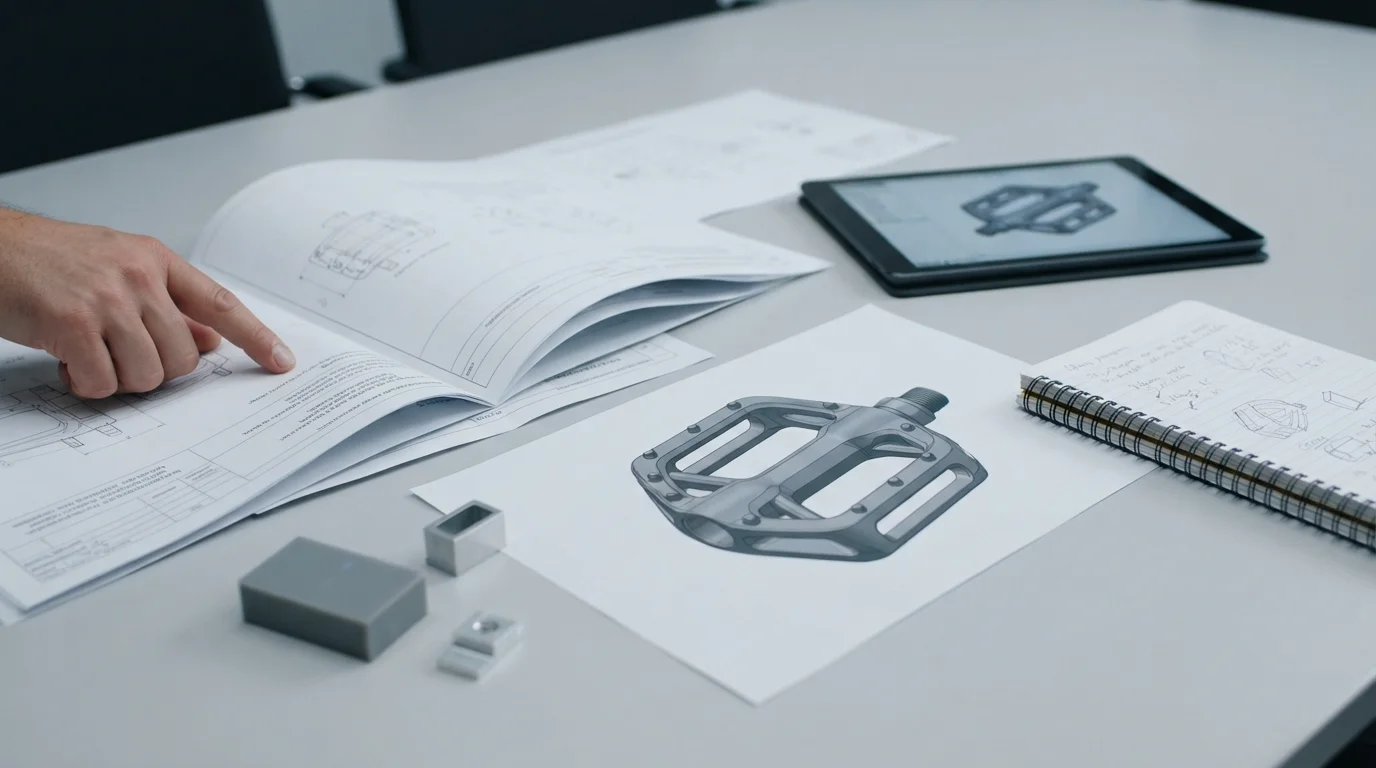
A clear request for quotation helps the manufacturer evaluate the project without guessing at the intended use. Sporting goods projects often combine appearance, comfort, strength, and production requirements, so the RFQ should distinguish confirmed information from open design questions.
| RFQ item | Information to provide |
|---|---|
| Product context | Sport, user group, operating environment, expected motion, loads, and use frequency |
| Files | CAD, drawings, reference photos, assembly files, and the current revision |
| Materiali | Required grade or performance target, flexibility, hardness, finish, color, and available alternatives |
| Quantity | Number of design iterations, prototype units, pilot parts, and possible production volume |
| Validation | Fit checks, functional tests, field evaluation, dimensional inspection, or other evidence needed |
| Schedule | Review milestones, sample approval date, and the decision point for pilot production |
Frequently asked questions
Can one prototype prove both fit and durability?
Sometimes, but not always. A prototype can combine those objectives when its material, construction, and test conditions represent the intended use. In other cases, separate appearance, ergonomic, and functional samples produce clearer evidence and reduce the risk of misreading a result.
Is 3D printing suitable for every sports product prototype?
No. It is useful for rapid geometry, fit, and ergonomic iterations, but the printed material and layer structure may not represent molded, machined, laminated, or formed production parts. Select it for the question it can answer, then use another process when production-like behavior is required.
What makes a sporting goods prototype manufacturing-ready?
The design, material direction, process, assembly, inspection criteria, and revision history are sufficiently defined for repeatable production review. Manufacturing readiness does not mean every risk is eliminated; it means the remaining risks are known, assigned, and appropriate for the next stage.
Sporting goods prototyping works best as a structured learning process. Start with the user interaction and performance risks, choose a process that produces meaningful evidence, document what each prototype proves, and involve manufacturing engineering before the design is locked. That approach helps a product team move from an attractive concept to a sports product that is more comfortable to use, easier to validate, and more realistic to manufacture.

