


I responsabili degli acquisti perdono capitale quando autorizzano prematuramente costose attrezzature in acciaio per progetti di prodotto non verificati. Bloccare una geometria in enormi blocchi di acciaio per utensili H13 paralizza immediatamente la capacità del team di ingegneria di iterare su difetti meccanici critici. Scalare la produzione in modo efficace richiede di riconoscere il preciso confine finanziario tra prototipazione sottrattiva e replicazione a forma netta.

La scelta tra Attrezzature per stampi rigidi e lavorazione CNC determina la sopravvivenza del flusso di cassa di qualsiasi lancio hardware [2026]. Le macchine CNC lavorano i pezzi in modo indipendente senza richiedere esorbitanti costi di ingegneria iniziali, ma soffrono di tempi di ciclo dolorosamente lenti su larga scala. Al contrario, gli stampi personalizzati producono componenti identici in pochi secondi ma richiedono terrificanti acconti per spese di ingegneria non ricorrenti (NRE).
Padroneggiare questo specifico calcolo del punto di pareggio previene completamente la paralisi della catena di fornitura. I dirigenti hardware devono valutare brutalmente i rapidi cambi di progettazione, le dinamiche di congelamento dei gate e lo spreco localizzato di materia prima. L'economia di precisione si basa strettamente sull'abbinamento della metodologia di fabbricazione al volume esatto del ciclo di vita del componente.
Cosa definisce uno stampo personalizzato nella produzione industriale?
Attrezzature per stampi vs lavorazione CNC: come si confrontano?
Quando dovresti investire in attrezzature H13 ad alto volume?
Quando DEVI evitare le attrezzature rigide e attenersi alla CNC?
Quali sono le vere dinamiche di pareggio dei costi NRE?
Come ottimizza Jucheng i costi delle attrezzature a Shenzhen?
Quali sono le domande più critiche su attrezzature e CNC?
Cosa definisce uno stampo personalizzato nella produzione industriale?
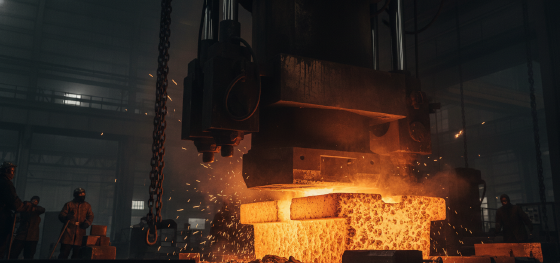
Uno stampo funziona come una cavità negativa indistruttibile realizzata in acciaio temprato, progettata per forzare leghe fuse o lamiera in forme geometriche permanenti sotto pressione cinetica estrema.
A differenza degli utensili da taglio che rimuovono materiale, gli stampi riformano la materia grezza attraverso pura forza e manipolazione termica. La pressofusione ad alta pressione comporta l'iniezione di alluminio fuso a 700 gradi in questi blocchi di acciaio a velocità supersoniche. Lo stampo deve assorbire aggressivamente questo devastante shock termico senza creparsi o deformarsi durante il successivo rapido ciclo di raffreddamento.
Fabricating the die itself requires thousands of hours of slow-a elettroerosione a filo and hard milling. Toolmakers specifically utilize H13 chromium-molybdenum steel for its legendary resistance to heat checking and thermal fatigue. You are effectively building an industrial weapon designed to survive millions of repetitive, violent mechanical impacts.
Attrezzature per stampi vs lavorazione CNC: come si confrontano?
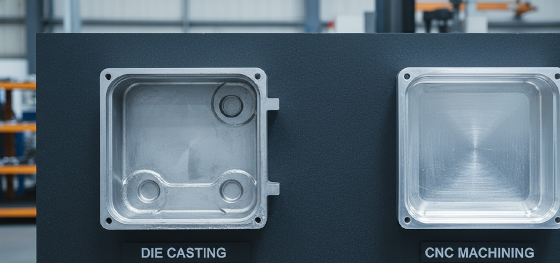
Subtractive machining burns through expensive raw billets and spindle hours linearly, whereas die casting requires astronomical upfront investment but drops unit costs to negligible pennies.
CNC mills slice parts from solid aluminum blocks, frequently turning 80% of the purchased metal into worthless recyclable chips. This tremendous waste, combined with the slow traversal of the cutting tool, makes the process economically punishing for massive runs. However, CNC guarantees aerospace-grade tolerances straight off the machine.
Die casting consumes exact volumetric material, creating net-shape components instantly with zero chip waste. The catch involves the draft angles and ejector pin marks inherent to the molding process. Parts emerging from a die often require secondary CNC operations to hit critical bearing press-fits, blending both technologies together.
| Metrica di produzione | Lavorazione CNC | Custom Die Casting | Impatto finanziario e di design |
|---|---|---|---|
| Costo NRE Iniziale | Extremely Low (Programming) | Astronomical ($10k - $100k+) | CNC protects startup cash flow |
| Per-Unit Variable Cost | High (Material + Time) | Extremely Low (Material Only) | Dies dominate high-volume margins |
| Geometric Flexibility | Instant CAD Updates | Locked (Requires New Steel) | Dies punish unverified designs |
| Production Cycle Time | Hours per part | Secondi per pezzo | Dies clear massive backlogs instantly |
Quando dovresti investire in attrezzature H13 ad alto volume?
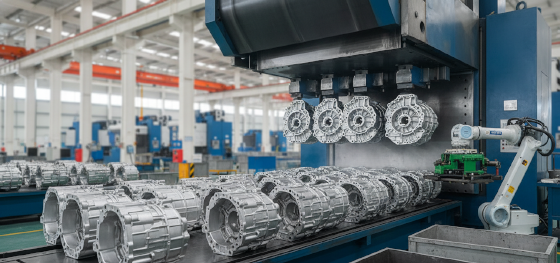
Commit to hard tooling exclusively when market demand guarantees continuous production runs exceeding ten thousand units of a completely verified, frozen CAD geometry.
Automotive manufacturers and consumer electronics giants rely entirely on custom dies. When producing identical motor housings for a global supply chain, spending eighty thousand dollars on a complex multi-cavity tool is a negligible rounding error. The die pays for itself within the first month of unyielding mass production.
Complex internal geometries also mandate tooling. If a part features intricate internal cooling channels or extremely thin, deep ribs, CNC end mills simply cannot reach the material without destructive vibration. Forcing liquid metal into these tight crevices via extreme injection pressure offers the only viable manufacturing pathway.
Quando DEVI evitare le attrezzature rigide e attenersi alla CNC?
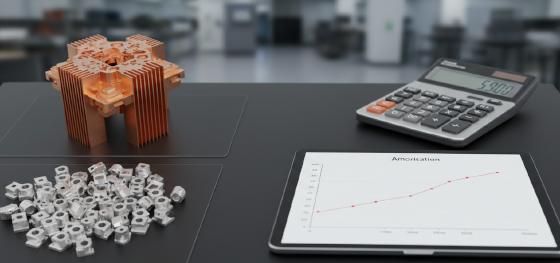
Deploying hard dies for early-stage prototypes or customized aerospace batches guarantees catastrophic financial ruin when inevitable design revisions render the steel obsolete.
Engineering change orders (ECOs) brutally punish hard tooling. You cannot easily add material back into a carved mold cavity. If a mating component changes dimensions, the entire die often requires complete scrapping. CNC machining avoids this nightmare entirely by allowing programmers to merely update a digital toolpath instantly.
Furthermore, parts requiring absolutely pristine, mirror-like aesthetic finishes without secondary processing should stay on the mill. Die-cast components naturally exhibit flow lines, gate residue, and ejector pin witness marks. CNC ensures pristine cosmetic surface integrity right off the final cutting pass.
Quali sono le vere dinamiche di pareggio dei costi NRE?

Calculating the precise volume where the astronomically high tooling NRE intersects and drops below the linear expense of CNC machine hours dictates your purchasing strategy.
Assume a complex aluminum manifold costs $300 to CNC machine. A die-cast version costs $15 per unit, but the mold commands a $30,000 NRE fee. Machining 100 units costs $30,000. Casting 100 units costs $31,500. The break-even point sits slightly above 100 units.
Scaling changes everything. Producing 5,000 units via CNC skyrockets your bill to $1.5 million. Casting those same 5,000 units, including the die cost, totals a mere $105,000. Procurement executives must aggressively forecast product lifecycles to trigger the transition to hard tooling at the exact mathematical sweet spot.
Come ottimizza Jucheng i costi delle attrezzature a Shenzhen?

Operating within the Shenzhen precision manufacturing hub, Jucheng deploys modular Master Unit Die (MUD) systems to brutally slash non-recurring engineering expenses for low-volume bridge production.
Navigating global supply chain constraints requires eliminating bloated tooling overhead. Instead of charging you for the massive, heavy exterior steel mold frame, we utilize standardized MUD bases. You only pay for the specific custom cavity inserts carved by our high-speed EDM machines, reducing upfront costs by forty percent.
Our 8000-square-meter facility executes completely seamless transitions from 5-axis CNC prototyping directly into high-pressure die casting. We offer highly aggressive Free DFM reviews to calculate precise draft angles and eliminate costly side-actions from your CAD. Backed by ISO9001:2015, we engineer profitability directly into your tooling.
Quali sono le domande più critiche su attrezzature e CNC?

Resolving hardcore manufacturing variables prevents catastrophic assembly failures during the high-volume transition of custom industrial hardware.
Can a CNC machine hit tighter tolerances than a high-pressure die?
Yes, universally. Subtractive milling avoids the violent thermal shrinkage inherent to molten metal solidification. While die casting generally holds +/- 0.05mm on critical features, high-end 5-axis CNC machines routinely hold +/- 0.005mm without issue, making CNC mandatory for critical bearing journals.
What causes internal porosity in die-cast components?
Porosity occurs when volatile atmospheric gases become trapped within the rapidly solidifying liquid metal. If the gate freezes prematurely before intensification pressure can squeeze out the trapped air, the resulting voids fundamentally destroy the structural integrity of the casting.
How long does an H13 aluminum die typically last before failure?
A properly maintained H13 tool steel die typically survives between 80,000 and 120,000 "shots" (injections) before severe thermal fatigue causes unacceptable heat checking on the cavity surface. Zinc dies run significantly cooler and can often exceed one million shots.

