


Il rumore secco e nauseante della rottura di un maschio in acciaio rapido in profondità all'interno di una billetta di titanio da diecimila dollari è un suono che fa calare il silenzio in un'intera officina meccanica. Ho visto macchinisti esperti passare ore angosciose cercando di estrarre maschi rotti utilizzando elettroerosione a tuffo, nel disperato tentativo di salvare un componente aerospaziale critico dal cestino dei rottami. Affidarsi esclusivamente alla maschiatura rigida per leghe indurite garantisce una rottura catastrofica dell'utensile quando l'evacuazione interna del truciolo inevitabilmente fallisce.

Implementare la fresatura di filetti riscrive completamente le regole fisiche della fabbricazione di elementi di fissaggio interni. Invece di forzare violentemente un utensile da taglio a pieno diametro in un foro cieco, i programmatori CNC utilizzano una fresa in metallo duro massiccio molto più piccola. Guidando matematicamente il mandrino in una spirale elicoidale precisa—muovendosi simultaneamente sugli assi X, Y e Z—l'utensile taglia delicatamente il profilo della filettatura nella parete laterale. Se la fresa si rompe, cade semplicemente fuori dal foro sovradimensionato.
Padroneggiare questa specifica matrice di interpolazione elicoidale previene aggressivamente perdite devastanti di ingegneria non ricorrente (NRE). Gli ingegneri acquisti devono valutare brutalmente i costi grezzi degli utensili, le penalità sui tempi ciclo e il rischio catastrofico di scarto del pezzo. Il successo della precisione hardware si basa interamente sull'abbinamento della metodologia di filettatura designata alla durezza esatta del materiale grezzo in entrata.
contenuto:
Fresatura di filetti vs Maschiatura rigida: Come differiscono le meccaniche?
Quando specificare la fresatura di filetti per parti CNC?
Quando si DEVONO evitare le frese per filetti e utilizzare maschi standard?
In che modo l'evacuazione del truciolo previene scarti catastrofici?
Quali sono le vere dinamiche di costo per la filettatura CNC?
In che modo Jucheng ottimizza le filettature interne a Shenzhen?
Quali sono le domande frequenti più critiche sulla fabbricazione di filetti?
Fresatura di filetti vs Maschiatura rigida: Come differiscono le meccaniche?

Una fresa per filetti taglia allo stesso modo di un maschio meccanico? Assolutamente no. Un maschio penetra fisicamente dritto nel materiale corrispondente al diametro esatto del foro, mentre una fresa per filettatura ruota eccentricamente all'interno di un vuoto più grande per asportare il metallo lateralmente.
La maschiatura rigida richiede una coppia del mandrino massiccia. La macchina forza violentemente il maschio nel foro pilota, costringendo i denti dell'utensile a spostare e tagliare aggressivamente il substrato simultaneamente. Il tagliente rimane in contatto continuo e agonizzante con il metallo fino a quando il mandrino inverte la marcia per estrarlo. Questo attrito continuo genera calore localizzato estremo, rendendo i maschi altamente suscettibili di grippaggio e rottura in leghe dure come acciaio inossidabile 304.
Le frese per filettatura eliminano il contatto continuo. Il diametro dell'utensile è deliberatamente più piccolo del foro pilota. Eseguendo un comando di interpolazione elicoidale CNC (G02 o G03), l'utensile rotante danza attorno alla parete interna, eseguendo tagli leggeri e intermittenti. Questa azione di taglio interrotta riduce drasticamente il carico del mandrino, abbassa notevolmente la generazione di calore cinetico e crea una radice di filetto perfettamente liscia senza strappi.
| Lavorazione Metrica | Maschiatura Rigida | Fresatura Elicoidale CNC per Filettatura | Impatto ingegneristico |
|---|---|---|---|
| Rischio di Rottura Utensile | Estremo (Il pezzo è rovinato) | Zero (L'utensile rotto cade) | La fresatura previene la rottura catastrofica della billetta |
| Versatilità | Bloccato a un passo/dimensione specifico | Un utensile taglia più diametri | La fresatura riduce aggressivamente l'inventario degli utensili |
| Tempo ciclo | Estremamente Veloce | Slower (Requires multiple orbits) | Tapping dominates soft aluminum mass production |
| Blind Hole Clearance | Requires deep clearance for tap point | Cuts perfectly to the flat bottom | Milling optimizes shallow assembly profiles |
Quando specificare la fresatura di filetti per parti CNC?

Is thread milling mandatory for high-value titanium and inconel components? Yes. The risk of destroying an expensive aerospace or medical billet with a snapped tap makes the slower cycle time of milling completely irrelevant.
When processing massive oil and gas valve bodies, engineers frequently require giant internal threads exceeding three inches in diameter. Purchasing a custom solid high-speed steel tap for an M80 thread costs thousands of dollars, requires a massive geared spindle to drive it, and poses a lethal safety risk if it shatters. A machinist can easily cut that massive M80 thread using a standard, small-diameter replaceable insert milling cutter.
Furthermore, if your blueprint demands asymmetrical or custom thread profiles that do not exist in standard catalogs, milling is your only pathway. Programmers can dynamically adjust the CNC tool offsets by a few microns to perfectly dial in a tight interference fit for a proprietary hydraulic fitting, a feat completely impossible with a fixed-dimension tap.
Quando si DEVONO evitare le frese per filetti e utilizzare maschi standard?

Can you thread mill a deep, microscopic M2 hole? Absolutely not. The extreme length-to-diameter ratio causes the tiny, fragile milling cutter to deflect violently, shattering the tool instantly.
When dealing with extremely deep, narrow cavities (exceeding 3xD depths) in soft materials like 6061 aluminum or brass, form tapping (roll tapping) dominates the floor. A form tap contains no cutting flutes; it violently physically displaces the soft metal into a thread shape without creating a single chip. It is virtually unbreakable in soft metals and operates ten times faster than a milling routine.
Procurement teams auditing high-volume consumer electronics must ruthlessly enforce rigid tapping for standard M3 and M4 chassis mounting holes. If a factory attempts to interpolate fifty standard mounting holes per part, the inflated machine cycle time will instantly destroy the profitability of the mass production run.
In che modo l'evacuazione del truciolo previene scarti catastrofici?

Why do taps snap in blind holes? Taps physically trap continuous, stringy metal ribbons deep inside the flutes. When these chips hit the bottom of a blind hole, they compress into a solid mass that violently binds and snaps the tool.
Helical milling completely eradicates this failure mode. Because the cutter is smaller than the hole, there is a massive physical gap allowing high-pressure coolant to easily flush debris outward. More importantly, the intermittent cutting action creates microscopic, powdery chips rather than long strings, ensuring the cavity remains perfectly clear during the entire machining cycle.
This superior evacuation allows machinists to thread all the way down to the absolute flat bottom of a blind cavity. A standard tap requires a deep, unthreaded "runout" section at the bottom for the chips to accumulate and the tapered tip to clear. Milling optimizes thin-walled geometries where engineers cannot afford to drill deeply.
Quali sono le vere dinamiche di costo per la filettatura CNC?

Are solid carbide thread mills a waste of budget compared to cheap HSS taps? Only if you evaluate tooling costs in a vacuum. A broken twenty-dollar tap that destroys a five-thousand-dollar engine block is the most expensive tool in your facility.
Purchasing a premium solid carbide milling cutter demands a significant upfront invoice, often exceeding three hundred dollars. However, that single tool can execute right-hand threads, left-hand threads, internal bores, and external shafts, drastically reducing the total number of specialized tools required in the machine carousel.
The true financial break-even calculation hinges entirely on material hardness and scrap risk. If you are blasting hundreds of holes in mild 1018 steel, stick to cheap machine taps. If you are carving a single, irreplaceable mold cavity out of hardened D2 tool steel, the astronomical cost of a ruined billet makes the expensive carbide cutter the only mathematically responsible choice.
In che modo Jucheng ottimizza le filettature interne a Shenzhen?
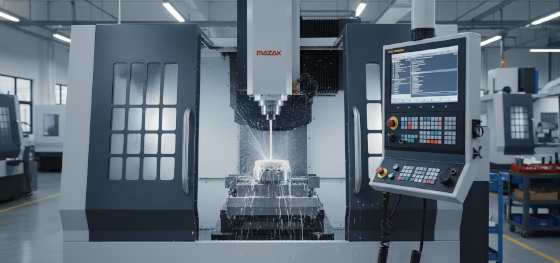
Can a facility balance both high-speed tapping and precision helical milling? Yes. Operating deep within the[2026] Shenzhen precision manufacturing hub, Jucheng assigns the exact threading protocol based exclusively on your CAD's metallurgical requirements.
Navigating global hardware procurement requires an absolute rejection of one-size-fits-all manufacturing. We deploy high-torque 5-axis Mazak centers capable of extreme helical interpolation for your exotic aerospace alloys, while utilizing rapid-spindle drilling centers for your high-volume aluminum brackets. We eliminate tooling bottlenecks entirely under one 8000-square-meter roof.
Our engineering teams intervene heavily during the initial CAD review phase. Backed by uncompromising ISO9001:2015 and IATF16949 protocols, our Free DFM reviews identify high-risk blind holes before the billet enters the chuck. We dynamically shift your blueprint to the safest, most economical cutting strategy without enforcing MOQ restrictions.
Quali sono le domande frequenti più critiche sulla fabbricazione di filetti?

Resolving hardcore kinetic variables prevents devastating assembly failures when designing complex threaded profiles for precision industrial fabrication.
Can a thread mill fix a hole that was drilled too large?
No. The milling cutter only carves the thread grooves; it cannot replace missing material. If the pilot hole is machined oversized beyond the major diameter of the thread, the resulting female threads will be blunt, shallow, and will instantly strip out under minimal bolt torque. The pilot hole dimension remains absolute.
Does thread milling produce a stronger thread than tapping?
The ultimate tensile strength is virtually identical, but the thread quality is superior. Because milling generates zero axial tearing and leaves a highly polished, burnished surface finish, the resulting threads provide significantly smoother engagement and reduce the risk of galling when assembling stainless steel fasteners.
Can you thread mill a tapered pipe thread (NPT)?
Yes, and it is the preferred method for large NPT fittings. Tapping a tapered hole requires massive spindle horsepower because the entire length of the tap engages the metal simultaneously at the end of the stroke. Milling traces the taper dynamically using CNC commands, easily creating high-pressure fluid seals with minimal machine strain.

