


Low volume is not one process. It is a project stage in which CNC machining, injection molding, 3D printing, sheet metal fabrication, casting, or other methods may be appropriate. Our Consumer Products manufacturing solutions help teams compare those routes according to geometry, material, quality, quantity, schedule, and the next expected stage.
When does low volume manufacturing make sense?
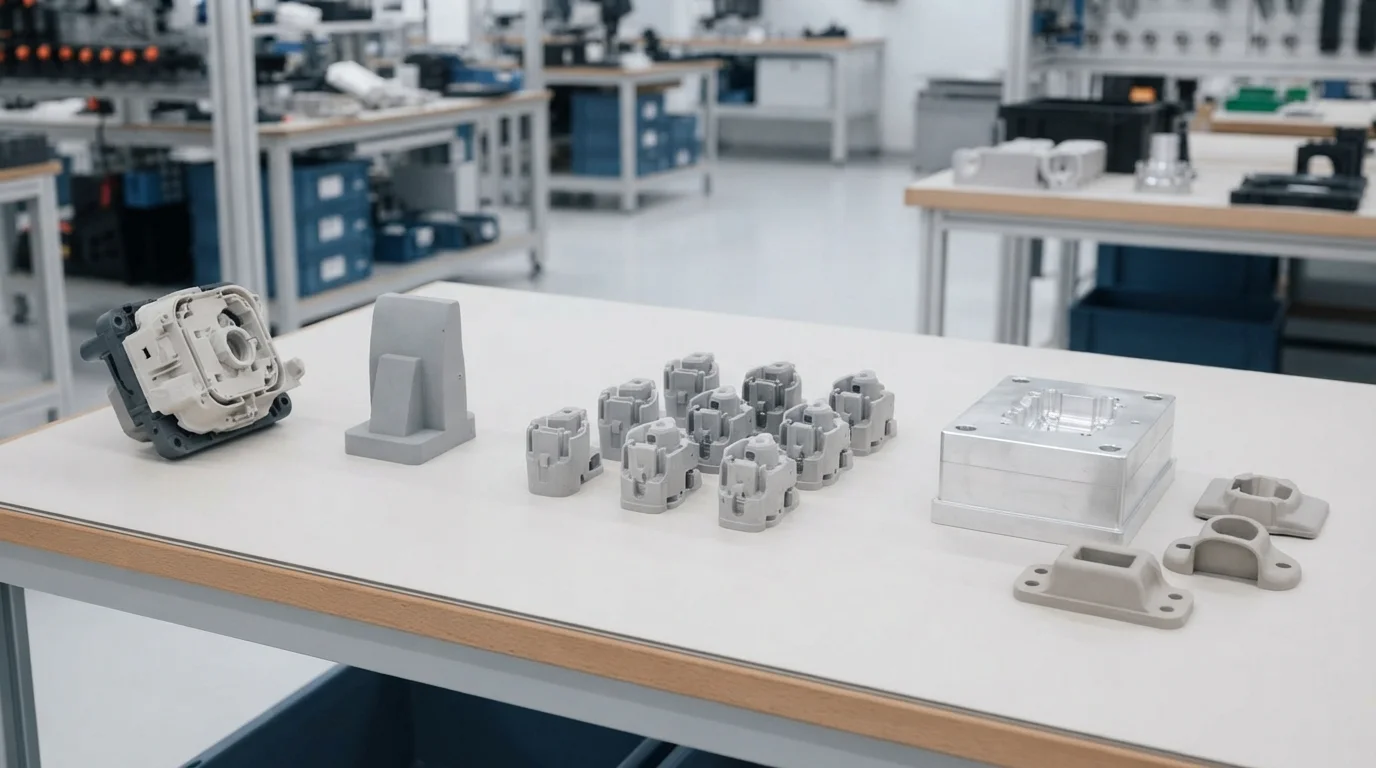
Low volume manufacturing makes sense when a product needs more than a few exploratory prototypes but the business is not ready to commit to a large production run. The design may be technically validated while sales demand remains uncertain, or the product may need real units for field feedback, crowdfunding fulfillment, trade shows, service inventory, or an initial launch.
The purpose should be stated clearly. A low-volume batch can be used to learn about user response, verify assembly, support early revenue, or maintain supply while production tooling is developed. It should not be presented as a universal substitute for high-volume manufacturing. The best method depends on whether the priority is flexible revision, production-like material behavior, cosmetic consistency, or unit economics.
| Business situation | What low volume can provide | Risk to manage |
|---|---|---|
| Design still evolving | Real units without locking the team into a high-volume tool. | Changes after production begins may create obsolete parts or rework. |
| Demand uncertain | Market or user feedback from a controlled quantity. | Unit cost and inventory risk may be higher than mature production. |
| Tooling in progress | Bridge parts while production tooling is reviewed or built. | Prototype process and final process may produce different behavior. |
| Limited or customized product | Small batches for variants, replacement parts, or specialized releases. | Material purchasing, setup, and inspection may not scale like mass production. |
Protolabs describes bridge production as a step that can test critical parts before committing to production quantities. That framing is useful: low volume should have a defined learning or supply role, a clear acceptance standard, and an exit plan for the next process.
Which process should produce the first sellable batch?
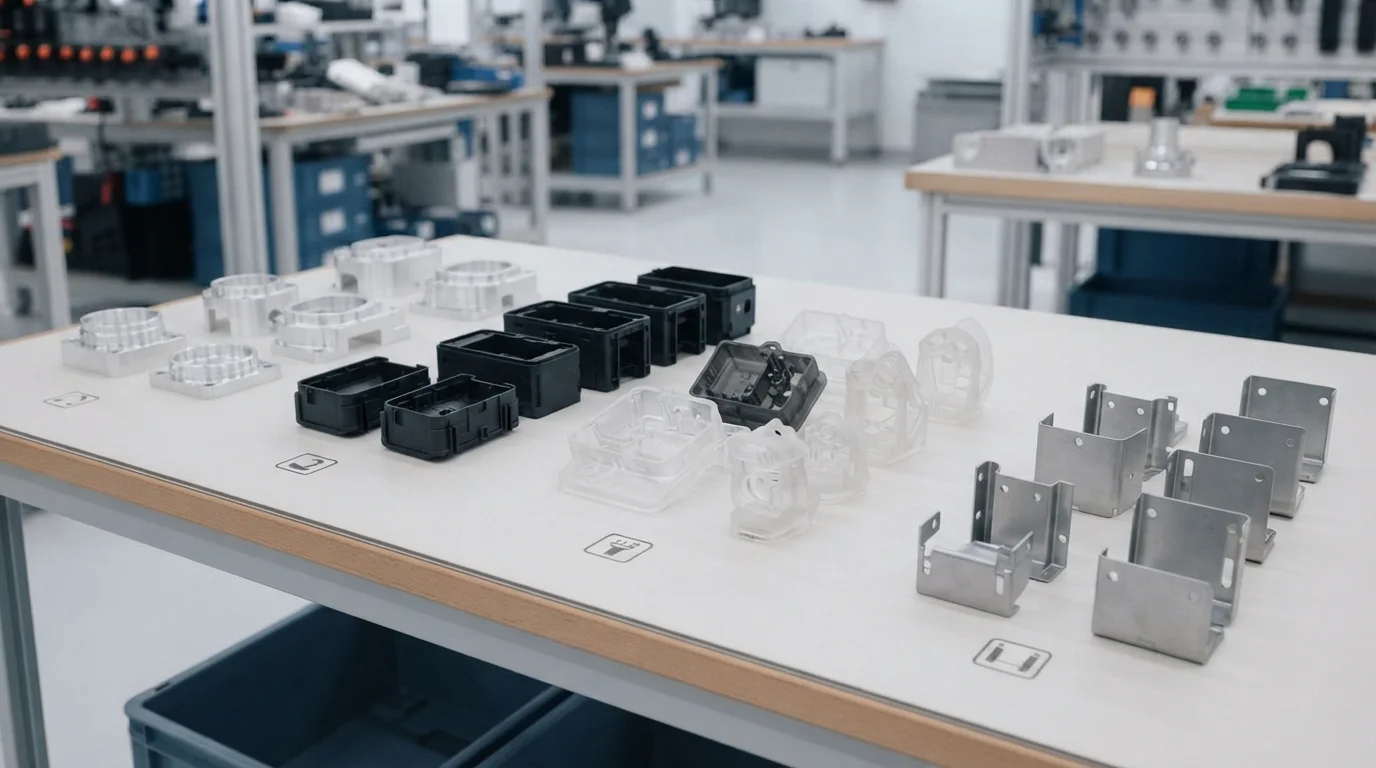
Process selection should follow the part and the business stage, not a generic volume label. A small run of metal brackets may be practical with CNC machining or sheet metal fabrication. A polymer housing may call for 3D printing, vacuum casting, or low-volume injection molding depending on the required surface, material behavior, quantity, and product expectations.
| Processo | Often useful for | Questions before choosing |
|---|---|---|
| La lavorazione CNC | Accurate metal or engineering-plastic parts, housings, brackets, fixtures, and functional components | Can setup, stock, tool access, finish, and inspection support the quantity? |
| stampa 3D | Complex geometry, customization, rapid revisions, and small batches without dedicated tooling | Does the printed material and surface meet the use and appearance requirement? |
| Stampaggio a iniezione | Repeatable polymer parts, molded surfaces, and a bridge toward larger production | Is the design stable enough for tooling, and does the tool strategy match demand? |
| La fabbricazione della lamiera | Enclosures, brackets, panels, chassis, guards, and formed structural components | Can the flat pattern, bends, hardware, joining, and finish be repeated? |
| Other casting or replication routes | Selected shapes and materials where tooling or pattern flexibility is important | Does the process reproduce the needed geometry, surface, and material behavior? |
For a first sellable batch, appearance may matter as much as function. A technically correct part can still fail a launch review because of inconsistent texture, visible seams, color variation, or a fit issue during assembly. Define the customer-facing standard before quoting rather than relying on a prototype that was never intended for sale.
La nostra prototipazione rapida can support earlier iterations, while other routes may be considered when the design is stable enough for a repeatable batch. The process should be confirmed from the current CAD, material, finish, quantity, and validation plan.
How should quality and repeatability be controlled?
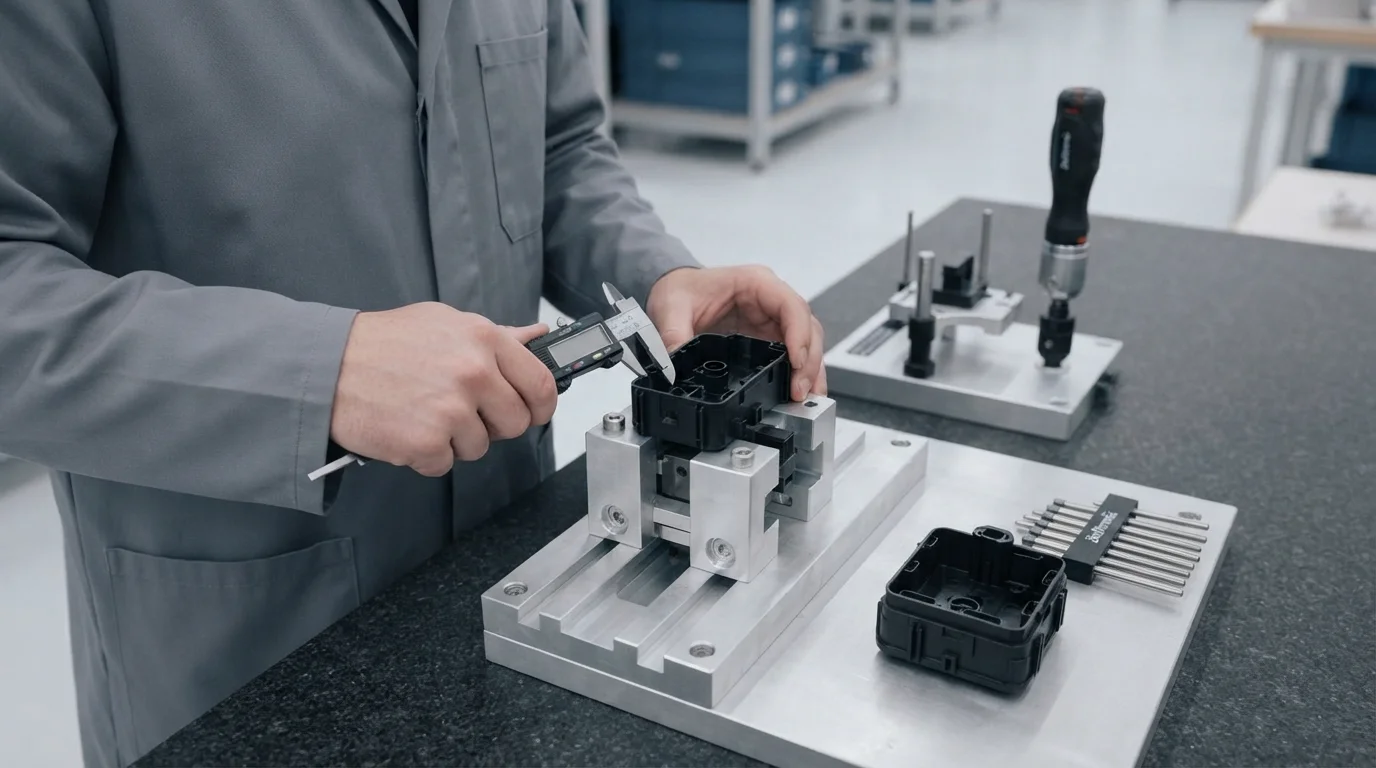
A low-volume batch is still a production activity when the parts will be shipped, assembled, or used by customers. Quality control should therefore be planned before the first run. The inspection level may be lighter than for a regulated or high-volume program, but the acceptance criteria must be visible and repeatable.
Establish a production baseline that includes:
- Approved CAD, drawings, revision, material, color, and finish
- Critical dimensions, functional interfaces, and cosmetic surfaces
- Reference sample or master part for appearance and assembly
- Inspection method, sampling approach, and required evidence
- Assembly sequence, hardware, adhesives, inserts, and torque or fit requirements where applicable
- Process deviations, nonconformance handling, and change-control ownership
Inspect more than the first part. One approved sample can hide variation in alignment, finish, warpage, hole position, assembly effort, or printed surface condition. A small set of parts can reveal whether the process is stable enough for the intended use and whether the inspection method can identify meaningful differences.
Separate cosmetic acceptance from functional acceptance. A hidden internal mark may be acceptable while a visible scratch is not; a cosmetic surface may look good while a mounting hole is out of position. Use photographs, reference samples, gauges, drawings, or assembly fixtures to make the decision objective.
Quality evidence should describe what was checked, not imply more than the data supports. Do not claim certification, compliance, capability, or a test result unless it has been verified for the actual product and project.
How do materials, tooling, and cost interact?
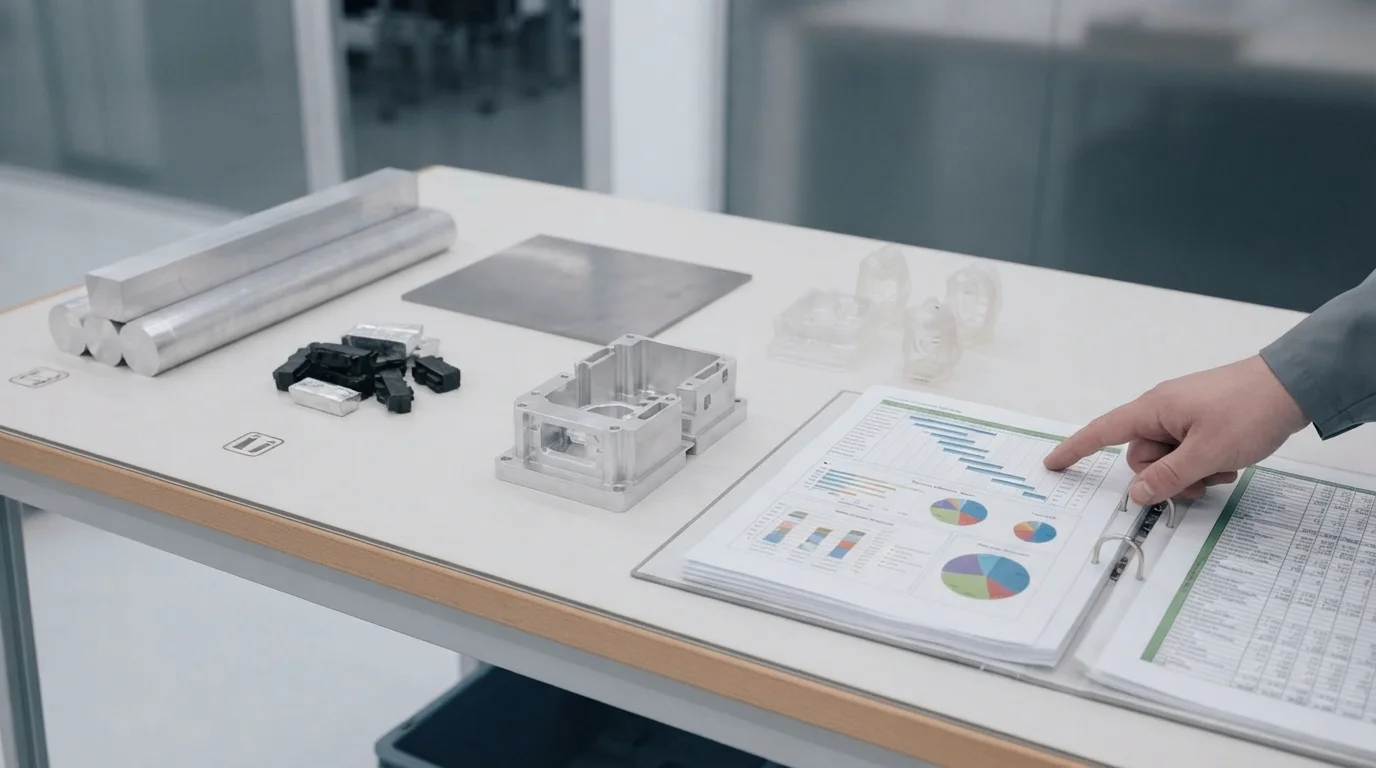
Low volume economics are shaped by total project cost, not simply by the price of one part. Consider engineering review, programming, material purchasing, fixtures, tooling, setup, finishing, inspection, assembly, packaging, shipping, and the cost of changing a design after production begins.
| Cost driver | How it affects a low-volume program | Decision to make |
|---|---|---|
| Utensileria | Dedicated molds, dies, fixtures, or patterns add upfront cost but may reduce unit cost or improve consistency. | Does the expected use justify the investment now? |
| Materiale | Small purchases, special colors, engineering grades, or production-intent materials may have supply implications. | Which material properties are essential for the batch? |
| Setup and programming | Complex parts or many variants can increase non-recurring effort. | Can parts be standardized, nested, or grouped without harming the design? |
| Finishing and assembly | Cosmetic treatment, hardware, bonding, and manual operations may exceed the raw-part cost. | Which customer-facing details must be controlled? |
| Change risk | Late revisions may affect tools, inventory, drawings, packaging, or assembled units. | What must be frozen before release? |
Formlabs notes that additive manufacturing, CNC machining, and rapid tooling each offer different advantages for low-volume production. The useful comparison is not “which process is cheapest?” but “which process provides the required evidence and supply outcome at the lowest total risk?”
Tooling decisions should include the expected next stage. If a design may change after market feedback, a flexible bridge route may be preferable. If the design is stable and the same polymer part will be needed repeatedly, low-volume injection molding may provide a closer production reference. Our low-volume injection molding service can be evaluated when molded material, surface, or repeatability is central to the decision.
How should a low-volume run transition to scale?
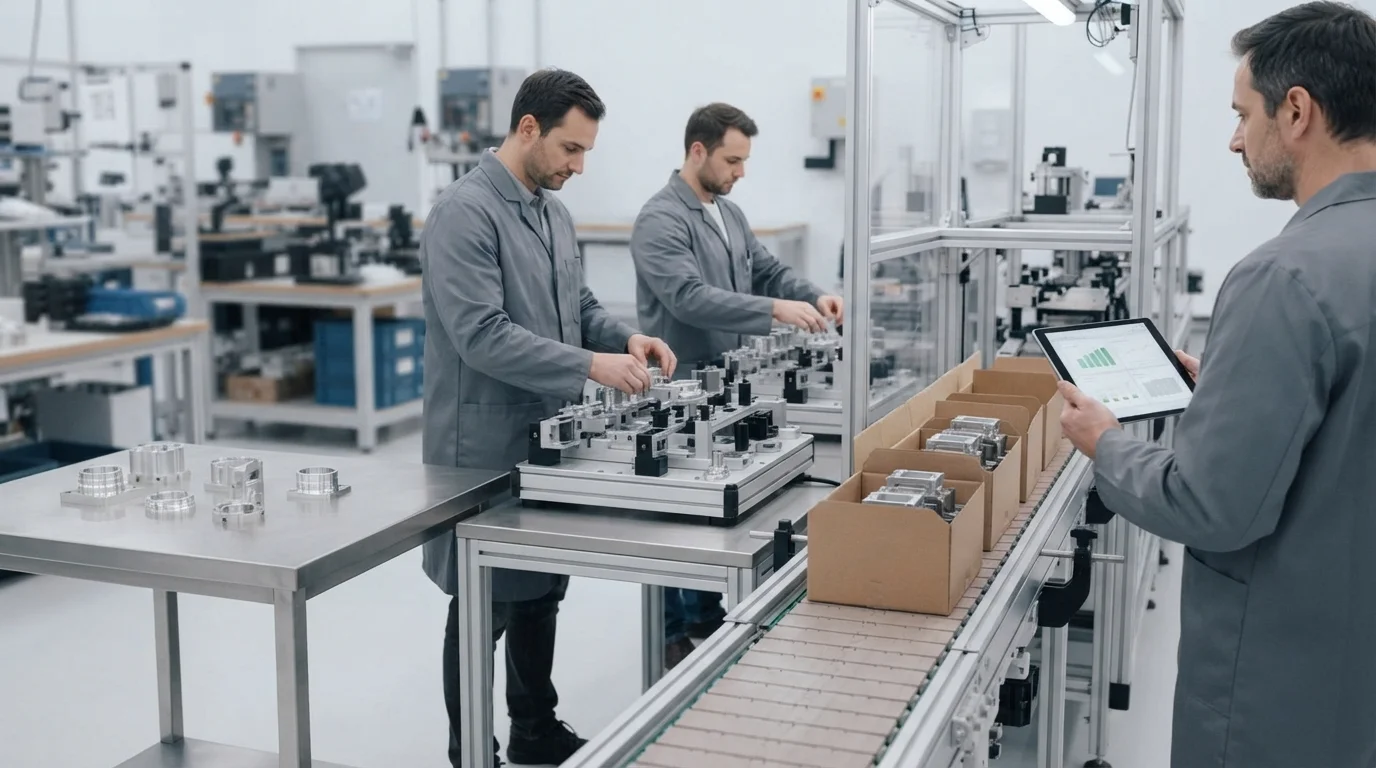
The low-volume run should generate information for the next manufacturing stage. Before production starts, define what will be learned: customer acceptance, assembly time, failure modes, material response, packaging, field performance, or demand. After the run, connect the findings to design revisions, process changes, tooling requirements, and the volume forecast.
- Set the baseline: approve the part revision, material, finish, assembly, packaging, and acceptance criteria.
- Build the batch: use a documented process and retain samples or records that represent the run.
- Review real use: collect assembly, user, field, cosmetic, and service feedback.
- Classify findings: separate design defects, process variation, supplier issues, assembly errors, and preference-based feedback.
- Update the plan: decide whether to revise the design, repeat the low-volume route, invest in tooling, or change process.
- Release the next stage: carry forward the approved requirements and close open risks before scaling.
One manufacturing partner across stages can simplify technical communication because tooling assumptions, design findings, and inspection lessons remain available to the next run. That does not mean one process must be used throughout. It means the handoff should preserve the product definition and explain which results are process-specific.
For example, a 3D-printed batch may validate customization and fit, while a later molded batch validates surface and production resin. A CNC batch may validate accurate metal interfaces, while a formed sheet-metal run tests enclosure assembly. The transition is successful when those differences are understood rather than hidden.
What should a low-volume manufacturing RFQ include?
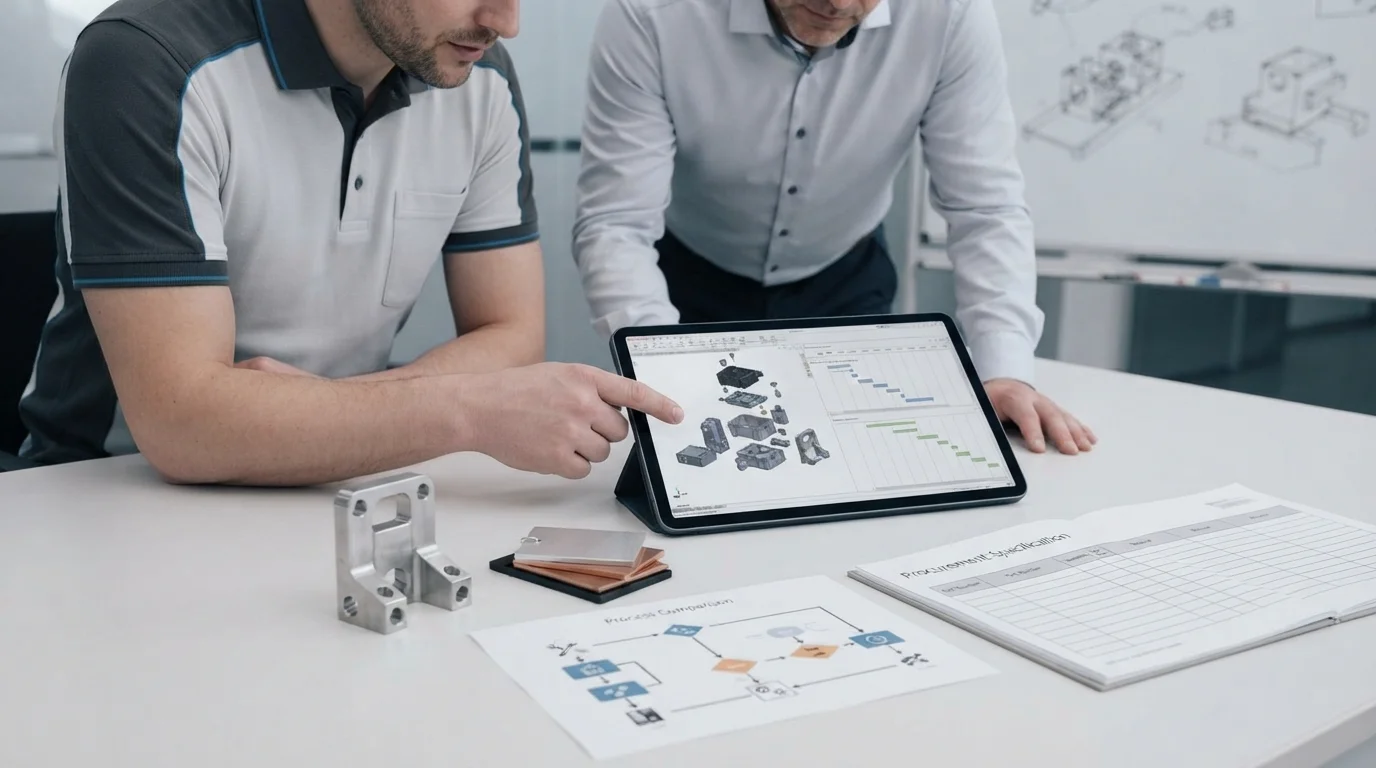
A low-volume RFQ should describe both the technical part and the commercial purpose of the run. This enables a supplier to recommend a process and identify cost or schedule risks before production begins.
| RFQ item | Information to provide |
|---|---|
| Product stage | Prototype, pilot, launch batch, bridge production, replacement inventory, or limited release |
| Design files | CAD, drawings, assembly files, revision, reference photos, and known open items |
| Quantity | Initial quantity, iteration count, expected reorder, forecast, and product variants |
| Material and finish | Required grade or performance target, color, texture, coating, and approved alternatives |
| Qualità | Critical dimensions, functional tests, cosmetic standard, inspection evidence, and reference sample |
| Assemblaggio | Hardware, inserts, adhesives, electronics, subassemblies, packaging, and supplied components |
| Schedule | Design freeze, first sample, feedback, batch delivery, and next-stage decision |
| Commercial context | Target use, budget assumptions, shipping destination, ownership, and change-control expectations |
Frequently asked questions
What is the difference between low volume manufacturing and prototyping?
Prototyping usually focuses on learning about the design, while low volume manufacturing produces a controlled quantity for a broader operational or market purpose. The boundary is not defined by one universal number; it is defined by the role of the parts, the process, the quality system, and the intended use.
Should low-volume parts use the final production process?
Use the final process when the run must validate production-specific behavior or when the design and demand justify its investment. When flexibility is more important, a different process may be appropriate, provided the team understands which properties and risks will not transfer directly.
How can a company avoid overproducing a low-volume batch?
Freeze only the requirements that are ready, define the learning objective, select a quantity tied to that objective, and establish a feedback gate before the next run. A smaller, well-inspected batch can be more informative than a large quantity built before the design and acceptance standard are stable.
Consumer product low volume manufacturing is a bridge between engineering uncertainty and commercial commitment. A strong plan connects process choice, material, tooling, quality, quantity, and feedback. When each batch has a defined purpose and a clear next-stage decision, product teams can respond to demand without losing control of design changes or manufacturing risk.

