


Imagine a complaint arrives with one device identifier and no intact packaging. Can the team determine the material lots, drawing revision, operators, machines, special processes, inspection results, software or label version, assembly batch, and neighboring units that may share the risk? Medical device traceability requirements become real when a company must reconstruct history quickly and accurately.
Traceability is not one serial number printed at the end of production. It is a chain of linked identities and evidence that survives splits, merges, rework, outsourcing, and relabeling.
Contents
Start With the Recall Question
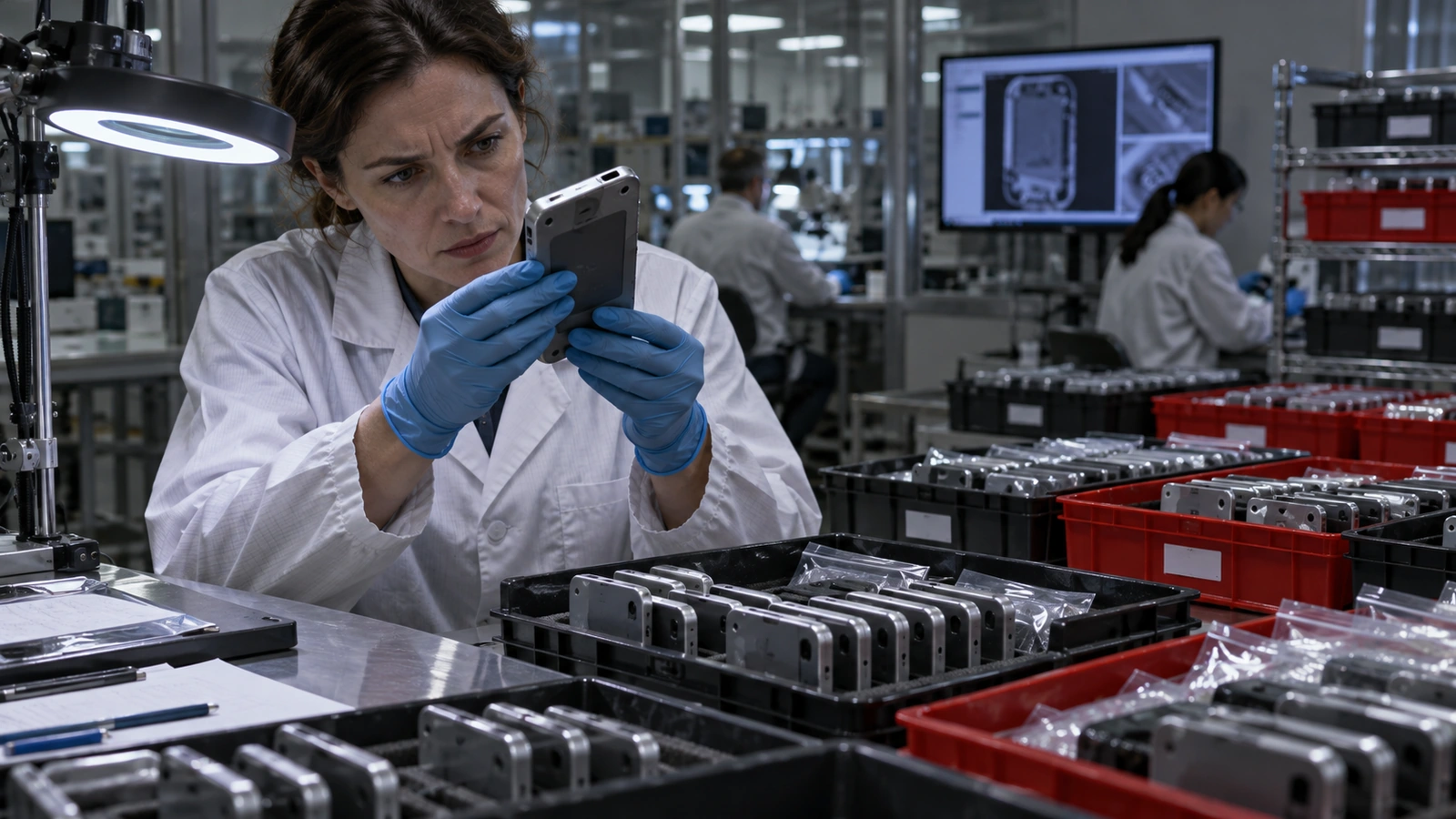
Traceability depth should follow product and process risk. Ask what units would need containment if a resin lot, coating batch, CNC program, mold cavity, sterilization load, adhesive expiration, inspection method, or label file were found defective. The answer defines which identifiers must be linked and at what granularity.
The wider framework of medical device manufacturing standards provides the parent context for record control, identification, supplier controls, nonconformance, validation, and corrective action. Traceability connects those controls to actual product.
Practical target: retrieve a defined device history and its potentially affected population within a measured time, using records that another trained person can interpret.
Build the Identity Chain

| Layer | Example identity | Must connect to |
|---|---|---|
| Incoming | Heat, resin lot, supplier batch | Supplier, certificate, receipt, acceptance status |
| Work in process | Traveler, job, cavity, machine batch | Revision, equipment, operator, parameters, inspections |
| Assemblaggio | Assembly lot or serial | Component lots, software, fasteners, adhesives, tests |
| Finished device | Serial, lot, UDI carrier | Release, label version, packaging, distribution |
| Postmarket | Shipment or complaint record | Customer, service, return, investigation, action |
Choose identifiers that remain unique, readable, and protected from accidental reuse. Define who creates each number, where it is applied, which system is authoritative, and how corrections occur. A spreadsheet can work at low volume only when access, version, validation needs, backup, and human-error risks are controlled.
Capture Transformation Events, Not Only Locations
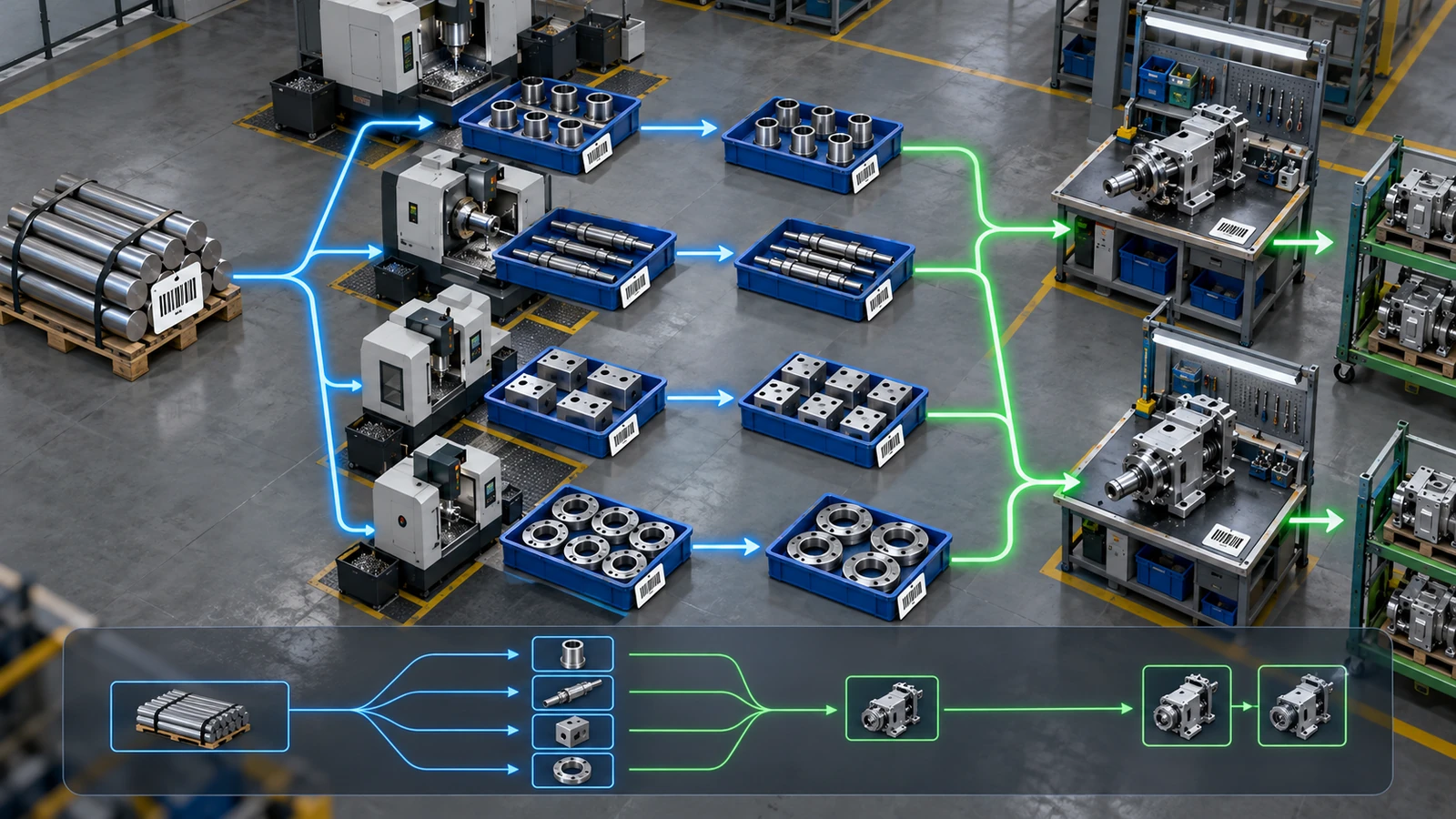
Traceability must record when product identity changes. One material lot may split across several jobs. Multiple components may merge into one assembly. Parts can leave for coating and return in a new supplier batch. Rework can create a second route. Sterilization and packaging may regroup devices into different loads or cartons.
- Receive: assign status without losing supplier identity.
- Issue: record which quantity and lot enter each work order.
- Transform: link operation, equipment, revision, operator, and result.
- Split or merge: preserve parent-child relationships.
- Inspect: connect results to the exact population sampled.
- Release: verify reconciliation and unresolved exceptions.
- Ship: link finished identity to destination and date.
A route based on medical device manufacturing process flow helps expose each point where identity can be lost, duplicated, or disconnected from evidence.
Connect Physical Marking and Digital Records
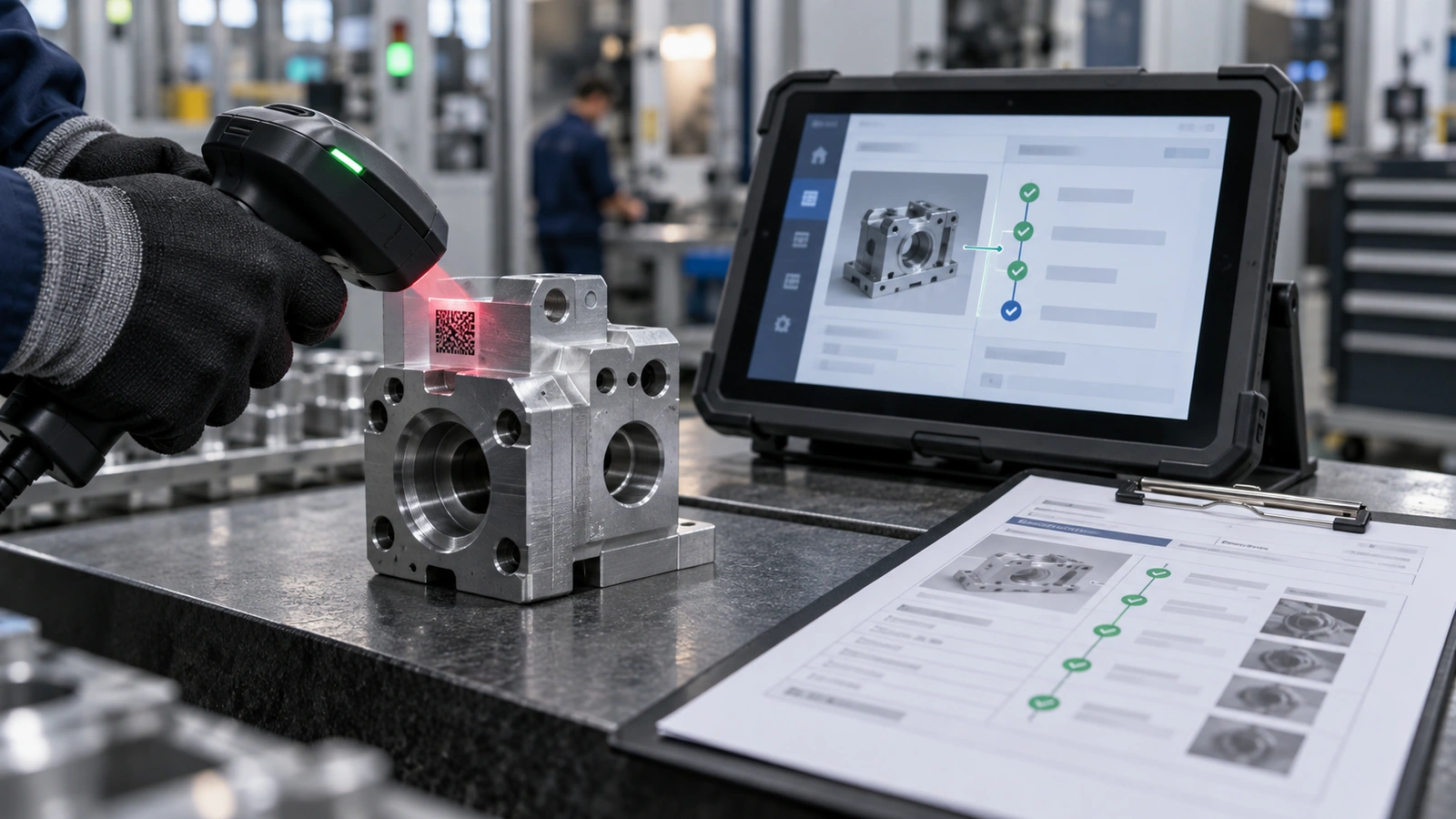
The physical identifier may be laser marked, molded, printed, etched, labeled, or carried by packaging. Select a method according to material, available area, readability, cleaning, sterilization, wear, contrast, and risk of damaging the component. Verify content and grade before release rather than merely confirming that a mark exists.
UDI obligations depend on device and market. The FDA’s UDI overview explains the US system at a high level. A UDI carrier is not the entire traceability system; internal lot, serial, material, process, and distribution records must still connect reliably.
Prevent label and data mismatches
- Control approved artwork and data source
- Verify line clearance before a new batch
- Challenge scanners and human-readable content
- Reconcile issued, used, damaged, and destroyed labels
- Restrict manual overrides and record corrections
- Preserve the link between label version and device history
Design the System for Exceptions
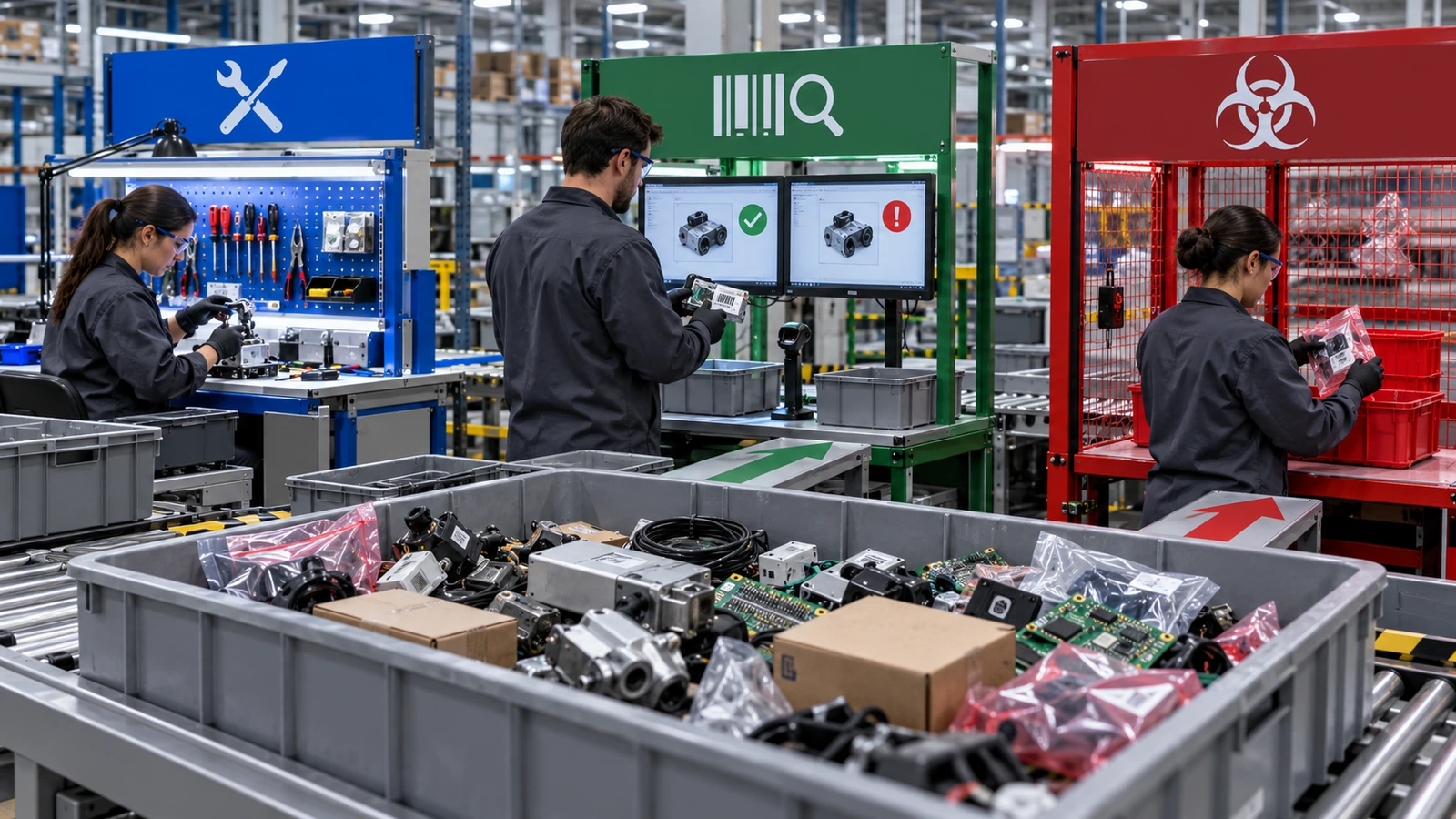
Normal flow is easy. The traceability system proves its value when material is partly consumed, a traveler is damaged, a serial is duplicated, a component is substituted, parts are reworked, an inspection sample is destroyed, or a supplier returns mixed lots.
Create explicit rules for quarantine, discrepancy investigation, re-identification, rework, scrap, and use-as-is disposition. Preserve the original identity and the authorization trail. Never solve a mismatch by quietly editing history. Corrections should show who changed what, when, and why.
If the system only works when every transaction is perfect, it is a demonstration a production traceability system.
Extend Control Across Suppliers
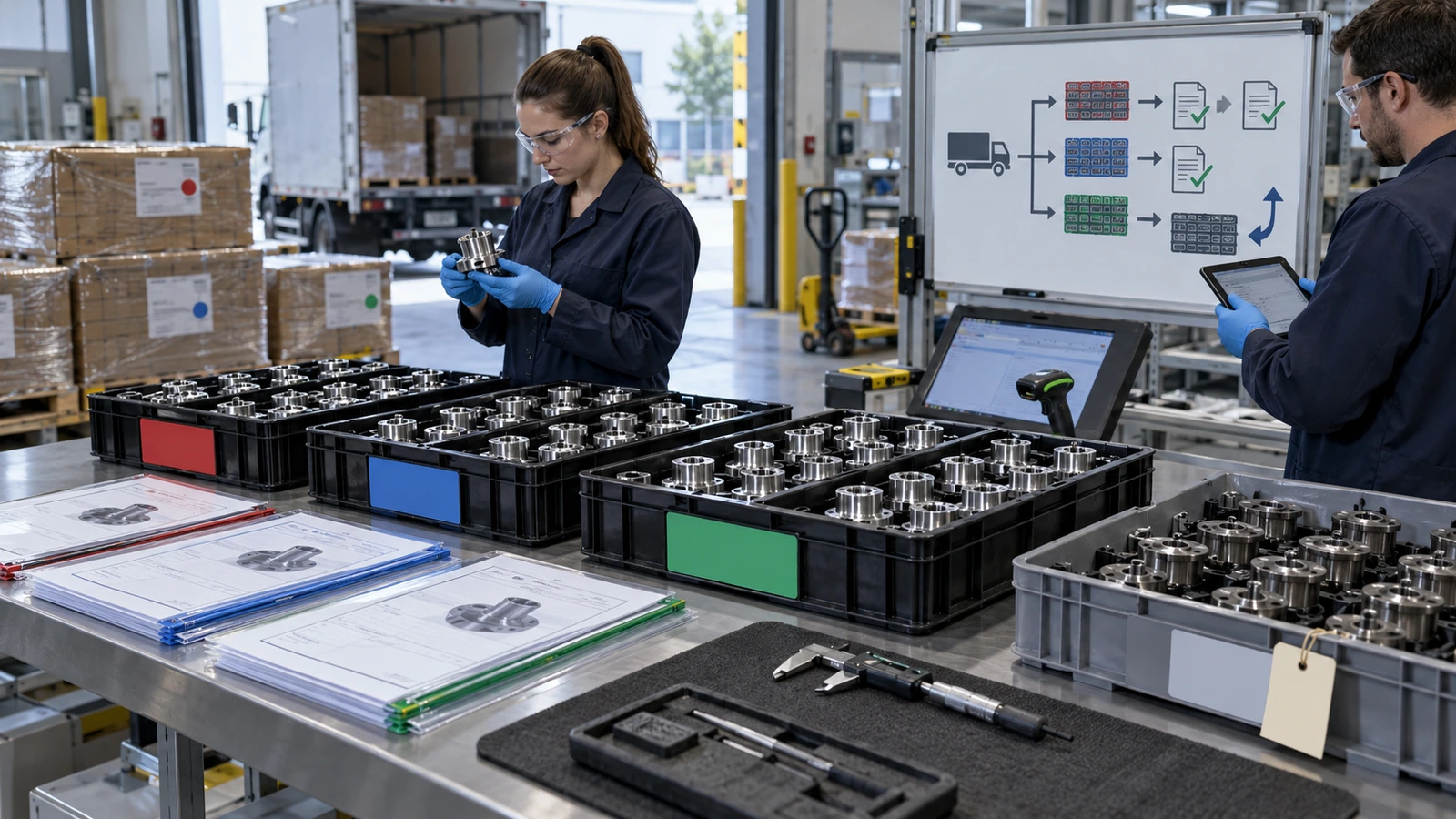
Purchase documents and quality agreements should define retained identity, lot segregation, sub-tier control, certificates, process records, change notification, nonconformance communication, and record retention. Decide whether the supplier’s lot can combine multiple upstream lots and whether that aggregation creates unacceptable containment.
For outsourced finishing, heat treatment, molding, machining, cleaning, or testing, reconcile quantities at shipment and return. Confirm that returned labels and certificates refer to the same physical population. Audits should follow a sample identifier backward and forward rather than only reviewing procedures.
Test the System Before a Complaint

Run periodic mock trace exercises. Select a finished serial and trace backward to materials, components, processes, inspections, labels, and release. Then select an incoming lot or process event and trace forward to every affected finished device and shipment.
Measure completeness, accuracy, retrieval time, ambiguous records, and over-containment. Challenge weekends, archived data, personnel absence, supplier records, and electronic-system downtime. Convert gaps into corrective actions, training, or system changes and repeat the exercise.
Traceable Production With Jucheng
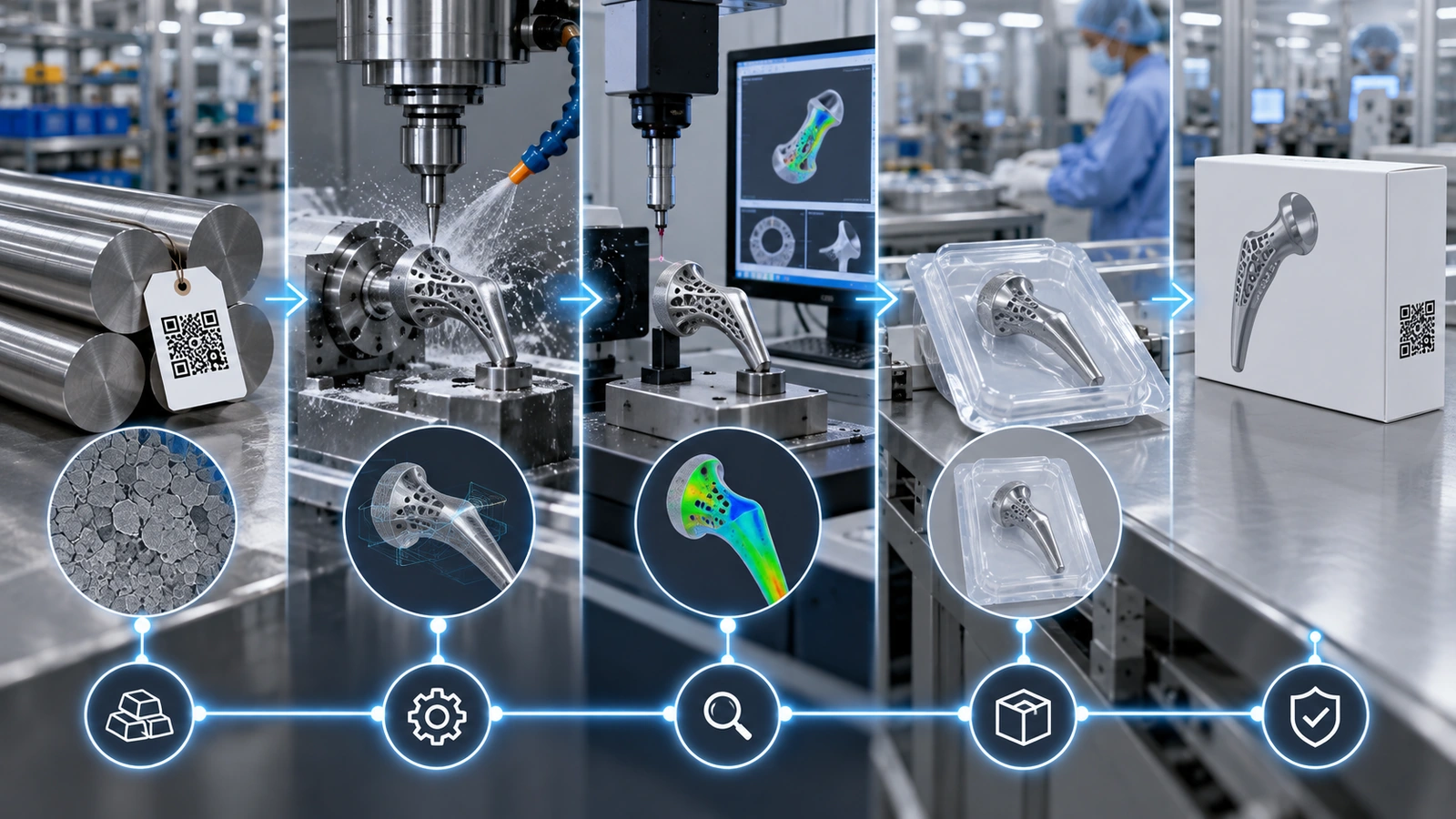
Jucheng Precision supports CNC machining, molding, sheet metal, additive manufacturing, tooling, surface finishing, inspection, and assembly for medical-device development and production. Project traceability can connect specified material, job, drawing revision, process route, inspection evidence, finishing, and shipment according to agreed requirements.
Provide the required trace unit, customer identifiers, marking method, certificate format, retention expectations, supplier controls, and change-notification rules before quoting. Traceability is most reliable when it is designed into the route rather than requested after parts are complete.
Medical Device Traceability FAQ

Are lot numbers and serial numbers interchangeable?
No. A lot identifies a defined population, while a serial identifies one unit. The appropriate level depends on risk, regulation, process, service needs, and containment strategy.
Does UDI replace internal manufacturing records?
No. UDI supports device identification and data systems, while internal records link product to materials, revisions, processes, inspections, release, and distribution.
How long should traceability records be retained?
Retention depends on applicable regulation, market, device life, company procedure, and contract. Define it explicitly and ensure electronic formats remain readable and retrievable.
Should every component carry a permanent mark?
Not necessarily. Small or sensitive components may be controlled by container, traveler, fixture position, or assembly record until their identity merges into a higher-level unit.
What is the fastest way to test traceability?
Run both backward and forward mock traces using actual released product and an incoming lot. Time the exercise and document missing, inconsistent, or overly broad results.
Make Every Identity Lead to Evidence

Medical device traceability requirements are met through linked events, controlled identifiers, exception handling, supplier records, and tested retrieval. A readable mark starts the search; the evidence chain makes the answer defensible.
Discuss your component files and traceability needs with Jucheng before the manufacturing route is released.

