


A supplier may describe a resin or alloy as biocompatible, but that label does not approve a finished device. Biological safety depends on the exact material, additives, colorants, manufacturing route, residues, surface condition, sterilization, packaging, contact type, and duration of exposure. Biocompatible materials for medical devices must therefore be selected as part of a risk-based device system.
This guide connects material selection with manufacturing reality. It is not a substitute for biological evaluation or regulatory advice; it shows product teams what evidence and process questions should be resolved before a material is frozen.
Contents
Interrogate the Word Biocompatible
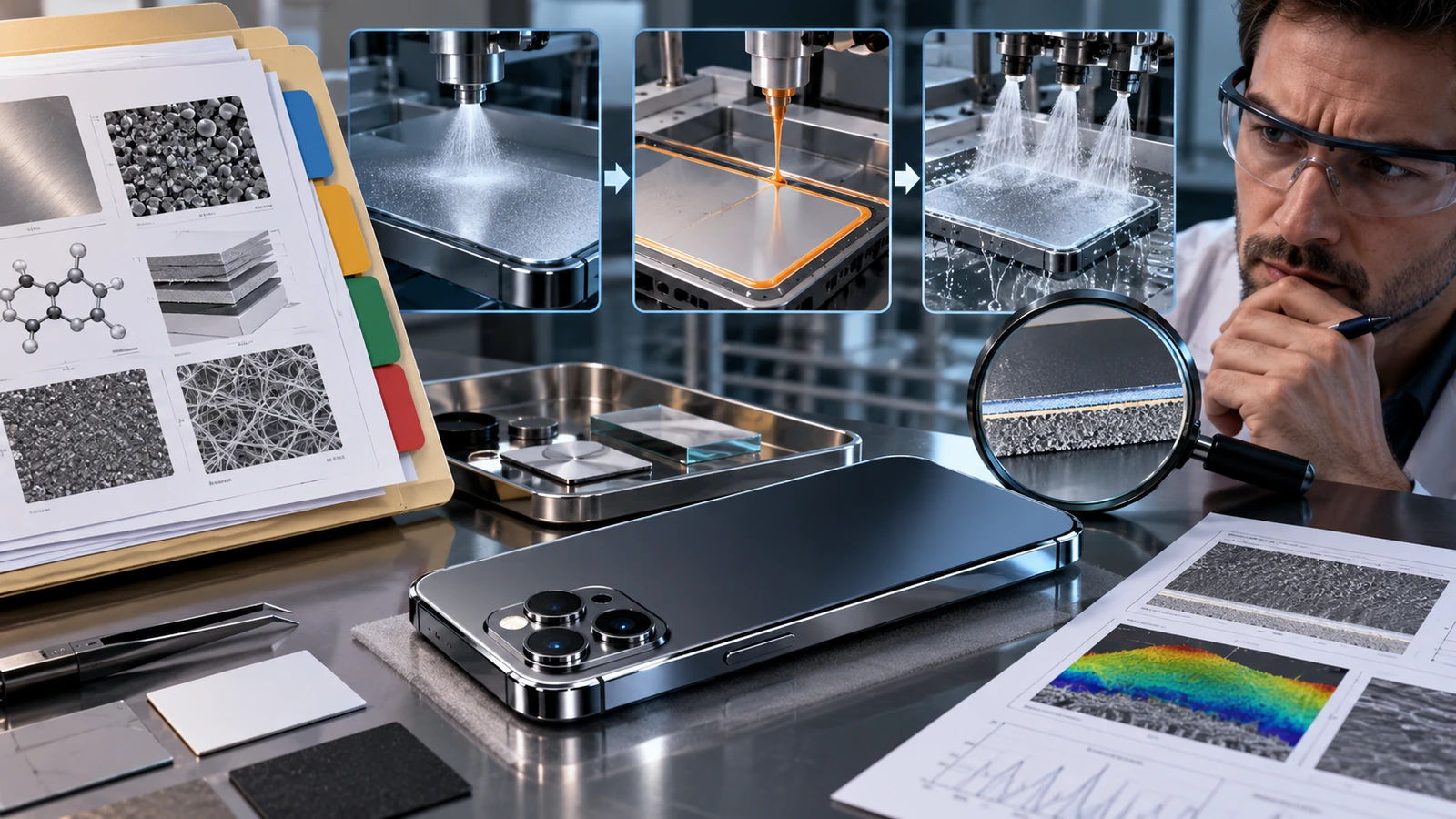
Biocompatibility is not an intrinsic yes-or-no property that transfers unchanged from a raw-material datasheet to every design. A published test may cover one grade, specimen preparation, extraction condition, endpoint, and supplier formulation. The production device may add pigments, machining fluids, mold-release residues, adhesives, coatings, weld debris, cleaning chemistry, or degradation products.
Ask what was tested, by whom, to which standard, on what formulation, after which processing, and whether the evidence represents the final device. The parent overview of medical device materials explains the wider mechanical, thermal, chemical, and manufacturing tradeoffs. Biological safety is one essential layer of that decision.
A material certificate can support a biological evaluation; it cannot replace evaluation of the finished device and its intended contact.
Map the Actual Contact Before Comparing Materials
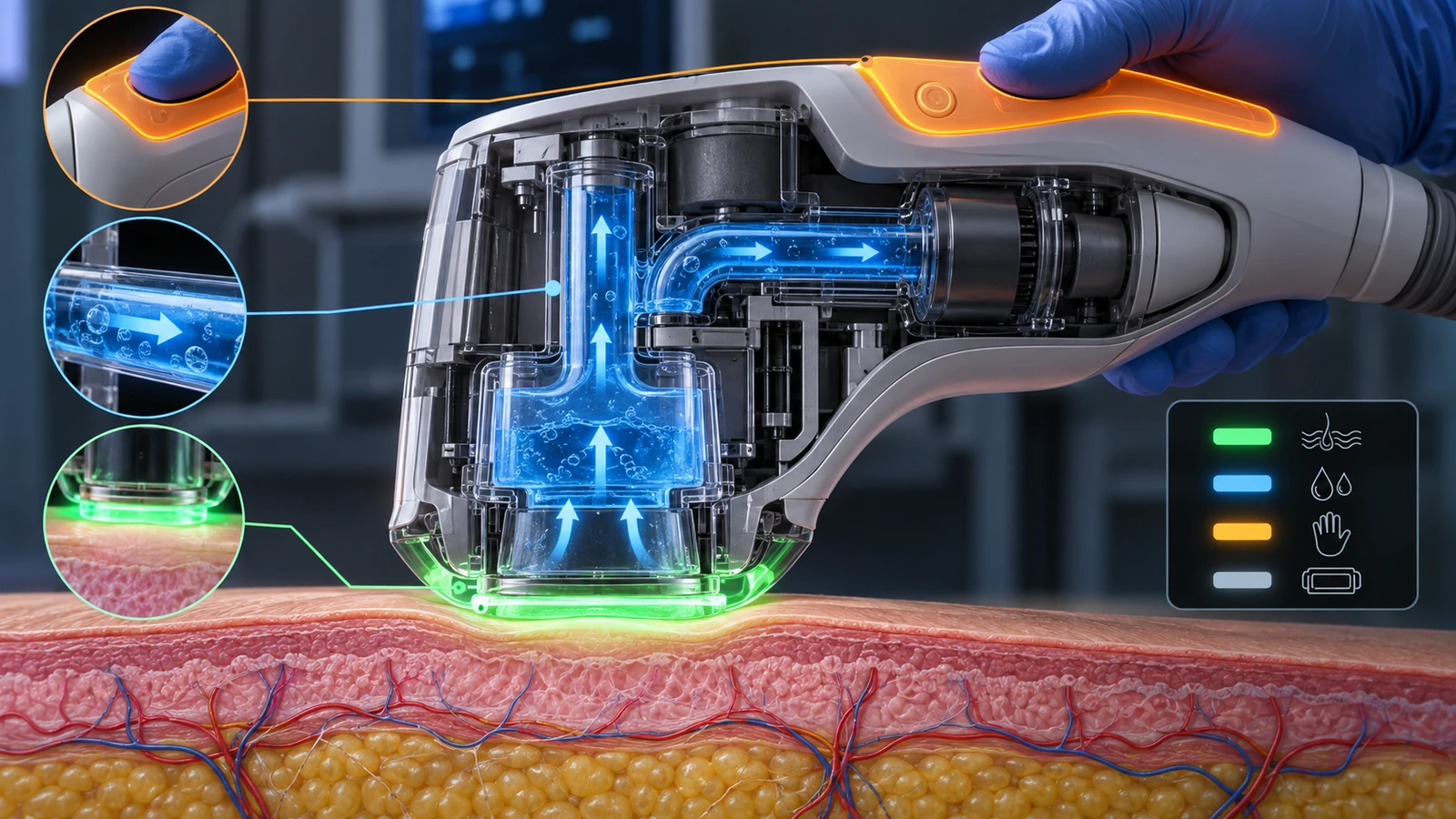
Describe the device contact precisely: intact skin, breached surface, tissue, circulating blood, fluid path, indirect contact, or no patient contact. Record whether exposure is transient, short-term, long-term, repeated, or cumulative. Include the user, operator, and cleaning personnel where relevant.
Then map every material and process chemical that can reach that contact path. A housing may seem non-contacting until a vent, fluid leak, condensate path, or user handling connects its surface to the patient environment. An internal adhesive may create extractables that migrate through a fluid path. Risk follows exposure, not the purchasing category assigned to the component.
A useful contact map records
- Contacting component, surface area, and material grade
- Contact route, duration, frequency, and temperature
- Cleaning, disinfection, and sterilization exposure
- Wear, abrasion, particles, leachables, and degradation
- Packaging contact and shelf-life conditions
- Worst-credible manufacturing residues
Build a Candidate-Material Matrix
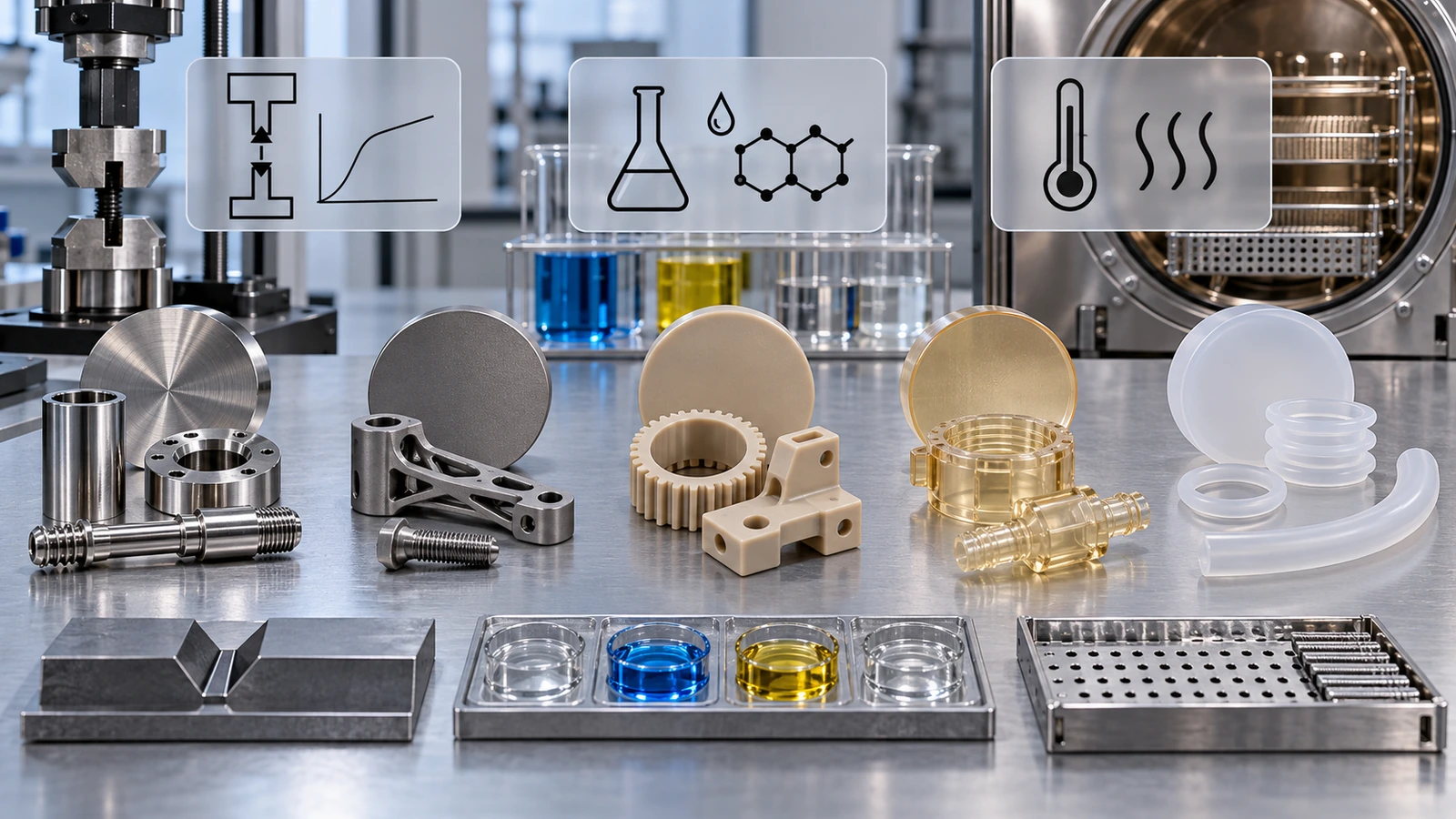
| Material family | Why teams consider it | Questions before selection |
|---|---|---|
| Stainless steels | Strength, corrosion behavior, cleaning, machinability | Exact grade, inclusions, passivation, weld state, finish, fretting |
| Titanium alloys | Low density, corrosion behavior, selected implant history | Wear, galling, debris, surface treatment, oxygen-rich layer |
| High-performance polymers | Low weight, insulation, radiolucency, molding freedom | Exact formulation, moisture, sterilization, creep, additives |
| Silicones and elastomers | Flexibility, sealing, soft contact | Cure chemistry, extractables, compression set, particulates |
| Coatings and adhesives | Barrier, lubrication, bonding, drug or surface function | Coverage, cure, degradation, bond failure, process residue |
Use the matrix to eliminate candidates that cannot meet mechanical or processing needs before investing in deeper evidence. Conversely, do not accept a mechanically convenient material when its formulation control, contact history, or sterilization response is poorly understood.
Manufacturing Changes the Exposure
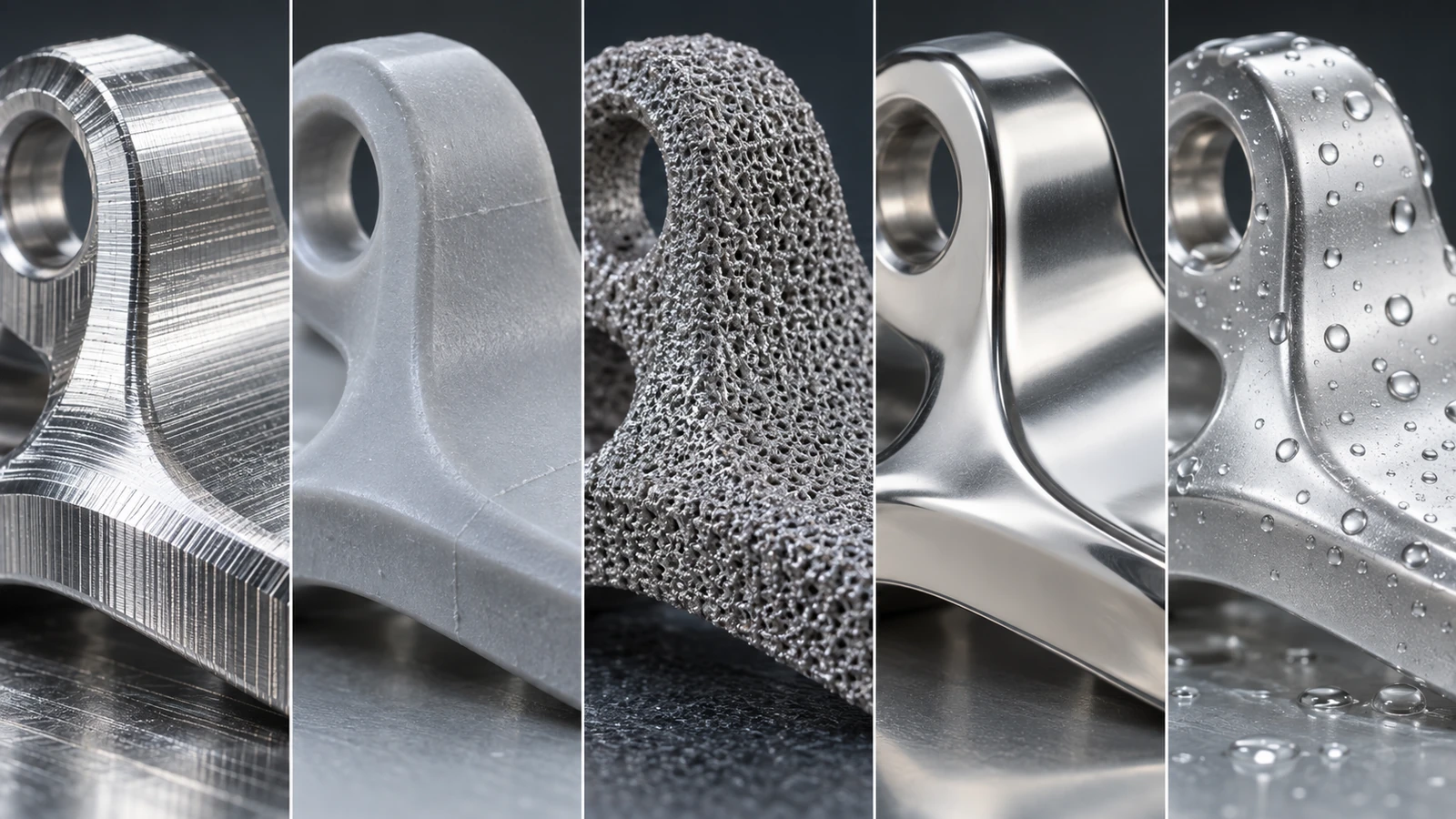
Machining can leave cutting-fluid residue or embedded media. Molding can create thermal degradation, weld lines, molded stress, or contamination from purging and prior resin. Additive manufacturing can leave powder, support residue, internal porosity, or difficult-to-clean passages. Welding and laser marking create heat-affected or chemically altered surfaces. Polishing, blasting, passivation, coating, and cleaning change topography and chemistry.
Document the complete route, including temporary materials. Define approved coolants, release agents, abrasives, cleaners, gloves, packaging, and rework. Control supplier changes to resin formulation, pigment, raw-material source, tool lubricant, and cleaning chemistry. A material is only as consistent as the process state that reaches the patient.
For precision metal or polymer components, La lavorazione CNC may be useful for development and controlled low-volume production, but representative finishing and cleaning must still be included in evaluation.
Sterilization Is a Material Event
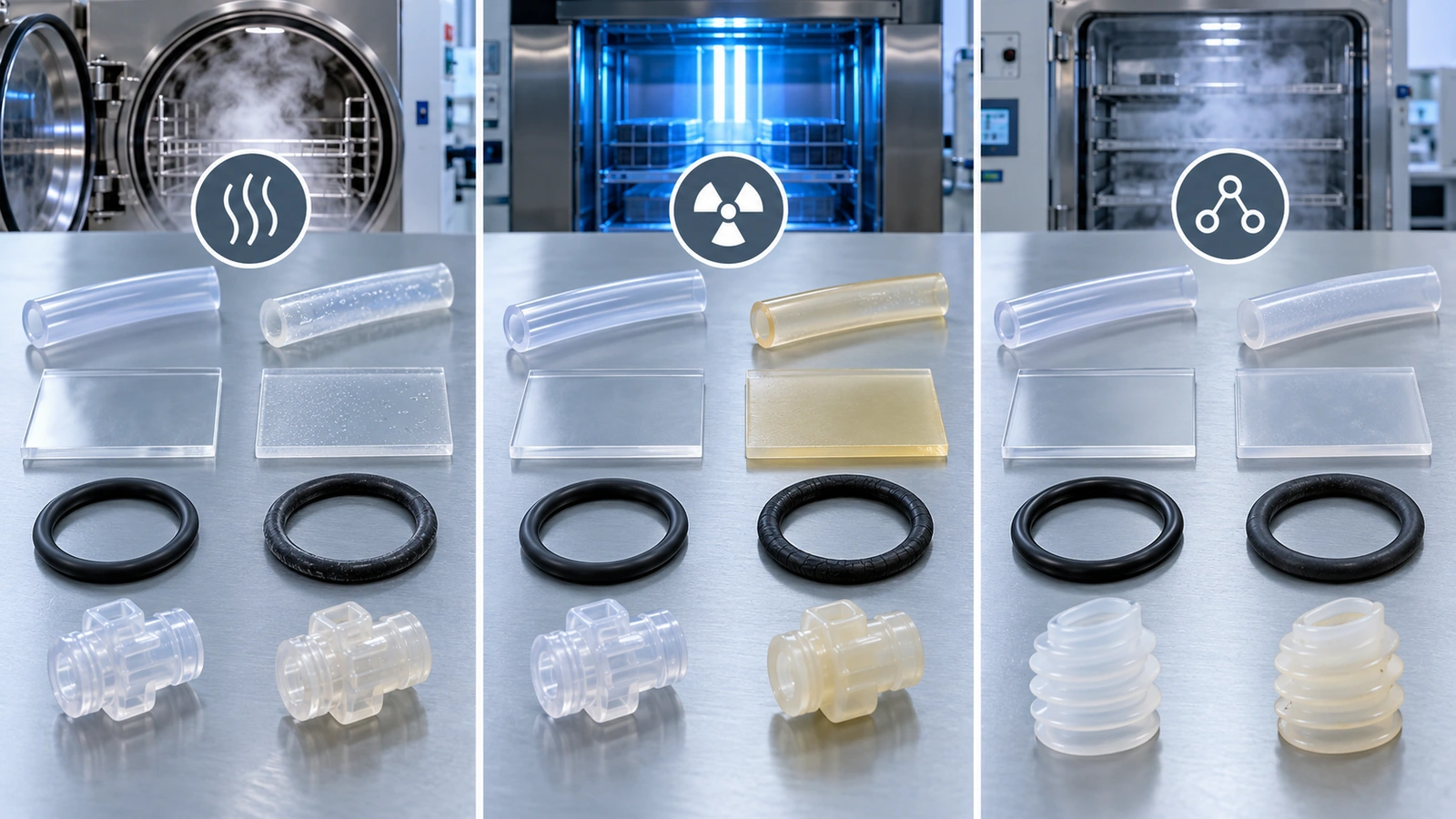
Steam, radiation, ethylene oxide, electron beam, low-temperature systems, and repeated disinfection can change molecular weight, color, brittleness, crystallinity, residuals, dimensions, surface energy, coatings, and bond strength. A device may pass immediately after sterilization yet drift during aging or repeated cycles.
Evaluate the production material, maximum intended dose or cycles, packaging configuration, and shelf-life condition. Include functional tests, appearance, dimensions, seal performance, and chemical or biological evidence appropriate to risk. If sterilization is not yet selected, avoid freezing a polymer merely because it machines or molds easily.
Create an Evidence Chain, Not a Folder of Certificates
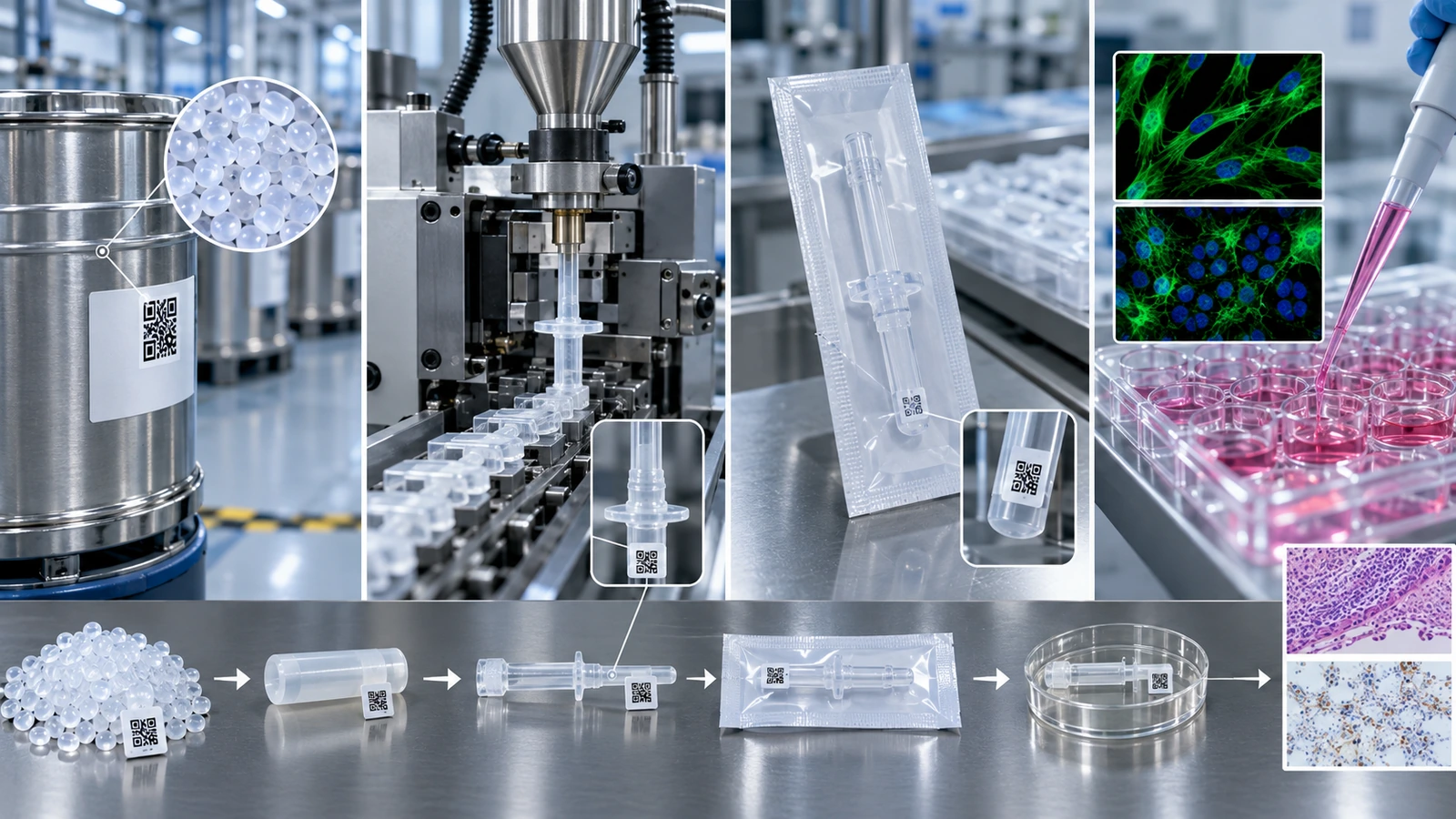
- Define exposure: intended use, contact route, duration, and patient population.
- Identify hazards: chemistry, particles, degradation, residues, and interactions.
- Characterize materials: exact grade, formulation, color, supplier, and processing aids.
- Use existing evidence: assess relevance and gaps rather than assuming equivalence.
- Plan testing: use representative finished devices and justified conditions.
- Control production: maintain traceability and assess changes against the evaluation.
The FDA describes biological evaluation as part of a risk-management process for devices with direct or indirect body contact. Its ISO 10993-1 guidance is a useful regulatory reference; teams should confirm current requirements for their device and market.
Prototype Without Creating False Confidence
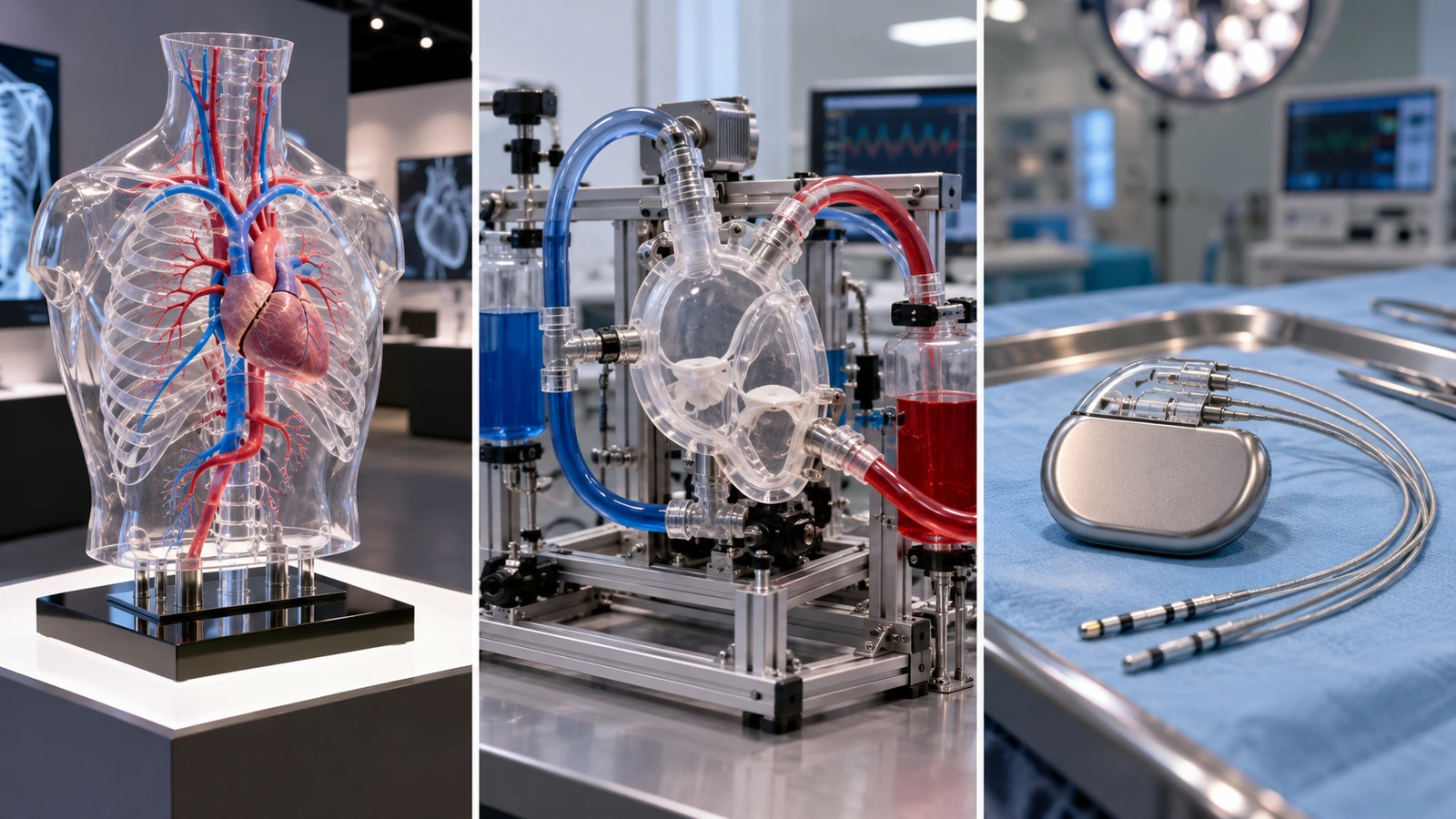
Prototype material may differ from production because of availability, machining behavior, printing technology, or tooling stage. That is acceptable when the purpose is explicit. A form-and-fit model can use a substitute. A functional fluid-path test, sterilization study, chemical characterization, or biological evaluation may require production-equivalent material and processing.
Label prototypes by evidence level: visual surrogate, mechanical analog, exact grade, production-equivalent process, or validation unit. This prevents an attractive prototype from being mistaken for proof of final-device safety.
How Jucheng Supports Material Development
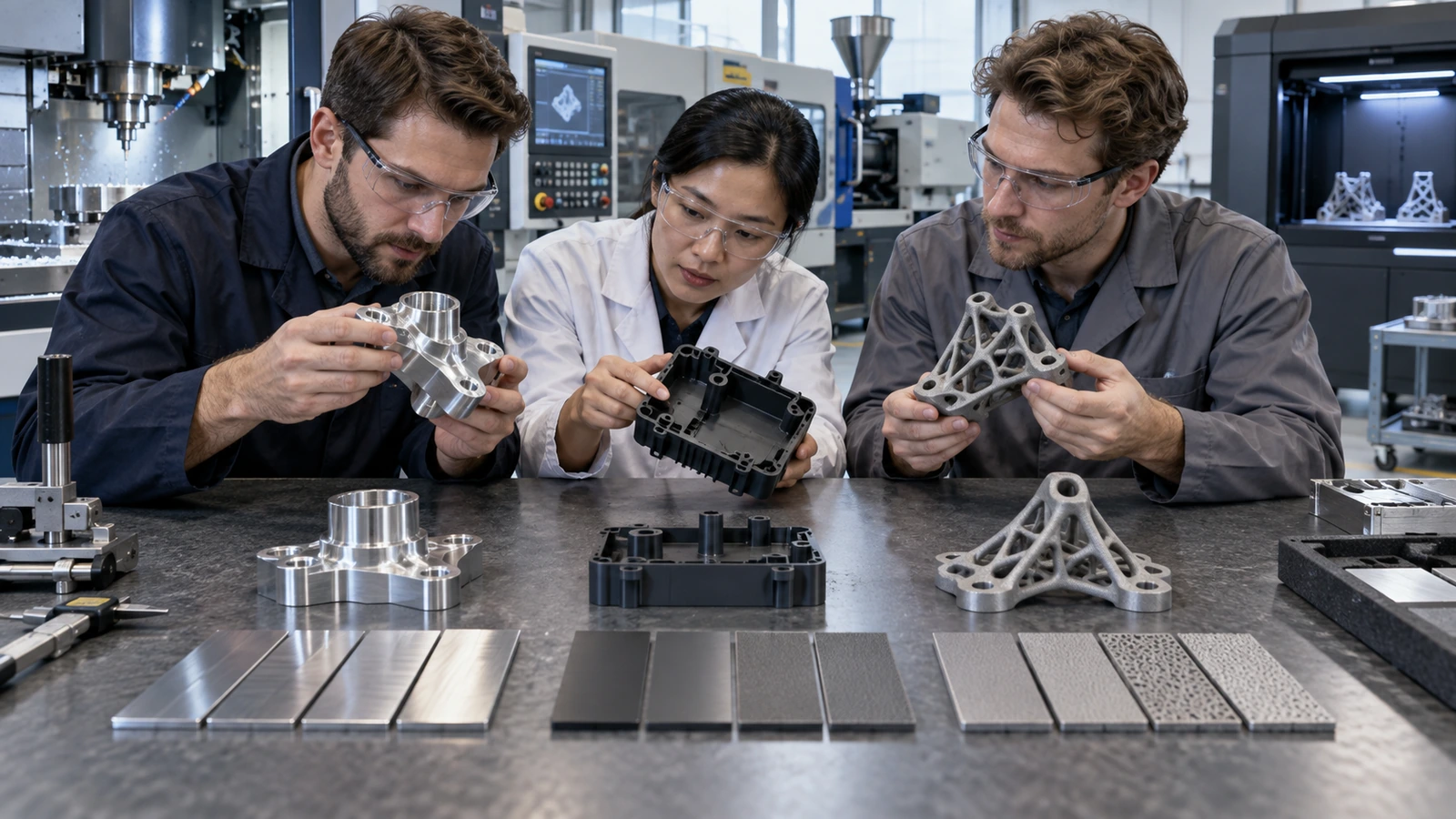
Jucheng Precision supports medical-device components through CNC machining, injection molding, additive manufacturing, sheet-metal fabrication, tooling, surface finishing, inspection, and assembly. We can review geometry, material availability, process sequence, cleaning access, critical surfaces, tolerances, and documentation needs before production.
Provide the exact material specification, intended contact, finish, sterilization method, critical dimensions, prototype purpose, annual volume, and required records. Biological-safety conclusions remain the device manufacturer’s responsibility, while disciplined manufacturing helps keep the evaluated configuration reproducible.
Biocompatible Material FAQ
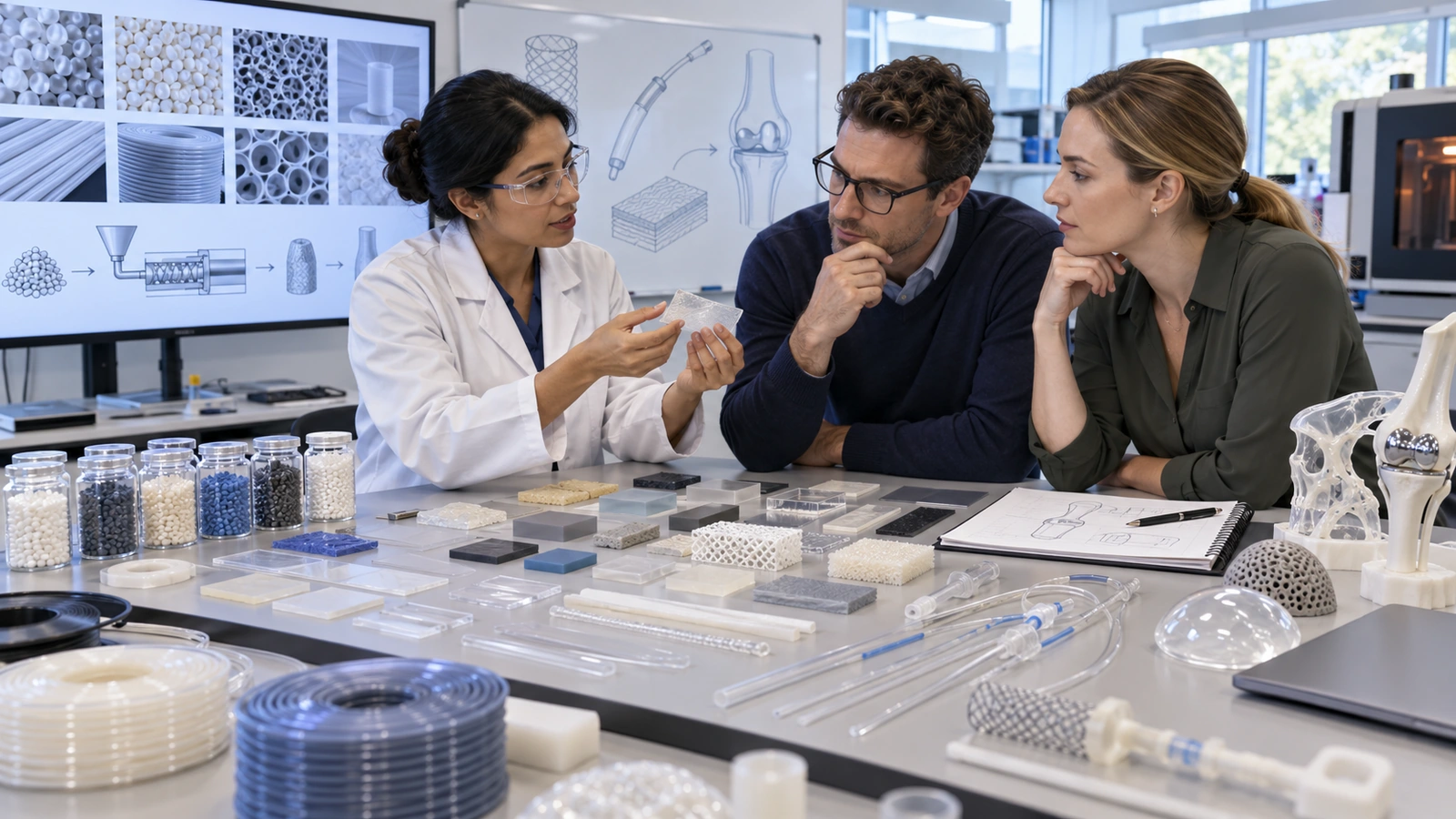
Does USP Class VI prove a finished device is biocompatible?
No single material test automatically establishes biological safety for every finished device. Evidence must be assessed against intended contact, duration, processing, sterilization, and device-specific risk.
Can a colorant change the evaluation?
Yes. Pigments, carriers, stabilizers, and other formulation differences can change chemical composition and processing. Control the exact production formulation and assess whether existing evidence remains applicable.
Must prototypes use the final material?
It depends on the test purpose. Geometry studies may use a surrogate, while chemistry, sterilization, wear, or patient-contact evaluations often need production-equivalent material and processing.
Are metals automatically safer than polymers?
No. Metals can corrode, release ions, generate wear debris, retain residues, or change during welding and finishing. Risk depends on the complete material-process-contact system.
When should material evidence be revisited?
Reassess it after changes to grade, supplier, formulation, color, process, finishing, cleaning, sterilization, packaging, contact, duration, or intended use.
Select the Device Configuration, Not Just the Resin or Alloy
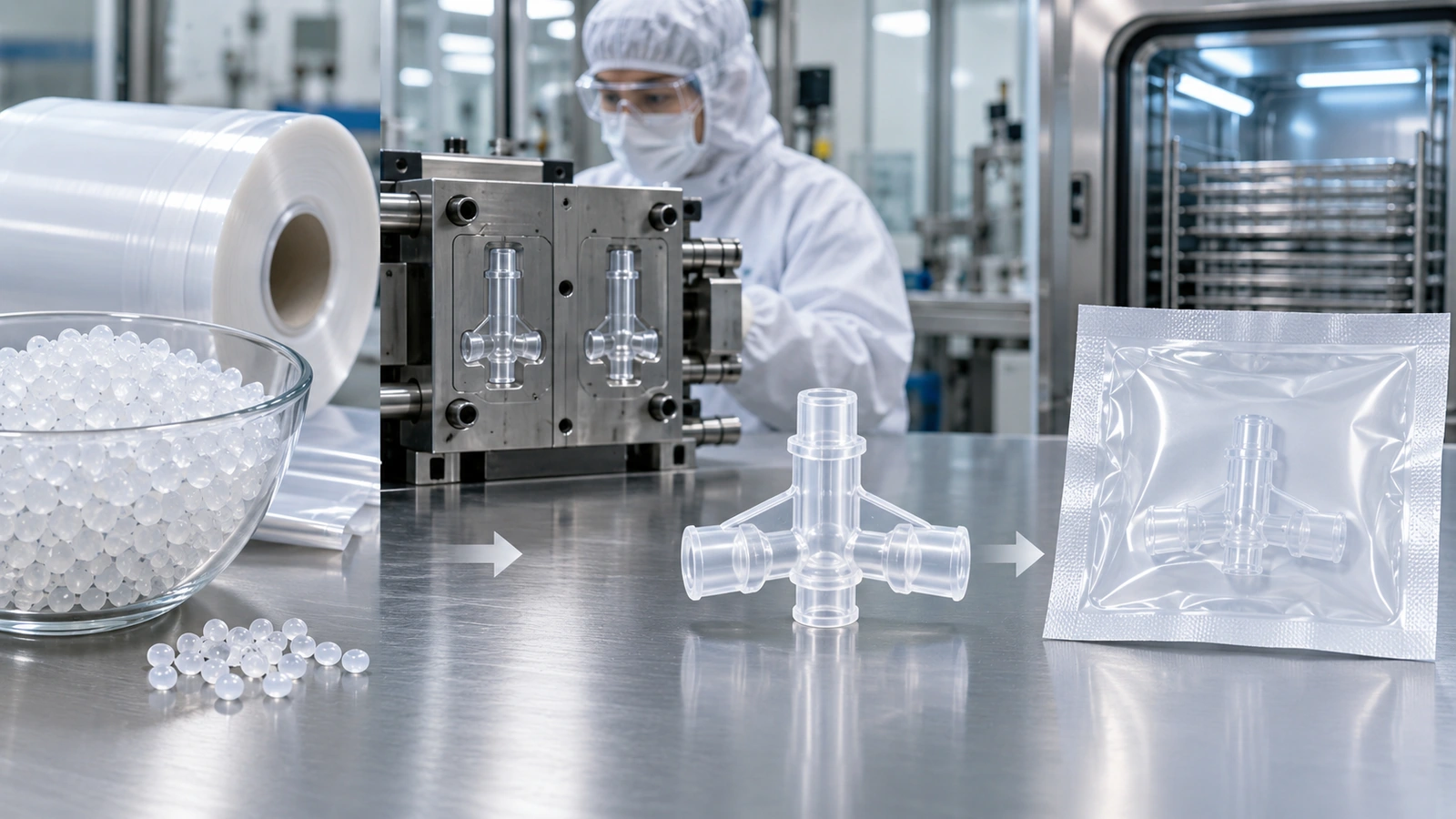
Biocompatible materials for medical devices are chosen through exposure mapping, engineering performance, representative processing, biological evidence, and change control. The strongest decision is one that remains defensible after the device is manufactured, sterilized, aged, and used.
Send Jucheng your device files and material requirements for a manufacturability and production-route review.

