


Graphite and metal bipolar plates reach the same destination by different engineering routes. Graphite offers useful corrosion behavior and can simplify some surface concerns, while thin metal plates support compact stacks and high-volume forming. Neither material is universally superior.
The correct choice depends on stack thickness, conductivity, corrosion environment, channel detail, sealing strategy, prototype quantity, target volume, tooling budget, and the team’s ability to control coatings and forming. This comparison keeps those trade-offs visible.
Graphite vs Metal Bipolar Plates at a Glance
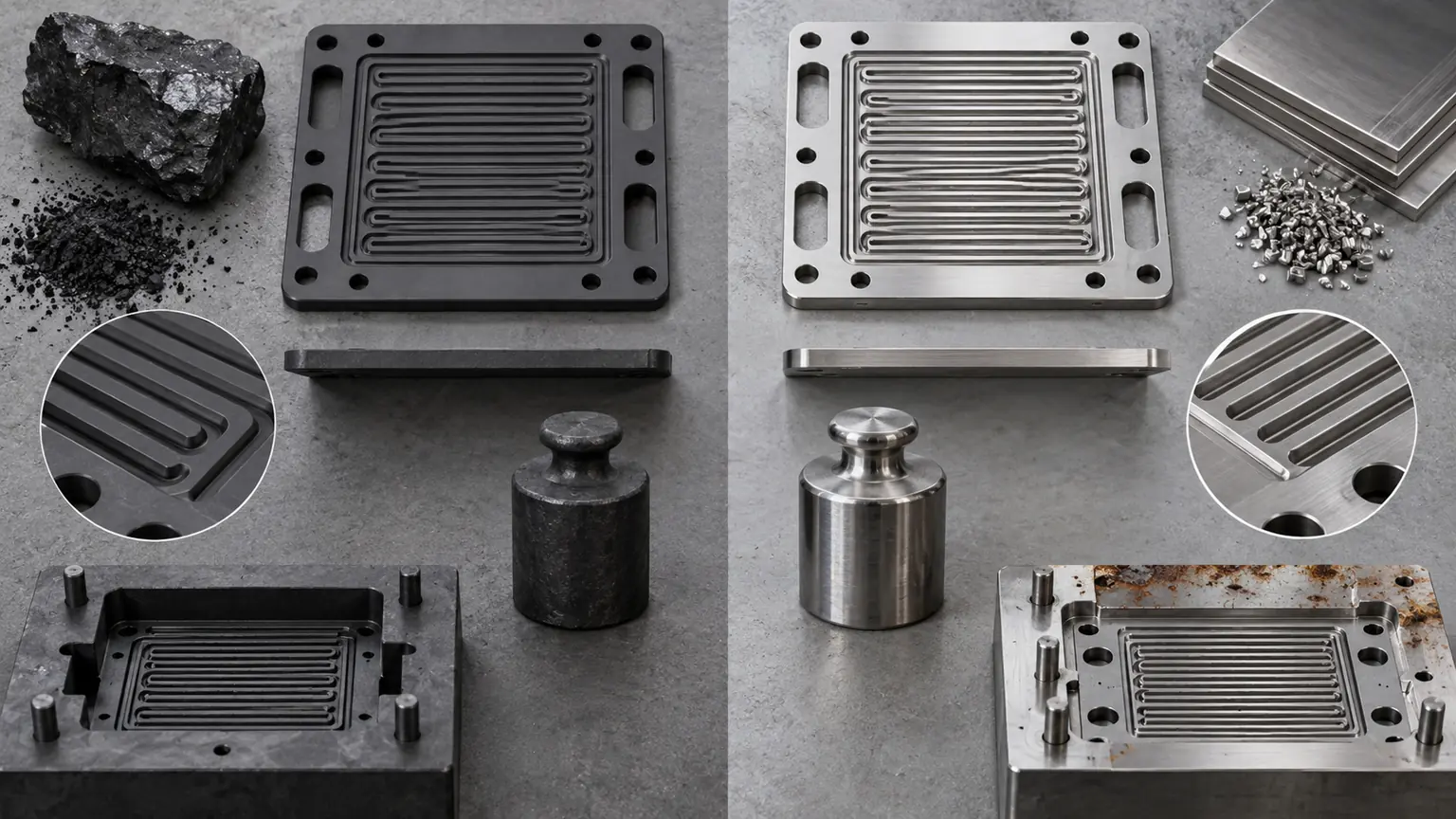
| Decision factor | Graphite and composites | Metal plates |
|---|---|---|
| Plate thickness | Usually thicker to protect brittle features | Can support very thin formed designs |
| Corrosion strategy | Often inherently favorable, grade dependent | Alloy and coating system are critical |
| Prototype flexibility | Channels can be CNC machined without forming dies | Machining is flexible; production forming needs development |
| Damage mode | Chipping, cracking, particle generation | Burrs, springback, wrinkles, distortion |
| High-volume route | Compression molding or other composite processing | Stamping, forming, joining, and coating |
| Stack compactness | Thickness can increase stack volume | Thin construction favors compact stacks |
This table describes tendencies, not guarantees. Specific grades, fillers, coatings, formed geometry, and operating conditions can reverse an apparent advantage.
Graphite Is Attractive When Chemical Stability Leads
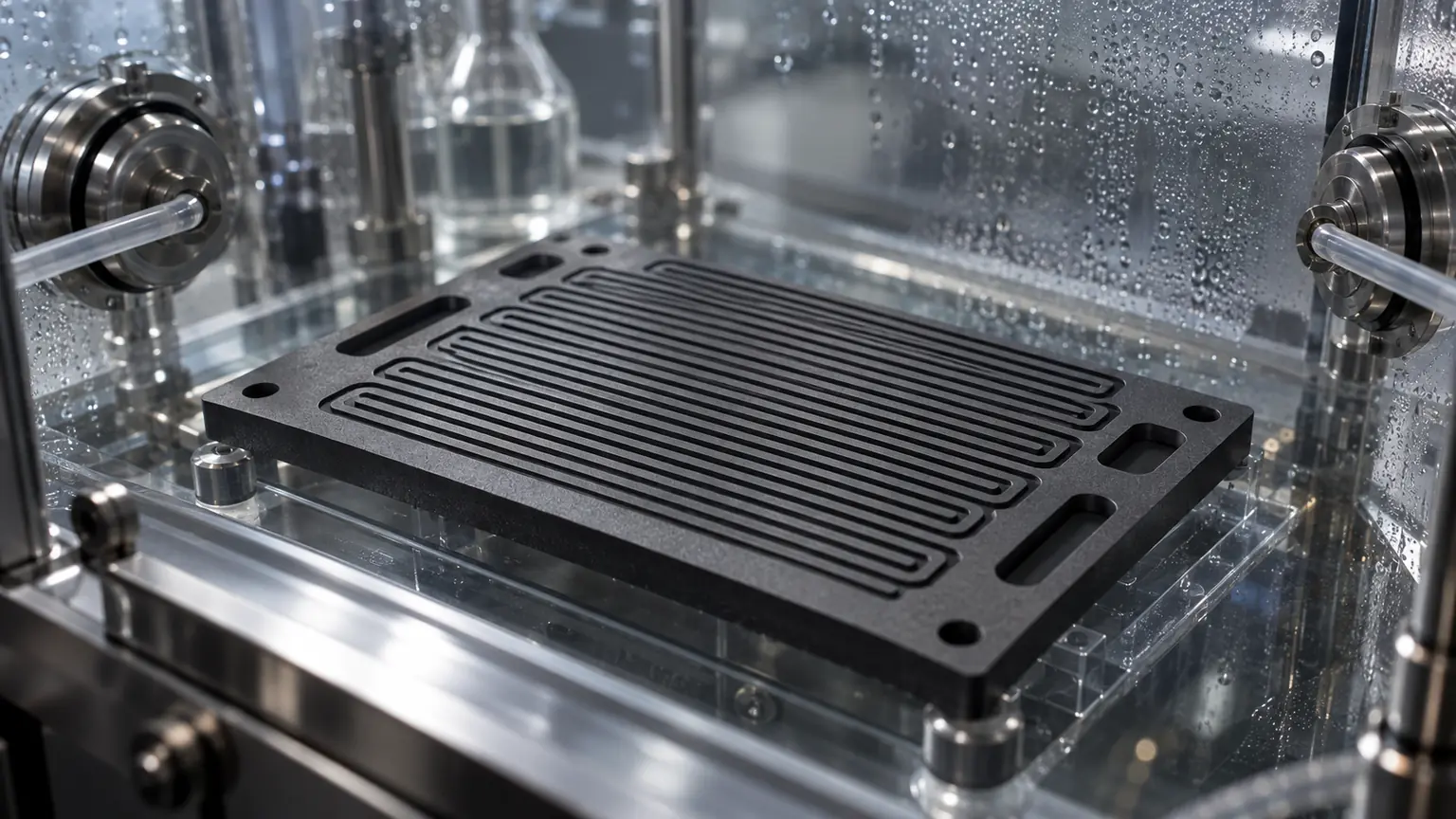
Graphite and graphite-based composites are electrically conductive and can perform well in corrosive fuel-cell environments. Machined graphite is useful during development because channels and manifold details can change directly in CAD and CAM without a dedicated stamping die.
The compromise is mechanical. Thin lands and edges may chip; plates need careful handling; dust extraction and cleaning become part of the process. Material porosity and resin content can influence sealing, permeability, conductivity, and machining response. A prototype should use a material representative of the intended function, not merely any machinable graphite.
Design habits that help graphite
- Avoid unnecessarily sharp internal transitions.
- Provide enough material around ports and alignment features.
- Control tool entry and exit near fragile edges.
- Define cleaning and protected packaging.
- Separate cosmetic marks from functional defects.
Metal Wins When Thinness and Scalable Forming Lead
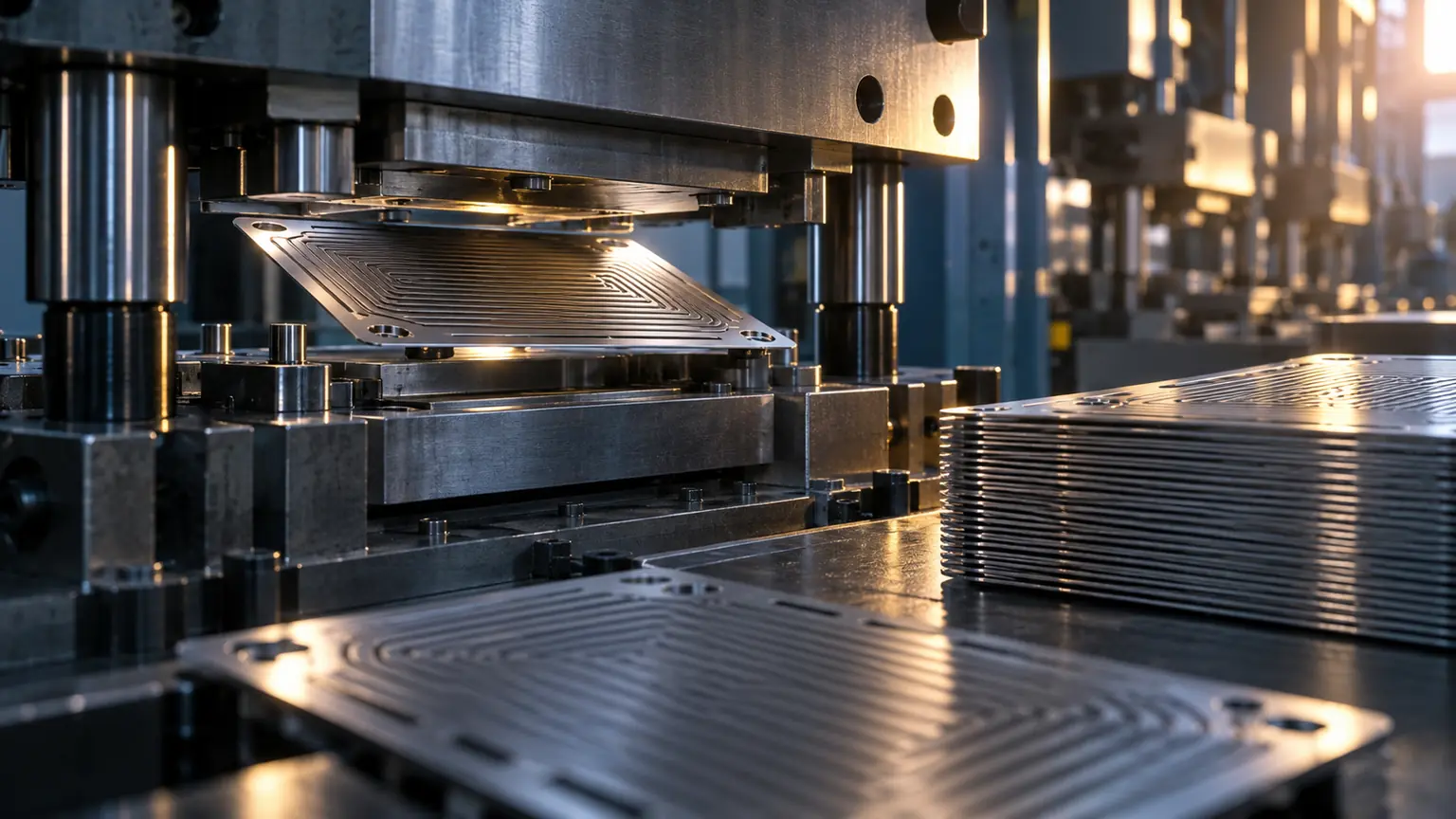
Stainless steel, titanium, and other metallic systems can produce thin plates that reduce stack length and weight. Metal also tolerates handling better than brittle graphite. At volume, forming can create channels quickly once the material, die, lubrication, springback, and joining process are stable.
Metal brings its own risks: corrosion, interfacial contact resistance, burrs, work hardening, residual stress, springback, and coating defects. Deep or narrow channels may thin, wrinkle, or split during forming. Joining two half-plates can distort the assembly or create a leak path.
Coatings are often functional rather than cosmetic. Their adhesion, thickness, coverage, electrical behavior, and corrosion performance must survive forming and handling. Coordinate the base alloy and surface finishing process from the beginning instead of specifying a coating after plate geometry is frozen.
The Economical Answer Changes With Volume
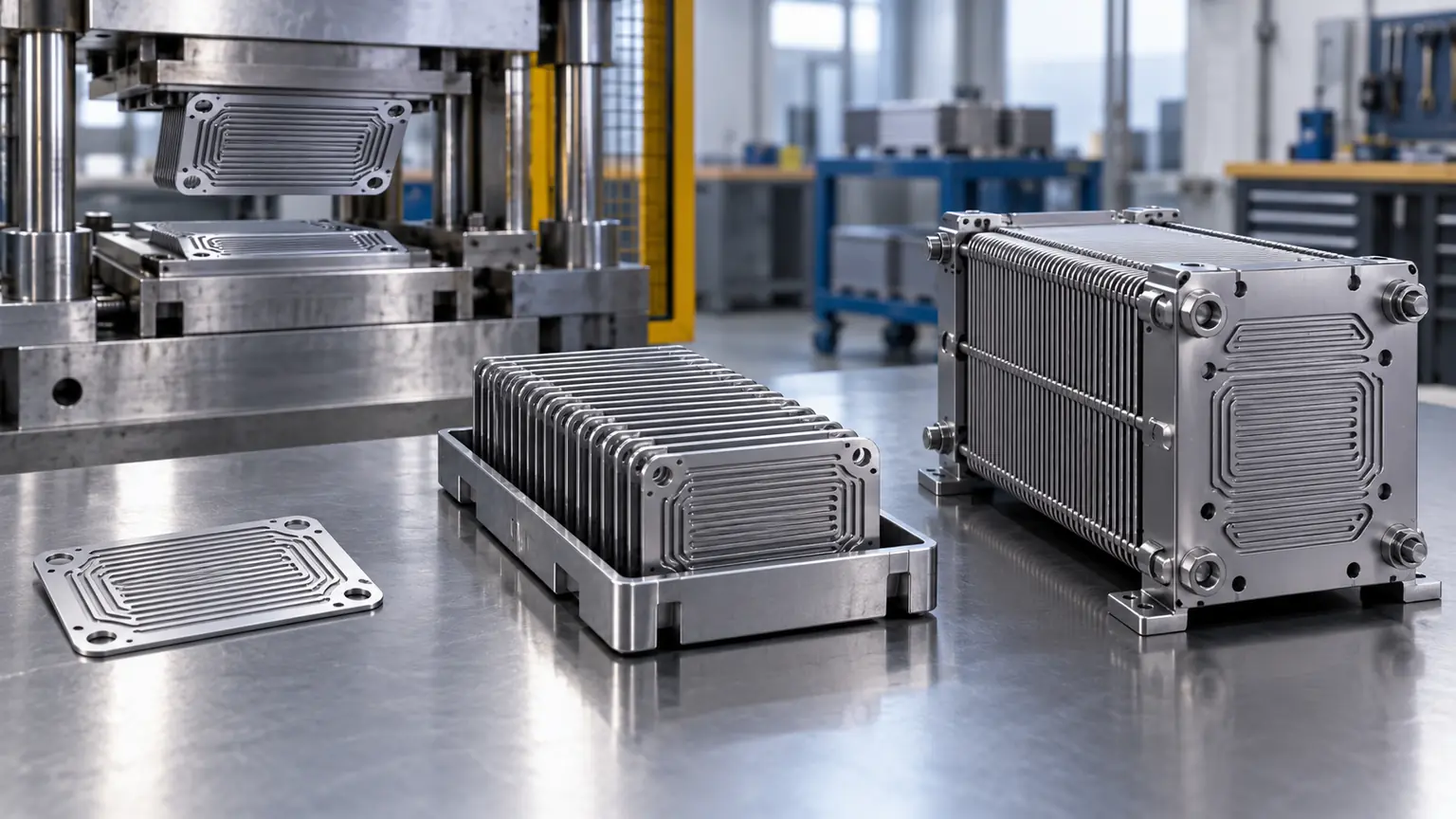
At prototype quantity, CNC machining is attractive because it converts geometry changes into programs rather than new dies. Graphite flow fields, metal proof plates, end plates, manifolds, and test fixtures can be updated rapidly. The per-part time may be high, but the cost of learning is low.
For metallic prototypes, Servizi di lavorazione CNC can verify channel layout, port alignment, gasket boundaries, and stack interfaces before forming development. A machined metal plate does not exactly reproduce the residual stress or thickness distribution of a stamped plate, so it should answer geometry and system questions—not pretend to validate the entire production process.
At pilot volume, hybrid routes are common: soft tooling, simplified forming, laser-cut blanks, machined fixtures, and controlled secondary operations. At high volume, cycle time, die life, automation, coating throughput, and inspection strategy dominate. The material decision should include the intended scale from the first design review.
Three Scenarios Show How the Choice Changes
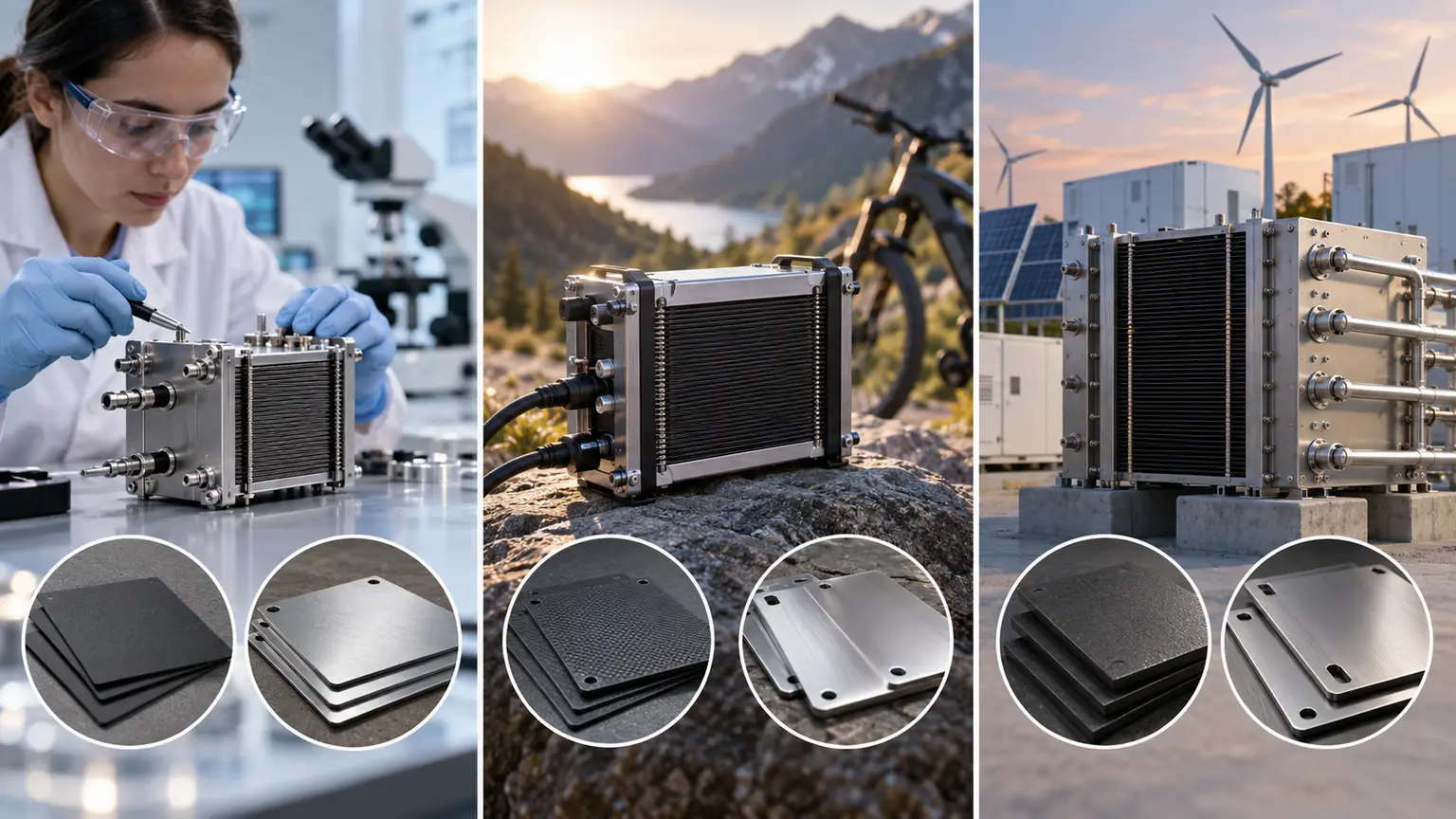
Scenario A: research stack with frequent channel changes
Machined graphite or machined metal may both work. Choose according to the test objective. If chemical behavior is central, representative graphite is valuable. If the team is exploring compact metallic architecture, machined metal can validate interfaces before forming.
Scenario B: mobile system with strict package limits
Thin metal plates often deserve priority because stack compactness and handling are important. The project must accept the development burden of forming, joining, coating, corrosion control, and high-volume quality.
Scenario C: stationary system prioritizing durability and development flexibility
Graphite or composite plates may be competitive when thickness is less restrictive and environmental stability matters. Mechanical protection, sealing, conductivity, permeability, and scalable composite processing remain part of the evaluation.
Questions to Put in the Supplier Review
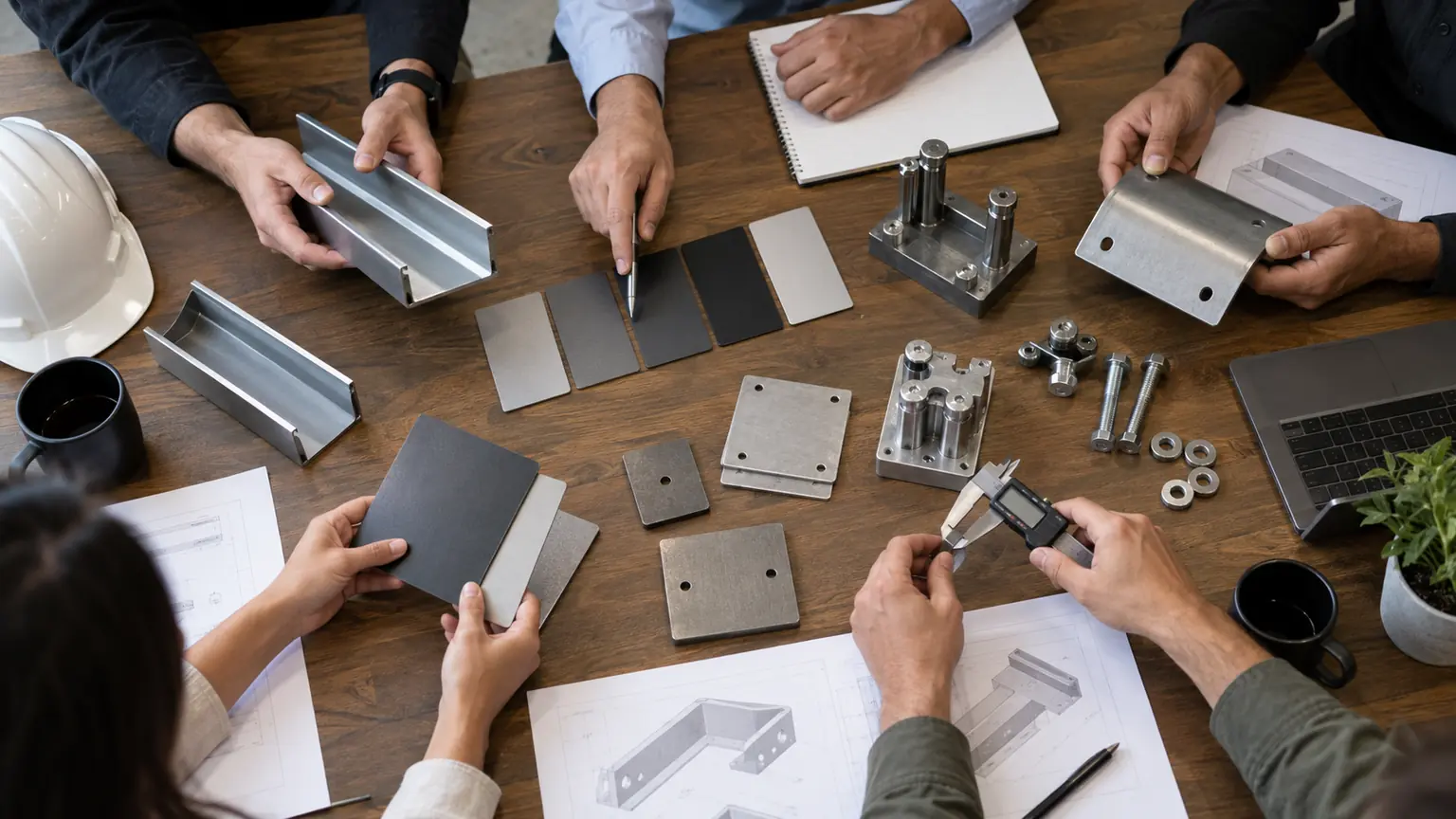
- Which exact material grade and condition is being quoted?
- Which dimensions control flow, sealing, contact, and stack alignment?
- How is free-state flatness defined and measured?
- What is the prototype route, and which production behaviors will it not represent?
- How are burrs, graphite dust, coolant, coating residue, and packaging controlled?
- What tool-life, die-life, or coating controls protect lot-to-lot repeatability?
- Which inspections are performed on every part, by sampling, or only during qualification?
For early stack development, Jucheng Precision can integrate prototype parts such as bipolar plates, end plates, manifolds, fixtures, and housings so mating interfaces are checked together.
Graphite vs Metal Bipolar Plate FAQ
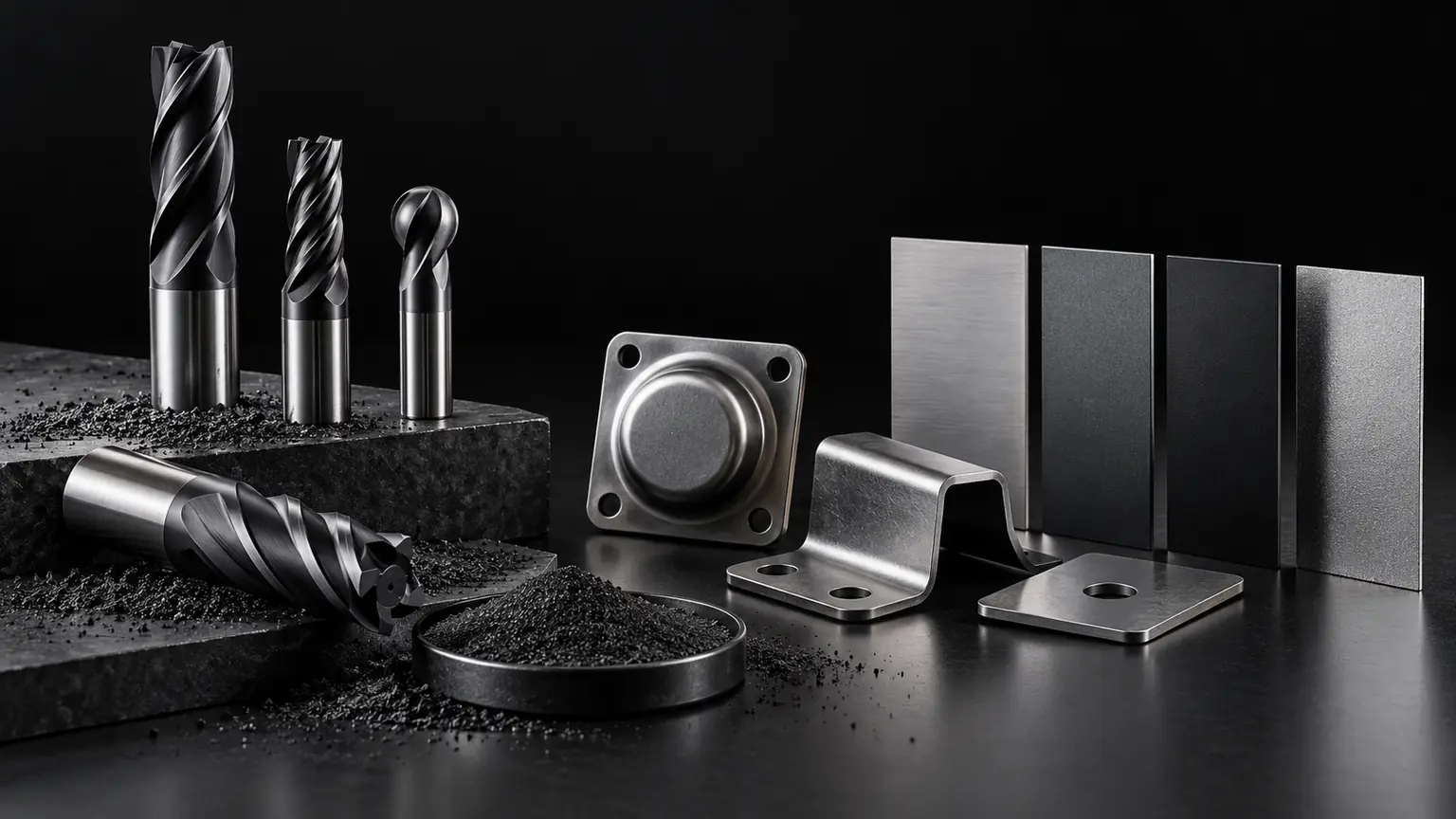
Which bipolar plate has better corrosion resistance?
Graphite is generally attractive in corrosive environments, while metal performance depends strongly on alloy and coating. Final selection requires representative operating tests.
Are metal plates always cheaper?
No. At high volume, forming can be economical, but tooling, joining, coating, inspection, and yield must be included. At low volume, machining may favor a different answer.
Can graphite plates be made thin?
They can be optimized, but brittleness, permeability, handling, channel geometry, and manufacturing process set practical limits.
Can a machined plate validate a stamped design?
It can validate layout, flow paths, sealing boundaries, and assembly interfaces. It does not reproduce forming strain, springback, thinning, die marks, or production coating behavior.
Choose the Development Path With the Material
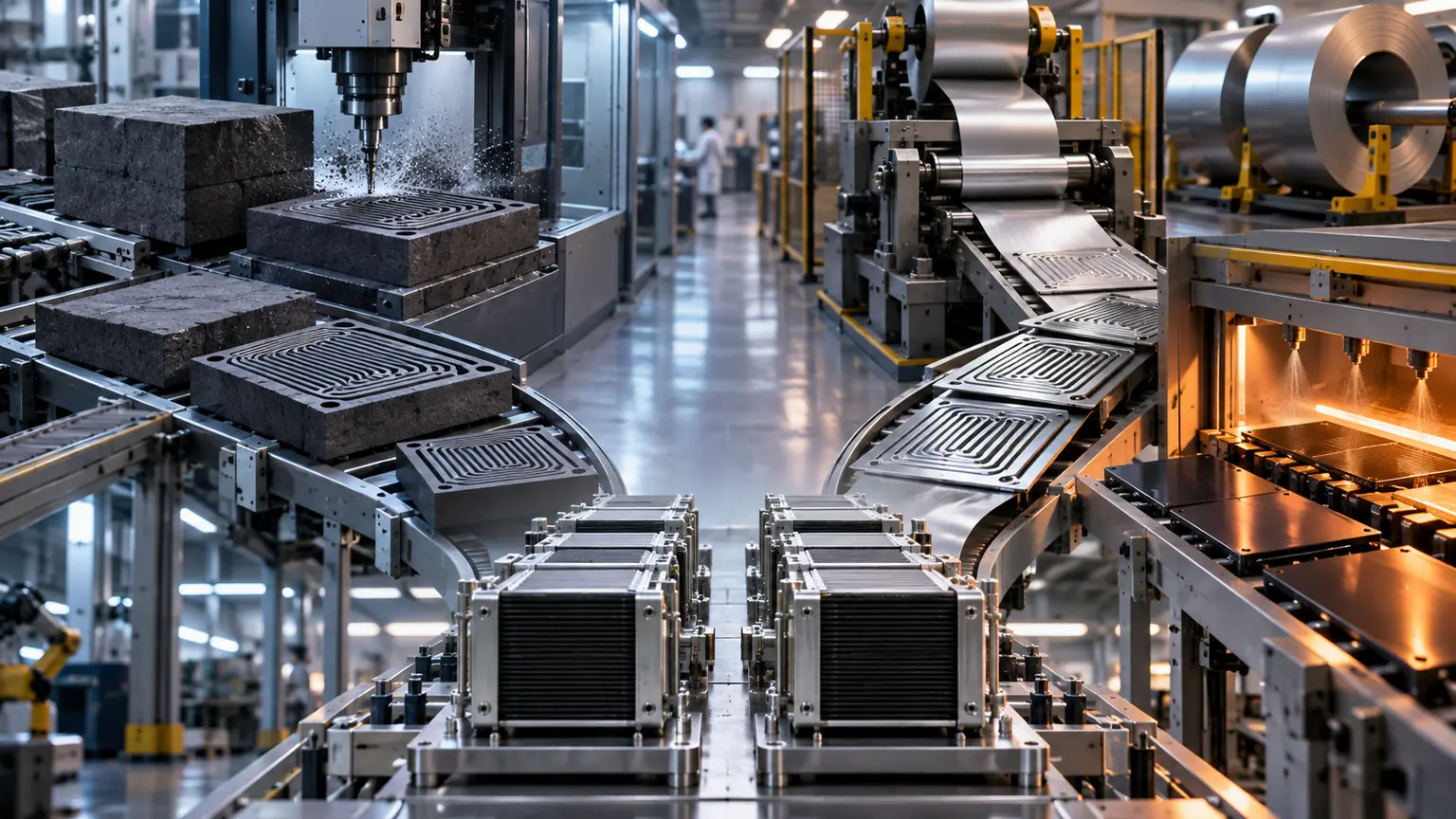
Graphite versus metal bipolar plates is not a one-property contest. The winning material is the one whose conductivity, corrosion strategy, thickness, geometry, process maturity, volume economics, and verification plan fit the complete fuel-cell program.

