


A biopsy forceps jaw is small, but its manufacturing definition cannot be reduced to “make two matching tips.” The jaw profile, hinge or pin interface, opposing-face relationship, edge condition, and movement clearance all affect whether the pair assembles as intended. A sharp tooth, cup edge, or cutting feature may be deliberate; a loose burr is not. Clear drawings should distinguish designed edges from unwanted edge break and identify the inspection state of the assembled pair. This is a manufacturing discussion for drawing-defined components, not a clinical-use guide. Jucheng Precision’s medical-device prototype capability is relevant when the development team supplies the controlled geometry, material specification, quantity, and verification plan.
Contents
- Design the jaw pair as a matched interface
- Make small features accessible to tools and gauges
- Compare machining and formed routes by what they must preserve
- Specify the edge condition precisely
- Lock down material and condition before machining
- Check motion and contact after assembly
- What a forceps-jaw RFQ should contain
- Frequently asked questions
Design the jaw pair as a matched interface
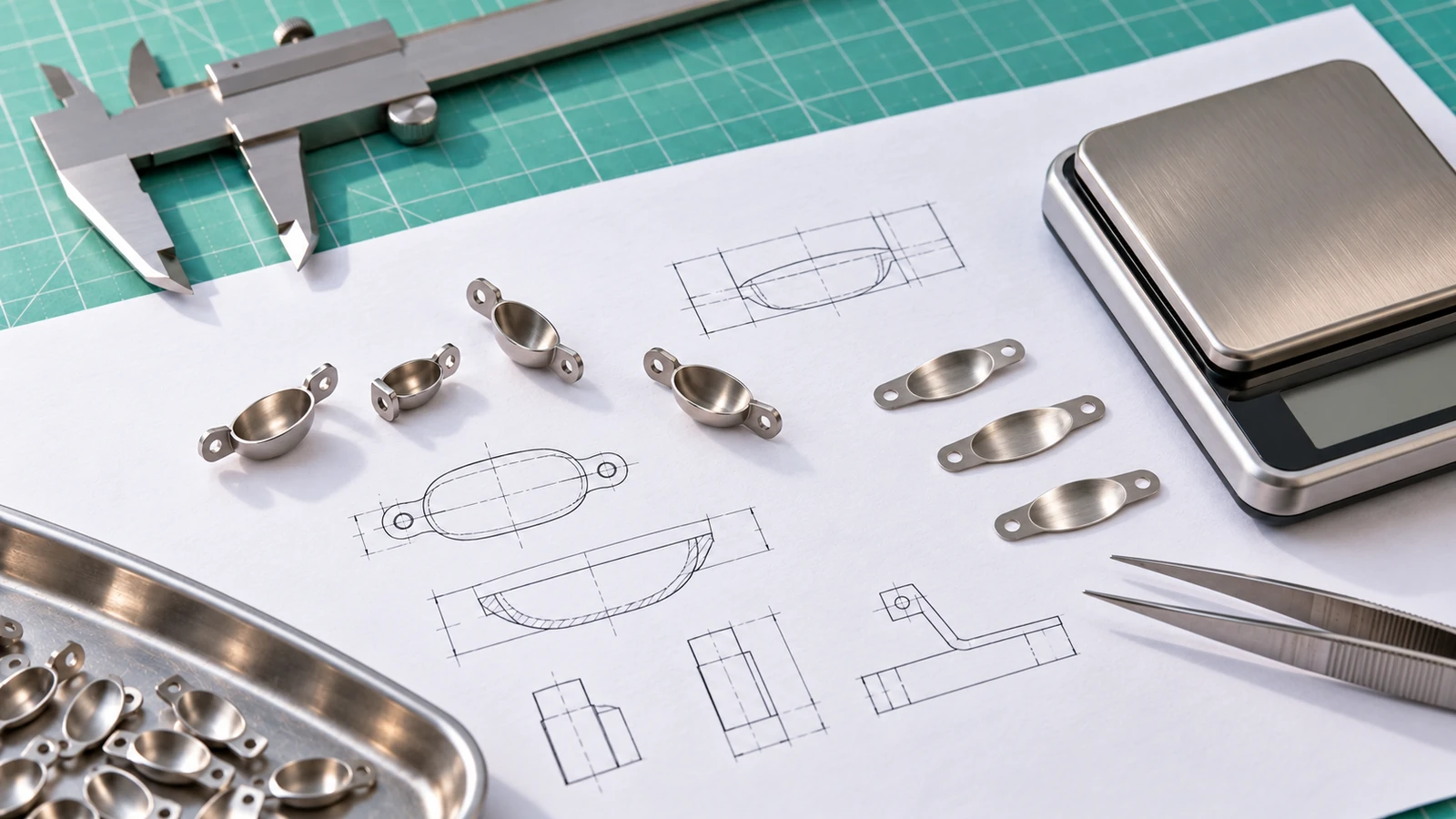
Some forceps use opposing cups, while other designs include serrations, cutting edges, or a different contact profile. The exact configuration should come from the drawing. Define the left and right components or the matched pair, the hinge axis, the closed condition, and the relevant contact boundary. If the parts are interchangeable, specify that requirement; if they are selectively matched, define the identification and pairing process. Geometry should be reviewed in both open and closed states where motion changes the relationship. The CAD assembly can reveal interference or insufficient clearance, but the drawing still needs measurable acceptance criteria. Identify which features locate the jaw during assembly and which features contact the intended material. This reduces interpretation gaps between design, machining, and inspection.
Make small features accessible to tools and gauges
Jaw components can contain narrow slots, tiny holes, serrations, curved lips, and thin sections. Small tools deflect more easily, and microscopic-looking features may be difficult to inspect with a general-purpose setup. During DFM review, check whether cutter access, chip evacuation, fixturing, and measurement access are all plausible for the specified geometry. If a feature is too small to inspect by the proposed method, that should be discussed before build approval. Where a fine tooth or cup edge is functional, dimension its profile and location or provide a clearly controlled model-based definition. Avoid relying on an undimensioned rendering. If the jaw is produced through stamping or forming, account for tool access and material behavior; if it is machined, review tool diameter, setup orientation, and burr direction. The appropriate route depends on quantity and design intent.
Compare machining and formed routes by what they must preserve
CNC machining may suit prototypes or low quantities when a jaw has complex local geometry or when the design is still changing. A stamped or formed route may be considered for suitable thin geometries and production quantities, but tooling, material direction, edge quality, and springback enter the discussion. The route should preserve the functional profile and assembly interfaces; the word “precision” does not replace a process plan.
| Decision point | Machined development part | Formed production route |
|---|---|---|
| Geometry changes | Can be easier to revise without dedicated forming tools | Tool changes may be needed as the design evolves |
| Thin features | May require careful fixturing and tool selection | Can suit sheet-like forms if bend and edge conditions are defined |
| Edge requirements | Tool marks and burr direction need process control | Sheared or formed edges need defined finishing and inspection |
| Quantity plan | Review cycle time and material use for the sample lot | Review tooling investment and repeatability expectations |
Jucheng’s medical CNC machining overview e medical manufacturing-process guide give broader context for route discussions. The design drawing and approved manufacturing plan determine the actual route.
Specify the edge condition precisely
“Deburr all edges” can conflict with a designed cutting or gripping feature. Mark intentional sharp or shaped edges and state which transitions may receive an edge break. Define the inspection approach for fine burrs and any visible edge defects that matter. If a finishing operation is used, confirm it does not blunt the working profile or remove material beyond the defined limit. For narrow slots and internal corners, indicate whether access for deburring is available and what evidence is required. A visual inspection under magnification may be appropriate only if the quality plan says so; it should not be assumed. Where the geometry makes a feature difficult to see, discuss process controls and representative inspection methods with the design authority.
Lock down material and condition before machining
Medical instrument jaws commonly require a specified corrosion-resistant material, but the exact grade, product form, hardness or condition, and documentation must come from the customer’s approved specification. Do not substitute a familiar stainless grade based on a generic product description. Material identity can affect machining, finishing, joining, corrosion behavior, and cleaning compatibility. Keep the material record tied to each lot or part identification as required by the project. If a finishing or passivation step is called out, state the applicable specification and acceptance documentation. Jucheng’s medical materials overview is a broad reference only; it does not approve a grade for a specific instrument.
Check motion and contact after assembly
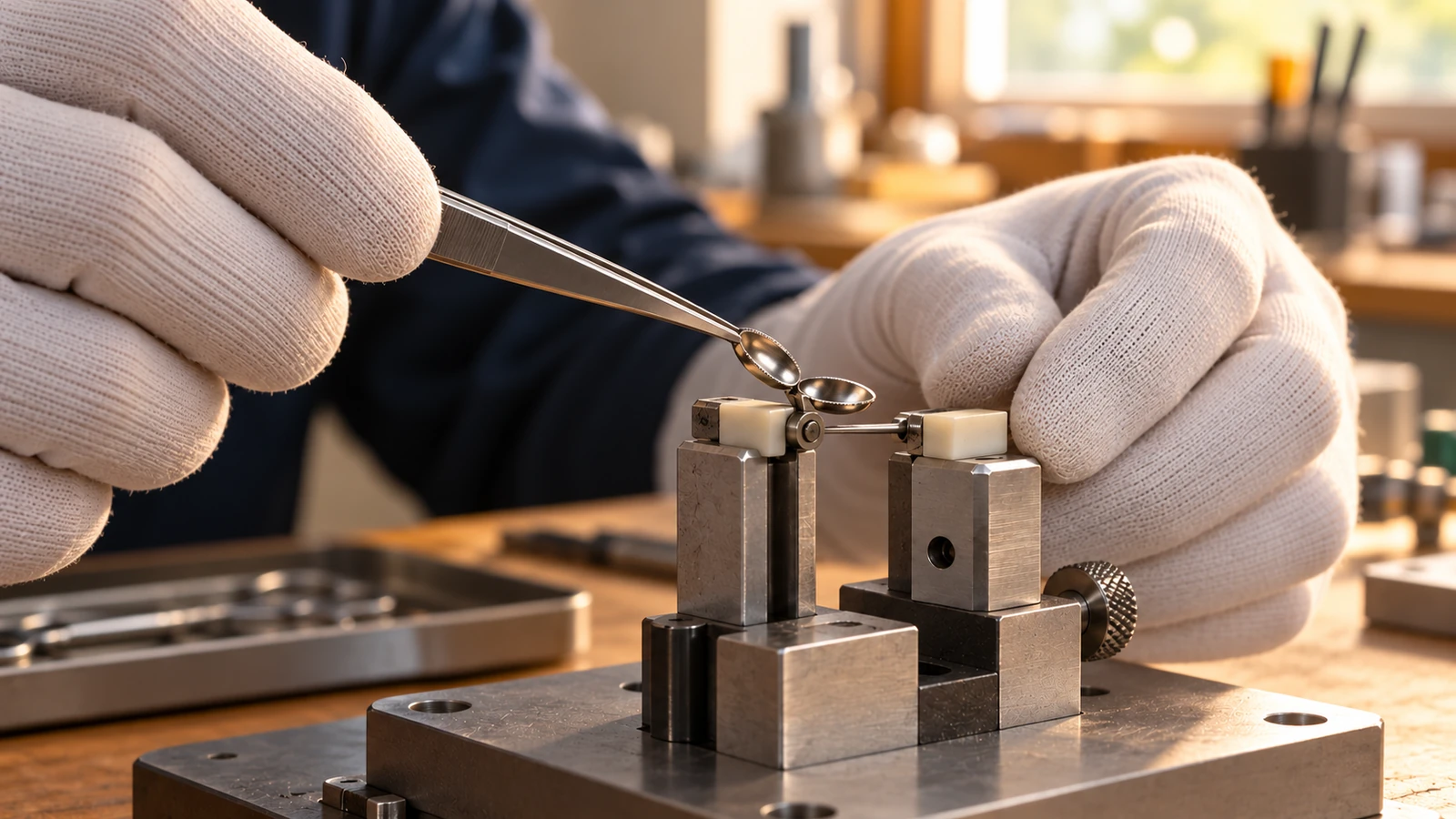
Separate part-level inspection from assembly checks. Individual jaw profiles can meet their dimensional criteria while the assembled pair binds, closes asymmetrically, or leaves an unintended gap. Define the assembly condition, pin or hinge interface, allowable movement, and any contact check required by the design. State whether lubricant, temporary assembly aids, or other components are part of the evaluation. Inspection should record which components were paired, the assembly revision, and the check performed. Do not infer functional or clinical performance from a simple open-close check. It can only confirm the specific motion or fit criterion defined by the project.
What a forceps-jaw RFQ should contain
Provide separate controlled drawings for each jaw or a clear matched-pair definition, the assembly model, material and condition, quantity, edge requirements, finishing instructions, inspection plan, and traceability expectations. Mark the functional profile, hinge axis, closed-state relationship, and features that must remain sharp or receive a controlled edge treatment. Ask the supplier to identify inaccessible features, likely burr locations, fixture assumptions, and whether the proposed process can inspect the smallest dimensions. If the design is being revised, state whether the requested build is for geometry review or a later verification stage. That context supports a useful quotation without implying that component machining alone establishes device performance.
Frequently asked questions
Should every jaw edge be rounded?
No. The drawing may define a functional cutting or gripping edge. The design should distinguish those edges from transitions that need deburring or an edge break.
Can the two jaws be inspected separately?
Individual inspection is useful, but the assembled pair may also need a defined fit or motion check. The plan should state whether components are interchangeable or paired.
Does a smooth surface prove the jaw is burr-free?
No. Surface appearance and edge condition are separate characteristics. Specify the method and acceptance criteria for each.