


Guardare i costi della lavorazione CNC esplodere perché si cerca di tagliare geometrie complesse da blocchi di metallo solido è una realtà dolorosa per le startup in fase di crescita. Fresare i pezzi uno per uno va bene per una manciata di prototipi, ma nel momento in cui il tuo ordine di acquisto raggiunge le cinquemila unità, ti scontri con un muro finanziario enorme. I team di ingegneria hanno un disperato bisogno di un modo per produrre migliaia di componenti metallici identici e ad alta resistenza senza pagare ore di lavorazione per ogni singolo pezzo. Utilizzare la processo di pressofusione rimane lo standard di riferimento assoluto per ottenere componenti metallici quasi a forma finita a volumi commerciali.
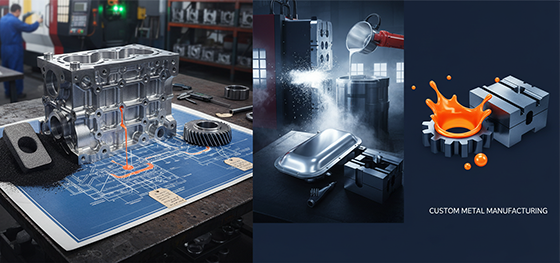
Buttare metallo liquido in una cavità d'acciaio sembra semplice finché non si prova a gestire la fisica violenta coinvolta. L'aria intrappolata causa porosità nascoste e una scarsa gestione termica rovina le tue tolleranze dimensionali. Ho visto responsabili acquisti rifiutare interi container di pezzi perché bolle d'aria nascoste hanno distrutto i loro costosi utensili da taglio CNC durante le operazioni di filettatura secondaria. Operando dal nostro hub di produzione di precisione a Shenzhen, Jucheng Precision affronta questi incubi metallurgici a testa alta.
I progetti hardware attuali [2026] richiedono pareti più sottili, pesi più leggeri e tasso di guasto zero sul campo. Reperire componenti metallici affidabili significa comprendere a fondo come diverse velocità di iniezione e configurazioni del crogiolo influenzano la tua lega specifica. Questa guida completa analizza i macchinari principali, le fasi critiche di raffreddamento e le esatte strategie sui materiali che devi padroneggiare prima di investire in attrezzature di produzione in acciaio pesante.
contenuto:
La linea di base: Cosa succede realmente all'interno della macchina?
Flusso di processo: Analisi del ciclo di iniezione e raffreddamento
Tipi di pressione: Dinamiche alta, bassa e da compressione
Attrezzature principali: Superare i limiti del punto di fusione
Selezione delle leghe: Strategie per alluminio, zinco e magnesio
Alternative di produzione: Perché abbandonare gli stampi in sabbia?
Hub JUCHENG: Il centro metallurgico avanzato di Shenzhen
FAQ: Risposte oneste su durata degli stampi e porosità
La linea di base: Cosa succede realmente all'interno della macchina?

Come si trasforma un blocco di alluminio grezzo in un complesso componente automobilistico in pochi secondi?
Forzando metallo non ferroso fuso in una cavità di stampo in acciaio temprato lavorato su misura sotto pressione idraulica estrema, congelando il liquido istantaneamente in una forma solida altamente precisa.
Forging metal takes brutal force, and CNC milling wastes massive amounts of raw material. Injecting liquid metal offers a brilliant shortcut. You essentially pay the heavy engineering cost upfront to cut a perfect reverse-image of your part into a block of H13 tool steel. Once that die is loaded into the press, the machine churns out identical, highly durable parts every few seconds.
Medical device housings, heavy-duty automotive transmission cases, and complex heatsinks rely completely on this technology. You achieve incredibly tight tolerances and smooth surface finishes directly out of the mold, drastically reducing the amount of post-machining required before final assembly.
Flusso di processo: Analisi del ciclo di iniezione e raffreddamento

What are the critical phases of a successful metal injection cycle?
The system relies on five distinct phases: die preparation, high-speed injection, intense thermal cooling, mechanical ejection, and finally, the automated trimming of excess flash.
Looking closely at a detailed diagramma del processo di pressofusione reveals exactly how complex the internal plumbing of these massive steel molds really is. The liquid metal must travel through a intricate network of runners and gates to fill every tiny corner of your design before it starts to freeze. If the metal freezes too early, you get defective parts with massive holes in them.
Executing the passaggi fondamentali del processo di pressofusione correctly requires absolute discipline on the factory floor. Our operators spray precise amounts of release agents onto the hot steel cavity before every single shot to prevent the liquid metal from welding itself to the tool.
Managing the thermodynamics is arguably the hardest part. Perfecting the die casting process cooling phase dictates your entire production speed. We drill complex water lines directly through the steel tool blocks. Pumping chilled water through these lines rapidly pulls the heat out of the molten metal, dropping your cycle time and preventing the part from warping as it solidifies.
Tipi di pressione: Dinamiche alta, bassa e da compressione
Does all metal casting require massive hydraulic injection rams?
No. While high-pressure systems dominate thin-walled consumer parts, heavy structural components often utilize low-pressure or gravity-fed systems to eliminate internal air turbulence.
When you need a thin, lightweight drone chassis, the processo di pressofusione ad alta pressione is the absolute king. The hydraulic ram slams the liquid metal into the mold at incredible speeds, forcing it to fill walls as thin as 1.5 millimeters before the metal cools. The downside is that this violent speed traps microscopic air bubbles inside the part.
Manufacturing heavy automotive wheels requires a completely different approach. Utilizing the processo di pressofusione a bassa pressione pushes the molten metal upward into the mold very slowly. This gentle, anti-gravity fill completely prevents air from mixing with the liquid, resulting in a denser, structurally superior part that can withstand extreme road impacts.
Some applications require pure brute strength. The gravity die casting process relies simply on the weight of the metal itself to fill permanent iron molds, which is perfect for incredibly thick, heavy pipe fittings. For military-grade strength, the processo di pressofusione per estrusione acts like a hybrid between casting and forging, applying massive hydraulic pressure as the metal freezes to crush any remaining microscopic voids.
Attrezzature principali: Superare i limiti del punto di fusione
Why can't you run all metal alloys through the exact same injection machine?
Because metals with high melting points, like aluminum, will literally melt and dissolve the internal steel pumping mechanisms if they are kept constantly submerged in the liquid holding furnace.
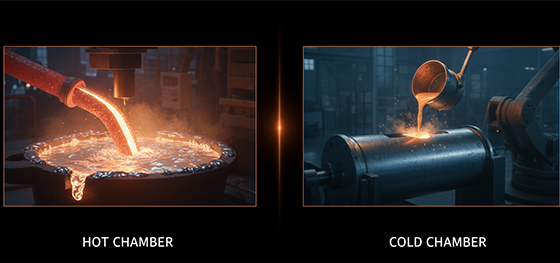
Running the processo di pressofusione a camera fredda is mandatory for aggressive metals. A robotic ladle scoops the glowing liquid aluminum out of a separate holding furnace and pours it into a cold steel cylinder just seconds before the plunger fires. This protects the machine's internal parts from being destroyed by the extreme heat.
Softer metals like zinc melt at much lower temperatures. This allows factories to use the incredibly fast processo di pressofusione a camera calda. The machine's entire injection pump, called a gooseneck, sits permanently submerged in a pot of liquid metal. It sucks the metal in and shoots it into the mold automatically, doubling the production speed compared to cold chamber setups.
Porosity remains the universal enemy of all these machines. Air gets trapped inside the mold cavity when the metal rushes in. Jucheng Precision completely solves this by deploying the advanced pressofusione sotto vuoto. We suck all the oxygen out of the steel mold milliseconds before the metal injects, delivering ultra-dense, void-free parts suitable for critical aerospace applications.
Selezione delle leghe: Strategie per alluminio, zinco e magnesio

Picking the right metal dictates your entire tooling budget and part lifespan. Jucheng Precision actively helps engineering teams select the perfect metallurgical profile. The table below breaks down the primary commercial options.
| Metal Alloy Family | Vantaggio ingegneristico chiave | Tipo di macchina richiesto | Durata dell'attrezzatura |
|---|---|---|---|
| Aluminum (A380, ADC12) | Excellent strength-to-weight, high thermal conductivity. | Cold Chamber Only | 100,000 Shots (High heat wear) |
| Zinc (Zamak 3, 5) | Incredible precision, easiest to plate and paint. | Camera Calda | 1,000,000+ Shots (Low heat wear) |
| Magnesium (AZ91D) | Lightest structural metal, excellent EMI shielding. | Camera Calda o Fredda | 500,000 Shots |
Il aluminum die casting process dominates the automotive sector because it sheds heat beautifully, making it perfect for LED lighting housings and engine blocks. However, the high melting point slowly erodes the expensive steel molds over time.
If you are designing tiny, complex locking mechanisms or high-end cosmetic electronics covers, the processo di pressofusione dello zinco is vastly superior. The liquid zinc flows like water, capturing microscopic details and allowing the steel tool to last nearly forever without wearing out. For laptops and high-end camera bodies where every gram matters, the processo di pressofusione del magnesio delivers the ultimate lightweight, dent-resistant armor.
Alternative di produzione: Perché abbandonare gli stampi in sabbia?
Is it ever cheaper to pour metal into a handmade sand mold instead of buying a steel tool?
Only for extreme low-volume prototyping or massive engine blocks; sand molds produce very rough surfaces and require heavy CNC machining to achieve functional tolerances.
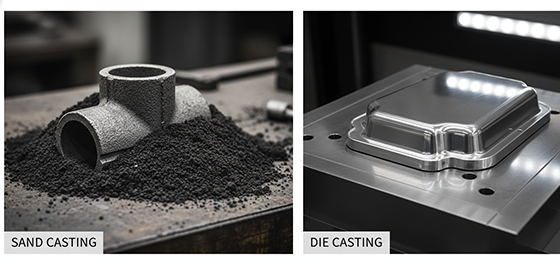
Startups often get confused by the different casting methodologies available. Debating sand casting vs die casting process always comes down to your production volume. Sand casting requires you to break and destroy the mold for every single part you make. It is a slow, messy, manual process that leaves your parts looking like they were buried in dirt.
Once your hardware moves past the Beta phase, you must transition to steel tooling. High-pressure injection delivers a beautiful, smooth finish right out of the machine. This drastically reduces the hours your supplier spends grinding and polishing the metal before painting, saving you a fortune in secondary labor costs.
Hub JUCHENG: Il centro metallurgico avanzato di Shenzhen

Why partner with Jucheng Precision for your global metal production?
Because we control the entire lifecycle under one roof, utilizing advanced casting presses alongside 150+ CNC machines to deliver finished, fully threaded hardware straight to your assembly line.
Receiving raw cast parts that still need to be drilled, tapped, and powder-coated by three different vendors is a supply chain nightmare. If a threaded hole fails quality control, the machine shop blames the casting factory for hidden air bubbles. You get stuck paying for the scrap.
Operating out of our massive Shenzhen precision manufacturing hub, we crush this liability. We melt the metal, shoot it under a vacuum to eliminate porosity, and immediately load it into our 5-axis Mazak units for high-tolerance surface milling. Stop dealing with messy vendor handoffs. Send your 3D models to our engineering team today for a free DFM analysis and secure a flawless bridge to production.
FAQ: Risposte oneste su durata degli stampi e porosità
What causes the ugly blister marks on painted die-cast parts?
Trapped microscopic air bubbles inside the metal expand when the part is baked in a paint curing oven, causing the surface to blister and pop. We prevent this using advanced vacuum extraction.
How long does it take to machine a hardened steel die casting mold?
Depending on part complexity, engineering and cutting a heavy H13 tool steel mold typically requires 3 to 6 weeks before first article inspection (FAI) samples are ready.
Can you cast metal parts with internal undercuts or hollow cavities?
Yes, but it requires designing the steel tool with complex hydraulic sliding cores and side-actions that pull out of the way before the part is ejected.
Why do thick metal casting walls constantly suffer from sink marks?
Because thick sections cool much slower than thin walls. As the liquid core freezes and shrinks, it pulls the outer skin inward. We fix this by coring out thick areas during the DFM phase.

