


A battery energy storage system enclosure is not simply a weatherproof box. It is part of the product’s safety, thermal, service, and structural strategy. A good enclosure limits water and dust entry, controls heat, supports heavy internal equipment, separates hazardous zones, and remains maintainable throughout the project life.
The practical design sequence is to define the hazards first, then build the cabinet around those hazards. Starting with sheet thickness or an off-the-shelf cabinet size often creates expensive corrections after batteries, cooling hardware, busbars, and cable routes have already been fixed.
Nine Requirements That Define a Reliable BESS Enclosure
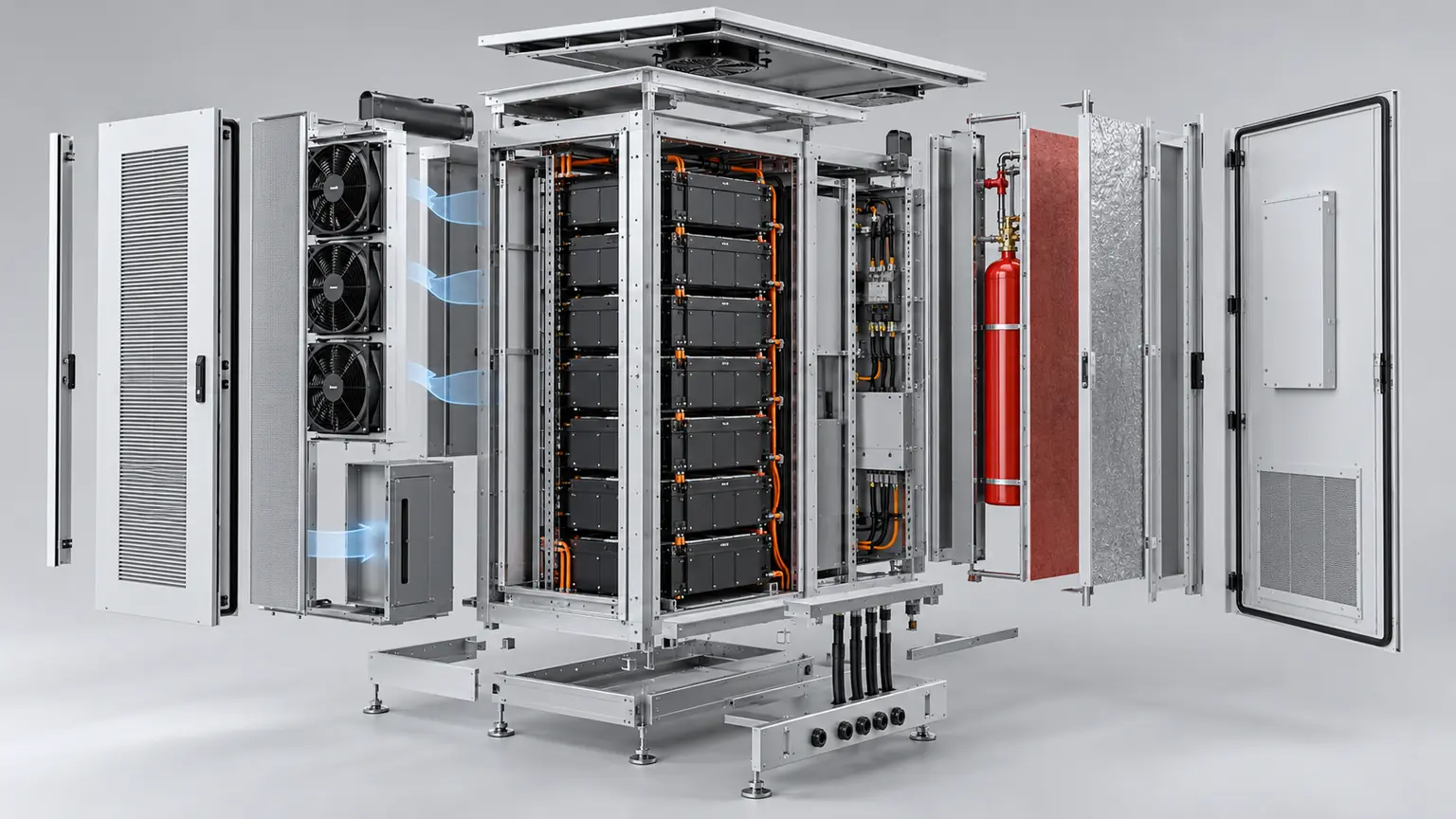
Different installations have different codes, climates, cell chemistries, and system architectures. Even so, most successful BESS enclosure design requirements can be organized into nine engineering questions.
- Environmental protection: Where will rain, wind-driven dust, condensation, salt, ice, and solar radiation attack the enclosure?
- Thermal control: How much heat must be removed in normal operation, charging peaks, standby, and fault conditions?
- Structural capacity: Can the floor, frame, lifting points, shelves, and panel interfaces carry the actual installed mass and transport loads?
- Fire and event management: How will detection, isolation, venting, suppression interfaces, and emergency access be integrated into the complete system?
- Electrical safety: Are high-voltage areas separated, bonded, grounded, guarded, and clearly accessible only to authorized personnel?
- Serviceability: Can technicians reach modules, filters, fans, disconnects, fasteners, and cable terminations without dismantling unrelated assemblies?
- Corrosion control: Do the base metal, coating, fasteners, and dissimilar-metal interfaces suit the installation environment?
- Manufacturability: Can bends, welds, cutouts, inserts, seals, and tolerances be produced repeatedly without unnecessary operations?
- Verifica: Is there a test plan for ingress, sealing, thermal performance, fit, grounding, lifting, and assembly?
These requirements interact. A tighter seal can reduce water entry but also restrict air exchange. A thicker panel may improve stiffness while increasing weight and welding distortion. Design decisions should therefore be evaluated at system level rather than as isolated specifications.
Design the Inside as Controlled Zones
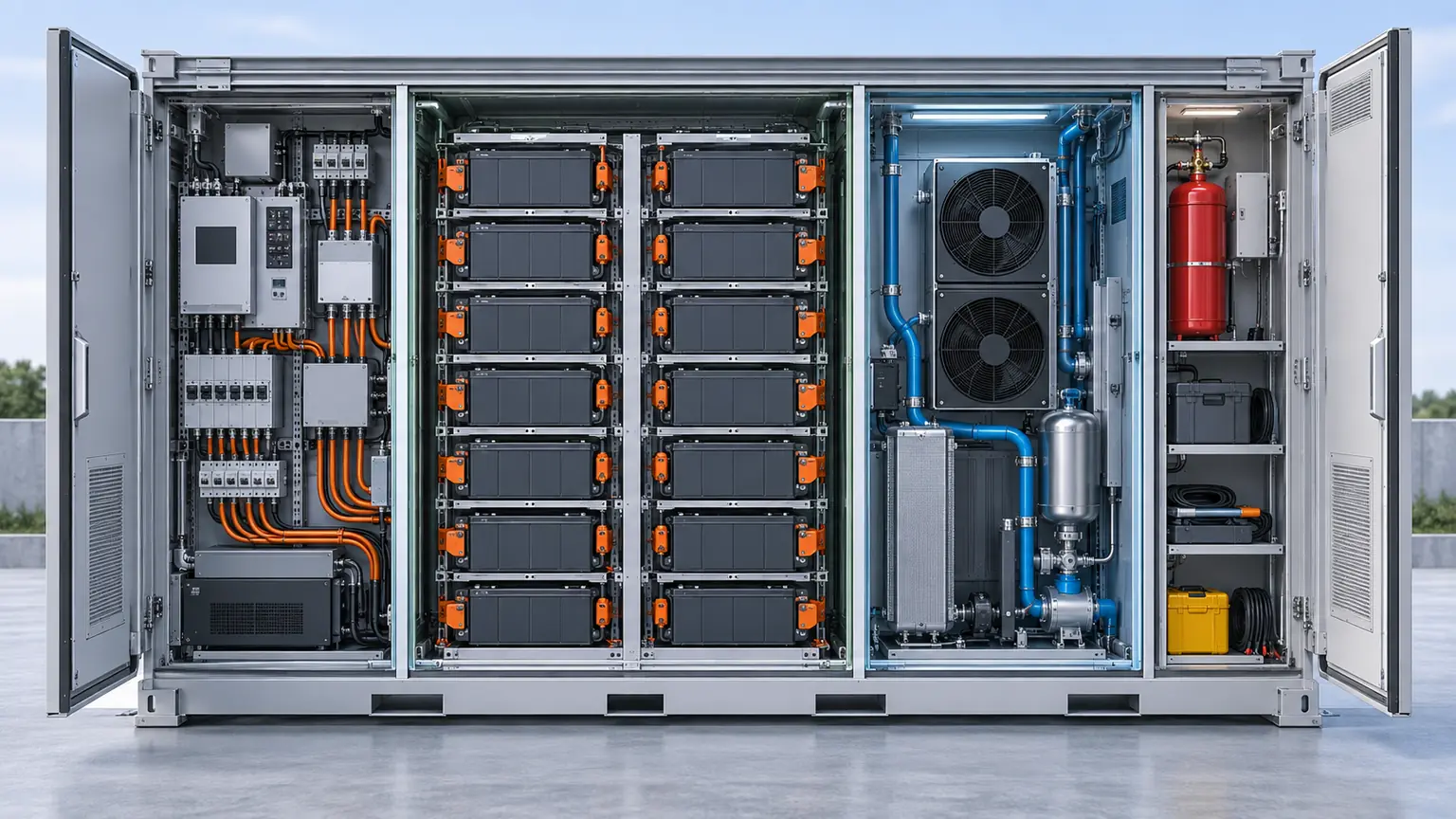
A clear zoning plan reduces conflicts before detailed CAD work begins. The battery area, power conversion equipment, cooling hardware, cable entry region, low-voltage controls, and service corridor should each have a defined purpose and boundary. Separation may be physical, thermal, electrical, or all three.
Keep dirty and clean airflow paths separate
Outdoor air can carry dust, moisture, and corrosive contaminants. If filtered ambient air is used, locate intake and exhaust paths so warm discharge air cannot recirculate. Service access to filters should not require opening the battery compartment.
Give cables a route, not leftover space
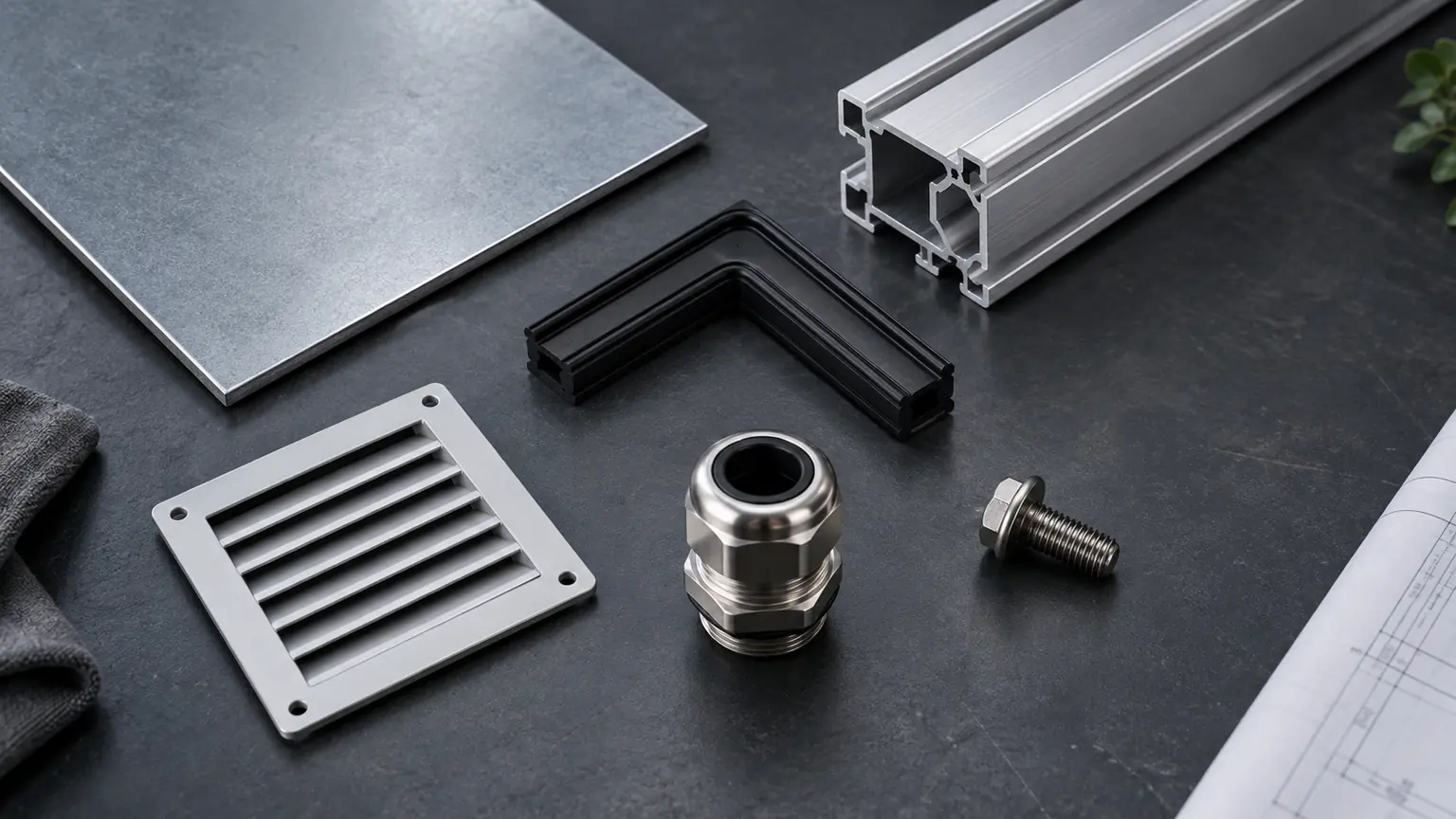
Busbars and high-voltage cables need bend radius, strain relief, isolation distance, support, and access for inspection. Low-voltage signal wiring should be routed to reduce interference and accidental contact. Penetrations should be planned with glands, grommets, or sealed plates rather than drilled during final assembly.
Make maintenance possible with the door open
Door swing, removable panels, hinge loads, latch positions, and technician reach should be checked in the intended installation environment. Components that require frequent service belong near an access plane. Heavy modules need guided insertion, positive retention, and a removal path that does not cross sensitive wiring.
The Structure Must Survive More Than Static Weight
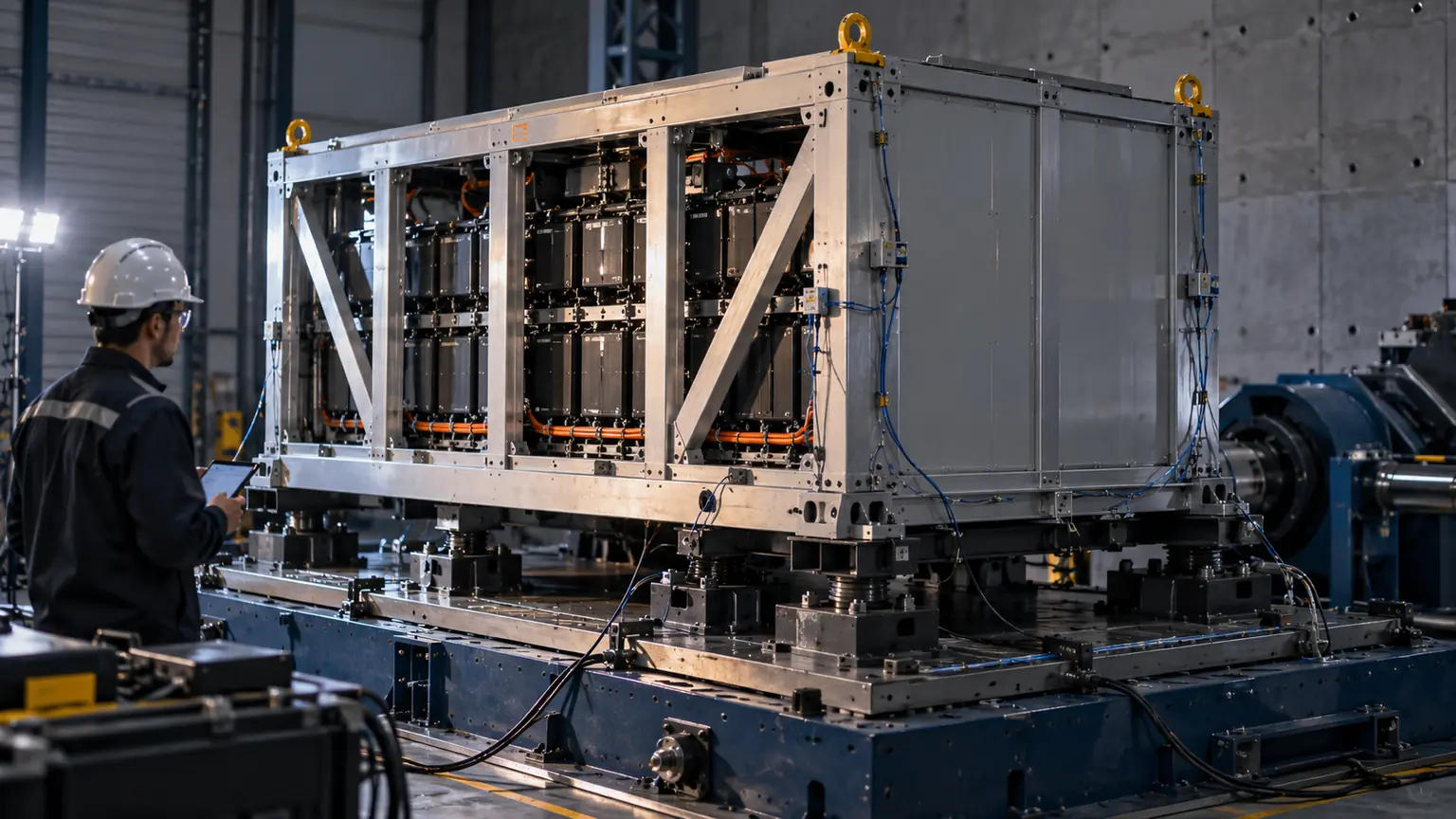
BESS cabinets experience lifting, road transport, installation, vibration, door cycling, thermal expansion, and concentrated equipment loads. A frame that passes a simple static check can still rack during lifting or lose door alignment after transport. The load path should continue from module supports through the frame to the base and lifting interfaces.
Large panels rarely need uniform thickness. Strategic returns, ribs, hat sections, formed channels, and local reinforcements can provide stiffness with less mass. For production-ready geometry, a supplier experienced in fabbricazione della lamiera can review bend access, weld sequence, tolerance accumulation, inserts, and panel flatness before tooling is committed.
| Caratteristica | Common design risk | Useful control |
|---|---|---|
| Base frame | Local deflection under racks | Defined load paths and reinforced mounting zones |
| Door opening | Racking and seal compression variation | Stiff perimeter, controlled hinge and latch geometry |
| Roof | Ponding and water entry | Drainage slope, drip edges, protected seams |
| Lifting points | Distortion during handling | Verified load transfer into the main frame |
| Cable plate | Late changes and leaking penetrations | Replaceable plate with defined sealing surface |
General flange, bend, fastening, and tolerance choices are covered in our sheet metal enclosure design guide. For BESS projects, those rules must be combined with the actual module mass, cooling layout, ingress target, and service strategy.
Prototype the Interfaces That Can Fail
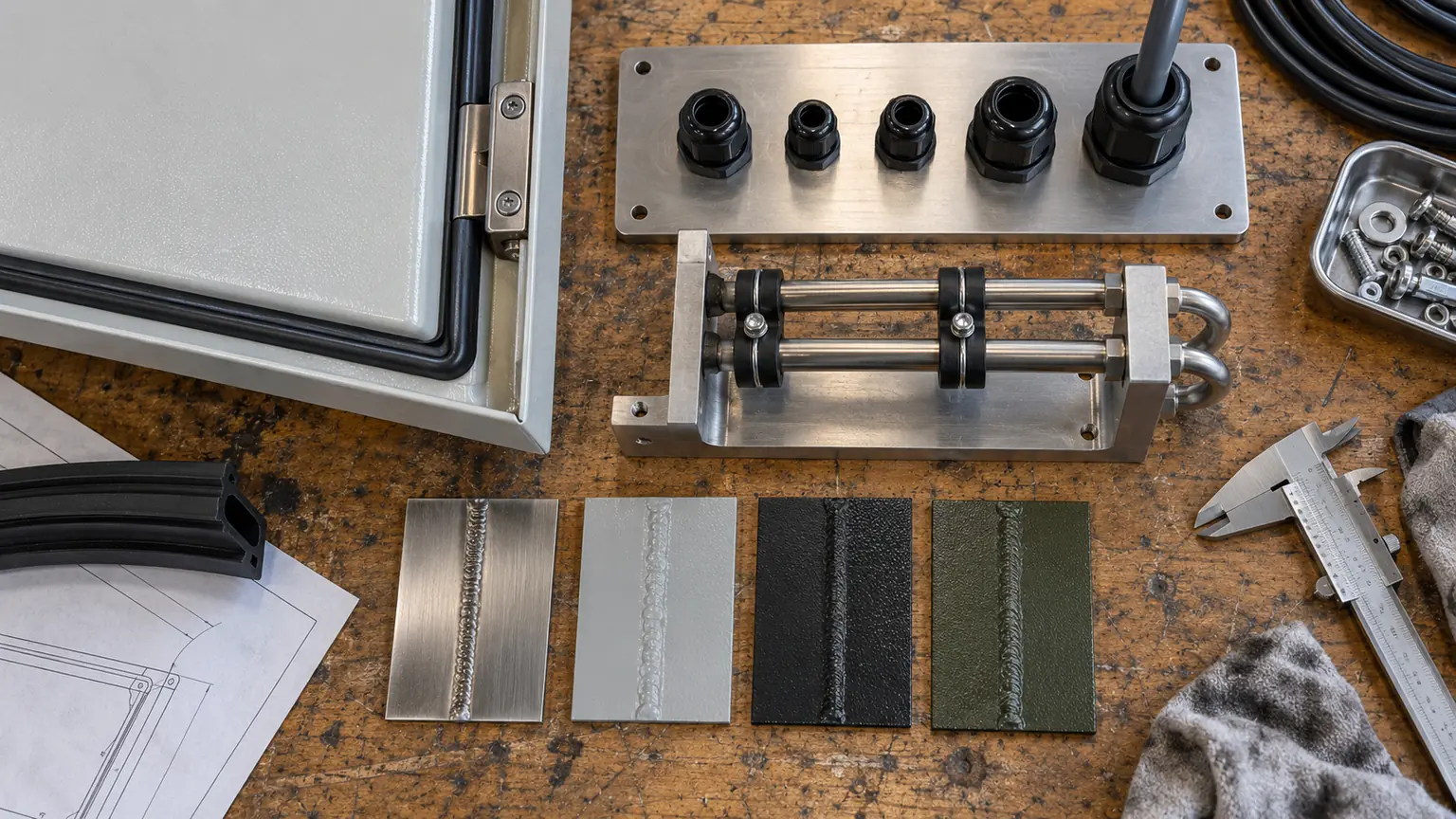
A full-size finished enclosure is not always the best first prototype. Risk-driven prototypes are faster and more informative. A corner sample can validate gasket compression and weld finishing. A door section can test hinge sag and latch force. A cable-entry panel can verify glands and assembly access. A thermal mock-up can confirm airflow resistance before cosmetic details are finalized.
A useful prototype plan may progress through four gates:
- Geometry gate: rack fit, component clearances, door swing, cable routes, and tool access.
- Sealing gate: gasket continuity, compression, drainage, penetrations, and seam quality.
- Structural gate: load support, lifting behavior, transport restraint, and repeated door operation.
- Thermal gate: hot spots, bypass airflow, pressure drop, condensation risk, and service conditions.
For programs that are still changing, rapid prototyping services can combine machined brackets, printed ducts, sheet metal panels, and short-run assemblies in one validation build. That reduces the temptation to freeze a weak design simply because one production process has already started.
A Better RFQ Starts With the Operating Envelope
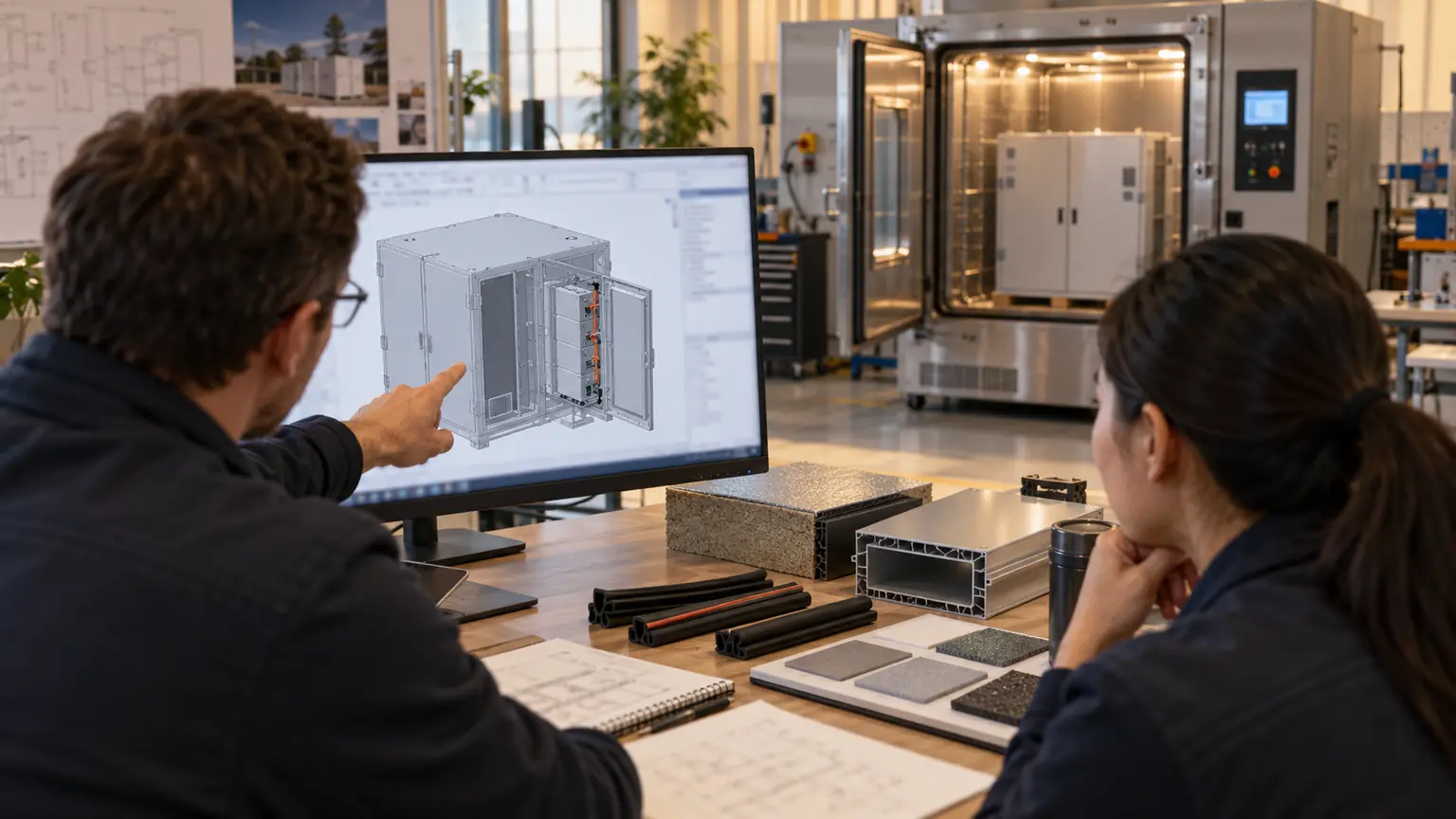
An enclosure quotation is only as accurate as the information behind it. A CAD model without environmental, loading, finish, and inspection requirements leaves critical assumptions unresolved. Buyers should provide the intended location, temperature range, exposure conditions, target ingress performance, installed equipment mass, lifting method, expected quantity, service access, cable interfaces, finish specification, and required verification documents.
Also identify which dimensions are functional. Door seal planes, rack datums, rail spacing, heat-exchanger openings, grounding points, and mating interfaces normally deserve tighter control than cosmetic panel edges. This lets the manufacturer place inspection effort where failure would affect safety, assembly, or performance.
BESS Enclosure FAQ
What is the most important BESS enclosure design requirement?
There is no single universal requirement. The enclosure must control the combined risks of environment, heat, electrical energy, structural loading, fire events, and maintenance. The correct priority depends on the system architecture and installation site.
Should a BESS enclosure be completely airtight?
Not automatically. Airtightness, pressure behavior, cooling, condensation, venting, and emergency event management must be engineered together. A high sealing target does not replace a complete thermal and safety strategy.
When should enclosure prototyping begin?
Begin before the layout is fully frozen, especially for door seals, cable entry, module support, cooling interfaces, and service access. Small risk-focused prototypes often prevent more rework than a late cosmetic prototype.
Which dimensions need the tightest tolerances?
Prioritize functional interfaces: rack datums, mounting patterns, sealing surfaces, hinge and latch geometry, cooling openings, and mating equipment locations. Tolerancing every panel tightly adds cost without improving system performance.
Build the Enclosure Around Evidence
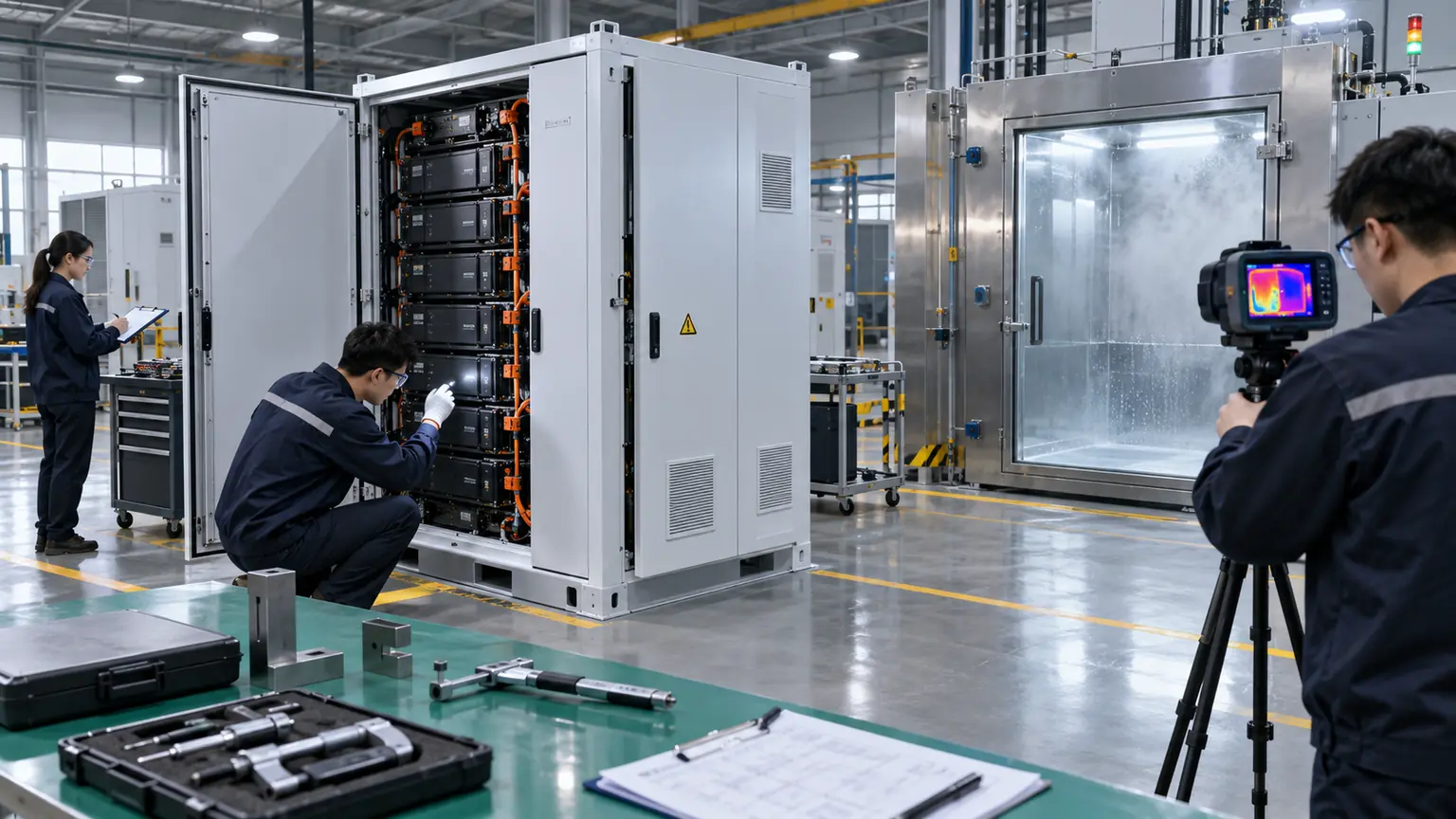
The strongest BESS enclosure is not the heaviest or most complicated one. It is the design in which hazards, interfaces, loads, airflow, service tasks, and verification methods are explicit. Jucheng Precision supports enclosure programs with sheet metal fabrication, CNC machining, 3D printing, surface finishing, prototyping, and low-volume production, allowing engineering teams to validate cross-process assemblies before scaling.

