


Il taglio di grezzi piatti ad alta precisione da lamiere metalliche con bordi puliti e privi di scorie è il passo fondamentale della produzione personalizzata. La gestione delle tolleranze di taglio laser della lamiera rappresenta una delle fasi più critiche nella fabbricazione personalizzata di lamiere, determinando direttamente se le operazioni a valle di piegatura e assemblaggio rimangano altamente accurate. Questo processo di taglio termico guidato da software utilizza fasci di luce ad alta potenza per vaporizzare il metallo, traducendo layout piatti digitali in pannelli fisici.
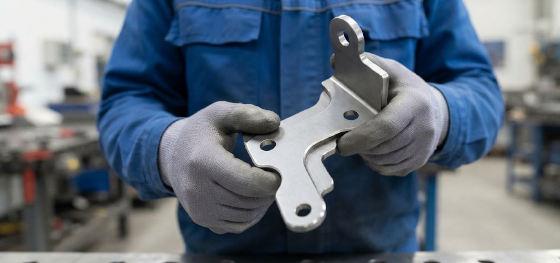
Soffri di parti fuori tolleranza che mostrano una forte conicità dei bordi, angoli fusi o bave elevate lungo le fessure tagliate al laser? Quando i modelli piatti vengono annidati senza compensare la larghezza fisica del taglio (kerf) del fascio laser, o quando le velocità di taglio sono impostate troppo alte, le parti finali si discosteranno dalle dimensioni target. Integrare proattivamente variabili di taglio specifiche del materiale nei tuoi modelli CAD è il modo migliore per garantire la qualità del tuo prodotto.
Esploriamo la precisione dimensionale standard dei laser a fibra moderni, analizziamo come la divergenza del fascio causi la conicità dei bordi su piastre spesse e confrontiamo la precisione del laser direttamente con il taglio a getto d'acqua e al plasma.
Qual è la tolleranza standard per il taglio laser a fibra?

Qual è la precisione dimensionale tipica ottenuta dai tagliatori laser a fibra standard?
Un laser a fibra moderno multi-kilowatt mantiene tolleranze di taglio lineari standard di ±0,1 mm per lamiere di spessore inferiore a 3 mm e può raggiungere ±0,05 mm in condizioni ottimizzate.
Per garantire accoppiamenti di componenti riusciti, è fondamentale comprendere come funziona l'interfaccia di taglio. Un laser a fibra CNC concentra un'immensa energia termica su un punto microscopico, vaporizzando il metallo istantaneamente. Tuttavia, il fascio laser possiede uno spessore fisico noto come larghezza del taglio (kerf) (la larghezza del materiale rimosso durante il taglio), che tipicamente varia da 0,15 mm a 0,3 mm.
Il nostro software di annidamento compensa automaticamente questa larghezza del taglio, garantendo che le parti finite corrispondano alle tue dimensioni 2D esatte. Anche la scelta del gas di taglio influisce sulla precisione. L'utilizzo di gas di assistenza ad azoto ad alta pressione raffredda la zona di taglio e rimuove il metallo fuso in modo pulito, prevenendo l'ossidazione dei bordi e preservando tolleranze strette, mentre il gas di assistenza all'ossigeno reagisce con l'acciaio al carbonio creando un bordo più largo e leggermente più ruvido.
Comprendere la conicità del laser su piastre spesse
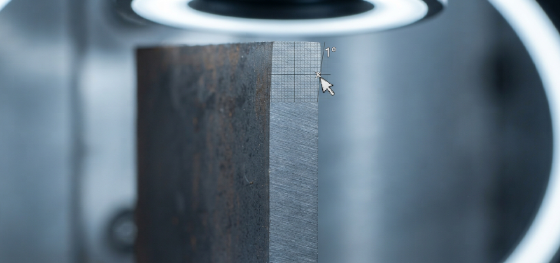
Perché i bordi tagliati al laser su piastre metalliche spesse mostrano una conicità microscopica?
As the laser beam penetrates thick plates, the focused light naturally diverges, causing the bottom of the cut to remain slightly wider than the top, creating a minor edge draft.
Bending or assembling thick-gauge laser-cut parts requires a deep understanding of laser taper (edge draft). On thin-gauge sheets under 3mm, this taper is virtually invisible. However, as the plate thickness scales past 6mm, the divergent nature of the focused laser beam becomes noticeable, causing the cut edge to exhibit a slight angle, typically between 1 and 2 degrees.
This edge draft means that the vertical cross-section of a cut is not a perfect 90-degree rectangle. If your assembly requires tight-tolerance sliding fits or press-fit pins in thick steel plates, this minor taper can prevent the parts from mounting flush. To resolve this, we utilize high-precision focus-tracking cutting heads to minimize divergence, and suggest secondary CNC machining to shave the tapered edges flat for critical mating interfaces.
Taglio laser vs. precisione di getto d'acqua e plasma

How do the processing tolerances of laser cutting compare directly to waterjet and plasma?
Fiber laser cutting is the most precise method for thin sheets, while waterjet is preferred for thick, heat-sensitive plates, and plasma cutting is reserved for low-cost, thick structural steel.
When evaluating high-volume cutting methods, designers must choose the optimal process based on material thickness and tolerance requirements. High-pressure waterjet cutting utilizes an abrasive garnet slurry to erode metal cold, holding tight tolerances of ±0.13mm with zero heat distortion. However, waterjet is significantly slower and more expensive than laser cutting.
Conversely, industrial plasma cutting is exceptionally fast and economical for cutting thick carbon steel plates up to 50mm, but its standard tolerance is much wider, typically ranging from ±0.5mm to ±1.5mm due to a large heat-affected zone. Below is a direct comparison of the three cutting methods:
| Cutting Technology | Standard Linear Tolerance | Heat-Affected Zone (HAZ) | B2B Application Range |
|---|---|---|---|
| Precision Fiber Laser | ±0.05 mm to ±0.15 mm | Microscopic (Highly concentrated light) | Thin-gauge enclosures, custom brackets, medical chassis |
| Abrasive Waterjet | ±0.13 mm to ±0.25 mm | Zero (Cold erosion process) | Thick copper busbars, titanium plates, aerospace parts |
| Industrial Plasma | ±0.50 mm to ±1.50 mm | Large (Intense high-temperature gas) | Heavy structural frameworks, thick carbon steel blanks |
Taglio laser a fibra di precisione presso Jucheng Precision
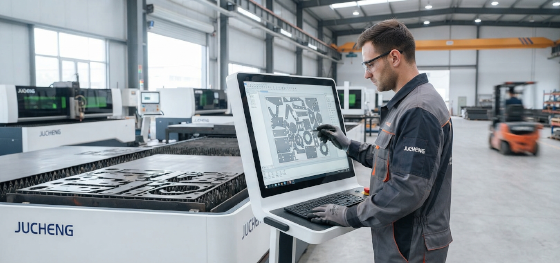
How does Jucheng Precision consistently achieve tight tolerances on custom laser-cut parts?
We operate high-power fiber lasers integrated with automatic focus-tracking heads and active gas-pressure control, checking all alignments before we cut.
Why pay premium prices for scattered processing? At Jucheng Precision, we manage cutting, bending, and powder coating under a unified quality system. This integrated capability keeps our overall tolleranze per la lavorazione della lamiera notevolmente basso, garantendo che le vostre parti siano tagliate, piegate e assemblate con estrema consistenza.
We process a wide range of materials, including lightweight aluminum, high-yield stainless steel, and easily formable carbon steel during high-precision sheet metal fabrication cycles. Our technical department provides a 24-hour free DFM analysis to check your CAD models, checking tolerances and tool clearances before production. Supported by our no MOQ policy and rapid delivery guarantee, we manage your project from initial flat pattern cutting to final, high-durability packaging and assembly.
FAQ: Domande critiche sulle tolleranze di taglio laser della lamiera
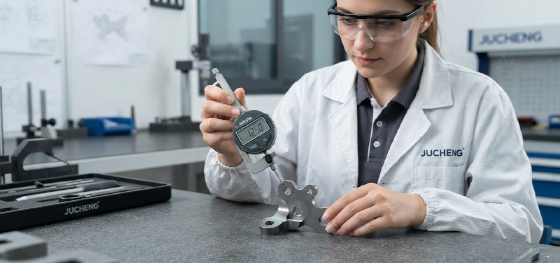
Il nostro team di ingegneria ha compilato soluzioni professionali per le sfide più comuni di qualità e costo affrontate dagli sviluppatori di prodotti:
What is the standard tolerance for laser cutting sheet metal tolerances in general projects?
Under standard commercial norms, the standard tolerance for laser cutting is approximately ±0.1mm to ±0.15mm for steel and aluminum sheets under 3mm thickness. These limits are highly cost-effective to manufacture, but high-end medical or aerospace enclosures often require tighter custom tolerances down to ±0.05mm, which we achieve using advanced fiber lasers with automatic focus tracking.Can highly reflective metals like brass and copper be cut to tight tolerances?
Yes, but they require advanced fiber lasers. High-purity copper and brass reflect standard CO2 laser wavelengths like a mirror, causing the laser beam to bounce straight back into the cutting head and burn out the optics. Fiber lasers operate at a much shorter wavelength that reflective metals absorb easily, delivering a clean, tight-tolerance cut without back-reflection risks.Does a thick sheet metal plate increase laser cutting tolerances?
Yes, thicker sheets are more rigid and harder to melt cleanly, requiring slower cutting speeds and higher laser powers. This high thermal energy increases the width of the heat-affected zone and causes a slight edge taper, typically widening the standard cutting tolerance to ±0.25mm or more for plates over 12mm thickness.How does Jucheng Precision prevent thermal warping from affecting the cutting tolerances?
We bypass thermal distortion by optimizing our laser cutting paths to distribute heat input evenly across the raw sheet. Our CNC programmers utilize advanced nesting software to schedule cut paths so that the laser head never dwells in a single area too long, and our quality control team conducts full coordinate measuring machine (CMM) dimensional checks on completed parts.

