


Ambienti esigenti come sale operatorie, laboratori farmaceutici e imbarcazioni marine richiedono materiali in grado di resistere a lavaggi chimici aggressivi senza degradarsi. L'impiego della fabbricazione di lamiere in acciaio inossidabile fornisce il livello di eccellenza in termini di resistenza meccanica, limiti termici e resistenza alla corrosione eccezionale necessari per soddisfare rigorose normative sanitarie e strutturali. Per i progettisti di prodotto che realizzano involucri di alta gamma, serbatoi per fluidi e staffe complesse, questo materiale robusto offre un valore di durata senza pari.
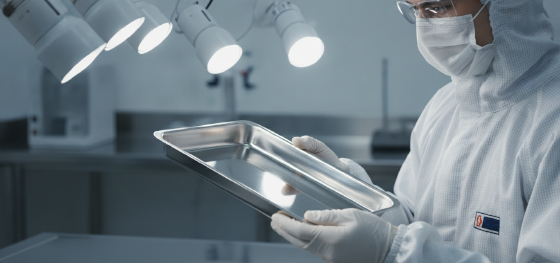
A differenza delle leghe più morbide che si graffiano facilmente o perdono i loro rivestimenti protettivi nel tempo, le leghe a base di ferro contenenti cromo possiedono una superficie naturale auto-riparante. Tuttavia, la lavorazione di questo metallo incredibilmente duro introduce gravi sfide di produzione. Se il tuo produttore non dispone di macchinari di formatura ad alta tonnellaggio e set di punzoni in acciaio per utensili specializzati, dovrai affrontare un'usura grave degli utensili, angoli di piega fuori tolleranza e contaminazione estetica della superficie.
Bilanciare il rapido tasso di incrudimento del materiale rispetto ai requisiti di tonnellaggio della pressa piegatrice è ciò che distingue i progetti industriali di successo dai costosi scarti. Esaminiamo la chimica unica alla base della resistenza alla corrosione di questo metallo, valutiamo i gradi standard utilizzati nelle officine moderne e rivediamo i metodi di finitura professionali che garantiscono superfici pulite e igieniche.
contenuto:
La resistenza alla corrosione senza pari dell'acciaio inossidabile
Grado 304 vs. Grado 316
Superare le sfide della piegatura e del taglio dell'acciaio inossidabile
Sabbiatura e lucidatura per una finitura impeccabile
Fabbricazione di precisione in acciaio inossidabile JUCHENG
FAQ: Domande critiche sulla fabbricazione di lamiere in acciaio inossidabile
La resistenza alla corrosione senza pari dell'acciaio inossidabile
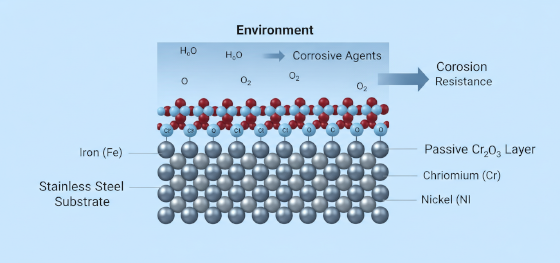
Cosa rende l'acciaio inossidabile impermeabile alla ruggine e all'ossidazione?
Il materiale contiene un minimo di 10,5% di cromo, che reagisce con l'ossigeno atmosferico formando uno strato passivo invisibile di ossido di cromo auto-riparante che blocca l'umidità.
Comprendere la chimica di questa lega di acciaio inossidabile è essenziale per gestire i cicli di vita del prodotto in ambienti difficili. A differenza degli acciai al carbonio che si affidano a vernici o zincatura per bloccare l'umidità, l'acciaio inossidabile possiede un meccanismo di protezione integrato. Se la superficie viene graffiata o incisa fisicamente, il cromo esposto reagisce immediatamente con l'ossigeno circostante per ricostruire lo strato passivo.
Questa proprietà metallurgica unica lo rende molto apprezzato nei dispositivi medici e nell'hardware per il trattamento chimico. Il materiale può gestire sterilizzazione quotidiana, lavaggi a vapore estremi e disinfettanti aggressivi senza subire degradazione superficiale, vaiolatura o ruggine. Ciò garantisce igiene a lungo termine e integrità strutturale in applicazioni critiche.
Grado 304 vs. Grado 316
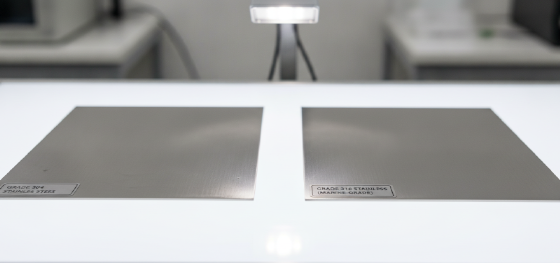
What is the difference between standard Grade 304 and marine-grade Grade 316?
Grade 304 is the industry workhorse for standard corrosion resistance, while Grade 316 contains molybdenum, which drastically reduces pitting caused by chlorides and saline.
To optimize costs during stainless steel sheet metal fabrication, engineers must understand the metallurgical differences between these common austenitic grades. Selecting the incorrect alloy can lead to premature stress corrosion cracking in high-saline environments, while over-specifying can inflate your material budget.
For most indoor, medical, and consumer electronics applications, acciaio inossidabile 304 is the preferred material choice, providing outstanding formability and excellent weldability at a balanced price point. However, if your hardware must survive saltwater exposure, industrial acids, or high-humidity coastal environments, upgrading to 316 acciaio inossidabile is essential. The addition of molybdenum protects the metal from localized chloride pitting, ensuring reliable performance in harsh marine applications.
Superare le sfide della piegatura e del taglio dell'acciaio inossidabile
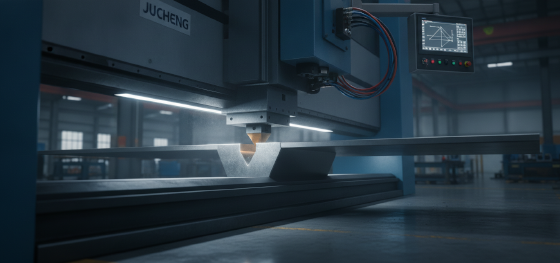
Why does forming stainless steel require high-tonnage CNC press brakes?
Stainless steel possesses high yield strength and work-hardens rapidly during deformation, requiring up to double the bending force of carbon steel to fold successfully.
Bending stainless steel requires a deep understanding of its high physical resistance to deformation. This metallurgical behavior is known as work hardening, where the metal becomes significantly harder and more resistant to bending as it is deformed. To force this tough material past its plastic limit, we deploy high-tonnage, rigid press brakes equipped with hardened tool steel dies.
Managing springback is also critical when forming these hard sheets. Due to high tensile limits, stainless steel exhibits extreme angular rebound when the punch retracts. Our programmers compensate for this by over-bending the metal by calculated angles in our CNC systems. Applying incorrect pressure when forming stainless can trigger local work hardening, causing the sheet to crack along the outer radius if the minimum bend radius is set too tight.
Sabbiatura e lucidatura per una finitura impeccabile
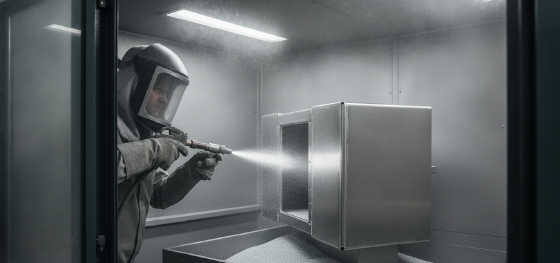
How do you achieve a uniform, aesthetic surface finish on fabricated stainless parts?
We execute physical bead blasting to create a uniform, non-reflective matte finish, or perform progressive polishing to achieve a highly cosmetic brushed texture.
Raw stainless steel parts straight from the welding booth often display localized heat tint and superficial weld marks. To restore cosmetic uniformity, we recommend advanced surface treatments. Running the parts through a professional sabbiatura con perle cabinet sprays fine glass beads under high pressure, producing a beautifully smooth, satin-matte texture that easily hides finger oils and light surface wear.
For high-end appliances, food processing panels, and architectural covers, we execute progressive abrasive polishing. Using fine-grit sanding wheels, our finishing technicians blend weld joints flat, creating a continuous, parallel-brushed direction. This highly skilled manual blending removes all geometric seams, leaving a premium finish that looks like a single continuous block of stainless.
Fabbricazione di precisione in acciaio inossidabile JUCHENG
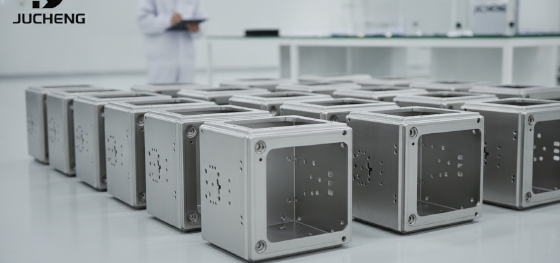
What sets JUCHENG's custom stainless steel manufacturing apart?
We operate high-power fiber laser cutters and high-tonnage press brakes managed by skilled operators, utilizing dedicated tooling to prevent carbon cross-contamination on your assemblies.
Whether your project requires high-durability brackets or sanitary enclosures, selecting the correct sheet metal material is critical to long-term lifecycle performance. JUCHENG integrates advanced laser profiling and high-force forming into our full-service production lines. This allows us to transition your 3D models into fully finished, durable stainless hardware with extreme dimensional accuracy.
We stock a wide variety of raw gauges in both 304 and 316 grades, matching each to its mathematically calculated springback allowances. Our technical queue provides a 24-hour free DFM analysis to check your CAD designs for bend limits and tooling access before production. Supported by our no MOQ policy and rapid delivery guarantee, we manage your project from initial flat pattern cutting to final, fully integrated packaging.
FAQ: Domande critiche sulla fabbricazione di lamiere in acciaio inossidabile
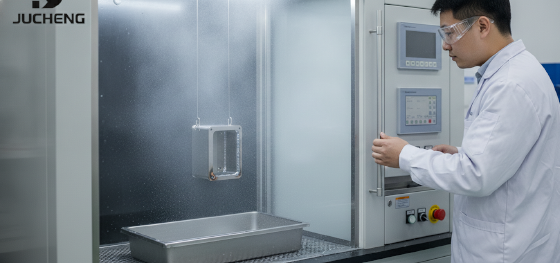
What causes carbon cross-contamination on stainless steel, and how is it prevented?
Carbon contamination occurs when stainless steel comes into contact with carbon steel tools, such as grinding discs or press brake dies. The carbon steel particles embed in the stainless surface, disrupting the passive chromium layer and initiating rapid rust. To prevent this, we utilize dedicated, stainless-only tooling on our shop floor and perform complete chemical passivating washes to clean the metal after fabrication.
Why is laser cutting stainless steel with nitrogen assist gas preferred over oxygen?
Oxygen assist gas causes the cut edge of stainless steel to oxidize and turn black, requiring extensive secondary grinding before welding or painting. Utilizing high-pressure nitrogen assist gas cools the cut zone and completely prevents oxidation, delivering a clean, bright, and shiny edge that is ready for immediate structural welding.
Can stainless steel 304 be hardened through post-weld heat treatment?
No, austenitic stainless steels like 304 and 316 cannot be hardened by heat treatment. They can only be hardened mechanically through cold-working processes like rolling or bending. If your design requires high post-weld hardness, we recommend utilizing martensitic stainless steel grades (such as 410) which are highly responsive to thermal hardening.
How does JUCHENG prevent surface contamination during stainless steel sheet metal fabrication?
We keep our stainless steel fabrication area strictly segregated from our carbon steel processing bays to prevent airborne metal dust cross-contamination. Our finishing team utilizes certified iron-free grinding discs, performs electro-chemical weld cleaning, and runs automated passivation treatments to ensure that every finished component maintains its flawless corrosion resistance.

