


L'implementazione di robot mobili autonomi negli ambienti caotici di magazzini ad alto traffico o cantieri pieni di ghiaia nel [2026] rivela una debolezza meccanica critica: i parafanghi standard in Polipropilene (PP) si crepano e si deformano permanentemente sotto impatto improvviso. Mentre il PP è apprezzato per il suo basso costo e la sua tenacità nei beni di consumo, le sue prestazioni in formati industriali su larga scala sono spesso compromesse da sbiancamento da stress e scarsa memoria dimensionale. Ottenere un esterno veramente "Infrangibile" per il tuo robot prototipo richiede una svolta sofisticata nei materiali. Padroneggiare la simulazione del polipropilene con RIM elastomerico consente agli ingegneri di produrre componenti di grandi dimensioni e ad alto impatto che si piegano senza rompersi e ritornano perfettamente alla loro geometria originale.
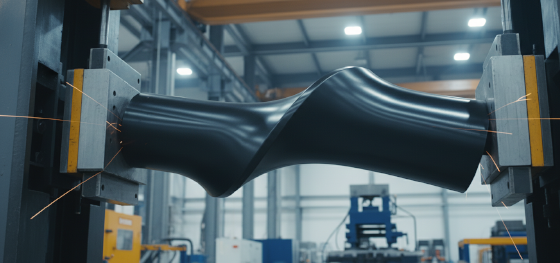
La resilienza meccanica in Parti per Robot Industriali non riguarda più solo l'evitare la frattura; si tratta di mantenere l'integrità estetica e funzionale della macchina dopo una collisione. Il PP stampato a iniezione standard spesso mostra brutti segni di stress bianchi nel punto di impatto, segnalando una perdita permanente di resistenza del materiale. Jucheng Precision affronta questi ostacoli di durabilità utilizzando polioli ad alte prestazioni che mostrano 100% memoria flessionale. Jucheng fornisce Servizi di Stampaggio in Poliuretano di alta gamma che danno priorità all'assorbimento di energia e alla qualità superficiale a zero difetti nel nostro hub di produzione di precisione a Shenzhen.
Operando secondo i rigorosi standard di qualità di ISO 13485, ISO 14001, e IATF 16949, Jucheng Precision funge da partner materiale di alta gamma per gli OEM globali di veicoli autonomi. Trasformiamo progetti bionici complessi in hardware validato e a prova di impatto in appena 15 giorni lavorativi, sfruttando la nostra flotta di oltre 150 macchine CNC. Questa guida esplora gli standard essenziali di allungamento, l'eliminazione dello sbiancamento da stress e la logica applicativa richiesta per simulazione del polipropilene con RIM elastomerico per garantire che la tua prossima flotta di macchine autonome sopravviva alla transizione dal laboratorio al fango.
contenuto:
Memoria a flessione: la RIM elastomerica può superare il PP reale?
Dati tecnici: confronto tra RIM elastomerica e PP stampato a iniezione
Logica a zero difetti: eliminazione dello stress bianco in parti di grandi dimensioni
Applicazioni: paraurti e parafanghi protettivi per robot industriali
Jucheng Hub: prototipazione rapida per hardware ad alto impatto
FAQ: logistica e durata dei materiali simulati in PP
Memoria a flessione: la RIM elastomerica può superare il PP reale?
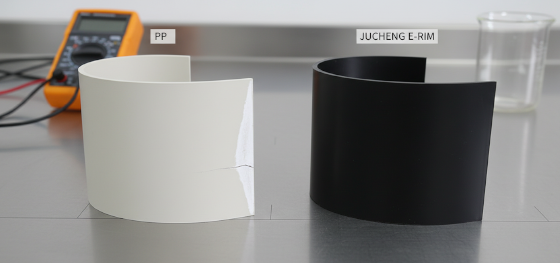
La tenacità assoluta nell'hardware autonomo è determinata dalla capacità del materiale di tornare alla sua forma originale dopo un impatto a 10 G. In simulazione del polipropilene con RIM elastomerico, il principale vantaggio ingegneristico è la capacità di "rimbalzo" del materiale. I parafanghi tradizionali in PP spesso si "piegano" o si ammaccano permanentemente quando vengono colpiti da un oggetto pesante, richiedendo costose sostituzioni o rimodellamenti manuali. Jucheng Precision utilizza resine poliuretaniche elastomeriche specializzate che agiscono come una molla solida. Quando si verifica un impatto, i legami incrociati molecolari si deformano elasticamente e poi riportano la parte alle sue esatte dimensioni CAD. Questo garantisce che i sensori del tuo robot rimangano allineati anche dopo una piccola collisione in magazzino.
Perché la RIM elastomerica è migliore per i paraurti?
Offre un allungamento a rottura fino al 400%, consentendo alla parte di assorbire un'enorme energia senza fratturarsi o perdere la sua geometria strutturale.
La resistenza alla fatica è la seconda vittoria meccanica per il PP simulato. In parti per robot industriali, componenti come soffietti protettivi o coperture flessibili per giunti subiscono migliaia di cicli di flessione al giorno. Il PP tradizionale alla fine sviluppa un "cedimento a cerniera", dove la plastica si assottiglia e si spezza lungo la linea di piega. Le parti in RIM elastomerica di Jucheng mantengono la loro integrità per milioni di cicli perché la matrice termoindurente non subisce lo stesso "scorrimento" molecolare che causa l'affaticamento nei termoplastici. Fornendo questi componenti ad alto ciclo, garantiamo che i tuoi intervalli di manutenzione siano misurati in anni, non in mesi, riducendo significativamente il costo totale di proprietà per i tuoi clienti.
La gestione del peso è anche migliorata dalla logica liquida del processo di stampaggio a iniezione reattiva. Possiamo stampare un parafango lungo 1,5 metri che è spesso 4 mm nei punti di montaggio ma si assottiglia a 2 mm nelle aree non critiche. Questo spessore di parete variabile ci consente di ridurre il peso del pezzo del 20% rispetto al PP standard stampato a iniezione, che richiede pareti uniformi per evitare segni di avvallamento. Jucheng Precision esegue una analisi DFM gratuita in 24 ore per identificare queste opportunità di risparmio di peso, garantendo che i tuoi robot a batteria si muovano più velocemente e lavorino più a lungo sul campo.
Dati tecnici: confronto tra RIM elastomerica e PP stampato a iniezione
Success in hardware validation depends on matching the material's energy absorption to your robot's crash profile. High-fidelity simulations require accurate stress-strain data. Jucheng Precision provides full material characterization reports back to the primary chemical batch. The following table compares the essential performance metrics of simulazione del polipropilene con RIM elastomerico against standard industrial Polypropylene for the current market.
| Parametro meccanico | Simulated PP (Elastomeric RIM) | Injection Molded PP | Impatto ingegneristico |
|---|---|---|---|
| Elongation at Break (%) | 150 - 400 | 50 - 150 | Superior Energy Absorption |
| Resistenza a Trazione (psi) | 3,500 - 5,500 | 4,500 | Equivalent Load Capacity |
| Tear Strength (pli) | 350 - 500 | 150 - 250 | Resists Sharp Object Piercing |
| Stress Whitening | None (Permanent Color) | High (Visual Failure) | Preserves Retail Aesthetic |
The higher "Tear Strength" of elastomeric RIM is a critical factor for robots operating in environments with sharp debris, such as scrap yards or forests. While a real PP part would experience "crack propagation" from a single scratch, our simulated PP material stops the crack in its tracks due to the rubbery molecular structure. Jucheng Precision’s Servizi di Stampaggio in Poliuretano ensure that your hardware remains functionally sound and aesthetically pristine even after heavy mechanical abuse.
Logica a zero difetti: eliminazione dello stress bianco in parti di grandi dimensioni
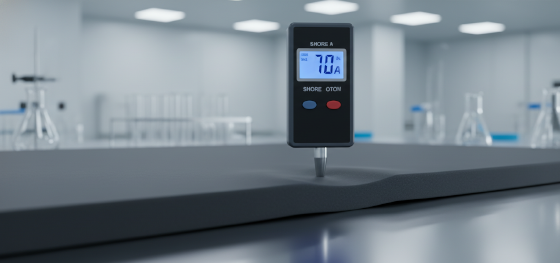
Aesthetics and structural integrity are linked through the phenomenon of stress whitening. When traditional PP is bent beyond its elastic limit, the internal crystalline structure breaks, scattering light and creating a white mark. In simulazione del polipropilene con RIM elastomerico, Jucheng Precision eliminates this failure mode entirely. Our thermoset polyurethanes do not use the same semi-crystalline structure as PP. Instead, they utilize an amorphous molecular mesh that can bend 180 degrees without any change in color. This ensures that your autonomous tractors and delivery bots look as good on their 1,000th day as they did on their first.
How to achieve custom colors for bumpers?
We mix high-stability pigments directly into the liquid Side B component, creating a "Color-Through" part that hides scratches better than painted alternatives.
Chemical resistance is another silent advantage of our elastomeric formulations. In [2026] agricultural environments, hardware is constantly exposed to liquid fertilizers and acidic pesticides. Real PP is prone to "Environmental Stress Cracking" (ESC) when exposed to these chemicals under tension. Because Jucheng’s RIM parts cure in a "Relaxed State" at low pressure, they possess zero internal stress. Combined with the naturally inert chemistry of polyurethane, this ensures your robot fenders survive years of chemical application without losing their flexibility.
Precision at the parting line is maintained through our oltre 150 macchine CNC capacity. We machine high-strength aluminum molds with sub-micron accuracy, ensuring that the "Flash" on your flexible parts is kept to a microscopic film. This reduces the need for aggressive post-processing that can mar the surface of an elastomeric part. By delivering parts with a Ra 0.8 finish directly from the mold, Jucheng Precision allows your assembly team to move from crate to robot in minutes, providing a true "Bridge to Production" service in the Shenzhen hub.
Applicazioni: paraurti e parafanghi protettivi per robot industriali
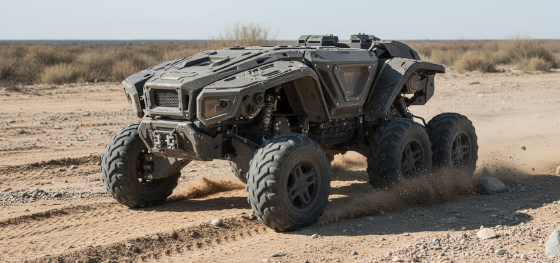
Impact protection is the primary mission of simulazione del polipropilene con RIM elastomerico. In the fulfillment centers of the future, AMRs operate in high-density areas alongside human workers. A rigid plastic bumper is a safety risk to humans and a liability for the robot. Jucheng Precision specializes in manufacturing "Soft-Skin" bumpers that provide a 50mm "Crush Zone." By utilizing structural foam RIM techniques, we create bumpers with a dense, tear-resistant skin and a microcellular core that dissipates impact energy, protecting both the human and the machine’s internal AI compute stack.
Can elastomeric RIM handle low temperatures?
Yes. Unlike standard PP which becomes brittle and shatters at 0°C, our elastomeric PU remains flexible and impact-resistant down to -40°C, ideal for cold-storage robotics.
Agricultural robotics demand a level of "Gravel-Resistance" that standard plastics cannot match. Fenders for autonomous tillers are constantly blasted by rocks and dirt. Jucheng Precision’s simulated PP materials possess a "Self-Healing" surface quality—minor scratches are absorbed by the rubbery matrix, making them invisible to the naked eye. This environmental resilience is essential for maintaining the "High-Tier" brand image required for global AgTech OEMs. Our Shenzhen facility manages the entire production cycle, from raw chemical blending to final robotic trimming, ensuring your Beta fleet is ready for the harvest.
Multi-material integration is the final pillar of protective design. Jucheng Precision can overmold flexible elastomeric panels directly onto a rigid CNC-machined skeleton. This creates a monolithic part with a "Hard Bone and Soft Skin" architecture. This technique is frequently used for Parti per Robot Industriali where the mounting interface must be rigid for sensor accuracy, but the external face must be flexible for impact safety. By consolidating these functions into a single Servizi di Stampaggio in Poliuretano cycle, we eliminate the cost and weight of secondary bolted assemblies, delivering a sleeker and more reliable autonomous platform.
Jucheng Hub: prototipazione rapida per hardware ad alto impatto
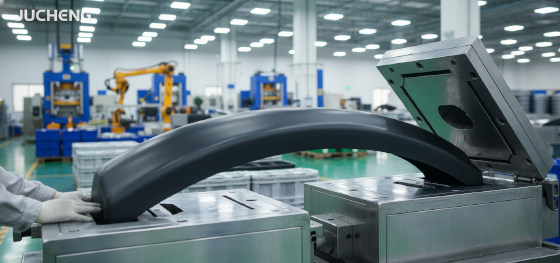
Dominating the hardware market requires a partner that can scale from a single functional prototype to a commercial deployment of 5,000 units without losing a millisecond of momentum. Jucheng Precision operates with a 24/7 manufacturing mindset in our Shenzhen precision manufacturing hub, delivering high-tolerance simulazione del polipropilene con RIM elastomerico components with industry-leading speed. We provide a "Bridge to Production" that allows you to move from a CAD file to a fleet of 50 Beta robots with consistent tactile and mechanical quality.
Integrating your structural design with Jucheng’s expertise ensures that your hardware survives the "First-Field Contact" and moves into mass adoption. We offer a Nessun MOQ policy, allowing you to source 1 to 10 units for initial Alpha testing without the crushing cost of mass-production tools. Whether you are building an autonomous vineyard scout or a heavy-duty industrial mobile base, Jucheng Precision provides the rigid, precise, and chemically optimized foundations that keep your innovation moving through the high-stakes cycles and the years of hard labor.
Our facility is equipped with dedicated high-pressure RIM assembly cells and ISO-standard quality labs, allowing us to manage the entire hardware lifecycle in one location. we manage the complexity of multi-material bonding and custom textures so your engineering team can focus on the motion control and the AI. By combining Shenzhen's speed with industrial-grade material verification and global quality standards, Jucheng Precision remains the preferred partner for the world's most aggressive hardware challenges. Contact us today to start your next project.
FAQ: Logistics and Durability of Simulated PP Materials
Is simulated PP as light as real Polypropylene?
Yes. By utilizing microcellular foaming, we can achieve specific gravities below 1.0, making our elastomeric parts float on water while maintaining structural strength.
Can JUCHENG overmold rubber skins onto aluminum parts?
Absolutely. We specialize in bonding medical and industrial elastomers to CNC-machined metal cores for ergonomic and safety applications.
How do you ensure the flexible parts don't sag over time?
We utilize high-tier polyols with superior thermal stability and manage the curing cycle to eliminate internal residual stresses.
What is the maximum part length for flexible RIM at Jucheng?
We regularly produce flexible protective bumpers and fenders up to 2,000mm in length with consistent wall thickness.
What is the lead time for a set of 20 flexible fenders?
Aluminum rapid tools and the first 20 parts are typically delivered in 15 to 20 business days.
Material fatigue and stress whitening are absolute innovation killers for high-end industrial robotics. Partnering with Jucheng Precision ensures that your functional iterations are built with the spring-back stampaggio a iniezione di reazione in poliuretano e le tecniche specializzate simulazione del polipropilene con RIM elastomerico techniques the industry demands. Reach out to our Shenzhen manufacturing hub today for a complete DFM review and build the unyielding foundation your autonomous fleet requires.

