


Un'idea nella tua testa è perfetta. Non ha difetti. Un modello 3D sullo schermo è anche perfetto. Non ha difetti di produzione. Ma tra questo mondo di perfezione e il mondo reale dei prodotti fisici, c'è un divario pericoloso.
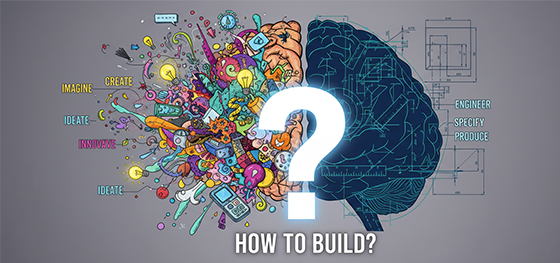
Molte grandi idee muoiono in questo divario. Falliscono le dure prove della realtà. Lo scatto che funzionava nel modello CAD si rompe nella vita reale. Il materiale che sembrava buono in una simulazione sembra economico nelle mani del cliente.
Allora, cos'è lo stampaggio rapido? Non è solo un pezzo di metallo. È un ponte. È uno strumento strategico progettato per portare la tua idea in sicurezza attraverso questo divario, dalla fantasia di un prototipo alla realtà di un prodotto producibile.
contenuto:
Rispondere alla Prima Domanda: Cos'è un Prototipo?
Definire lo Stampaggio Rapido: Il Ponte
Vantaggio 1: Parlare il Linguaggio dei Materiali Reali
Vantaggio 2: Rispondere alla Domanda della Scala
Il Tuo Partner per Attraversare il Divario
Rispondere alla Prima Domanda: Cos'è un Prototipo?
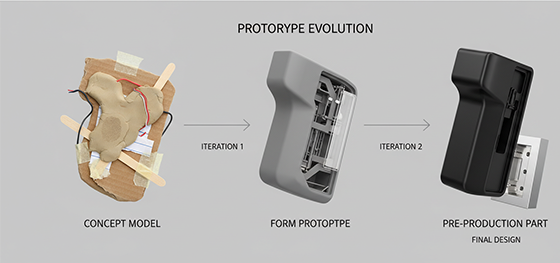
Per capire lo stampaggio rapido, devi prima capire i diversi livelli di un "prototipo"."
Il primo livello è un prototipo "simile nell'aspetto". Questo è spesso una stampa 3D. Il suo compito è validare la forma, le dimensioni e l'ergonomia del tuo design. Risponde alla domanda: "La mia idea sembra giusta?"
Il secondo livello è un prototipo "funzionante". Questo potrebbe essere un assemblaggio approssimativo di parti CNC ed elettronica. Il suo compito è validare la funzione principale. Risponde alla domanda: "La mia idea funziona?"
Ma c'è un terzo livello critico. Il prototipo "pre-produzione". Questo prototipo deve apparire, sentire e funzionare esattamente come il prodotto finale. Deve essere realizzato con il materiale di produzione reale e con il processo di produzione reale. Risponde alla domanda più importante: "Posso effettivamente produrre e vendere questa idea?"
Definire lo Stampaggio Rapido: Il Ponte
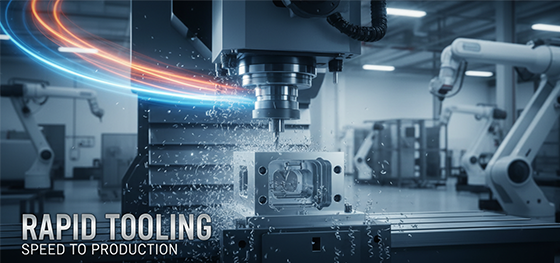
Qui entra in gioco la Attrezzatura rapida entra in gioco. È il modo più veloce ed economico per creare questi prototipi critici di pre-produzione.
La parte "stampaggio" si riferisce a uno stampo a iniezione. Ma a differenza di uno stampo per produzione di massa in acciaio temprato che richiede mesi per essere costruito, uno stampo rapido è tipicamente realizzato con un materiale più morbido, come l'alluminio.
The "rapid" part refers to how this tool is made. We use high-speed CNC machines to carve the mold directly from a block of aluminum. This allows us to create a functional injection mold in as little as 7 days.
This tool is then used in a standard injection molding machine to produce your parts. The result is not a simulation. It is a real, molded part.
Vantaggio 1: Parlare il Linguaggio dei Materiali Reali
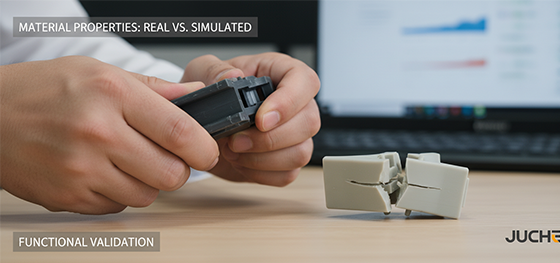
The first huge benefit of this approach is material reality.
3D printing materials are amazing, but they are simulants. A 3D printed part that is "ABS-like" is not the same as a part molded from real ABS pellets. It does not have the same strength, the same flexibility, or the same surface texture.
Rapid tooling allows you to make your parts in the exact, final, production-grade plastic. Real ABS. Real Polycarbonate. Real glass-filled Nylon.
This is a game-changer. It allows you to perform real, meaningful functional tests. Will your snap-fit break after 100 cycles? Will your part deform under heat? With a part from a rapid tool, the data you get is real data you can trust.
Vantaggio 2: Rispondere alla Domanda della Scala

The second benefit is answering the question of scale. 3D printing is great for making 5 or 10 parts. But what if you need 500 parts for a beta test with real customers? Or 2,000 parts for your first production run?
3D printing at this volume is incredibly slow and expensive. The cost per part never goes down.
Rapid tooling is the perfect solution for this "low-volume" stage. While there is an upfront tooling cost, the price per part is extremely low. This makes it economically feasible to produce hundreds or even thousands of parts.
It allows you to get your product into the hands of real users. You can gather market feedback and validate your idea before you make the huge investment in a mass-production steel mold. It is the ultimate risk-reduction strategy.
Il Tuo Partner per Attraversare il Divario
Quindi, what is rapid tooling? It is the technology that bridges the dangerous gap between a simple prototype and full-scale production.
It is a philosophy that allows you to test, learn, and iterate with real materials, at a realistic scale, and at an affordable cost.
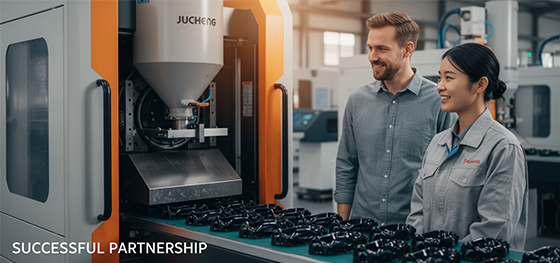
Choosing a partner for this critical stage is essential. At JUCHENG, we are experts in building these bridges. We have the in-house CNC capabilities to create your tool quickly. We have the injection molding expertise to produce your parts perfectly.
We are here to be your guide on the most important part of your product's journey: the journey from a great idea to a real, successful product.

