


Gli ingegneri hardware perdono tempo di produzione critico quando specificano i fissaggi meccanici sbagliati per involucri a lamiera sottile. Guidare filettature aggressive e rigide in pannelli di alluminio morbido senza calcolare i limiti di coppia massimi garantisce immediati colli di bottiglia sulla linea di assemblaggio. La fisica dei fissaggi determina la durata operativa assoluta del vostro telaio industriale personalizzato sotto vibrazione cinetica.
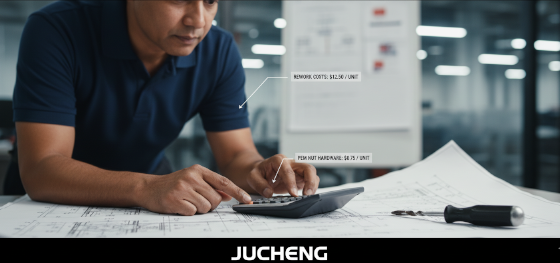
Scegliere tra Viti per lamiera e Dadi PEM rappresenta il crocevia strutturale definitivo per la produzione di precisione hardware [2026]. Queste due tecnologie di fissaggio operano su paradigmi meccanici totalmente ostili. Una estrude e schiaccia violentemente il materiale nativo per creare il proprio blocco di attrito, mentre l'altra incorpora un ancoraggio permanente in acciaio ad alta resistenza nel substrato delicato.
Padroneggiare questa specifica matrice decisionale di assemblaggio previene aggressivamente i catastrofici fallimenti sul campo. I team di procurement devono valutare brutalmente le tolleranze dei fori pilota, le soglie di strappo della filettatura e i rischi di corrosione galvanica localizzata. L'economia di precisione si basa interamente sull'abbinamento del fissaggio designato all'esatta frequenza di accesso alla manutenzione dell'involucro.
Viti per lamiera vs Dadi PEM: In cosa differiscono meccanicamente?
Quando utilizzare le viti per lamiera per gli involucri?
Quando è NECESSARIO evitare le viti per lamiera nell'assemblaggio?
Quali sono le vere dinamiche di costo di assemblaggio per entrambi?
In che modo Jucheng ottimizza la lamiera personalizzata a Shenzhen?
Quali sono le FAQ più critiche sui fissaggi per lamiera?
Viti per lamiera vs Dadi PEM: In cosa differiscono meccanicamente?
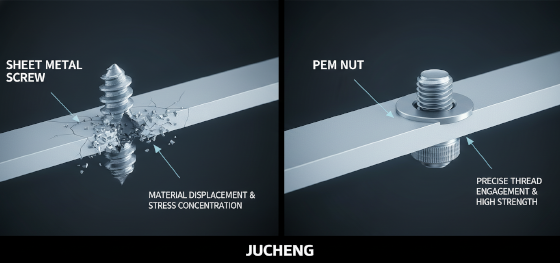
Le viti per lamiera incidono forzatamente le proprie filettature di accoppiamento in substrati duttili, mentre i dadi PEM forniscono filettature maschio permanenti in acciaio pre-filettate pressate direttamente in pannelli sottili.
I fissaggi autofilettanti utilizzano un passo di filettatura ampiamente distanziato e un nucleo in acciaio temprato. Mentre l'avvitatore pneumatico fa ruotare la vite, le filettature affilate tagliano aggressivamente nella parete del foro pilota CNC preforato. Questo spostamento meccanico brutale crea un attrito intenso, bloccando saldamente il fissaggio contro il metallo circostante senza richiedere un dado di supporto posteriore.
I dadi PEM (elementi di fissaggio a ricalcatura) alterano fondamentalmente la capacità strutturale del substrato. Una pressa idraulica massiccia comprime il dado temprato in un foro tagliato al laser. La pressione estrema costringe l'alluminio morbido del pannello a fluire a freddo nell'anello di ricalcatura dentellato del dado, incorporandolo permanentemente nel telaio. Ciò consente agli ingegneri di utilizzare bulloni standard di alta precisione su involucri estremamente sottili.
| Fissaggio metrico | Vite autofilettante per lamiera | Elemento di fissaggio a ricalcatura (dado PEM) | Impatto ingegneristico |
|---|---|---|---|
| Riutilizzabilità (Manutenzione) | Estremamente bassa (si strappa facilmente) | Infinita (bullone standard) | I dadi PEM dominano i pannelli di accesso rimovibili |
| Attrezzatura di assemblaggio richiesta | Trapano / Avvitatore a percussione | Pressa idraulica di inserimento | Le viti riducono drasticamente i costi delle attrezzature |
| Resistenza alle vibrazioni | Moderata (può allentarsi) | Very High (With thread-locker) | PEM hardware secures aerospace drivetrains |
| Minimum Substrate Thickness | Requires thick enough wall to bite | Down to 0.030" (0.76mm) | PEM secures ultra-lightweight electronic chassis |
Quando utilizzare le viti per lamiera per gli involucri?
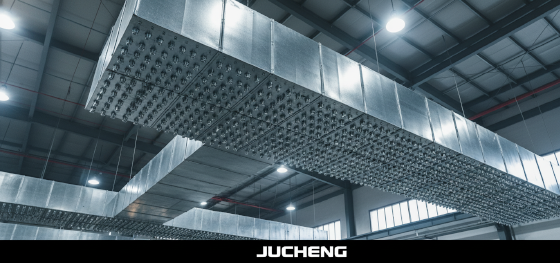
Specify sheet metal screws exclusively for permanent, one-time assembly joints on heavy galvanized HVAC ducting and static internal brackets where high-torque reusability remains entirely unnecessary.
Industrial ventilation systems rely on massive overlaps of thin gauge steel. Sending these massive tubes to a hydraulic press for PEM nut installation represents a logistical nightmare. Installers deploy self-drilling TEK screws directly on the construction site. The integrated drill-bit tip violently cuts its own pilot hole, penetrating two layers of raw steel in milliseconds.
Engineers actively exploit these aggressive threads to permanently lock blind-side assemblies. If an internal power supply bracket mounts deep inside a telecom chassis where technicians cannot physically reach behind to hold a standard hex nut, a self-tapping fastener provides the fastest, most economical friction lock available.
Quando è NECESSARIO evitare le viti per lamiera nell'assemblaggio?
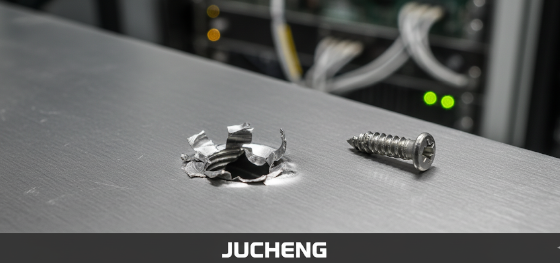
Deploying sharp-threaded fasteners into dynamic access panels requiring frequent maintenance guarantees catastrophic thread strip-out and permanent enclosure ruin after mere three removal cycles.
Every time a technician backs out a sheet metal screw and re-drives it into a soft 5052 aluminum chassis, the hardened steel threads literally chew away the delicate aluminum wall. The pilot hole rapidly expands, losing all frictional grip. This fatal phenomenon, known as torque-out, leaves the screw spinning endlessly in a destroyed, hollowed-out crater.
You must absolutely mandate PEM nuts or thick CNC tapped blocks for server rack faceplates, battery compartment doors, and highly kinetic drone payloads. Furthermore, overtightening a self-tapping screw with an unregulated impact driver causes instant cam-out, stripping the Phillips head into a useless metallic bowl that prevents future extraction.
Quali sono le vere dinamiche di costo di assemblaggio per entrambi?
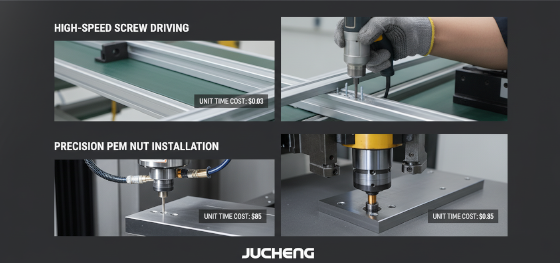
Self-tapping screws drastically slash initial hardware procurement and tooling capital, while PEM nuts demand slower, highly specialized hydraulic insertion labor that explodes prototyping budgets.
Purchasing ten thousand zinc-plated sheet metal screws costs mere fractions of a penny per unit. An assembly line worker armed with an auto-feed pneumatic driver can lock down fifty enclosure covers in minutes without moving the chassis off the conveyor belt. This blazing raw velocity dominates low-margin consumer electronics manufacturing.
Transitioning to PEM nuts flips the economic equation. While the physical steel nut remains relatively inexpensive, the labor process is excruciating. Operators must manually align each specific hole on a heavy aluminum chassis over the hydraulic press anvil, cycling the machine hundreds of times per unit. Elite structural survivability demands heavy upfront labor investments.
In che modo Jucheng ottimizza la lamiera personalizzata a Shenzhen?
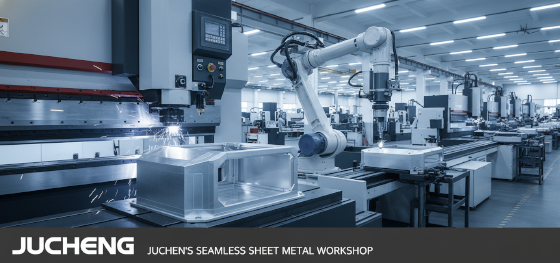
Operating deep within the Shenzhen precision manufacturing hub, Jucheng deploys automated robotic hardware insertion systems to brutally slash the labor costs associated with high-end PEM nut assemblies.
Navigating global hardware procurement requires eliminating disjointed, third-party assembly vendors. Shipping laser-cut panels across the city for fastener insertion invites catastrophic dimensional warping and logistical delays. We centralize heavy CNC bending, laser cutting, and robotic press-fitting entirely under one heavily audited 8000-square-meter roof.
Our engineering teams aggressively execute Free DFM reviews prior to cutting your first blank. If your CAD blueprint specifies a self-tapping screw into a highly stressed 1mm aluminum plate, we immediately flag the strip-out risk and pivot the design to hardened steel clinching nuts. Backed by strict ISO9001:2015 protocols, we engineer absolute survivability.
Quali sono le FAQ più critiche sui fissaggi per lamiera?
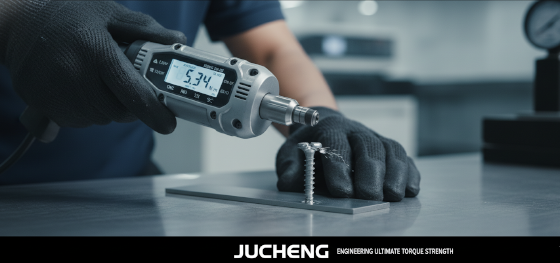
Resolving hardcore kinetic clamping variables prevents catastrophic structural separation during the high-vibration deployment of custom industrial hardware.
What dictates the exact pilot hole size for a sheet metal screw?
The pilot hole must mathematically align with the screw's inner root diameter, not the outer thread pitch. If the laser-cut hole is too small, the screw will bind, overheat, and snap its own head off. If the hole is too large, the sharp threads cannot bite into enough substrate, resulting in immediate torque-out and zero clamping force.
Can you use sheet metal screws directly into solid CNC machined aluminum blocks?
No, it represents a severe mechanical conflict. Driving coarse, aggressive threads deep into solid billet aluminum creates immense radial pressure that often snaps the hardened steel fastener. Solid CNC blocks require traditional drilled and tapped machine threads or specialized helical wire inserts for maximum pull-out strength.
Does dissimilar metal corrosion occur with these fasteners?
Yes, catastrophically. Driving a raw stainless steel sheet metal screw directly into an untreated magnesium or aluminum chassis in a highly humid environment triggers rapid galvanic corrosion. The aluminum substrate physically dissolves around the screw threads. Engineers must specify zinc-plated or specialized ceramic-coated fasteners to act as a chemical barrier.

