


Choosing materials for semiconductor equipment parts is an engineering decision, not a catalog exercise. The right grade must survive the operating environment, hold its geometry, support the required finish, and remain available through the next build. Material selection is strongest when performance, manufacturing, cleanliness, and procurement are reviewed together.
Start with the environment, not the material name
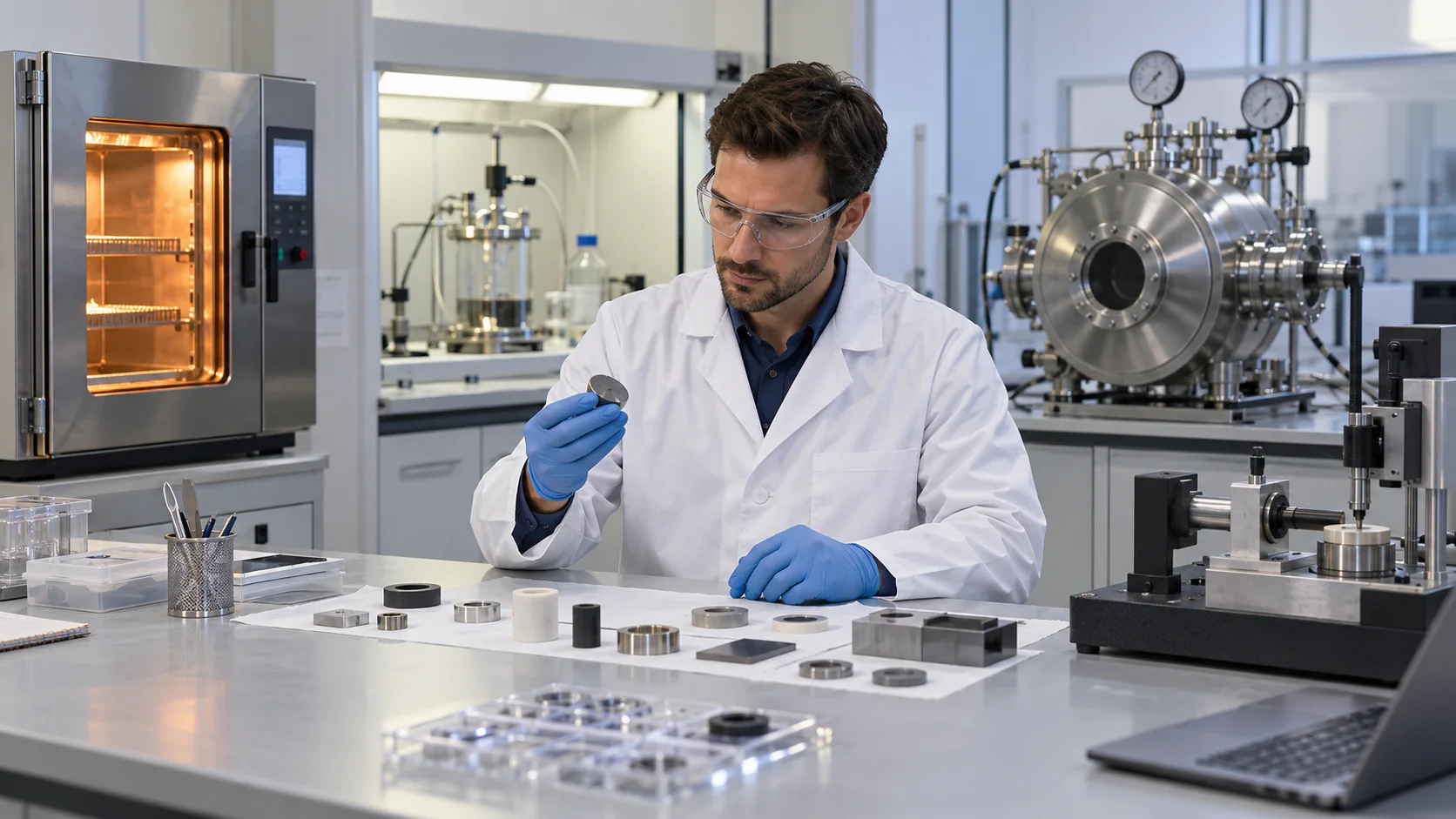
Start with exposure and function. Record temperature range, chemical contact, vacuum or pressure conditions, wear, electrical requirements, load, thermal movement, and cleaning expectations. Also identify whether the component is process-facing, structural, insulating, sliding, or purely protective.
This brief prevents a common mistake: choosing a material because it is familiar while ignoring the feature that actually controls performance. A soft polymer may work for an insulating fixture but fail as a wear surface. A strong metal may be unnecessary for a guard but essential for a stable locating base.
The wider semiconductor equipment parts manufacturing route should be considered at the same time, because material choice affects machining, finishing, inspection, and packaging.
How the main material families differ
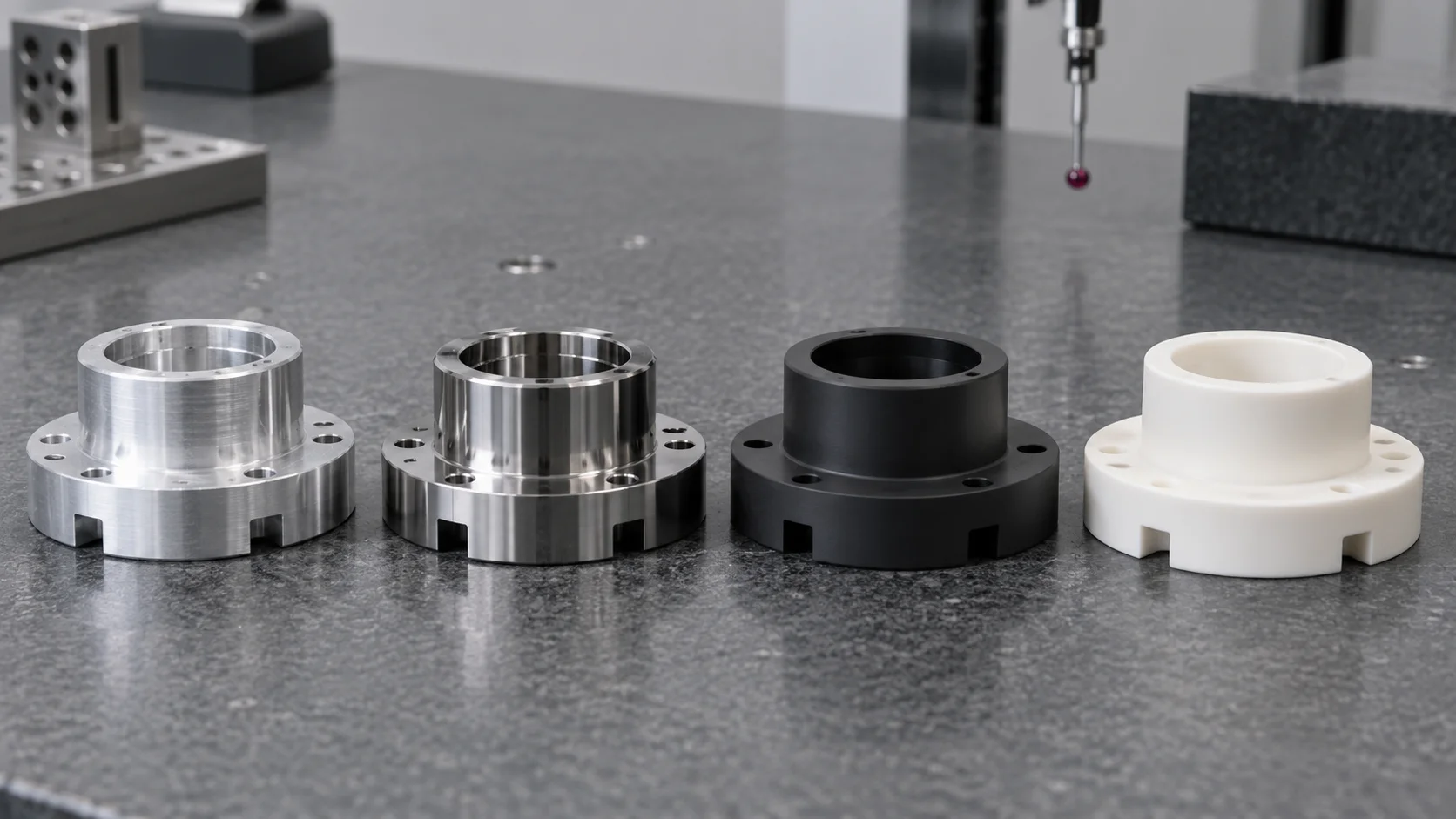
| Famiglia | Useful strengths | Questions to resolve |
|---|---|---|
| Aluminum alloys | Low weight, machinability, heat transfer | Surface protection, wear, and chemical exposure |
| Stainless steels | Strength, corrosion resistance, dimensional stability | Machining time, passivation, and handling |
| Engineering plastics | Insulation, low friction, light weight | Temperature, creep, moisture, and cleaning |
| Ceramics and specialist materials | High-temperature or wear performance | Lead time, brittleness, and process capability |
For a common aluminum option, review the existing 6061-T6 material page. The correct choice still depends on the actual part environment and finish.
Manufacturability belongs in material selection
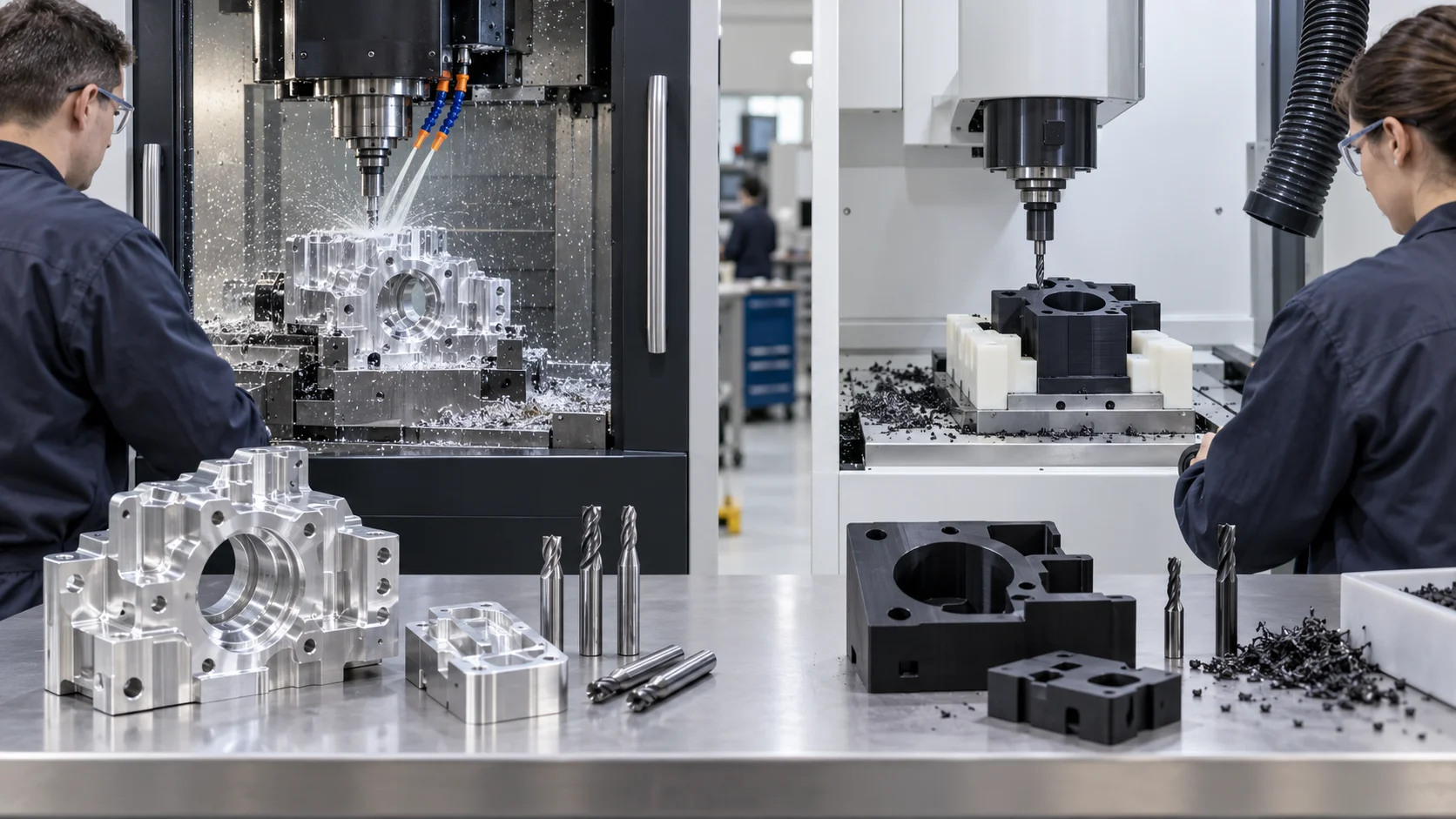
Material behavior changes the manufacturing route. Hard or abrasive grades may require different cutting conditions and tool strategies. Thin sections can move during machining. Plastics may need support against deformation, while brittle materials require careful edge and hole design.
Review stock size, grain or orientation where relevant, achievable tolerances, minimum wall thickness, threads, deep pockets, and inspection access. A material that looks ideal in a specification can become costly if every feature requires a special setup.
Surface condition is part of material performance
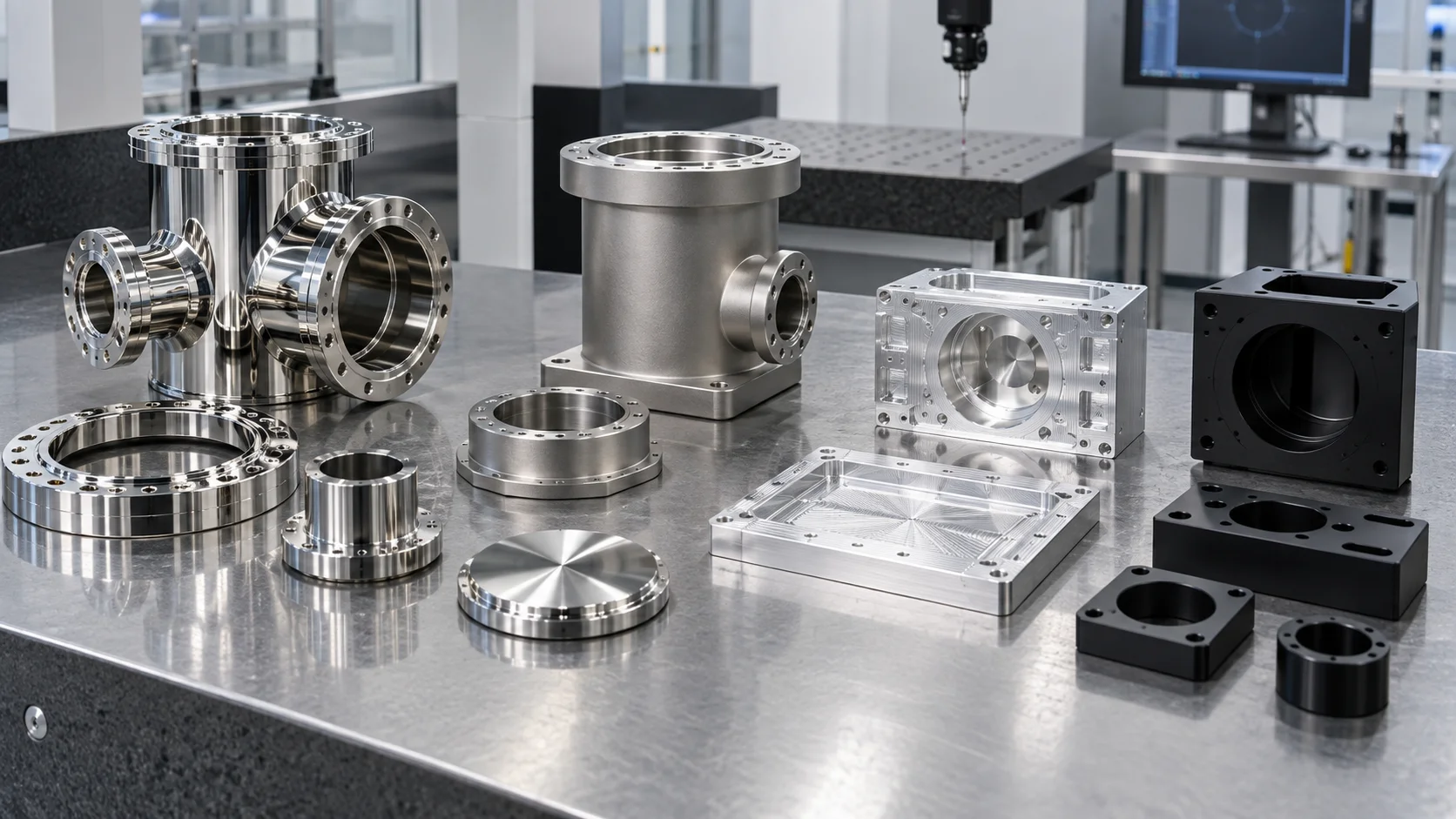
The base material and the finished surface work as a system. An anodized aluminum part, a passivated stainless part, and an unfinished engineering plastic part have different handling and service behavior. Define roughness, coating or treatment, masking, cleaning, and packaging rather than writing only “smooth” or “clean.”
A general surface finishing service overview can help teams compare treatment options before freezing the drawing.
Lock the material specification before release
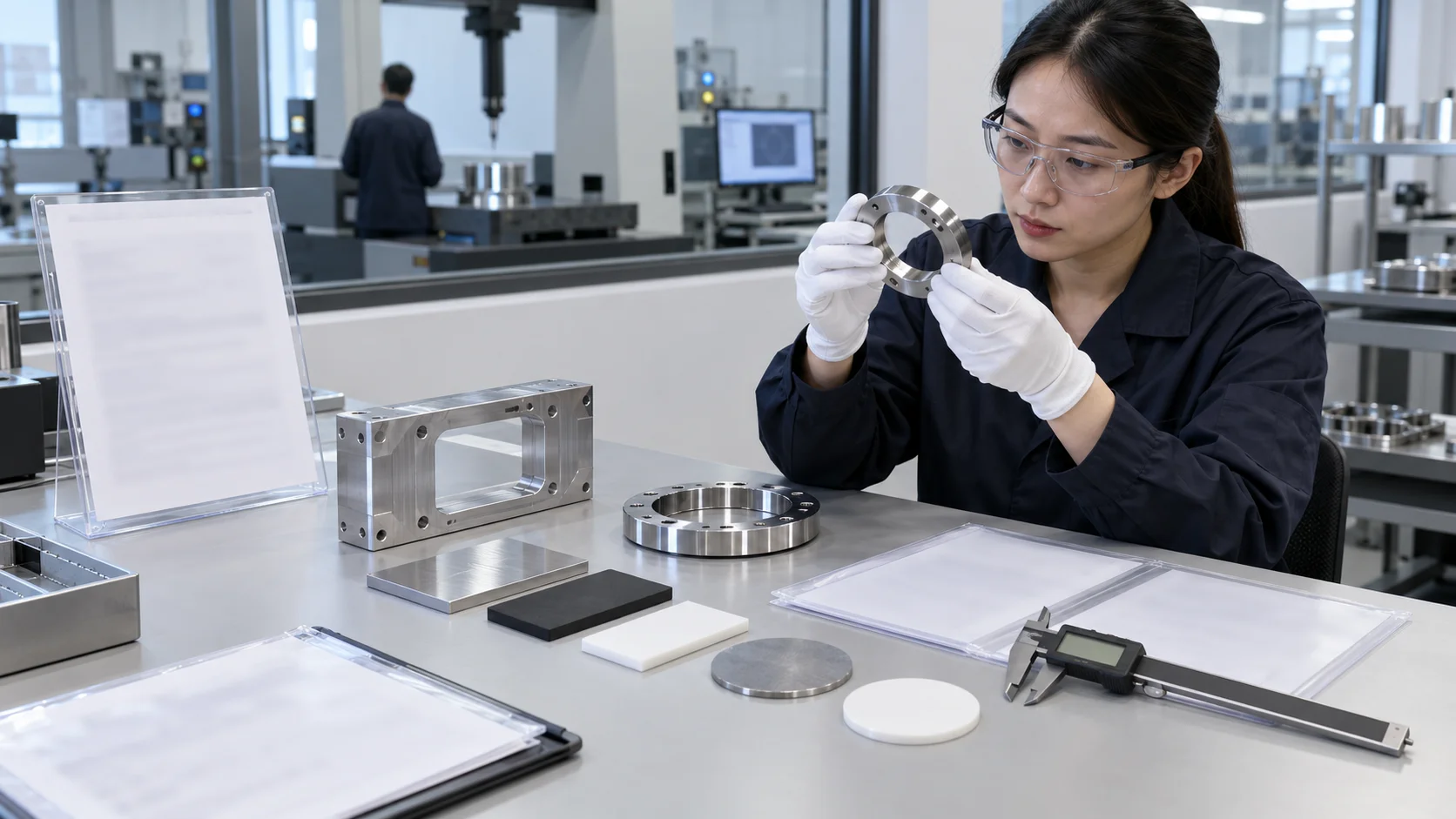
The released specification should name the material grade, acceptable equivalents, required certificate, finish, inspection method, and change-approval process. It should also identify whether a substitute is allowed for a prototype or only after engineering approval.
This discipline protects the second and third build. It reduces unplanned substitutions, makes quotations comparable, and gives quality teams a clear basis for receiving inspection.
Material Selection Questions
Which material is most common for semiconductor equipment parts?
Aluminum, stainless steel, and engineering plastics are common choices, but the best material depends on temperature, chemical exposure, wear, cleanliness, stiffness, and the part function.
Should the finish be selected after machining?
No. The finish can change dimensions, handling, corrosion behavior, and cleaning requirements, so it should be considered during design and process planning.
The Material Decision in Practice
A robust material decision balances environment, function, manufacturing, finish, inspection, and supply continuity. That approach gives semiconductor equipment teams parts that remain dependable beyond the first prototype.

