


Osservando una linea di assemblaggio elettronico ad alta velocità nel [2026] si rivela l'eleganza violenta di parti per robot industriali: il robot SCARA si muove con tale velocità che l'occhio umano fa fatica a seguirne il percorso. In questi ambienti, ogni millisecondo risparmiato in un ciclo di pick-and-place si traduce in milioni di dollari di maggiore produttività nell'arco di un anno di produzione. L'hardware deve essere ottimizzato per accelerazioni estreme, il che significa che i bracci rotanti e gli alberi verticali devono essere leggeri come piume ma abbastanza rigidi da fermarsi al micron. Padroneggiare la lavorazione di parti per robot SCARA richiede un passaggio dall'ingegneria industriale generale al mondo delle dinamiche ad alta frequenza e dei componenti a bassissima inerzia.
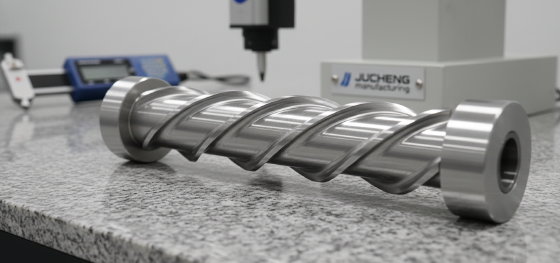
La velocità cinematica nei sistemi SCARA è un sottoprodotto diretto della gestione della massa. Poiché gli assi J1 e J2 operano su un piano orizzontale, i motori combattono costantemente contro le forze centrifughe dei bracci in movimento. Se i bracci rotanti sono anche solo del 10% troppo pesanti, la vibrazione risultante durante le fermate improvvise richiederà un "tempo di assestamento" che rovina le prestazioni ad alta velocità. Jucheng Precision affronta queste critiche sfide di massa utilizzando design scheletrici in alluminio 7075-T6 e alberi dell'asse Z con nucleo cavo. Produciamo i componenti ad alta agilità che consentono ai robot SCARA di raggiungere oltre 120 cicli al minuto con ripetibilità sub-micrometrica.
Operando nel polo di produzione di precisione di Shenzhen, JUCHENG fornisce un "Ponte verso la Produzione" per gli OEM di automazione elettronica 3C. La nostra struttura è specializzata nella lavorazione ad alta velocità richiesta per assemblaggi verticali e collegamenti rotanti leggeri. Trasformiamo barre piene di leghe aerospaziali in condotti ad alta velocità per il movimento. Questa guida esplora gli standard essenziali per la canna dell'asse Z, le strategie di alleggerimento dei bracci e gli accoppiamenti di precisione delle boccole necessari per produrre parti di robot SCARA che ridefiniscono i confini dell'efficienza del tempo di ciclo.
Precisione della canna dell'asse Z: lavorazione della vite a ricircolo di sfere
Dati tecnici: confronto delle leghe per bracci ad alta velocità
Ingegneria del braccio scheletrico: ottimizzazione del rapporto rigidezza-peso
Boccole di precisione: ottenere accoppiamenti ultra-smooth
JUCHENG: il polo di Shenzhen per l'hardware ad alta velocità
FAQ: produzione di componenti ad alta frequenza per SCARA
Precisione della canna dell'asse Z: lavorazione della vite a ricircolo di sfere
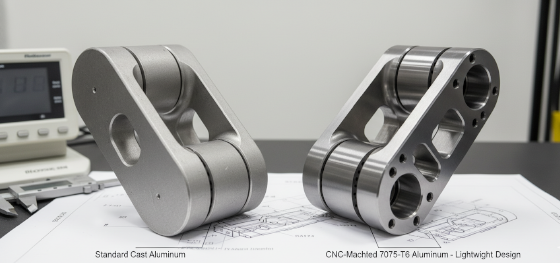
La canna verticale è il componente tecnicamente più impegnativo in lavorazione di parti per robot SCARA. Questo albero a doppia funzione funge sia da vite a ricircolo di sfere per il movimento verticale sia da albero scanalato per l'orientamento rotazionale. Poiché questi due movimenti avvengono simultaneamente ad alta velocità, le scanalature per le sfere e la scanalatura devono essere concentriche entro 5 micron su una lunghezza di 300 mm. JUCHENG utilizza rettifica specializzata di filettature CNC e rettifica cilindrica per eseguire queste geometrie complesse. Qualsiasi deviazione nel "passo" o "pitch" della canna si manifesterà come vibrazione verticale, che è un killer assoluto della missione per attività delicate come il montaggio di chip.
Surface hardness dictates the wear-life of the Z-axis. The vertical shaft experiences millions of reciprocating cycles where the recirculating balls in the nut exert intense surface pressure on the quill's grooves. JUCHENG utilizes induction-hardened SUJ2 (Bearing Steel) to achieve a surface hardness of HRC 60-62 while maintaining a ductile core to resist snapping under sudden impact. This combination of surface toughness and structural resilience ensures that the parti per robot industriali we provide can operate 24/7 in 3C assembly lines without requiring frequent replacement.
Hollow-core quills are utilized for weight reduction in high-payload SCARA designs. By utilizing deep-hole drilling (gun drilling) to remove the center of the vertical shaft, JUCHENG reduces the mass of the quill by up to 30%. This lower vertical mass allows for faster acceleration in the Z-direction, which is often the bottleneck in pick-and-place cycle times. We ensure the internal bore is mirror-polished to prevent any stress risers that could lead to fatigue cracks, providing a lightweight quill that doesn't compromise on its multi-ton axial load rating.
Lubrication management is integrated directly into the quill's machining. JUCHENG machines specialized "oil-retention" micro-textures into the non-load-bearing areas of the spline grooves. These textures act as reservoirs, ensuring that the critical contact surfaces remain lubricated even during the intense heat generated by high-speed vertical cycles. This level of advanced surface engineering prevents the "stiction" that can cause micro-stalls in the Z-axis, ensuring that your robot maintains its fluid motion through millions of pick cycles in the [2026] factory.
Dati tecnici: confronto delle leghe per bracci ad alta velocità
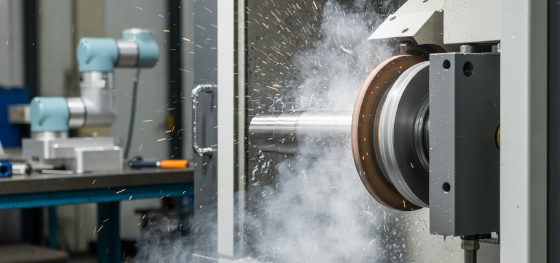
Selecting the right material for a rotating jib determines the robot's "bandwidth"—the range of frequencies at which it can operate stably. For high-speed SCARA bots, stiffness is the primary defense against vibration. Jucheng Precision provides technical consultations to help you balance mass and Young’s Modulus. The following table compares the materials most frequently used in high-performance lavorazione di parti per robot SCARA ad alte prestazioni per il mercato del [2026].
| Grado del materiale | Densità (g/cm³) | Modulo Elastico (GPa) | Cycle-Time Advantage |
|---|---|---|---|
| Alluminio 7075-T6 | 2.81 | 71.7 | Exceptional Rigidity |
| Alluminio 6061-T6 | 2.70 | 68.9 | Standard Performance |
| Magnesio AZ91D | 1.81 | 45.0 | Lowest Inertia / Fast Acceleration |
| CFRP (Hybrid) | 1.60 | 150 - 230 | Ultimate Positioning Speed |
7075-T6 Aluminum is the gold standard for SCARA jibs because it offers the yield strength of many steels while remaining one-third the weight. This allows JUCHENG to machine extremely skeletal arm designs that can handle the centrifugal forces of a 10kg load rotating at 2 meters per second. In our Shenzhen hub, we utilize high-speed trunnion 5-axis centers to carve these organic links in a single setup, ensuring that the centers of rotation for both joints are perfectly parallel within 0.01mm.
Magnesium AZ91D is utilized for ultra-high-speed assembly bots where every millisecond counts. Its exceptional vibration-dampening capacity means the arm stops vibrating almost instantly after a high-speed move, allowing the gripper to engage without delay. JUCHENG’s specialized magnesium machining cell delivers these parts with high-grade conversion coatings, ensuring that the parti per robot industriali maintain their structural properties even in foundries or humid electronics assembly environments.
Ingegneria del braccio scheletrico: ottimizzazione del rapporto rigidezza-peso
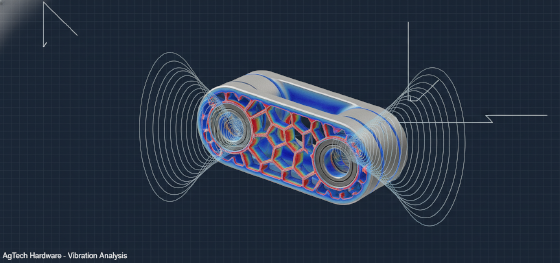
Lightweighting a SCARA jib is a delicate balance of material removal and structural preservation. In lavorazione di parti per robot SCARA, JUCHENG utilizes "Generative Design" principles to identify the neutral-axis zones of the arm where metal can be safely removed. We machine deep pockets and honeycomb internal lattices into the jib, leaving a skeletal frame that mimics the bone structure of a falcon’s wing. This reduces the rotational inertia of the J1 axis by up to 40%, directly increasing the robot’s acceleration capability without requiring larger, hotter-running motors.
Torsional stiffness is maintained through strategic "webbing." While the jib is hollowed out, JUCHENG machines thin-wall vertical ribs that resist the twisting forces of the Z-axis motor mounted at the end of the arm. If the jib twists during a vertical move, the gripper will "snap" or vibrate, causing pick failures. By holding +/- 0.02mm wall thickness tolerances on these internal ribs, we ensure that the arm remains a rigid beam under load. This level of precision is only possible through 5-axis CNC movement and real-time tool-wear compensation on our Mazak machines.
Resonant frequency management is the third pillar of jib design. A well-machined jib must not amplify the harmonic noise of the high-speed servo motors. JUCHENG utilizes varying wall thicknesses and "randomized" rib patterns that prevent the part from having a single, strong natural frequency. This effectively "muffles" the mechanical noise and prevents the high-frequency jitter that can confuse the robot’s force-sensing algorithms. Our Shenzhen facility provides the technical oversight necessary to "tune" the hardware for silent, stable parti per robot industriali operazione.
Integrated thermal-expansion gaps are machined into the joint housings of the jibs. As the J1 and J2 motors generate heat during 24/7 shifts, the aluminum arms will expand. JUCHENG machines these interfaces with "floating" bearing seats and precise allowances that accommodate this expansion without changing the center-to-center distance of the joints. This ensures that the robot’s kinematic model remains accurate from the first hour of the shift to the last, providing the long-term reliability required for [2026] electronics manufacturing.
Boccole di precisione: ottenere accoppiamenti ultra-smooth
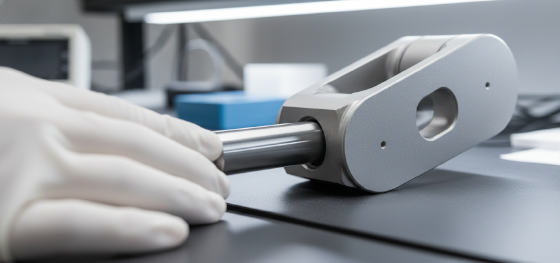
The interface between the Z-axis quill and the jib determines the robot's vertical "smoothness." In lavorazione di parti per robot SCARA, the bushings or linear bearings must be press-fitted into the jib with absolute concentricity relative to the rotational axis. If the bushing is tilted by even five microns, the vertical shaft will experience high-friction "hot spots" that lead to motor overheating and premature belt failure. JUCHENG utilizes sub-micron diamond-boring to finish the bushing seats, ensuring a perfect g6 or h6 fitment that provides zero-play vertical movement.
Material selection for these bushings is critical for low-friction operation. JUCHENG often machines custom bushings from Oil-impregnated Bronze or high-performance PEEK-PTFE composites. These materials offer the lowest possible coefficient of friction against the hardened steel quill, preventing the "stick-slip" phenomenon that causes jitter during slow-speed vertical moves. By optimizing the surface finish of the jib bore to a Ra 0.4, we ensure that the bushing maintains its geometric shape after press-fitting, providing a stable, low-maintenance joint for the robot's lifetime.
Registration features for the Z-axis motor mounts are machined in the same setup as the vertical bushings. This "Common-Setup" philosophy is the cornerstone of JUCHENG’s parti per robot industriali precision. It ensures that the vertical drive pulley and the Z-axis quill are perfectly parallel, preventing the belt wear and harmonic noise that plague robots with multi-setup machining errors. We utilize coordinate measuring machines (CMM) to verify that the motor-to-shaft alignment is within 0.01mm, ensuring that the belt drive operates with maximum efficiency and zero backlash.
Modular tool-flange interfaces at the end of the Z-axis are another focus area. JUCHENG machines these flanges from lightweight titanium or 7075 aluminum, providing a high-strength connection for end-effectors like vacuum grippers or screw-drivers. These interfaces are machined to ISO 9409 standards, ensuring universal compatibility with standard tools. By holding sub-micron tolerances on the centering pilot, JUCHENG ensures that every tool change is repeatable, keeping the robot’s TCP (Tool Center Point) constant during the most demanding 3C assembly tasks in [2026].
JUCHENG: il polo di Shenzhen per l'hardware ad alta velocità
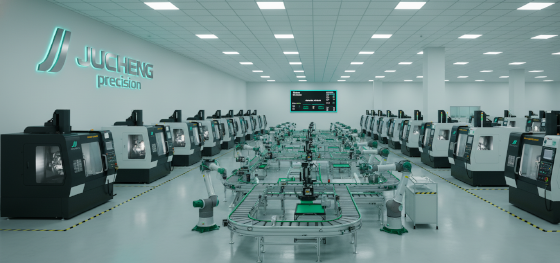
Dominating the [2026] high-speed automation market requires a partner that can scale from prototype to massive fleet production without losing a single micron of accuracy. Jucheng Precision operates with a 24/7 manufacturing mindset in our Shenzhen precision manufacturing hub, delivering high-tolerance SCARA jibs and vertical quills with lead times as fast as 12 business days. We provide a "Bridge to Production" that allows you to move from a single hand-balanced prototype to a commercial deployment of 1,000 bots with consistent kinematic quality.
Integrating your high-speed design with JUCHENG’s expertise ensures that your robot survives the "First-Million Cycle" test and moves into mass adoption. We offer comprehensive DFM reviews within 24 hours, identifying potential vibration bottlenecks or weight-reduction opportunities in your SCARA design before they become field failures. Whether you are building a tabletop bot for smartphone assembly or a heavy-duty SCARA for palletizing, Jucheng Precision provides the lightweight, precise hardware that keeps your innovation moving through the high-speed cycles and the years of hard labor.
Our facility is equipped with 150+ CNC machines, including the latest 5-axis Mazak trunnions and cylindrical grinders, allowing us to manage the entire SCARA part lifecycle in one location. We manage the complexity of skeletal machining and spline grinding so your engineering team can focus on the motion-control loops and the AI. By combining Shenzhen's speed with industrial-grade material verification, JUCHENG remains the preferred partner for the world's most aggressive parti per robot industriali challenges. Contact us today to start your next high-speed project.
FAQ: produzione di componenti ad alta frequenza per SCARA
What is the maximum cycle time JUCHENG parts can handle?
Our components are engineered for SCARA robots operating at 120-150 cycles per minute with 24/7 duty cycles.
Why use SUJ2 for Z-axis quills?
SUJ2 provides exceptional surface hardness (HRC 60+) and dimensional stability required for reciprocating ball screw splines.
How do you ensure SCARA arms are lightweight?
We utilize skeletal 7075-T6 aluminum designs and 5-axis "undercutting" to remove mass from neutral structural zones.
What is the typical tolerance for a vertical quill spline?
We hold involute and pitch tolerances within +/- 0.005mm to ensure zero-backlash vertical orientation.
Vibrational fatigue in high-speed assembly is an absolute hardware killer. Partnering with Jucheng Precision ensures that your arms are built with the skeletal 7075 aluminum and specialized spline-grinding techniques the industry demands. Reach out to our Shenzhen manufacturing hub today for a complete DFM review and build the high-speed foundation your autonomous fleet requires.

