


Robotics Surface Treatment: Wear Resistance, Anodizing, and Environmental Protection
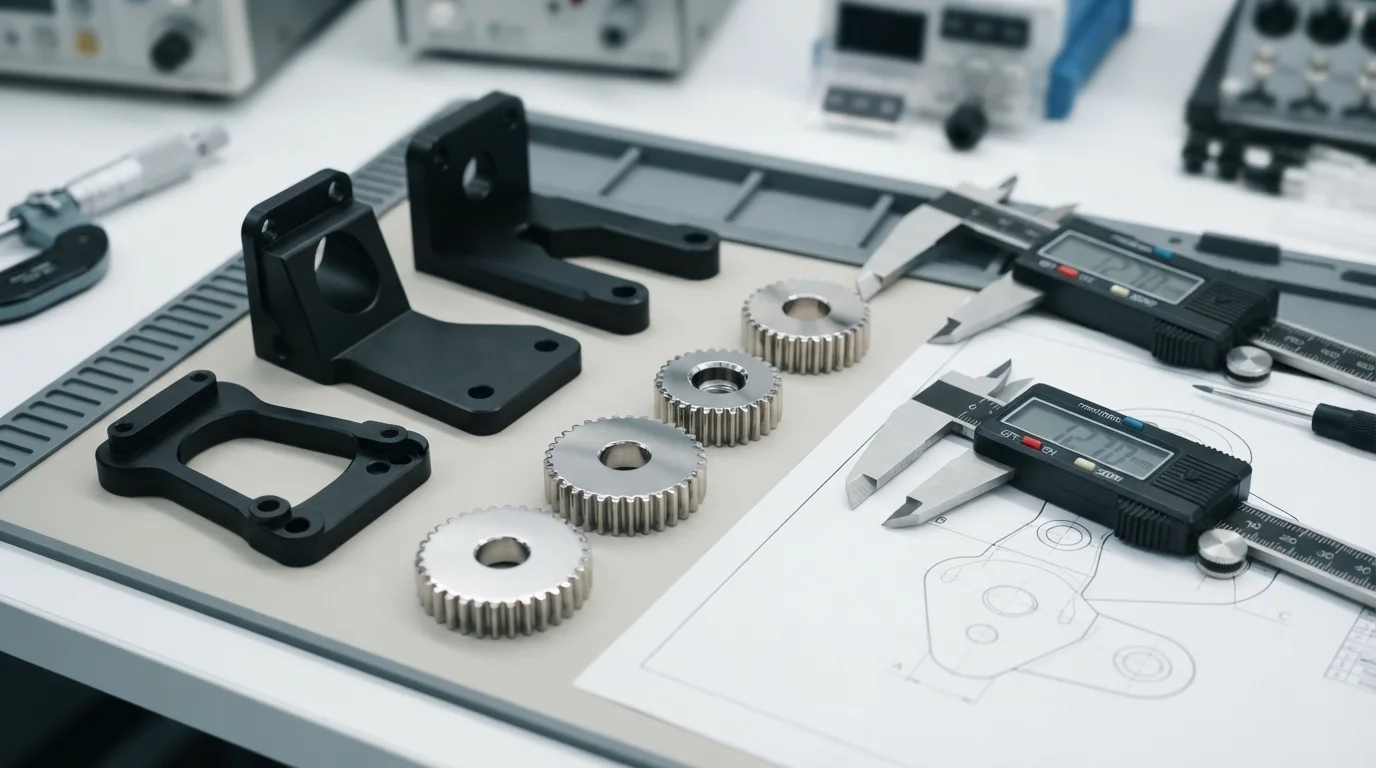
What surface finishes and coatings are used on robotic parts? Robotic components rely on four core surface treatments: Type III hard anodizing (raising aluminum arm link surface hardness above 60 HRC to prevent abrasive wear and scratch damage), electroless nickel plating (depositing a uniform anti-corrosion barrier across high-torque steel splines and gear teeth), conductive metallic shielding paints (applied inside electrical controller boxes to block EMI/RFI noise), and heavy-duty thermoset powder coating (protecting outdoor AGV mobile bases against chemical washdowns and gravel impacts). Applying specialized robotics surface treatment protocols ensures that dynamic automation systems endure multi-million-cycle operations without surface pitting or electrical cross-talk.
Balancing functional hardness against dimensional plating buildup dictates whether precision bearing journals assemble smoothly or bind during integration. Understanding how chemical passivation, electrochemical oxidation, and conductive barrier films interact guarantees that structural links and drive shafts survive harsh factory environments without premature mechanical seizure.
Hard Anodizing (Type III) for Aluminum Robotic Links and Bushings
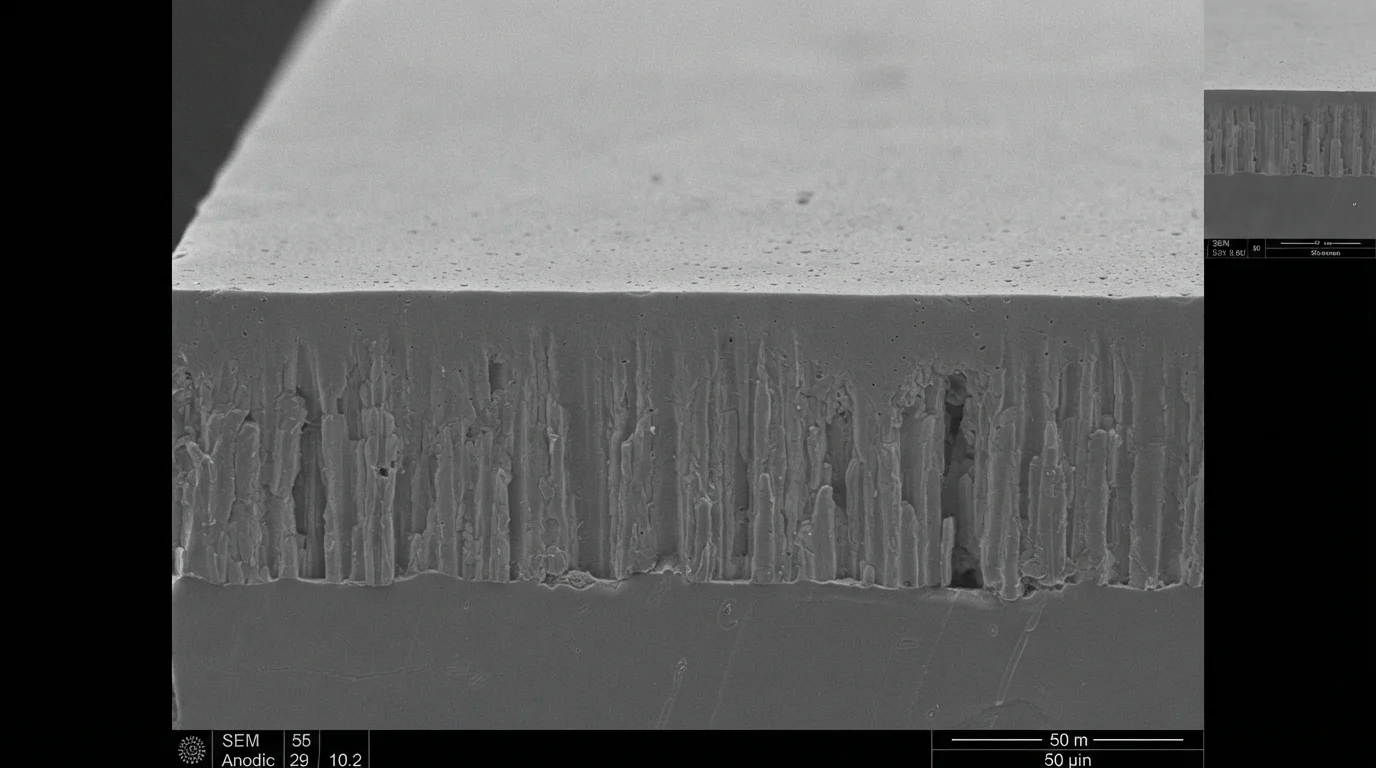
Lightweight structural arm links machined from AL7075-T6 aluminum possess exceptional bulk strength but remain vulnerable to surface scuffing when exposed to metal-on-metal sliding or airborne factory grit. Type III hardcoat anodizing converts the aluminum surface into a dense, ceramic-like aluminum oxide layer (typically 40 µm to 60 µm thick) that delivers diamond-like scratch defense and high electrical dielectric insulation.
Key considerations when hard-anodizing high-precision link components include:
- Dimensional growth pre-compensation: Hard anodizing penetrates 50% into the metal and grows 50% outward, requiring CNC machinists to undersize precision bores by 20 to 25 microns before chemical processing.
- Low-friction PTFE sealing: Impregnating the porous anodic crystal structure with microscopic PTFE particles lowers the surface friction coefficient, allowing sleeve bushings to run dry.
- Dielectric insulation barrier: The dense ceramic layer provides high breakdown voltage resistance, protecting sensitive encoder electronics from stray motor leakage currents.
Electroless Nickel Plating for High-Wear Steel Gears and Drive Shafts
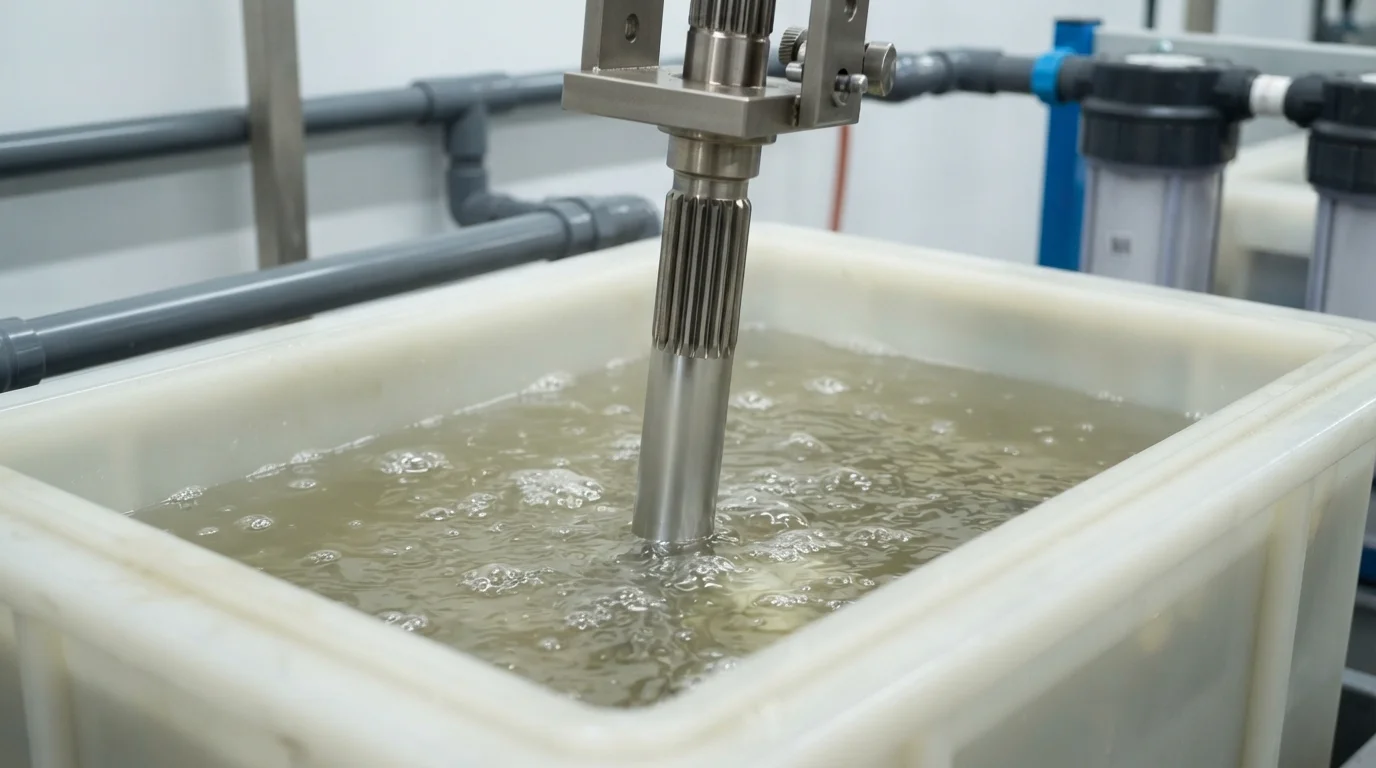
Unlike electrolytic plating that creates thick buildup on outer corners while starving deep internal pockets, electroless nickel plating deposits an autocatalytic nickel-phosphorus alloy with 100% uniform thickness across every intricate tooth root and blind keyway. When mechanical engineers specify functional robotics surface treatment, selecting high-phosphorus electroless nickel for alloy steel transmission components provides complete corrosion defense against synthetic lubricants while increasing surface hardness to 50–54 HRC (and up to 68 HRC after post-bake heat treatment). Discussions on mechatronics forums across Reddit and Facebook emphasize that electroless nickel is the standard choice for spline shafts in automated sorting arms.
Comparing surface engineering treatments across different robotic mechanisms outlines distinct functional capabilities:
| Trattamento superficiale | Substrate Material | Vantaggio funzionale principale |
|---|---|---|
| Type III Hard Anodizing | AL7075-T6, 6061-T6 Aluminum | 60+ HRC surface hardness, superior scratch and wear resistance |
| Electroless Nickel (ENP) | 42CrMo4 alloy steel, Carbon Steel | 100% uniform coating thickness inside gear roots, high corrosion defense |
| Conductive Nickel Coating | Molded ABS, Polycarbonate shells | 50 dB+ attenuation blocking EMI/RFI noise around servo controllers |
Conductive EMI/RFI Shielding Coatings for Controller Enclosures
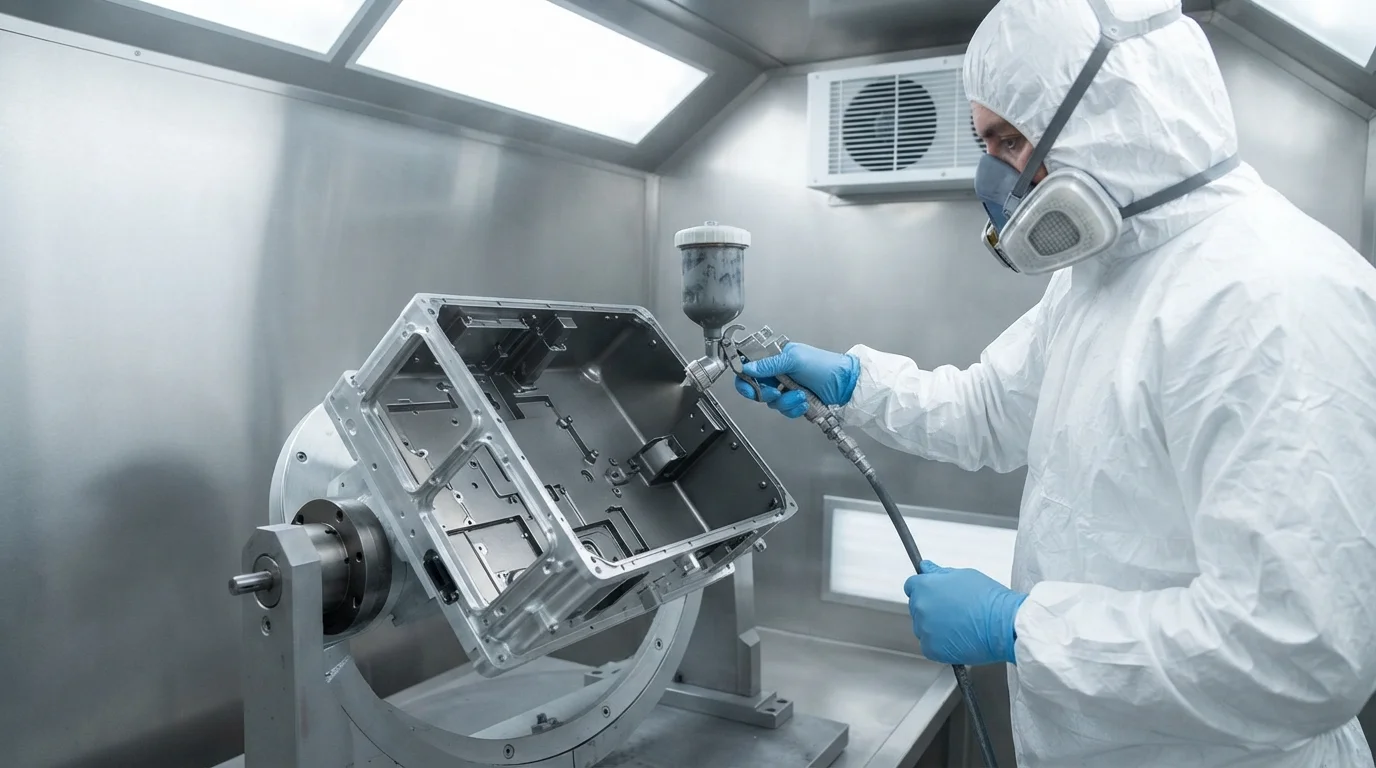
High-frequency pulse-width modulated (PWM) motor drivers and high-power wireless telemetry modules generate intense electromagnetic noise inside robot controller enclosures. Spraying a fine conductive nickel-based or copper-based acrylic coating onto the interior walls of plastic enclosures creates an internal Faraday cage effect. This blocks 50 dB to 70 dB of electromagnetic interference, preventing signal jitter in delicate absolute optical encoders.
Heavy-Duty Powder Coating for Outdoor Mobile Robots and AGVs
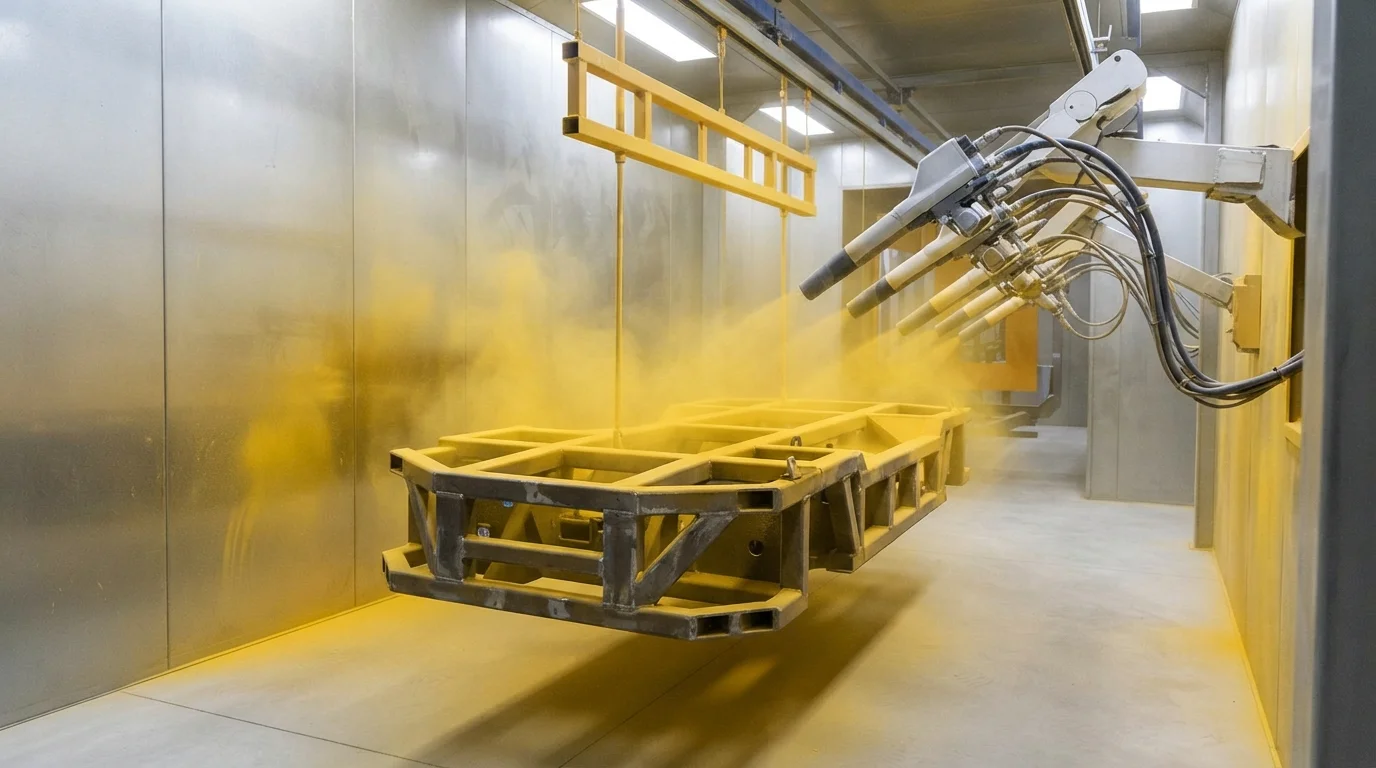
Autonomous mobile robots (AMRs) and industrial automated guided vehicles (AGVs) operating in distribution warehouses or outdoor yards face gravel impacts, chemical oil spills, and high-pressure power washing. Applying an electrostatic polyester-epoxy powder coat over a zinc-rich primer creates an 80 to 120-micron thick cross-linked polymer shell that resists chipping, ultraviolet degradation, and 1,000+ hours of ASTM B117 salt spray exposure.
Precision Masking Guidelines and Coating Maintenance Tips
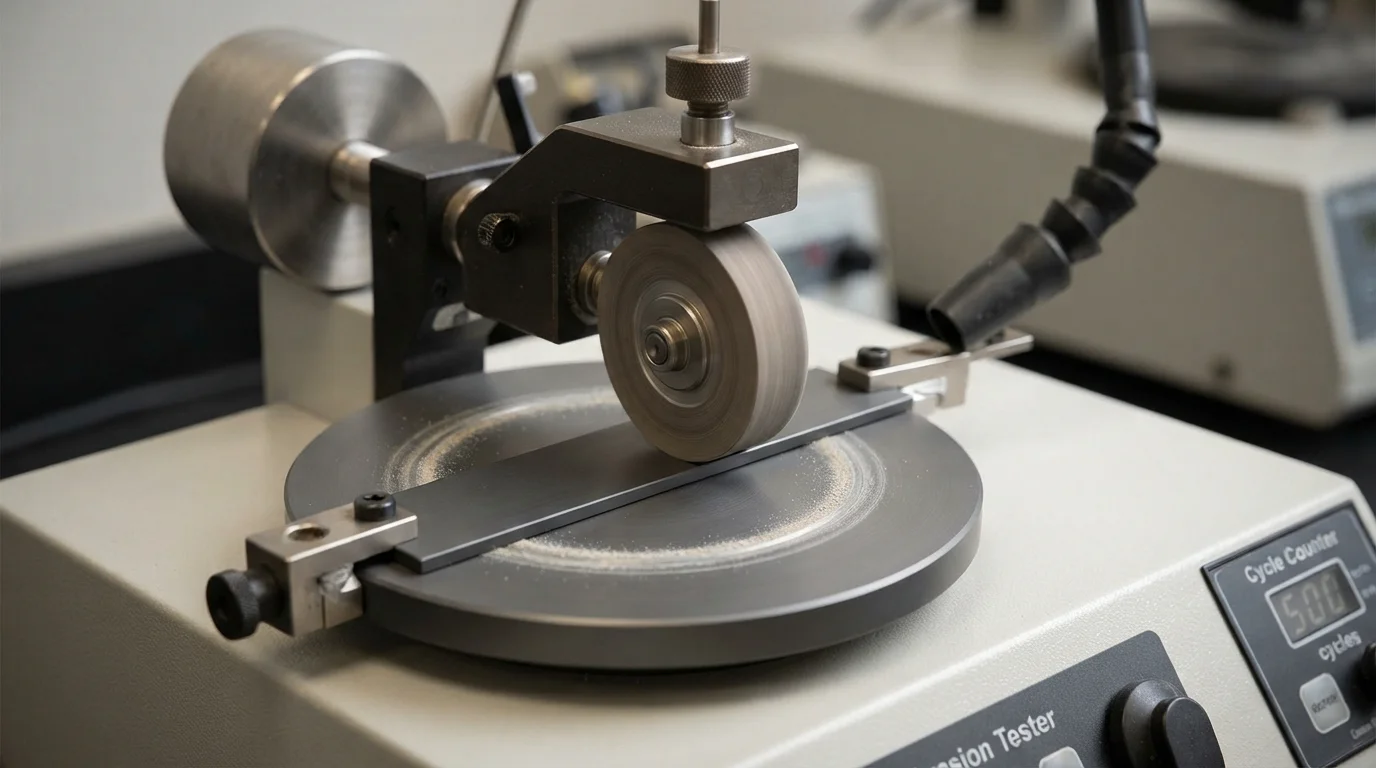
Treating multi-axis robotic hardware requires disciplined custom masking to protect critical bearing bores and ground datums from dimensional buildup. Coating thickness in tight H6 bearing journals will cause mechanical binding during assembly if not masked with precision silicone plugs.
Key shop-floor handling and maintenance protocols include:
- Custom silicone masking plugs: Seal internal threaded holes and bearing journals with high-temp plugs during anodizing and powder coating to preserve raw CNC tolerances.
- Conductive grounding contact points: Leave unpainted, nickel-plated contact pads around enclosure bolt perimeters to establish electrical grounding continuity.
- Post-finish ultrasonic degreasing: Clean treated gears and shafts in ultrasonic deionized water baths to strip residual acid salts before final cleanroom assembly.
Domande Frequenti (FAQ)
1. Why is Type III hard anodizing mandatory for robotic aluminum arm links?
Type III hard anodizing creates a thick ceramic-like oxide layer with a surface hardness over 60 HRC, protecting lightweight aluminum arms from scratches, wear, and environmental corrosion.
2. How does electroless nickel plating maintain dimensional accuracy on robotic gears?
Electroless nickel relies on an autocatalytic chemical reaction without electrical current, depositing a perfectly uniform coating thickness inside gear roots and threads with zero edge buildup.
3. What is the purpose of conductive spray coatings on plastic robot shells?
Conductive nickel paints create an internal Faraday cage on non-metallic enclosures, blocking 50 dB+ of EMI/RFI noise generated by high-frequency motor controllers and servo drives.
4. How does hard anodizing affect tight bearing bore tolerances?
Hard anodizing grows outward by approximately 50% of its total coating thickness; bearing journals must be masked with silicone plugs or pre-machined undersized to maintain final ISO H6 fitment.
5. Why is powder coating preferred over liquid paint for AGV mobile robot chassis?
Powder coating forms an 80 to 120-micron thick cross-linked shell that provides superior chip resistance, chemical oil defense, and impact toughness in harsh factory logistics environments.
6. How does Jucheng Precision support turnkey surface treatment for robotics?
Jucheng Precision provides in-house Type III hard anodizing, electroless nickel plating, conductive shielding coatings, and custom precision masking under strict ISO 9001 quality controls.
Why Choose JUCHENG for Your Robotics Sourcing
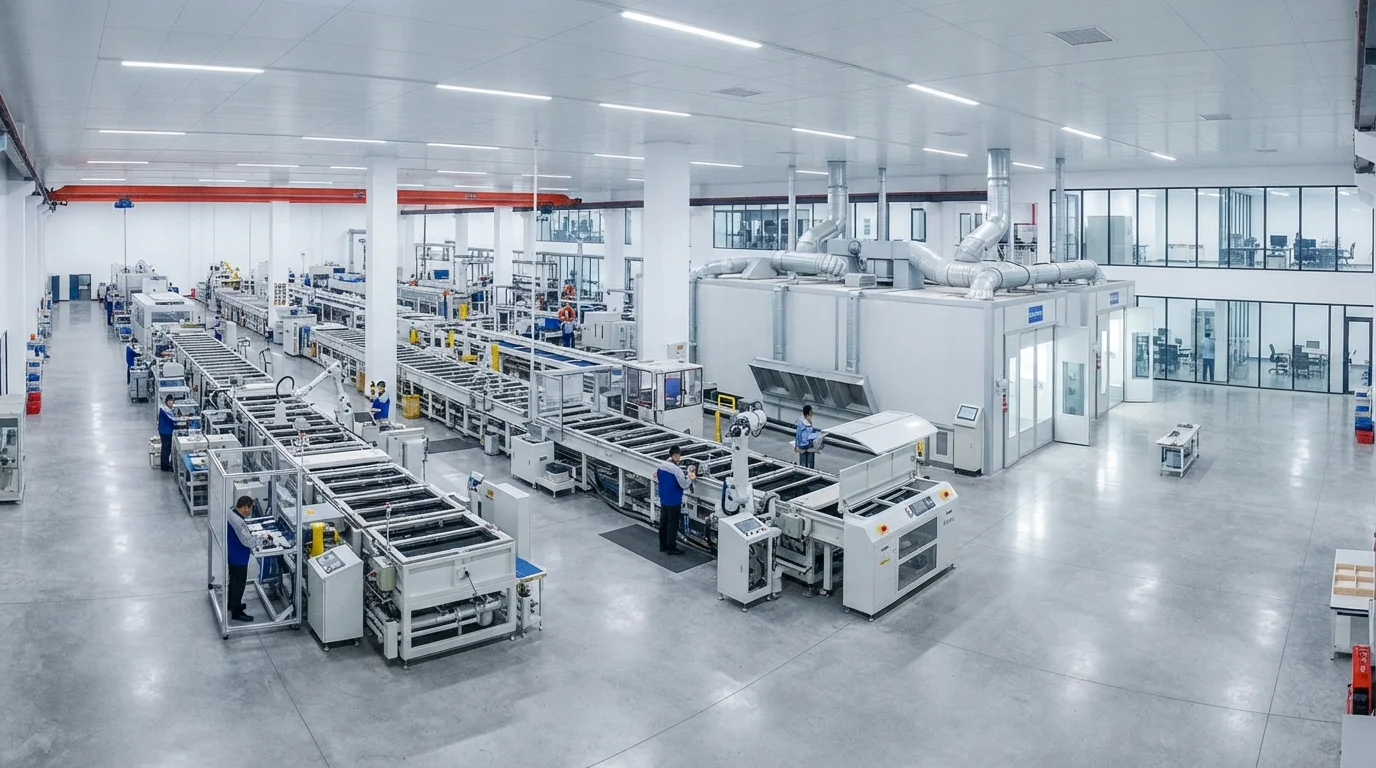
Achieving multi-year wear resistance and environmental protection requires an experienced manufacturing partner with integrated chemical processing and precision machining infrastructure. JUCHENG supports robotics innovators by delivering comprehensive revisioni DFM gratuite 24 ore su 24 reviews that analyze coating thickness growth, bearing masking plans, and substrate alloy compatibility prior to production. Founded in Shenzhen in 2012 with an 8,000-square-meter facility in Dongguan, our factory houses 150+ advanced machines, including 25+ high-performance 5-axis Haas and Mazak milling centers alongside dedicated chemical finishing bays [9.10].
Backed by ISO 9001, ISO 14001, ISO 13485, and IATF 16949 certifications, our engineering teams ensure that executing high-performance robotics surface treatment programs achieves verified hardness ratings, precise dimensional control, full Material Test Report (MTR) traceability, and absolute batch consistency.
Ready to Protect Your Robotics Hardware with Advanced Surface Finishes?
Carica oggi i tuoi modelli 3D per ricevere feedback immediato, prezzi competitivi e analisi DFM professionali dai nostri esperti ingegneri. Lascia che JUCHENG dia vita ai tuoi progetti complessi con velocità e affidabilità senza pari!

