


Analizzare il cedimento di un collettore strutturale o la fatica di un giunto robotico spesso riconduce a una svista critica nella fase di R&S: presumere che tutte le resine poliuretaniche si comportino in modo identico. Nel mercato attuale, le capacità fisiche di un componente sono dettate dall'energia di miscelazione e dalla pressione utilizzate durante la fabbricazione. Scegliere tra Proprietà dei materiali RIM vs. Colata sottovuoto richiede un passaggio dalla validazione visiva a quella meccanica. Mentre le resine colate a mano sono eccellenti per i mock-up estetici, spesso mancano della densa maglia molecolare necessaria per l'autonomia portante. Padroneggiare queste sfumature tecniche è l'unico modo per garantire che il tuo robot prototipo rimanga strutturalmente solido attraverso migliaia di cicli ad alta coppia sul campo.

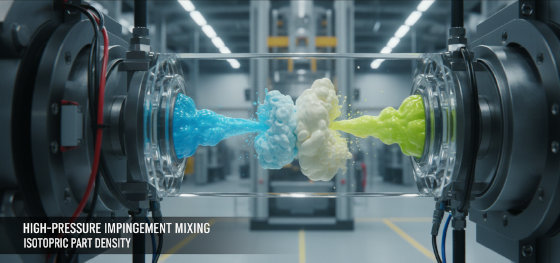
Le prestazioni meccaniche nei componenti stampati a liquido sono governate dall'equilibrio stechiometrico dei componenti A e B. Se il processo di miscelazione è manuale, l'hardware risultante può soffrire di microvuoti d'aria e reticolazione non uniforme. Jucheng Precision affronta questi ostacoli materiali utilizzando la tecnologia di miscelazione ad alta pressione a impingement. Questo processo automatizzato garantisce strutture molecolari isotrope, il che significa che il componente è ugualmente resistente in tutte le direzioni. Fornendo un analisi DFM gratuita in 24 ore, Jucheng Precision aiuta gli ingegneri a identificare potenziali punti deboli strutturali prima che la resina entri nello stampo, assicurando che la tua RIM vs Colata sottovuoto decisione sia supportata da dati concreti piuttosto che da supposizioni.
Operando sotto i mandati globali di qualità di ISO 13485, ISO 14001 e IATF 16949, Jucheng Precision funge da consulente metallurgico per aziende globali di MedTech e robotica. JUCHENG sfrutta una flotta di oltre 150 macchine CNC e 25 unità Haas/Mazak a 5 assi per produrre gli utensili in alluminio di precisione che consentono questi risultati materiali ad alte prestazioni. Questa guida esplora i parametri essenziali di resistenza alla trazione, temperatura di deflessione al calore (HDT) resilienza e le capacità di rinforzo con fibre necessarie per padroneggiare Proprietà dei materiali RIM vs. Colata sottovuoto per garantire che la tua innovazione sopravviva ai cicli di validazione sul campo più aggressivi.
contenuto:
Modulo a Trazione e Flessione: Quale Processo è più Rigido?
Dati Tecnici: Confronto tra Densità e Solidità Strutturale
Limiti Termici: Padroneggiare la Deformazione Termica e la Stabilità
Vantaggio Composito: Aggiunta di Fibre di Vetro per Uso Pesante
Hub JUCHENG: Verifica della Purezza del Materiale nello Stabilimento di Shenzhen
FAQ: Risposte Reali su Affaticamento, Stabilità UV e Resistenza Chimica
Modulo a Trazione e Flessione: Quale Processo è più Rigido?
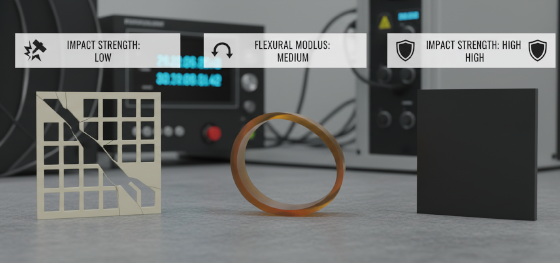
La rigidità strutturale è il parametro imprescindibile per console diagnostiche su larga scala e telai robotici. Nel confronto tra Proprietà dei materiali RIM vs. Colata sottovuoto, il modulo a flessione del poliuretano iniettato a macchina è significativamente più alto rispetto alle resine colate a mano. Questo perché la miscelazione ad alta pressione per impingement crea un reticolo molecolare più denso che resiste alla deformazione elastica sotto carico. Se il tuo involucro deve supportare un array di sensori da 30 kg senza cedimenti, il RIM fornisce la rigidità "ossea" necessaria per la stabilità di calibrazione a lungo termine. Le resine per colata sottovuoto a mano, sebbene eccellenti per l'aspetto, spesso si comportano più come plastiche semirigide che possono mostrare "creep" quando sottoposte a stress meccanico costante.
Come garantire che una parte grande non si fletta?
Utilizzare formulazioni RIM ad alta densità con un modulo a flessione superiore a 300.000 psi per eliminare l'effetto "Oil-Canning" su pannelli di 2 metri.
Anche la resistenza a trazione favorisce il processo RIM industrializzato. Quando un robot mobile autonomo colpisce un ostacolo, l'energia deve essere dissipata attraverso il materiale senza causare una frattura fragile. Jucheng Precision utilizza sistemi polieterici ad alte prestazioni che offrono un equilibrio superiore tra durezza e allungamento. Questo garantisce che il tuo hardware possa assorbire un impatto di 10 G e tornare alla sua geometria CAD esatta. Al contrario, i materiali utilizzati nella colata sottovuoto standard sono spesso più soggetti a "rottura fragile" a basse temperature, rendendoli una scelta rischiosa per ambienti AgTech esterni o logistici dove la durabilità è una metrica di sopravvivenza primaria.
La vita a fatica è il differenziatore finale nell'integrità meccanica. I componenti nei sistemi di automazione 24/7 subiscono milioni di cicli di coppia inversa. La matrice termoindurente reticolata delle parti RIM di Jucheng garantisce che le catene polimeriche non scivolino l'una sull'altra, prevenendo l'assottigliamento e il conseguente cedimento comune nelle plastiche di qualità inferiore. Fornendo parti con alti "limiti di resistenza a fatica", Jucheng Precision permette al tuo team di ingegneria di verificare gli intervalli di manutenzione con una sicurezza del 100%, assicurando che il lancio del tuo hardware non sia afflitto da richiami prematuri sul campo dovuti a fatica del materiale.
Dati Tecnici: Confronto tra Densità e Solidità Strutturale
Il successo nella validazione dell'hardware dipende dai numeri. Se il tuo progetto assume le proprietà di un blocco solido ma ricevi un modello poroso, le tue simulazioni di stress saranno invalide. Jucheng Precision fornisce rapporti completi sui lotti di materiale per ogni ciclo produttivo per garantire l'integrità dei dati al 100%. La tabella seguente confronta le metriche di prestazione essenziali di Proprietà dei materiali RIM vs. Colata sottovuoto per l'attuale mercato hardware di fascia alta.
| Metrica | Colata Sottovuoto a Mano | RIM Iniettato a Macchina | Beneficio Clinico |
|---|---|---|---|
| Densità Interna (%) | 92% - 96% (Micro-bolle) | 100% (Matrice Solida) | Previene Perdite Interne |
| Resistenza a trazione (MPa) | 35 - 55 | 60 - 85 | Stabilità ad Alto Carico |
| Resistenza all'Autoclave | Bassa (Dipende dalla Resina) | Eccezionale | Sopravvive alla Sanificazione |
| Consistenza di Miscelazione | Dipende dall'Operatore | Controllato da Pompa Servo | Prove sul Campo Ripetibili |
I dati evidenziano perché l'iniezione controllata da macchina è l'unica scelta per hardware di grado medico. La "Densità Interna" di un pezzo determina la sua capacità di mantenere il vuoto o una tenuta ermetica. Jucheng Precision utilizza il vuoto degassing and high-pressure injection to ensure that every internal rib and boss is 100% solid. This eliminates the "Internal Voids" that can harbor bacteria or cause a part to explode during the pressure cycles of gas-sterilization. By delivering hardware with "Surgical-Grade" density, Jucheng Precision helps you pass the most rigorous IP67 and IP69K sealing audits on the first attempt.
Limiti Termici: Padroneggiare la Deformazione Termica e la Stabilità
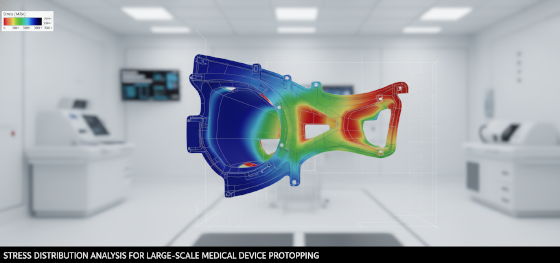
Heat management is often the bottleneck for autonomous hardware containing high-power AI processors. In Proprietà dei materiali RIM vs. Colata sottovuoto, the thermal resilience of the polymer determines if your enclosure will sag during a summer afternoon in the sun. Vacuum casting resins are generally designed for room-temperature curing, which results in a relatively low Glass Transition Temperature (Tg). Under the thermal load of an internal GPU, these parts can become "Soft," leading to panel misalignment. Jucheng Precision’s RIM polyurethanes possess a higher cross-link density, resulting in heat deflection temperatures (HDT) exceeding 100 degrees Celsius, ensuring your hardware remains rigid even in high-heat industrial environments.
Can RIM handle the heat of a steam autoclave?
Yes. Specialized medical RIM formulations from Jucheng Precision are engineered to survive repeated 134-degree autoclave cycles without losing their Shore D hardness.
Dimensional stability after demographic changes is the secondary pillar of thermal logic. When a large diagnostic console moves from a cold storage facility to a warm operating room, the material must expand uniformly. Jucheng Precision utilize strutture molecolari isotrope to ensure that thermal expansion is predictable and does not induce internal warping. This "Thermal-Sync" capability is essential for multi-material assemblies where plastic panels are bonded to a CNC-machined aluminum chassis. Our Shenzhen facility manages these expansion coefficients by fine-tuning the chemical recipe of Side B, providing a stable platform for your most sensitive sensor integrations.
UV stability is the final environmental defense. Many hand-poured resins turn yellow and become brittle within months of direct sun exposure. Jucheng Precision integrates UV-blocking additives and Hindered Amine Light Stabilizers (HALS) directly into the liquid resin matrix. This ensures that your robot fenders and medical shrouds maintain their high-gloss finish and impact toughness throughout their entire field lifecycle. By delivering hardware that resists the sun's fire and the machine's internal heat, Jucheng Precision ensures your innovation survives the transition from a laboratory concept to a global commercial success.
Vantaggio Composito: Aggiunta di Fibre di Vetro per Uso Pesante

Achieving the stiffness of a metallic frame with the lightweight benefits of plastic is the "Holy Grail" of modern robotics. This is where the Proprietà dei materiali RIM vs. Colata sottovuoto divide is most prominent. Jucheng Precision offers Reinforced Polyurethane RIM (RRIM), where milled glass fibers are mixed directly into the liquid polyol before injection. This turns the polyurethane into a high-performance composite with a flexural modulus that can exceed 800,000 psi. Hand-poured vacuum casting is physically unable to handle this level of fiber reinforcement, as the resin would become too thick to flow into a silicone mold, leaving the process limited to unreinforced polymers.
Why is fiber reinforcement critical for autonomous vehicles?
It reduces the Coefficient of Linear Thermal Expansion (CLTE) to match that of aluminum, preventing panel buckling in the hot sun.
Mineral fillers such as Wollastonite can also be integrated into the RIM process to improve surface smoothness while increasing rigidity. Jucheng Precision utilize specialized abrasion-resistant mixing heads to handle these "Slurries" without tool damage. This allows us to produce structural shells for large-scale medical scanners that possess the "Solid-Core" feel and sound that investors and users associate with high-end technology. By choosing RRIM, you can eliminate the need for heavy internal steel sub-frames, reducing your total robot weight by up to 40% and directly extending your battery life in the field.
Chemical resistance is further enhanced by these reinforced systems. In industrial and agricultural settings, hardware is constantly exposed to corrosive oils and fertilizers. The cross-linked nature of Jucheng’s RIM materials, combined with inert mineral fillers, ensures that your enclosures do not experience Environmental Stress Cracking (ESC). We provide 100% density in these parts, ensuring no "Leaking Highways" exist within the polymer matrix. Jucheng Precision’s commitment to material science is why our parti per robot industriali move from the Shenzhen hub to global assembly lines with zero risk of material degradation or field failure.
Hub JUCHENG: Verifica della Purezza del Materiale nello Stabilimento di Shenzhen

Dominating the large-format hardware market requires a partner that doesn't just buy materials, but understands the chemistry of performance. Jucheng Precision operates with a 24/7 manufacturing mindset in our Shenzhen precision manufacturing hub, delivering high-tolerance RIM components and structural parti per robot industriali with industry-leading speed. Jucheng Precision provides the "Bridge to Production" that ensures your innovations move from concept to pilot run with 100% metallurgical and chemical confidence. Jucheng Precision has Nessun MOQ, allowing you to source 1 to 10 units for initial material validation without the crushing cost of mass-production infrastructure.
Integrating your structural design with Jucheng Precision’s expertise ensures that your Proprietà dei materiali RIM vs. Colata sottovuoto decision is based on performance data, not guesswork. Jucheng Precision offer comprehensive DFM reviews within 24 hours, identifying potential material-ratio risks or thermal-expansion bottlenecks in your design before they become field failures. Whether you are building an autonomous medical assistant or a heavy-duty industrial mobile base, Jucheng Precision provides the rigid, precise, and chemicals-optimized foundations that keep your innovation moving through the high-speed cycles and the years of hard labor.
Our facility is equipped with dedicated high-pressure RIM assembly cells and dedicated ISO 13485 quality labs, allowing Jucheng Precision to manage the entire hardware lifecycle in one location. Jucheng Precision manage the complexity of multi-material bonding and automotive-grade finishing so your engineering team can focus on the motion control and the AI. By combining Shenzhen's speed with industrial-grade material verification and global quality standards, Jucheng Precision remains the preferred partner for the world's most aggressive hardware challenges. Contact the Shenzhen hub today to start your next project.
FAQ: Risposte Reali su Affaticamento, Stabilità UV e Resistenza Chimica
Is RIM polyurethane as hard as CNC-machined ABS?
Yes. By adjusting the isocyanate index, we achieve Shore D hardness of 85, providing a surface that is indistinguishable from solid ABS plate.
Can vacuum cast parts handle outdoor UV exposure?
Generally no. Most casting resins yellow and become brittle in weeks; RIM polyurethanes are formulated with HALS to survive years of direct sun.
Does adding glass fiber make the RIM part heavier?
Slightly. It increases density by about 15%, but the massive jump in stiffness allows for thinner walls, often resulting in a lighter overall assembly.
How do you handle the high piece price of RIM at high volumes?
Once your annual volume exceeds 2,000 units, we help you transition to high-pressure injection molding using our in-house steel tooling bay.
What is the typical lead time for a custom-material Alpha unit?
Functional iterations using specialized resins are typically delivered in 7 to 10 business days, including basic testing.
Material fatigue and thermal warping are absolute innovation killers for high-end robotic systems. Partnering with Jucheng Precision ensures that your functional iterations are built with the unyielding stampaggio a iniezione di reazione in poliuretano e le tecniche specializzate Proprietà dei materiali RIM vs. Colata sottovuoto specializzata che l'industria richiede. Contatta oggi il nostro hub di produzione di Shenzhen per una revisione completa del DFM e costruisci la base inflessibile di cui la tua flotta autonoma ha bisogno.

