


Mescolare due liquidi per creare un pezzo strutturale da 20 libbre in pochi secondi sembra magia industriale, ma in realtà è la scienza fondamentale del processo di stampaggio a iniezione reattiva. Nel mondo dello sviluppo hardware di fascia alta per il [2026], gli ingegneri non sono più soddisfatti delle plastiche generiche "pronte all'uso". Hanno bisogno di parti accuratamente calibrate per impatto, calore e peso. Il segreto di questa personalizzazione risiede nella logica liquida dei componenti A e B in poliuretano RIM. Comprendendo come queste due "personalità" chimiche interagiscono, è possibile produrre involucri su larga scala che superano le termoplastiche tradizionali negli ambienti più ostili.

Lo stampaggio a iniezione standard utilizza il calore per fondere pellet solidi, ma Servizi di Stampaggio in Poliuretano utilizza una reazione chimica per costruire la catena polimerica da zero all'interno dello stampo. Questa trasformazione "da liquido a solido" consente la produzione di materiali resistenti agli agenti chimici che possono sopravvivere ai fertilizzanti acidi di una fattoria o ai forti sterilizzanti di un ospedale. Jucheng Precision affronta queste sfide di scienza dei materiali fornendo flussi A e B formulati su misura che garantiscono che il tuo hardware non solo assomigli a un prodotto, ma sopravviva come un bene industriale.
Operando all'interno del polo di produzione di precisione di Shenzhen, JUCHENG funge da partner metallurgico e chimico per gli OEM globali. Non "spariamo" plastica; ingegnerizziamo i componenti A e B per soddisfare i tuoi specifici requisiti di coppia, peso e sicurezza. Questa guida è uno sguardo concreto su cosa c'è effettivamente all'interno di quei serbatoi, come il rapporto di miscelazione cambia la vita del tuo pezzo e perché aggiungere i giusti "extra" rende il tuo guscio robotico a prova di proiettile. Immergiamoci nella chimica liquida dei componenti A e B in poliuretano RIM.
Comprendere gli isocianati: i muscoli del lato A
Esplorare i polioli: il cervello e la personalità del lato B
Dati tecnici: come i rapporti dei componenti influenzano la durezza del pezzo
Il rapporto di miscelazione: perché l'indice di isocianato è il capo?
Smart Additives: Incorporating Fire, UV, and Strength
JUCHENG Hub: Custom Resin Blending in the Shenzhen Shop
FAQ: Real Answers for Component Ratios and Shelf Life
Comprendere gli isocianati: i muscoli del lato A
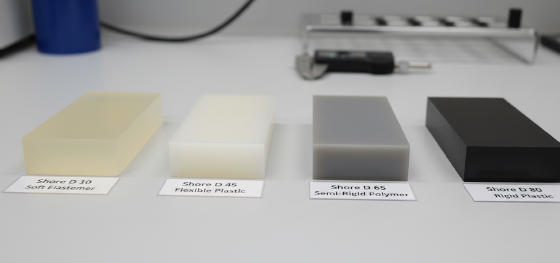
Think of the A-side component as the "structural backbone" of your part. In RIM polyurethane A and B components, Side A is almost always an isocyanate—a clear, reactive liquid that provides the cross-linking strength. When this liquid meets the B-side, it forms the polyurethane bonds that give the material its unyielding rigidity. JUCHENG utilizes high-purity MDI (Methylene Diphenyl Diisocyanate) for most structural RIM projects because it offers the best balance of stiffness and rapid curing time, essential for keeping production cycles fast in our Shenzhen hub.
What happens if the A-side gets contaminated by air?
Isocyanates are extremely sensitive to moisture. Even a tiny amount of humidity can turn Side A into a useless solid, which is why JUCHENG uses nitrogen-blanketed tanks to keep the chemicals pristine.
The A-side is the "unforgiving" part of the chemistry. It dictates how fast the part will harden (the "green strength") and how well it will bond to metal inserts. In high-performance parti per robot industriali, JUCHENG engineers the isocyanate viscosity to ensure it can be pumped at 3,000 psi through our mixing heads without shearing. This high-pressure handling is what ensures the "Exothermic Kick" happens uniformly throughout a 2-meter long part, preventing the localized soft spots that lead to field failures in [2026] AgTech hardware.
Safety and handling of Side A are non-negotiable standards at JUCHENG. We utilize closed-loop delivery systems that prevent technicians from being exposed to vapors. This level of environmental control isn't just about safety; it's about the chemistry. By keeping the isocyanate in a "controlled state" from the shipping container to the mixing head, we guarantee that the material entering your mold is chemically identical every time. This consistency is why our Beta trial fleets possess the repeatable mechanical data that regulatory bodies like the FDA demand for medical-grade hardware.
Esplorare i polioli: il cervello e la personalità del lato B
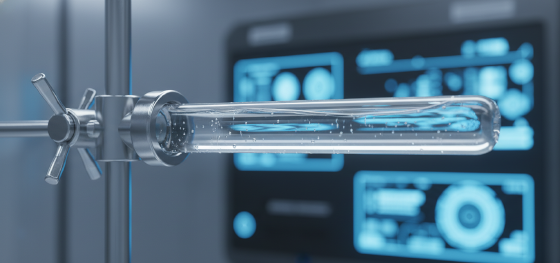
While the A-side provides the muscles, the B-side (the polyol) provides the "personality" of the part. In RIM polyurethane A and B components, Side B is a complex cocktail of polyols, catalysts, blowing agents, and pigments. This is where JUCHENG does the heavy customization work. If you need a part that feels like soft rubber for a robot bumper, we use a "long-chain" polyol. If you need a rock-solid enclosure for an MRI scanner, we use a "short-chain" rigid polyol. This versatility is why the reaction injection molding process is the preferred choice for multi-functional robotic assemblies.
Can I change the color of my part without painting?
Yes. We mix high-stability pigments directly into the Side B polyol, resulting in a "color-through" part that hides scratches and scuffs from the field.
Side B is also the home for thermal regulation. At our Shenzhen facility, we keep the polyol tanks heated to a precise 45°C to manage viscosity. If the polyol is too thick, it won't mix correctly with the isocyanate, leading to "marbling" or chemical streaking on the surface of your parts. JUCHENG utilize 24/7 thermal monitoring to ensure the "personality" of your material remains stable, whether we are molding a single Alpha prototype or a commercial run of 5,000 diagnostic scanner shells.
Chemical Resistant Materials are born in the polyol formulation. By selecting polyols with high hydroxyl functionality, JUCHENG creates a denser molecular mesh that resists the penetration of solvents and medical disinfectants. This is the secret to manufacturing enclosures that can survive thousands of bleach wipe-downs without losing their gloss. We work with global material leaders like Covestro and BASF to source the most advanced polyol blends, ensuring your [2026] hardware is built on a foundation of world-class chemistry.
Dati tecnici: come i rapporti dei componenti influenzano la durezza del pezzo

Success in Polyurethane Molding Services depends on matching the mechanical data to your robot's mission. The hardness of a RIM part is a direct result of the chemical ratio and the specific polyol chain length. The following table illustrates the typical performance ranges JUCHENG achieves by adjusting RIM polyurethane A and B components for our global clients. Use this to help specify your requirements during our DFM review.
| Tipo di materiale | Durezza (Shore) | Modulo a Flessione (psi) | Miglior Utilizzo |
|---|---|---|---|
| Rigid Structural | 80 - 85 D | 250,000 - 320,000 | MRI Shells / Robot Chassis |
| Semi-Rigid | 60 - 70 D | 100,000 - 150,000 | Tractor Fenders / Body Panels |
| Elastomeric (Rubber) | 40 - 90 A | 5,000 - 20,000 | Impact Bumpers / Grippers |
| Structural Foam | 75 - 80 D | 180,000 (Lightweight) | Oversized Internal Supports |
The "Rigid Structural" category is where JUCHENG handles the majority of our MedTech enclosures. By utilizing high-load isocyanate ratios, we achieve a stiffness that mimics ABS or glass-filled polycarbonate, but with much better dent resistance. This isotropic strength ensures that your robot prototipo remains structurally sound even if it's tipped over or struck by heavy equipment in a warehouse, providing a level of physical security that 3D-printed parts simply cannot offer.
Il rapporto di miscelazione: perché l'indice di isocianato è il capo?

In RIM polyurethane A and B components, the most important number is the "Isocyanate Index." This is the ratio of Side A to Side B. While many systems run at a 1:1 ratio for simplicity, high-tier industrial parts often require an "Over-Indexed" or "Under-Indexed" ratio to fine-tune the final properties. An over-indexed part (more Side A) is harder and more heat-resistant but can be more brittle. JUCHENG uses automated mass-flow meters to maintain this ratio with +/- 0.5% accuracy during the entire injection of a 1.5-meter long part.
Can the ratio change mid-run?
No. A drifting ratio is the #1 cause of part failure. JUCHENG uses closed-loop servo pumps to ensure the "Index" never moves, guaranteeing that part #100 is identical to part #1.
Mixing precision determines the curing uniformity. If the A and B components aren't mashed together perfectly in the mixing head, the "reaction" will be lopsided. This leads to "Internal Voids" and surface bubbles. JUCHENG’s high-pressure impingement mixing technology ensures that every drop of liquid is homogenized at the molecular level. This results in a "Clean Cure" where the part reaches its full mechanical strength evenly, preventing the internal warping that ruins the fitment of multi-part robotic shells.
Molecular weight distribution is managed through these ratios. In our Shenzhen hub, we perform "Shot-Weight Tests" before every production run to calibrate the pumps. By weighing the liquid output of each stream down to the gram, we eliminate the guesswork of traditional molding. This level of technical oversight is essential for parti per robot industriali where a weight imbalance in a large fender could affect the robot's center of gravity or battery life. We provide a full "Chemistry Log" for every batch, giving you the transparency needed for high-stakes hardware R&D.
Smart Additives: Incorporating Fire, UV, and Strength
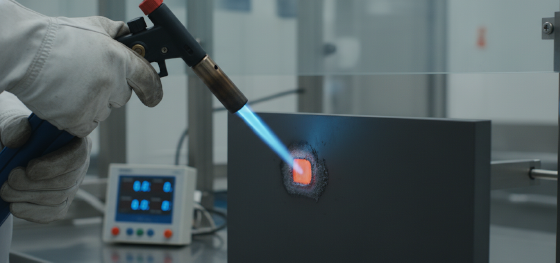
Liquid chemistry allows JUCHENG to "Sneak" high-performance features into your parts via the B-side polyol. Unlike solid plastics that are hard to modify, RIM polyurethane A and B components are the perfect host for smart additives. We integrate liquid flame retardants directly into the polyol stream to help your medical devices achieve the UL94 V-0 safety rating. These additives are homogenized during the impingement mix, ensuring that every square millimeter of the enclosure provides the same level of fire protection for your internal electronics and AI compute stacks.
How to prevent yellowing in outdoor robots?
JUCHENG adds high-intensity UV stabilizers and HALS (Hindered Amine Light Stabilizers) to the polyol to block solar degradation and color fading.
Blowing agents are added to the B-side to create structural foam. By injecting tiny amounts of gas into the liquid, JUCHENG creates parts with a dense solid skin and a lightweight "bionic" core. This sandwich structure is the ultimate weight-saving trick for [2026] autonomous tractors. It allows us to produce 30mm thick structural panels that weigh less than a 5mm solid part but possess significantly higher bending stiffness. This is a core competency of our Servizi di Stampaggio in Poliuretano, helping our clients build robots that move faster and work longer.
Reinforcement through glass fibers or minerals (RRIM) is the final level of material upgrading. JUCHENG utilizes specialized mix-heads that can handle abrasive "milled glass" fibers added to the polyol. This results in parts with extremely low CLTE (Coefficient of Linear Thermal Expansion), meaning they won't grow or shrink when the robot moves from a cool warehouse to a hot sunny loading dock. This dimensional stability is vital for maintaining the calibration of high-resolution LiDAR and computer-vision sensors, ensuring your robot prototipo stays on the path regardless of the weather.
JUCHENG Hub: Custom Resin Blending in the Shenzhen Shop

Dominating the hardware market requires a partner that doesn't just buy materials, but understands the chemistry behind them. Jucheng Precision operates with a 24/7 manufacturing mindset in our Shenzhen precision manufacturing hub, delivering high-tolerance RIM components and structural parti per robot industriali with lead times that keep your R&D moving. We provide a "Bridge to Production" that ensures your innovations move from a CAD file to a commercial fleet of 5,000 units with consistent chemical and dimensional quality.
Integrating your structural design with JUCHENG’s expertise ensures that your RIM polyurethane A and B components decision is based on performance data, not guesswork. We offer comprehensive DFM reviews within 24 hours, identifying potential material-ratio risks or thermal-expansion bottlenecks in your design before they become field failures. Whether you are building an autonomous vineyard scout or a multi-part surgical robot, Jucheng Precision provides the rigid, precise, and *chemically optimized* foundations that keep your innovation moving through the high-stakes cycles and the years of hard labor.
Our facility is equipped with 150+ CNC machines and dedicated high-pressure RIM assembly cells, allowing us to manage the entire material and part lifecycle in one location. We manage the complexity of impingement mixing and custom polyol blending so your engineering team can focus on the motion control and the AI. By combining Shenzhen's speed with industrial-grade chemical verification and global ISO 13485 standards, JUCHENG remains the preferred partner for the world's most aggressive hardware challenges. Contact us today to start your next project.
FAQ: Real Answers for Component Ratios and Shelf Life
What is the shelf life of RIM A and B components?
Typically 6 to 12 months. We maintain fresh inventory to ensure the chemical reactivity and viscosity are always at peak levels.
Can JUCHENG match my corporate brand color in the resin?
Yes. We mix custom pigments into the Side B polyol for a permanent, color-through finish that never chips or peels.
Is the mixing ratio different for flexible vs. rigid parts?
Yes. Flexible parts often use longer polyol chains and different A/B ratios to achieve elastomeric properties.
Do you provide the chemical batch logs for medical compliance?
Yes. We provide full traceability and chemical ratio logs for every medical-grade production batch in our Shenzhen hub.
Can I add glass fiber to my prototype for extra stiffness?
Yes. Our RRIM process allows for up to 20% milled glass fiber reinforcement to increase the modulus of the part.
Chemical drift and soft spots are absolute innovation killers for large-scale robotics. Partnering with Jucheng Precision ensures that your functional iterations are built with the precision-balanced processo di stampaggio a iniezione reattiva e le tecniche specializzate componenti A e B in poliuretano RIM the industry demands. Reach out to our Shenzhen manufacturing hub today for a complete DFM review and build the unyielding foundation your autonomous fleet requires.

