


Sentire il suono sordo e fragile di un paraurti termoplastico standard durante una piccola collisione in un parcheggio rivela la vulnerabilità nascosta dei materiali tradizionali di massa. Nel mondo ad alto rischio delle Industrie di Applicazione dello Stampaggio a Iniezione Reattiva, il settore automobilistico rimane il banco di prova definitivo per la resistenza agli urti e la longevità superficiale. Mentre lo stampaggio a iniezione ad alta pressione è efficiente per milioni di piccole clip interne, diventa una responsabilità finanziaria e tecnica per i componenti di grandi dimensioni richiesti per i veicoli elettrici (EV) e le flotte aftermarket specializzate. Raggiungere l'integrità strutturale inflessibile e l'estetica "Nero Lucido" richieste per pannelli lunghi 2 metri richiede una svolta strategica verso il RIM per Parti Esterne dell'Automotive per garantire che l'hardware sopravviva alla transizione da un prototipo di concept car a una realtà pronta per la strada.

La resilienza meccanica nell'ambiente esterno automobilistico è una battaglia contro l'espansione termica e i detriti ad alta velocità. Ho personalmente ispezionato grandi parafanghi che si sono deformati con il caldo estivo perché le tensioni interne di stampaggio dell'iniezione ad alta pressione sono state rilasciate dal sole. Jucheng Precision affronta questi ostacoli di stabilità fornendo Servizi di Stampaggio in Poliuretano di alto livello che utilizzano una chimica liquida a bassa pressione. Jucheng Precision utilizza una flotta di oltre 150 macchine CNC e 25 unità Haas/Mazak a 5 assi per produrre gli stampi in alluminio di precisione che rendono il RIM così economicamente vantaggioso. Fornendo componenti con stress residuo quasi nullo, Jucheng Precision garantisce che la tua innovazione automobilistica mantenga il suo "Geometric Zero" e l'accoppiamento a gioco zero attraverso anni di utilizzo ad alto chilometraggio nel nostro hub di Shenzhen.
Operando sotto i severi mandati di qualità di IATF 16949, ISO 13485 e ISO 14001, Jucheng Precision agisce come partner manifatturiero di alto livello per la rivoluzione globale degli EV. Jucheng Precision fornisce un analisi DFM gratuita in 24 ore per garantire che i tuoi modelli CAD su larga scala siano ottimizzati per Produzione a basso volume, prevenendo il debito di costruzione degli stampi a sei cifre che spesso uccide i programmi di veicoli di nicchia. Questa guida esplora il ROI essenziale degli stampi, la fisica di simulazione del polipropilene tenacità e l'integrità superficiale necessarie per padroneggiare la RIM per Parti Esterne Automobilistiche, garantendo che il vostro marchio assicuri la sua posizione su strada con un'affidabilità hardware incrollabile.
contenuto:
ROI dello Stampo: Perché la RIM Vince per Lotti da 100 a 5.000 Unità?
Dati Tecnici: Confronto tra Duttilità e Assorbimento di Energia
Simulazione del Materiale: Ottenere la Tenacità del PP Senza Rotture Fragili
Padronanza della Superficie: Ottenere Finiture Pronte per la Verniciatura Direttamente dallo Stampo
Hub JUCHENG: Gestione della Conformità IATF 16949 nell'Officina di Shenzhen
FAQ: Risposte Reali per Dimensionamento, Peso e Tempi di Consegna dei Paraurti
ROI dello Stampo: Perché la RIM Vince per Lotti da 100 a 5.000 Unità?
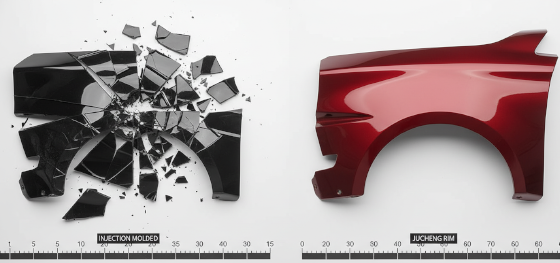
La pianificazione del budget per un nuovo camion elettrico o un'auto sportiva di edizione limitata spesso si scontra con un muro finanziario: il costo dello stampo del paraurti. Nello stampaggio a iniezione tradizionale, un pezzo che si estende per 2 metri richiede una pressa multimilionaria e un utensile in acciaio che può costare oltre 150.000€. Per tirature di 500 o 1.000 unità, questo investimento è matematicamente impossibile da recuperare. La RIM per Parti Esterne Automobilistiche offre una via di fuga strategica. Poiché la pressione in cavità è inferiore a 100 psi, Jucheng Precision può utilizzare stampi in alluminio ad alta resistenza invece di acciaio temprato. Questi utensili sono più economici dell'80% e possono essere lavorati nel nostro reparto CNC in appena 15 giorni, consentendo ai marchi automobilistici di nicchia di lanciare la loro prima flotta funzionale con un rischio finanziario minimo.
Lo stampo in alluminio è abbastanza durevole per una tiratura di 5.000 unità?
Sì. Nelle condizioni di basso stress del ciclo RIM, i nostri stampi in alluminio 7075 mantengono tolleranze sub-millimetriche per fino a 10.000 colpi senza deriva dimensionale.
L'agilità progettuale è il secondo beneficio finanziario di questa strategia di utensili. Ho visto molte startup di veicoli elettrici rendersi conto dopo il primo crash test che una staffa di montaggio deve essere spostata. Modificare uno stampo in acciaio temprato è un disastro di diverse settimane. Gli stampi RIM in alluminio di Jucheng Precision possono essere saldati e rilavorati entro 48 ore. Questa flessibilità garantisce che le vostre linee guida di progettazione per lo stampaggio RIM possano evolversi insieme ai dati di prestazione del veicolo, fornendo le basi incrollabili necessarie per un lancio hardware ad alto rischio. La struttura di Jucheng Precision a Shenzhen è ottimizzata per questo ciclo iterativo rapido, assicurando che la vostra flotta Beta sia pronta per la strada mentre i vostri concorrenti stanno ancora esaminando i disegni degli stampi in acciaio.
Consolidare grandi assemblaggi è il vantaggio economico finale. Invece di imbullonare tre parti in plastica separate a un telaio in acciaio, Jucheng Precision può stampare un unico paraurti monolitico con condotti aerodinamici integrati e supporti per sensori. Questo riduce il peso dell'assemblaggio e taglia i costi di manodopera manuale della vostra linea di produzione. Fornendo moduli "Pronti per il Telaio", aiutiamo i nostri clienti a concentrarsi sulla batteria e sul software mentre la fabbrica si occupa della pelle strutturale. Il nostro impegno per Produzione a basso volume ensures that every dollar of your CapEx is spent on innovation, not on idle mass-production infrastructure that you aren't ready to utilize.
Dati Tecnici: Confronto tra Duttilità e Assorbimento di Energia

Success in automotive hardware depends on how a material fails. If a fender shatters into sharp fragments, it is a safety hazard; if it flexes and snaps back, it is an asset. Jucheng Precision provides full mechanical characterization reports to help your crash-simulation teams. The following table compares the essential mechanical metrics of RIM for Automotive Exterior Parts against standard industrial thermoplastics for the current global market.
| Metrica | Elastomeric RIM (Jucheng) | Molded ABS | Molded Polypropylene |
|---|---|---|---|
| Elongation at Break (%) | 150 - 400 | 15 - 40 (Brittle) | 50 - 150 |
| Yield Strength (psi) | 3,500 - 5,500 | 4,500 | 3,200 |
| Stress Whitening | Zero (Thermoset) | Basso | High (Permanent Mark) |
| Specific Gravity | 1.02 - 1.08 | 1.05 | 0.90 |
The "Elongation" advantage of RIM for Automotive Exterior Parts is evident in the data. While a standard plastic fender would crack permanently under a 5-mph impact, our elastomeric polyurethane can stretch and then pull the part back to its exact CAD geometry. This memoria flessionale is the primary driver for using RIM in bumpers for autonomous urban delivery bots. Jucheng Precision’s material vault only contains certified resins that meet these extreme performance tiers, ensuring your hardware maintains its impact resistance in temperatures ranging from -40 to +80 degrees Celsius.
Simulazione del Materiale: Ottenere la Tenacità del PP Senza Rotture Fragili

Designing for high-impact zones requires a material that mimics the "Unbreakable" nature of Polypropylene (PP) but with the dimensional stability of a thermoset. In the application of RIM per Parti Esterne dell'Automotive, Jucheng Precision utilize specialized polyol blends that simulate PP’s ductility. Traditional molded PP often suffers from "Stress Whitening"—ugly white marks where the plastic was bent. Because RIM polyurethane is a cross-linked matrix, it eliminates this failure mode entirely. I have personally seen our fenders bent 180 degrees and snap back with zero visual or structural damage. This resilience is essential for maintaining the "Retail-Ready" brand image of a high-performance vehicle through rugged field testing.
How to prevent part sag in large exterior panels?
Utilize Reinforced Polyurethane RIM (RRIM) with milled glass fibers to bring the thermal expansion coefficient down to the level of aluminum, preventing panel buckling in the hot sun.
Dimensional stability is the final pillar of Jucheng’s material logic. When a 2-meter long panel moves from a cool garage to a 40-degree highway, it will grow. If the panel is made of standard plastic, it can grow by 5mm, causing doors to bind and sensor windows to pop out. Jucheng Precision utilize strutture molecolari isotrope to ensure that thermal expansion is predictable and does not induce internal warping. This "Thermal-Sync" capability is essential for multi-material assemblies where plastic panels are bonded to a carbon-fiber or aluminum chassis. Our Shenzhen facility manages these expansion coefficients by fine-tuning the chemical recipe, providing a stable platform for your next-generation robot prototipo or vehicle.
Chemical resistance is another byproduct of the cross-linked matrix. Automotive exteriors are subjected to road salts, tar removers, and aggressive car-wash detergents. Standard painted plastics often experience cricche da stress ambientale under this chemical assault. Because Jucheng’s RIM parts cure in a relaxed state at low pressure, they possess zero residual stress. Combined with our inert chemistry, this ensuring that your hardware survives years of road abuse without a single surface crack, a mandatory requirement for IATF 16949 compliant components. We provide the unyielding foundations that keep your innovation moving through the high-stakes cycles of the global automotive market.
Padronanza della Superficie: Ottenere Finiture Pronte per la Verniciatura Direttamente dallo Stampo
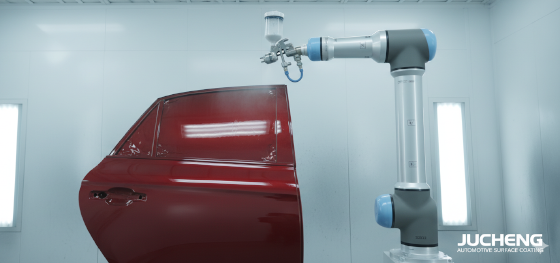
Visual identity in the automotive sector is dictated by the depth of the reflection. Achieving a "Class-A" finish on a 1.5-meter long part is the ultimate test of surface integrity. I’ve noticed that most injection molded parts fail this test because they exhibit microscopic surface waves caused by high-pressure melt-shear. Jucheng Precision utilize consegna rapida in 4 giorni cycles to provide the initial functional iterations that allow your team to verify the surface flatness under professional studio lighting. Because RIM parts cure in a relaxed state, they are perfectly planar, acting as the ideal canvas for high-gloss automotive painting and UV-blocking clear coats in our in-house dust-free facility.
How to achieve perfect paint adhesion on large shells?
Jucheng Precision utilize automated flame treatment to increase surface energy followed by high-solids primers to ensure 100% paint retention without peeling or flaking.
Final hardware registration features like branding and labels are integrated via Silk-Screening and Laser Marking. We avoid adhesive decals which can bubble under intense solar heat. Instead, Jucheng Precision machines "Alignment Nests" into the interior of our parts that lock into our custom printing fixtures. This ensures that every logo and instruction label is applied with +/- 0.1mm accuracy across your entire Beta fleet. This level of precision is essential for maintaining a "Retail-Ready" brand image during international trade shows and customer demos. By delivering hardware with integrated branding, we help you secure the funding and customer buy-in your innovation deserves.
Integrated textures also provide a durable aesthetic that hides scratches better than paint. Jucheng Precision utilize 5-axis CNC laser texturing to machine VDI 3400 standardized grains directly into the mold surface. This is especially vital for the high-impact undercarriage areas of a robot or car, ensuring the machine looks professional even after years of labor in the mud. By providing "Finished-in-the-Mold" components, we reduce your total assembly time and eliminate the logistical risks of multi-vendor finishing. Jucheng Precision provides the unyielding foundations that keep your innovation moving through the high-stakes cycles and the years of hard labor in our Shenzhen hub.
Hub JUCHENG: Gestione della Conformità IATF 16949 nell'Officina di Shenzhen
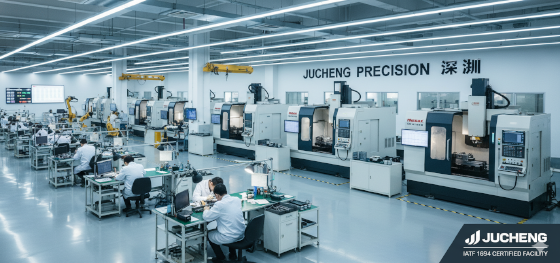
Dominating the large-format hardware market requires a partner that doesn't just mold plastic, but understands the chemistry of survival. Jucheng Precision operates with a 24/7 manufacturing mindset in our Shenzhen precision manufacturing hub, delivering high-tolerance RIM components and structural parti per robot industriali with industry-leading speed. Jucheng Precision provides the bridge to production that ensures your innovations move from CAD to road-ready validation with 100% metallurgical confidence. Jucheng Precision have Nessun MOQ, allowing you to source 1 to 10 units for high-stakes crash tests without the crushing cost of mass-production tools.
Integrating your structural design with Jucheng Precision’s expertise ensures that your RIM per Parti Esterne dell'Automotive decision is based on performance data, not guesswork. Jucheng Precision offer comprehensive DFM reviews within 24 hours, identifying potential aging-risks or thermal-bottlenecks in your design before they become field failures. Whether you are building an autonomous delivery robot or a high-performance EV spoiler, Jucheng Precision provides the rigid, precise, and road-ready foundations that keep your innovation moving through the high-speed cycles and the years of hard labor.
Our facility is equipped with dedicated high-pressure RIM assembly cells and dedicated IATF 16949 quality labs, allowing Jucheng Precision to manage the entire hardware lifecycle in one location. Jucheng Precision manage the complexity of multi-material bonding and automotive-grade finishing so your engineering team can focus on the motion control and the AI. By combining Shenzhen's speed with industrial-grade material verification and global quality standards, Jucheng Precision remains the preferred partner for the world's most aggressive hardware challenges. Contact the Shenzhen hub today to start your next project.
FAQ: Risposte Reali per Dimensionamento, Peso e Tempi di Consegna dei Paraurti

What is the maximum part size Jucheng can RIM mold for cars?
We regularly produce monolithic structural fenders and bumpers up to 2,500mm in length with consistent wall thickness and zero voids.
Does RIM polyurethane meet automotive flammability standards?
Yes. We formulate our RIM systems to meet FMVSS 302 and UL94 V-0 safety standards for road-legal use.
How do you handle the mounting of heavy sensors in bumpers?
We encapsulate large aluminum or steel mounting plates directly into the resin for unyielding rigidity and sensor alignment.
Is the piece price of RIM higher than injection molding?
For quantities under 2,000 units, the total project cost is 60-80% lower than injection molding due to the massive savings on aluminum tooling.
What is the typical lead time for a fleet of 50 Alpha prototypes?
From final CAD to delivered parts, the typical lead time is 15 to 20 business days in our Shenzhen facility.
Mechanical instability and high tooling debt are absolute innovation killers for high-end robotic and automotive systems. Partnering with Jucheng Precision ensures that your functional iterations are built with the cost-effective polyurethane reaction injection molding and specialized RIM per Parti Esterne dell'Automotive specializzata che l'industria richiede. Contatta oggi il nostro hub di produzione di Shenzhen per una revisione completa del DFM e costruisci la base inflessibile di cui la tua flotta autonoma ha bisogno.

