


Il tuo prossimo prodotto ha bisogno di una "personalità". Deve essere flessibile e indulgente, come una guarnizione in gomma? Deve essere indistruttibilmente resistente, come un alloggiamento di un utensile elettrico? O deve essere rigido e inflessibile, come un telaio di supporto?
Il mondo delle materie plastiche offre tutte queste personalità. Ma per scegliere quella giusta, devi prima imparare a porre le domande giuste. La lingua che devi parlare è la lingua della della plastica.
Questa guida non è un dizionario di termini scientifici. È un manuale di problem-solving per progettisti e ingegneri. Inizia con la tua esigenza e ti aiuta a trovare la proprietà che la soddisfa.
contenuto:
L'esigenza di 'piegarsi': flessibilità e forma
L'esigenza di 'tenere': rigidità e durezza
L'esigenza di 'sopravvivere': resistenza e tenacità
L'esigenza di 'resistere': resistenza al calore
L'esigenza di 'diventare': stampabilità e densità
L'esigenza di 'rinnovare': materiali riciclati
L'esigenza di 'piegarsi': flessibilità e forma
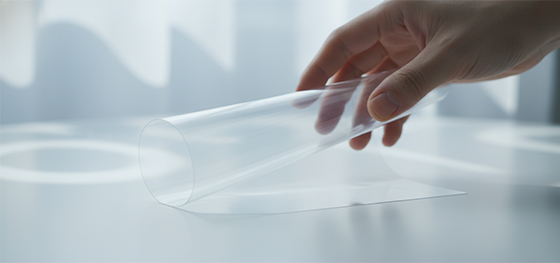
La tua esigenza: "Ho bisogno di un materiale che possa piegare, arrotolare o incernierare." La proprietà che stai cercando è la flessibilità. Questa è misurata da un basso modulo a flessione.
Per questo, sceglieresti un materiale in lamiera di plastica flessibile come il polipropilene (PP) o il LDPE. Questi materiali possono essere piegati migliaia di volte senza rompersi. Questo li rende perfetti per cerniere vive sui coperchi dei contenitori.
A volte, hai bisogno di flessibilità semplicemente perché la parte è molto sottile. Un materiale in lamiera di plastica sottile made from a more rigid plastic, like PET or PVC, can still be very flexible. Think of a blister pack or a plastic folder. Here, the geometry (the thinness) is just as important as the material itself.
L'esigenza di 'tenere': rigidità e durezza
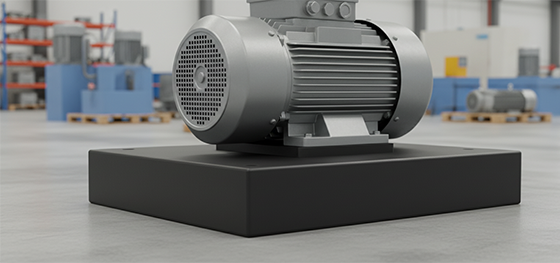
Your Need: "I need a material that will not bend or deform under load. It needs to be a solid foundation." The properties you are looking for are rigidity and hardness.
This calls for a hard plastic. But "hard" can mean two things. It can mean scratch resistance. Or it can mean stiffness (a high flexural modulus). Often, they go together.
Materials like Acrylic (PMMA) are very hard and scratch-resistant, but also brittle. For a part that needs to be truly robust, you would look for a materiale plastico rigido. A great choice is a glass-fiber reinforced polymer, like GF-Nylon. The glass fibers act like a skeleton inside the plastic, making it incredibly stiff and strong. This is perfect for support brackets or structural housings.
L'esigenza di 'sopravvivere': resistenza e tenacità
Your Need: "I need a part that can take a punch. It can be dropped or hit, and it will not shatter." The property you are looking for is toughness, or impact strength.
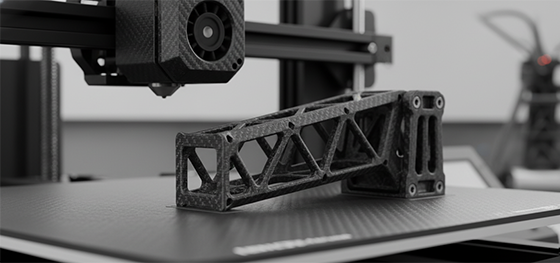
This is especially critical in 3D printing, where the layer-by-layer process can create weaknesses. To get a truly strong part, you need to choose the filamento per stampante 3d più resistente.
This often means a composite filament. These are special filaments made from a tough base plastic, like Nylon or PETG, that has been infused with chopped carbon fibers or glass fibers. These fibers bridge the layers and dramatically increase the final part's strength and stiffness. The result is a 3D printed part that can often rival the strength of machined aluminum, but at a fraction of the weight.
L'esigenza di 'resistere': resistenza al calore
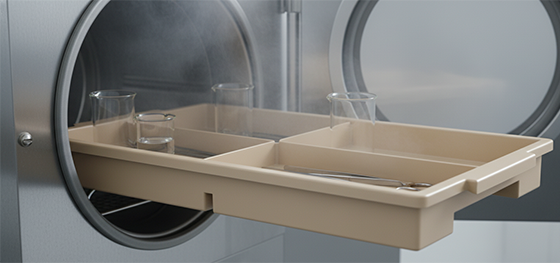
Your Need: "My part will operate in a very hot environment." The property you need is heat resistance. This is measured by the Heat Deflection Temperature (HDT).
Most common plastics will soften and deform at temperatures above 100°C. For a job that requires high heat, you need a specialist.
A materiale plastico resistente al calore belongs to a family of high-performance polymers. Materials like PEEK, PEI (Ultem), and PPS are the champions here. They can withstand continuous operating temperatures of 150°C, 200°C, or even higher. This allows plastic parts to be used in demanding applications like engine components, medical sterilization trays, and industrial sensors.
L'esigenza di 'diventare': stampabilità e densità
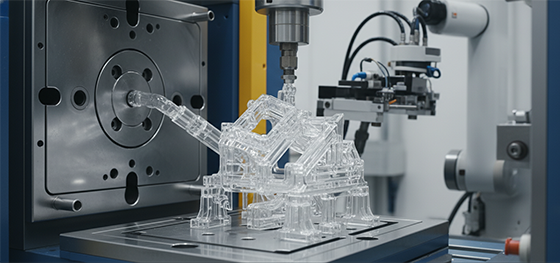
Your Need: "I need to create a very complex shape with high precision and repeatability." The property you are looking for is good moldability.
A good moldable plastic material, like ABS or Polycarbonate, has excellent flow characteristics when molten. It can fill every tiny feature of a complex injection mold. It also has predictable and low shrinkage as it cools. This allows a manufacturer to produce millions of identical parts with very tight tolerances.
A related property is the materiale plastico in base alla densità. The density affects two things: the part's final weight and its cost. A lower density material will result in a lighter part. Since plastic is bought by weight, a lower density material can also sometimes lead to a lower cost per part. A designer must balance the need for a "solid" feel with the goal of light weight and low cost.
L'esigenza di 'rinnovare': materiali riciclati
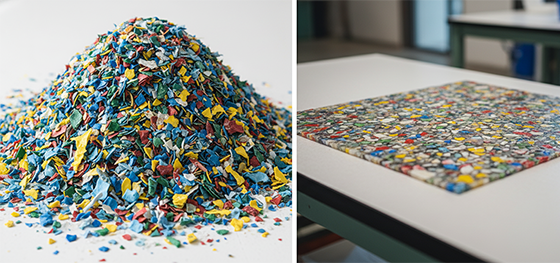
Your Need: "I want to make a product that is more sustainable and environmentally friendly." The property you are looking for is recyclability.
Many companies are now choosing to use a recycled plastic sheet material. These materials are made from post-consumer or post-industrial waste. For example, plastic bottles can be collected, cleaned, shredded, and melted down to create new sheets or pellets.
Using these materials can significantly reduce a product's carbon footprint. They can also have a unique aesthetic. A sheet made from recycled plastics often has small, colorful flecks from the original products, creating a one-of-a-kind finish. This is a powerful way to tell a story of sustainability with your product.

