


La perdita di ore operative della batteria a causa del peso parassita di involucri sovradimensionati è il principale grattacapo ingegneristico per la prototipazione rapida per la robotica. Nel mondo ad alta posta in gioco delle flotte di consegna autonome e degli esploratori volanti, ogni chilogrammo di peso morto sul telaio è un chilogrammo sottratto al carico utile o al sensore. Mentre la stampaggio a iniezione di reazione in poliuretano standard è famosa per la creazione di pezzi di grandi dimensioni, le resine solide pure possono ancora essere troppo pesanti per piattaforme mobili agili. Raggiungere l'ultimo rapporto resistenza-peso richiede un passaggio al poliuretano microcellulare RIM, un processo che crea una "struttura a sandwich" bionica con una pelle densa e resistente e un nucleo microporoso che assorbe gli urti.

L'alleggerimento tramite schiumatura non riguarda solo la riduzione della densità del pezzo; riguarda la gestione del rapporto pelle-nucleo per garantire che la rigidità strutturale rimanga elevata. Nello stampaggio ad alta pressione tradizionale, la schiumatura porta spesso a "striature argentee" superficiali o a una finitura ruvida e porosa che richiede una pesante levigatura. Jucheng Precision affronta questi ostacoli estetici e meccanici utilizzando polioli caricati con gas e dinamiche a bassa pressione dei liquidi. Jucheng fornisce componenti che sembrano solidi come l'osso ma pesano dal 30% al 50% in meno, fornendo l'affidabilità "Aero-Industriale" che la robotica di nuova generazione e le console mediche richiedono nel nostro hub produttivo di Shenzhen.
Operando sotto un duplice mandato di ISO 13485 e ISO 14001, Jucheng Precision agisce come scienziato dei materiali di alto livello per gli OEM globali. Trasformiamo concetti grezzi in hardware leggero e validato in appena 15 giorni lavorativi, sfruttando la nostra oltre 150 macchine CNC per costruire gli stampi in alluminio ad alta tolleranza necessari per il RIM assistito da gas. Questa guida esplora gli standard essenziali della struttura a sandwich, i dati di riduzione della densità e i coefficienti di smorzamento interno necessario per la produzione di hardware RIM in poliuretano microcellulare che assicura il futuro della tua flotta autonoma.
contenuto:
La struttura sandwich: come bilanciare rigidità e massa?
Dati tecnici: confronto tra densità e prestazioni strutturali
Vantaggi nascosti: padroneggiare l'attenuazione acustica e l'isolamento
Strategia JUCHENG: dal prototipo alla produzione leggera
FAQ: logistica e prestazioni delle parti in poliuretano espanso
La struttura sandwich: come bilanciare rigidità e massa?
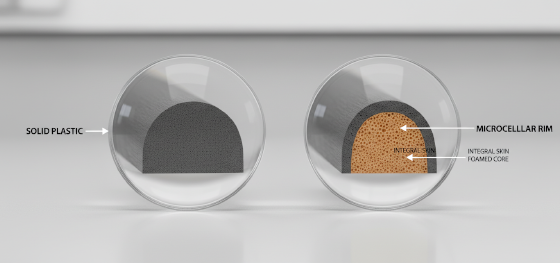
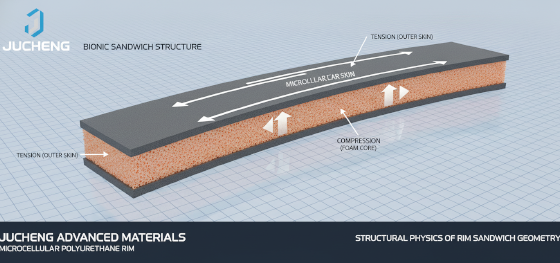
Le prestazioni strutturali nel poliuretano microcellulare RIM sono governate dalle leggi della geometria bionica. A differenza di una parte plastica solida con densità uniforme, una parte microcellulare è composta da tre strati: due pelli esterne solide ad alta densità e un nucleo microporoso a bassa densità. Questo è essenzialmente una "trave a I" in ogni direzione. Quando un parafango robot viene colpito, la pelle esterna gestisce i carichi di trazione e compressione, mentre il nucleo espanso agisce come un distanziatore resistente al taglio. Jucheng Precision esegue analisi DFM gratuita in 24 ore per ottimizzare lo spessore di queste pelli, assicurando che il tuo robot prototipo rimanga rigido anche quando il volume totale del materiale è ridotto.
Una parte espansa può contenere inserti metallici?
Sì. Jucheng utilizza densificazione localizzata o sovrastampa inserti metallici nelle aree della pelle solida, fornendo una resistenza alla torsione incrollabile anche in pannelli leggeri.
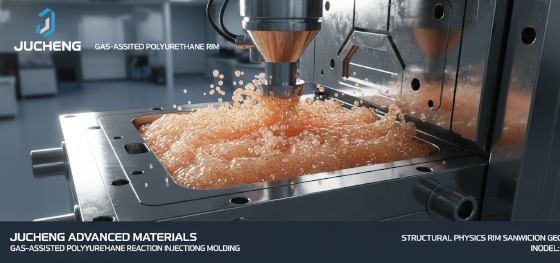
Il controllo del flusso laminare è il segreto per ottenere una "pelle integrale" perfetta. Durante la fase di iniezione, il poliuretano liquido colpisce le pareti fredde dello stampo in alluminio e solidifica istantaneamente, formando un esterno non poroso. L'agente espandente quindi innesca la reazione di schiumatura nel centro più caldo della parte. Il team di ingegneri di Jucheng utilizza 25 unità Haas/Mazak a 5 assi per lavorare canali di sfiato intricati nelle linee di divisione dello stampo. Questi sfiati permettono all'aria di fuoriuscire prima della schiuma in espansione, prevenendo le "buche superficiali" che rovinano l'estetica delle parti espanse di bassa qualità.
Il design delle nervature interne deve essere adattato al processo microcellulare. Nello stampaggio solido, le nervature spesse causano segni di ritiro; nel RIM espanso, l'espansione delle bolle spinge effettivamente il materiale nelle nervature, eliminando completamente i ritiri. Questo permette a Jucheng Precision di stampare strutture di rinforzo interne complesse impossibili da ottenere con lo stampaggio a iniezione. Fornendo plastica strutturale ad alta rigidità with zero surface defects, we allow your industrial designers to maintain a clean "Apple-style" exterior while the mechanical engineers get the structural backbone they need for high-torque robotic joints.
Dati tecnici: confronto tra densità e prestazioni strutturali
Success in hardware optimization depends on the numbers. If your design assumes the density of water but you receive the weight of a brick, your autonomous platform will be underpowered. Jucheng Precision provides full material characterization reports for every custom formulation. The following table compares the essential mechanical properties of poliuretano microcellulare RIM against standard solid polymers for the current MedTech and robotic markets.
| Metrica | Solid Polyurethane RIM | Microcellular RIM (Foamed) | Vantaggio Ingegneristico |
|---|---|---|---|
| Specific Gravity (g/cm³) | 1.05 - 1.15 | 0.60 - 0.85 | 30-40% Mass Reduction |
| Modulo a Flessione (psi) | 300,000 | 220,000 (Sandwich) | High Rigidity per Gram |
| Acoustic Damping (dB) | Basso | Eccezionale | Silences Motor Noise |
| Tooling Pressure (psi) | 50 - 100 | 40 - 60 | Enables Massive Parts |
The "Specific Gravity" data highlights why this process is a "Game Changer" for flying drones and handheld medical devices. By reducing the density below 1.0, Jucheng creates parts that are literally lighter than water but have the surface hardness of a car bumper. This mass reduction is the primary driver of energy efficiency in electric autonomous fleets, as it reduces the power required for every start-stop cycle. Our Shenzhen hub manages these density targets with +/- 2% precision, ensuring that part #1 and part #500 have identical centers of gravity for your flight control software.
Vantaggi nascosti: padroneggiare l'attenuazione acustica e l'isolamento
Beyond weight reduction, microcellular polyurethane RIM provides mechanical advantages that solid plastics cannot match. The micro-bubbles within the core act as millions of tiny shock absorbers, dissipating kinetic energy before it can travel through the frame. This results in high coefficienti di smorzamento interno that are essential for robots operating in quiet clinical or office environments. If your robot's gearboxes or cooling fans are too noisy, a microcellular enclosure acts as a natural "Muffler," soaking up high-frequency vibrations and delivering the mechanical silence that defines a premium product.
Does it dampen motor noise?
Yes. The porous core breaks up sound waves, reducing the "Rattle" of internal robotic components by up to 15 decibels compared to thin-walled injection molded shells.
Thermal insulation is the second hidden superpower. In medical diagnostic equipment containing high-power lasers or MRI coils, localized heat can be dangerous for patients and technicians. Standard plastic enclosures conduct this heat directly to the surface. Jucheng’s microcellular RIM parts act as a thermal insulation barrier, keeping the exterior skin cool to the touch even when internal components are running hot. This removes the need for expensive internal insulation blankets and simplifies your thermal management strategy, reducing the total footprint of your machine.
Environmental resilience in [2026] hardware is further enhanced by the "Gas-Shield" effect. Because the core is micro-porous, the part handles thermal expansion differently than solid plastic. It exhibits a lower "Coefficient of Linear Thermal Expansion" (CLTE), meaning your large-scale robot fenders won't sag or "buckle" when moving from a cold warehouse into the hot sun. Jucheng Precision provides production-grade Servizi di Stampaggio in Poliuretano that incorporate UV-blocking additives into the skin, ensuring your lightweight hardware survives years of outdoor exposure without color fading or brittle failure.
Strategia JUCHENG: dal prototipo alla produzione leggera
Dominating the robotics market requires a partner that can scale from a single functional Alpha unit to a commercial deployment of 5,000 Beta machines without losing a gram of efficiency. Jucheng Precision operates with a 24/7 manufacturing mindset in our Shenzhen precision manufacturing hub, delivering high-tolerance microcellular components with industry-leading speed. we provide a "Bridge to Production" that ensures your innovations move from concept to pilot run with 100% metallurgical and chemical confidence.
Integrating your structural design with Jucheng’s expertise ensures that your poliuretano microcellulare RIM decision is based on performance data, not guesswork. we offer comprehensive DFM reviews within 24 hours, identifying potential gas-trap zones or wall-thickness bottlenecks in your design before they become field failures. Whether you are building an autonomous vineyard scout or a heavy-duty industrial mobile base, Jucheng Precision provides the rigid, precise, and lightweight foundations that keep your innovation moving through the high-speed cycles and the years of hard labor.
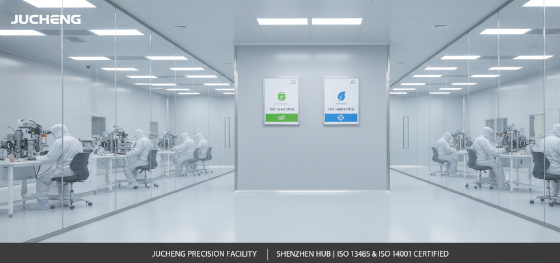
Our facility is equipped with dedicated high-pressure RIM assembly cells and ISO-standard quality labs, allowing us to manage the entire hardware lifecycle in one location. we manage the complexity of multi-material bonding and gas-injection chemistry so your engineering team can focus on the motion control and the AI. By combining Shenzhen's speed with industrial-grade material verification and global quality standards, Jucheng Precision remains the preferred partner for the world's most aggressive high strength plastic machining challenges. Contact us today to start your next project.
FAQ: logistica e prestazioni delle parti in poliuretano espanso
Is the surface of a foamed part smooth enough for painting?
Yes. The integral skin formed against the mold is 100% solid and smooth, making it ideal for automotive-grade high-gloss painting.
What is the maximum part length Jucheng can foam?
We regularly produce microcellular structural panels up to 2,500mm in length with consistent density across the entire span.
Does foaming reduce the impact strength?
Actually, the sandwich structure often handles impact energy better than solid plastic because the foam core deforms to absorb the shock.
Can I get 50 units with custom EMI shielding?
Yes. we specialize in applying conductive coatings to the internal skin of microcellular shells for regulatory compliance.
What is the lead time for a foamed Alpha prototype?
Functional foamed parts from aluminum rapid tooling are typically delivered in 15 to 18 business days.
Inertial mass and vibration noise are absolute innovation killers for high-end mobile robotics. Partnering with Jucheng Precision ensures that your functional iterations are built with the energy-saving stampaggio a iniezione di reazione in poliuretano e le tecniche specializzate poliuretano microcellulare RIM techniques the industry demands. Reach out to our Shenzhen manufacturing hub today for a complete DFM review and build the high-fidelity foundation your autonomous fleet requires.

