


Le illusioni visive sono la valuta suprema del design industriale. Nelle prime fasi dello sviluppo del prodotto, la capacità di tenere in mano un prototipo che appare e si sente esattamente come un prodotto finito per il consumatore vale più di mille rendering CAD. All'interno dello spettro high-tech del processo di stampa 3D, la maggior parte delle tecnologie fatica a colmare il divario tra colore, texture e trasparenza. Producono parti in colori singoli o con grana di strato visibile che richiedono una verniciatura manuale estesa. Tuttavia, un metodo si distingue come la "stampante a getto d'inchiostro del mondo 3D". Questo è la stampa 3D a getto di materiale. È un processo che scarta il laser e il filamento a favore di gocce microscopiche di fotopolimero, consentendo la creazione di capolavori multi-materiale e a colori pieni che possono imitare qualsiasi cosa, dal tessuto umano ai cruscotti automobilistici ad alta lucentezza in un'unica costruzione.

Presso JUCHENG, analizziamo ogni tecnologia additiva non solo per la sua novità, ma per il suo posizionamento strategico nel ciclo di vita della produzione. Il getto di materiale è un miracolo tecnico di replica sensoriale, ma comporta un compromesso strutturale. È la scelta principale per modelli di marketing e modelli di pianificazione chirurgica dove la fedeltà visiva è il mandato primario. Ma per i componenti che devono resistere a stress meccanici o alte temperature, la chimica delle resine a getto spesso raggiunge il suo limite. Questa guida va oltre le definizioni superficiali per esplorare la fluidodinamica dell'orchestrazione delle gocce, la logica della simulazione dell'overmolding e perché l'impegno di JUCHENG per la lavorazione MJF e CNC ad alta durabilità funge da perno essenziale per le parti che devono passare dallo studio di design alla dura realtà del campo.
Il realismo nella produzione è una questione di coordinamento microscopico. Non stai solo stampando una forma; stai mescolando una tavolozza digitale di proprietà fisiche a livello di voxel. Che tu stia costruendo un modello cardiaco medico realistico per la pianificazione preoperatoria o un mockup elettronico di consumo ad alta fedeltà, la logica della goccia è un potente alleato ingegneristico. Esaminiamo i pilastri tecnici del Material Jetting e vediamo come ridefinisce la velocità della validazione visiva ad alto dettaglio.
Orchestrazione delle gocce: meccanica della deposizione a getto d'inchiostro
Precisione cromatica: ingegneria del realismo a colori pieni
Fondamenta solubili: ottenere fori interni perfetti
Illusioni sensoriali: la fragilità delle resine estetiche
Perno tecnico: quando scegliere le soluzioni funzionali JUCHENG
Orchestrazione delle gocce: meccanica della deposizione a getto d'inchiostro
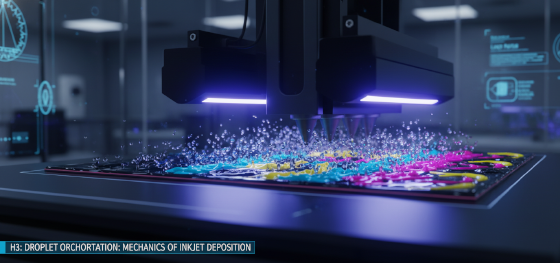
La logica operativa del stampa 3D a getto di materiale è un'evoluzione sofisticata della stampante da ufficio tradizionale. Invece di inchiostro su carta, la macchina utilizza più testine di stampa dotate di centinaia di ugelli microscopici per depositare minuscole gocce di resine fotopolimeriche su un vassoio di costruzione. Mentre le testine spazzano l'area di lavoro, una lampada a ultravioletti (UV) ad alta intensità segue immediatamente, polimerizzando le gocce liquide in uno stato solido in una frazione di secondo. Questo getto e polimerizzazione simultanei consente strati incredibilmente sottili—spesso fino a 16-30 micron—risultando in parti con una levigatezza superficiale che rivaleggia con lo stampa 3d sla standard.
Poiché le gocce vengono erogate in una griglia discreta, la macchina può variare il tipo di materiale da un micron all'altro. Questa è ingegneria del "Materiale Digitale". Possiamo mescolare resine rigide con elastomeri flessibili durante la costruzione per creare una parte con una durezza Shore graduata. Immagina un manico di strumento medico che è solido come una roccia al centro ma che si trasforma in una impugnatura in gomma soft-touch sulla superficie—tutto stampato in un unico ciclo continuo senza alcun assemblaggio manuale. Questo livello di coordinamento microscopico è il segno distintivo del Material Jetting, fornendo un livello di complessità geometrica e materiale tecnicamente impossibile da ottenere con l'overmolding tradizionale o l'incollaggio adesivo. È un processo di alchimia additiva, che trasforma i dati digitali in complesse esperienze sensoriali.
Precisione cromatica: ingegneria del realismo a colori pieni

For a designer, color is information. Standard 3D prints are often limited to the color of the filament or powder, requiring secondary painting that can obscure fine details. Material Jetting shatters this barrier by utilizing a CMYK (Cyan, Magenta, Yellow, Key/Black) color system. By jetting droplets of different colors in specific concentrations, the machine can generate over 500,000 distinct hues with incredible accuracy. This is not just a surface tint; the color is integrated into the entire volume of the part. If you cut a full-color Material Jetting part in half, the color remains consistent all the way through.
This chromatic precision is why JUCHENG identifies Material Jetting as the gold standard for high-fidelity consumer mockups. We produce prototypes for smartphones, wearable technology, and premium appliance controls that include vibrant brand colors, subtle gradients, and even transparent windows—all in one piece. The technology can even replicate the "wood grain" or "carbon fiber" appearance on a surface by projecting a high-resolution texture map into the resin matrix. When you present a Material Jetting prototype to a stakeholder, you aren't asking them to imagine the final product; you are showing it to them. This ability to eliminate visual ambiguity accelerates the design approval process and reduces the risk of aesthetic errors discovered late in the production cycle.
Fondamenta solubili: ottenere fori interni perfetti

Internal geometry is the graveyard of many additive methods. Removing rigid supports from a 2mm internal fluid channel is a physical impossibility. Material Jetting solves this through a secondary jetting system dedicated to "Support Material." Alongside the modeling resin, the machine jets a specialized wax or gel-like substance that fills all the voids and supports overhanging features. Once the print is complete, the part is either placed in a pressurized water bath or a chemical solution that melts or dissolves the support material away.
This "Soluble Foundation" allows for the creation of internal labyrinths, tiny cross-holes, and intricate lattice structures that remain perfectly clean. It ensures that the "skin" of the part is never touched by a mechanical scraper or a file, preserving the pristine surface finish that is essential for optical and aesthetic components. At JUCHENG, we leverage this non-contact support strategy to deliver micro-scale assemblies with moving internal parts—like captured ball valves or interlocking gears—that are ready for inspection directly from the cleaning tank. By removing the physical struggle of support removal, Material Jetting ensures that your most delicate internal visions are realized without the scars of manual labor.
Illusioni sensoriali: la fragilità delle resine estetiche

We must balance the visual awe of stampa 3D a getto di materiale with a technical reality check. These parts are sensory illusions. While they look and feel like production-grade plastic, the photopolymer resins used in the jetting process are inherently sensitive. They are susceptible to UV light (which can cause them to yellow or become brittle over time) and have relatively low heat-deflection temperatures compared to sintered nylons. If you leave a Material Jetting part on a car dashboard on a hot day, it may warp. If you drop it onto a concrete floor, it may shatter.
This fragility defines the material’s niche. It is a material for the eyes and the hands, not for the hammer. Designers often fall into the trap of using these realistic models for functional stress tests, leading to false failure data. At JUCHENG, we help our clients navigate this "Realism Trap." We advise that if your prototype is meant for a boardroom presentation or an ergonomic tactile study, Material Jetting is unbeatable. But if that same design must undergo high-pressure fluid testing or survive a 1,000-cycle mechanical endurance run, the beautiful resin facade will fail. Understanding the mechanical limits of the "Digital Material" is vital for engineering success. We don't just provide the pretty part; we provide the technical warning that ensures your testing data is accurate and your project avoids post-validation disasters.
Perno tecnico: quando scegliere le soluzioni funzionali JUCHENG
Choosing a manufacturer for high-end prototypes is a move of technical trust. While Material Jetting creates the most beautiful visual models in the processo di stampa 3D, JUCHENG’s core manufacturing philosophy is built on functional durability. We are honest with our clients: when the design moves past the "look-and-feel" phase and into the "work-and-survive" phase, you must pivot your technology choice.
For prototypes that need to survive the brutal reality of functional testing, we will direct you toward our MJF 3D Printing line or our precision CNC Machining Services. These technologies deliver parts made from industrial-grade thermoplastics like Nylon 12, PEEK, and Ultem—materials that can handle the heat, the chemicals, and the stress of real-world use. When you partner with JUCHENG, you are accessing a diversified manufacturing hub that understands when to use the sensory magic of the jet and when to use the raw power of the mill. We don't just ship 3D prints; we ship validated engineered solutions. Contact our engineering team today for a free technical consultation and let us help you choose the technology that will armor your next breakthrough.

