


La navigazione ortopedica richiede una chiarezza ottica assoluta nel campo chirurgico. Quando un assistente robotico guida un chirurgo durante una fusione spinale o una complessa sostituzione articolare, l'hardware fisico non può ostruire la telemetria critica a raggi X o MRI necessaria per verificare il posizionamento delle viti. Gli strumenti chirurgici standard e gli impianti forgiati in acciaio inossidabile o titanio, sebbene incredibilmente resistenti, creano artefatti bianchi densi e luminosi sullo schermo fluoroscopico, mascherando completamente le strutture biologiche sottostanti. Navigare questo "punto cieco" clinico richiede l'implementazione strategica della lavorazione di PEEK di grado medico. Il polietereeterchetone (PEEK) è il re indiscusso dei termoplastici ad alte prestazioni, possedendo un modulo a flessione che imita fedelmente l'osso corticale umano rimanendo completamente trasparente all'imaging radiologico. Jucheng Precision opera come un santuario polimerico ad alta fedeltà nel polo manifatturiero di precisione di Shenzhen, fornendo l'accuratezza sub-micrometrica necessaria per processare questo materiale brutalmente difficile. Nel quadro più ampio di Produzione di Robotica Medica, we transform raw, expensive PEEK billets into life-saving spinal cages and radiolucent targeting guides for project-specific requirements. The device manufacturer must verify intended reprocessing and reuse on the finished device.
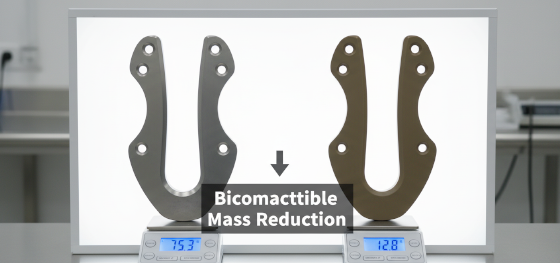
Establishing a resilient launch for PEEK hardware demands the rejection of "General Purpose" machining logic. Amateurs often treat a $500 block of implant-grade PEEK like a piece of cheap Delrin, ignoring the massive internal residual stresses generated during the extrusion process. Residual stresses can contribute to distortion when stock is machined. Check the stock supplier’s guidance and whether the stock has already been stress-relieved before deciding if further annealing is needed. This guide covers radiolucency, when stress relief may help, and why manufacturing controls do not replace finished-device validation.
Indipendenza visiva: il vantaggio radiotrasparente sul titanio
Patologia termodinamica: i pericoli delle tensioni residue interne
Il mandato di ricottura: eradicare la deriva dimensionale
Integrità microscopica: velocità, avanzamenti ed esecuzione senza bave
Protocollo JUCHENG: tracciabilità USP Classe VI e purezza medica
Domande frequenti: hardware chirurgico in PEEK
Indipendenza visiva: il vantaggio radiotrasparente sul titanio
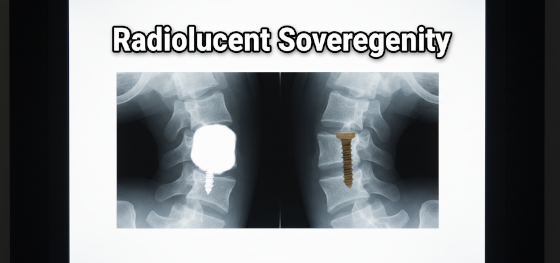
La visibilità diagnostica determina il successo della chirurgia robotica guidata da immagini. La ragione principale per cui gli ingegneri passano dal titanio grado 5 al PEEK è la sua radiotrasparenza intrinseca. Poiché il PEEK è un polimero organico a bassa densità (circa 1,3 g/cm³), i raggi X lo attraversano senza diffondersi. Questa "sovranità visiva" consente al chirurgo di monitorare la crescita ossea, il progresso della fusione e l'allineamento degli strumenti in tempo reale senza l'abbagliamento "a stella" associato agli impianti metallici. Inoltre, il PEEK elimina il rischio di "corrosione galvanica" che si verifica quando metalli dissimili interagiscono all'interno del corpo umano. Utilizzando la lavorazione CNC a 5 assi, forniamo complesse guide di targeting ortopedico e gabbie impiantabili che possiedono la spina dorsale meccanica di una lega senza l'interferenza ottica, garantendo che il tuo assistente robotico operi con una "visione" senza ostacoli."
Patologia termodinamica: i pericoli delle tensioni residue interne
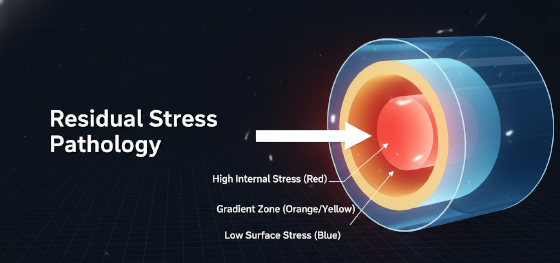
Geometric rebellion occurs when a highly crystalline polymer is violently relieved of its constraints. Extruded PEEK rods and plates are "frozen" in a state of high internal tension as they cool rapidly during production. When a CNC cutter removes the outer skin of this material to form a delicate surgical tool, the internal stresses are suddenly unleashed. If unmanaged, the part will literally bend, twist, or split in half while still clamped in the vise. This "Thermodynamic Pathology" is the primary cause of scrap when inexperienced shops attempt to process PEEK. The material fights the tool, leading to unpredictable dimensional drift that ruins the tight tolerances required for robotic end-effectors. Whether the stock needs further stress relief depends on its grade, manufacturing history, part geometry and dimensional requirements.
Il mandato di ricottura: eradicare la deriva dimensionale
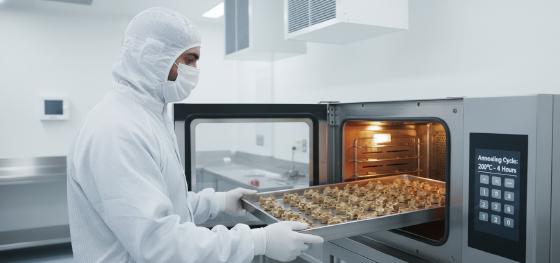
Two annealing steps are not mandatory for every PEEK part. Some stock is supplied stress-relieved. If substantial stock removal or a warp-prone geometry makes dimensional drift a concern, consider intermediate stress relief before final machining. Select the procedure for the exact grade, stock condition and section size using supplier guidance, and verify dimensions on representative parts. Annealing does not establish performance through steam cycles; check critical dimensions and function on the finished device after the intended reprocessing regimen.
Integrità microscopica: velocità, avanzamenti ed esecuzione senza bave
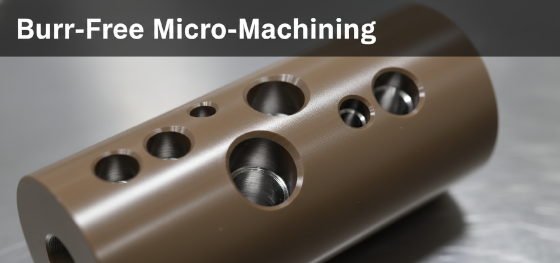
Cutting mechanics must respect the heat-sensitive nature of the polymer. PEEK is notoriously abrasive and a poor conductor of heat. If a CNC spindle runs too fast or feeds too slowly, the friction generates immense localized heat. Instead of cleanly shearing a chip, the tool begins to "melt and smear" the plastic, resulting in "Galling" and microscopic "Burrs." In the context of a surgical instrument, a plastic burr that detaches inside a patient is a catastrophic biological risk. Jucheng Precision eliminates this "Thermal Fuzz" by utilizing specialized, razor-sharp solid carbide tooling with polished flutes. We program highly aggressive feed rates combined with massive volumes of synthetic, medical-safe coolant to evacuate the heat instantly. This "Cold-Cut" philosophy produces surgical-grade edges and smooth bearing bores that require zero manual deburring. Machining alone does not make an instrument ready for clinical use. Finished-device release depends on the applicable inspection, cleaning and validation requirements.
Protocollo JUCHENG: tracciabilità USP Classe VI e purezza medica
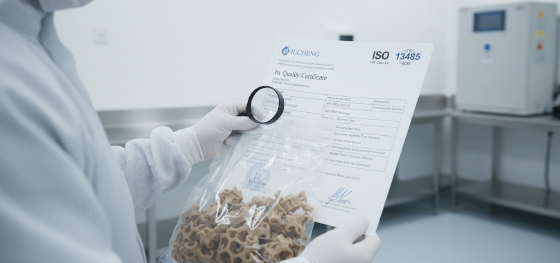
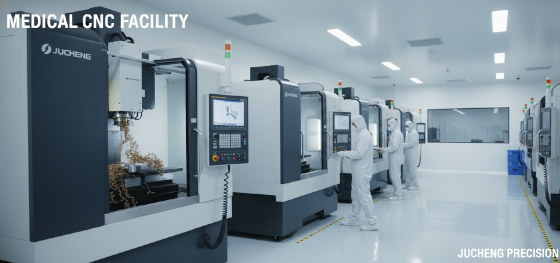
Manufacturing excellence at Jucheng Precision is built on the foundation of the documented pedigree. We recognize that "Implant-Grade" or "Surgical-Grade" PEEK (such as Invibio or Solvay) is an investment of hundreds of dollars per kilogram. Our facility operates under a strict ISO 13485 quality management system, ensuring that every billet is accompanied by a Certificate of Analysis (COA) for lot traceability. A COA and grade-specific USP Class VI or ISO 10993 test data can support the assessment, but they do not establish finished-device biocompatibility. Evaluate the final finished device for the intended type and duration of contact, taking manufacturing and any applicable sterilization into account. We maintain dedicated "Plastic-Only" CNC machines to ensure zero cross-contamination from metal shavings or non-medical cutting fluids. Manufacturing records can support the device manufacturer’s documentation, but do not replace finished-device validation or establish regulatory conformity.
Domande frequenti: hardware chirurgico in PEEK
Domanda: What is the tightest tolerance JUCHENG can hold on a PEEK surgical component?
Risposta: With 5-axis CNC machining and stress relief where needed, we routinely hold tolerances of +/- 0.01mm (0.0004") on critical bores and mating surfaces, ensuring zero-backlash assembly.
Domanda: How many times can a machined PEEK component be autoclaved?
Risposta: There is no universal number of steam cycles for machined PEEK instruments. Supplier results for a particular material specimen and steam cycle do not establish finished-device life. Validate the intended cleaning and steam reprocessing of the finished device, including the proposed reuse count, and check its dimensional, mechanical and functional acceptance criteria.
Domanda: Does JUCHENG provide carbon-fiber filled PEEK (CF-PEEK)?
Risposta: Yes. For robotic arms that require extreme stiffness and radiolucency, we machine 30% Carbon-Filled PEEK, which effectively doubles the flexural modulus compared to unfilled grades.

