


Proteggere i delicati stack di calcolo e i punti di montaggio ad alta coppia di una piattaforma autonoma richiede un allontanamento dalla logica tradizionale di assemblaggio a bulloni. Nel mondo di stampaggio a iniezione di reazione in poliuretano, l'involucro non è più solo un guscio; è un mezzo protettivo attivo. Se un sensore è semplicemente avvitato in un alloggiamento in plastica, rimane vulnerabile a umidità, vibrazioni e stress da dilatazione termica. Ottenere un profilo hardware veramente robusto richiede una padronanza di Insert molding and encapsulation in RIM per legare fisicamente l'elettronica e i metalli strutturali in un'unica unità monolitica. Questo processo elimina i fissaggi meccanici, riduce il numero di componenti e fornisce lo scudo ambientale definitivo per i componenti più costosi di un robot prototipo o scanner medico.
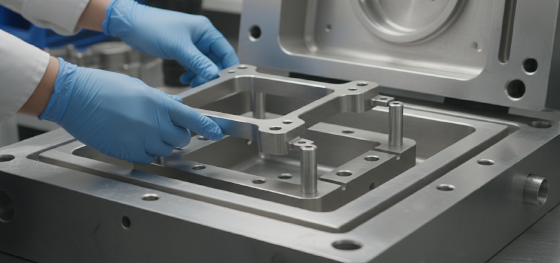
L'integrità meccanica nella robotica moderna è spesso compromessa all'interfaccia tra plastica e metallo. I componenti stampati a iniezione standard soffrono di vuoti d'aria attorno agli inserti filettati, che agiscono come autostrade di perdite per polvere e acqua. Jucheng Precision affronta queste critiche sfide di tenuta utilizzando la reazione da liquido a solido per creare un blocco molecolare senza soluzione di continuità. Jucheng Precision fornisce componenti che integrano Hermetic Sealing con rinforzo strutturale, garantendo che la tecnologia sopravviva alla transizione dal banco di laboratorio al caos implacabile del campo.
Operando secondo i rigorosi standard di qualità di ISO 13485, ISO 14001, e IATF 16949, Jucheng Precision agisce come partner di innovazione per gli OEM hardware globali. Jucheng Precision trasforma concetti grezzi in assemblaggi incapsulati e validati in appena 15 giorni lavorativi, sfruttando una capacità di oltre 150 macchine CNC e 25 unità Haas/Mazak a 5 assi per costruire l'attrezzatura specializzata richiesta per lo stampaggio a iniezione complesso. Questa guida esplora l'essenziale low-pressure physics for fragile electronics, l'eliminazione di metal-polymer leak path prevention, e la micro-vibration damping for sensor stacks richiesti per la produzione di hardware Insert molding and encapsulation in RIM che assicura il futuro di una flotta autonoma.
contenuto:
Vantaggio della bassa pressione: come proteggere i sensori dalla pressione?
Dati tecnici: confronto tra resistenza dell'incapsulamento e qualità della tenuta
Logica strutturale: eliminazione dei percorsi di perdita attorno agli inserti metallici
Protezione dagli urti: padronanza dell'attenuazione delle vibrazioni per i nervi dell'IA
Hub JUCHENG: gestione dell'integrazione multi-materiale a Shenzhen
FAQ: risposte reali per la protezione elettronica e la sicurezza degli inserti
Vantaggio della bassa pressione: come proteggere i sensori dalla pressione?
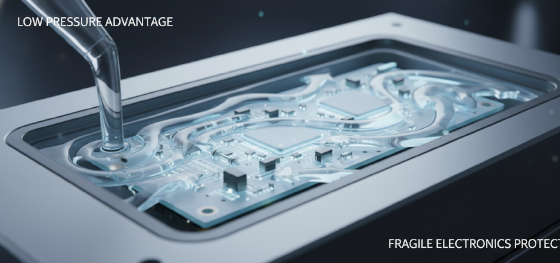
L'ostacolo principale nell'overmolding dell'elettronica è l'effetto martello idraulico dello stampaggio a iniezione tradizionale. Quando la plastica fusa entra in uno stampo a 15.000 psi, può facilmente schiacciare i condensatori montati in superficie o tagliare i delicati giunti di saldatura da un PCB. Nello stampaggio a inserti e nell'incapsulamento in RIM, la pressione interna della cavità rimane al di sotto di 100 psi. Questo ambiente a bassa sollecitazione consente a Jucheng Precision di far fluire poliuretano liquido direttamente su schede elettroniche sensibili senza danneggiare i circuiti. Utilizzando la fisica a bassa pressione per l'elettronica fragile, si crea un blocco solido e resistente agli urti che protegge il cervello di un robot meglio di qualsiasi contenitore imbullonato.
Come impedire alla resina di entrare nei connettori sensibili?
Jucheng Precision utilizza dighe di arresto in silicone lavorate su misura all'interno dello stampo per proteggere porte e spine, consentendo al resto della scheda di essere completamente incapsulato.
L'abbinamento dell'espansione termica è il secondo pilastro della protezione elettronica. Se la resina si espande a una velocità diversa dal PCB, i cicli termici dell'operazione quotidiana alla fine separeranno i giunti di saldatura. Gli esperti di materiali di Jucheng Precision formulano polioli del lato B con riempitivi minerali per regolare il coefficiente di espansione termica lineare (CLTE). Ciò garantisce che il bozzolo di poliuretano si muova in armonia con la scheda in vetro epossidico, prevenendo lo stress interno che rovina i prototipi di robot durante test sul campo di lunga durata. La struttura di Shenzhen fornisce la supervisione tecnica per garantire che l'hardware sia molecolarmente compatibile con la sua pelle.
La conducibilità acustica e termica può anche essere regolata durante il ciclo RIM. Per l'elettronica che genera calore, Jucheng Precision integra pad termici in alluminio nell'assemblaggio incapsulato. La resina liquida a bassa viscosità fluisce perfettamente attorno a questi pad, creando un percorso termico diretto dai chip alla superficie esterna. Ciò elimina la necessità di ventole interne, soggette a guasti in ambienti agricoli o industriali polverosi. Fornendo moduli incapsulati raffreddati passivamente, Jucheng Precision consente a un team di ingegneri di concentrarsi sul software mentre la fabbrica gestisce la termodinamica della sopravvivenza.
Dati tecnici: confronto tra resistenza dell'incapsulamento e qualità della tenuta
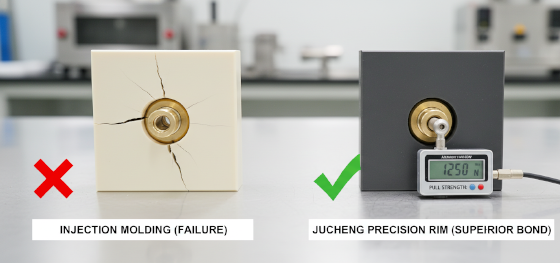
Il successo nell'irrobustimento dell'hardware dipende dalla forza del legame tra materiali dissimili. Se la resina non aderisce all'inserto metallico o plastico, l'assemblaggio alla fine perderà. Jucheng Precision fornisce dati completi di resistenza alla pelatura e test di pressione per aiutare i team a validare i loro progetti. La seguente tabella confronta le metriche di prestazione essenziali dello stampaggio a inserti e dell'incapsulamento in RIM rispetto alla tenuta meccanica tradizionale per l'attuale mercato industriale.
| Metrica | Tenuta meccanica con guarnizione | Legame incapsulato RIM | Vantaggio Ingegneristico |
|---|---|---|---|
| Protezione all'ingresso | IP65 - IP67 (Variable) | IP69K (Hermetic) | Survives Power Washing |
| Shock Resistance | Moderate (Mount dependent) | Maximum (Cradled) | Zero Jitter for Optics |
| Insert Pull-Out (lbs) | 800 - 1,200 | 2,500 - 4,000 | Unyielding Torque Strength |
| Assembly Time | High (Manual Bolting) | Zero (As-Molded) | Reduces Production Costs |
The insert pull-out strength is the most critical data point for building heavy-duty robotic skeletons. Jucheng Precision utilize Insert molding and encapsulation in RIM to anchor large steel mounting plates directly into the plastic shell. Because the resin flows into the microscopic undercuts and knurling of the metal, it creates a joint that is significantly stronger than a post-mold ultrasonic or heat-staked insert. This structural integrity is essential for industrial robot parts that must handle the reversing torque of a 50kg payload arm without the mounting bolts backing out over time.
Logica strutturale: eliminazione dei percorsi di perdita attorno agli inserti metallici
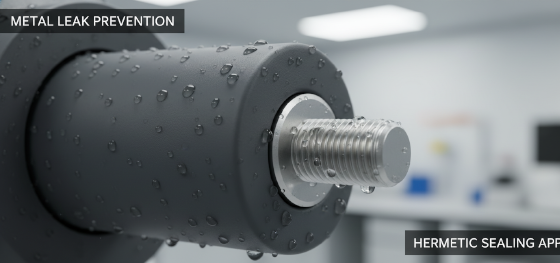
Threaded inserts are the Achilles Heel of waterproof enclosures. In traditional manufacturing, moisture finds its way into the device by traveling along the threads of the mounting bolts. Jucheng Precision solves this through metal-polymer leak path prevention. By encapsulating the entire blind-end of the threaded insert within the RIM part, the physical path to the interior is eliminated. The liquid polyurethane creates a high-pressure seal against the metal surface during the curing phase, providing Hermetic Sealing that survives even the pressure differentials of high-altitude flight or deep-sea submersion.
How to ensure metal inserts do not move during injection?
Jucheng Precision utilize specialized registration nests in the aluminum mold that lock the inserts into place with +/- 0.05mm accuracy.
Chemical bonding agents are applied to the metal surfaces before they enter the mold. While the mechanical interlock is strong, Jucheng Precision utilizes specialized primers that create a covalent bond between the metal oxide and the polyurethane resin. This chemical bridge ensures that the seal remains intact even if the part is subjected to extreme thermal cycles that cause the metal and plastic to expand at different rates. This level of attention to the invisible interface is why Jucheng Precision remains the preferred partner for global medical OEMs who cannot afford a single microscopic leak in their diagnostic hardware.
Weight management is also improved by this integration. By molding the structural metal frame directly into the shell, Jucheng Precision eliminates the need for redundant internal skeletons. This monocoque design approach reduces the total mass of a robot while increasing its torsional rigidity. Every gram saved in the chassis is a gram added to the battery capacity, extending the mission time of an autonomous fleet. Jucheng Precision’s analisi DFM gratuita in 24 ore service identifies these consolidation opportunities, helping build a sleeker, more reliable machine on a leaner budget.
Protezione dagli urti: padronanza dell'attenuazione delle vibrazioni per i nervi dell'IA
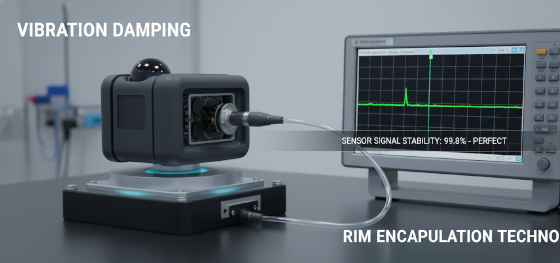
High-resolution sensors like LiDAR and multi-spectral cameras are incredibly sensitive to high-frequency mechanical noise. If the sensor mount vibrates, the resulting data jitter can blind the robot's AI. In Insert molding and encapsulation in RIM, the sensor is not just mounted; it is cradled. Jucheng Precision utilize elastomeric polyurethane formulations that act as a permanent micro-vibration damping for sensor stacks cocoon. The material absorbs the harmonic energy of the drivetrain, decoupling the delicate optics from the vibrating chassis. This results in a much cleaner data stream and extends the service life of the expensive sensors.
Does encapsulation block sensor signals?
No. Jucheng Precision utilize optical windows made of clear PC or Acrylic that are encapsulated into the shell, ensuring a transparent path for the laser or vision signal.
Impact protection is the second benefit of the foamed core. By utilizing structural foam RIM, Jucheng Precision can produce encapsulated assemblies with a dense solid skin and a microcellular core. This bionic bone architecture acts like a helmet for electronics. If an autonomous vehicle strikes an obstacle, the core deforms slightly to dissipate the kinetic energy, protecting the internal boards from the G-shock that would shatter a traditional thin-walled plastic case. This environmental resilience is essential for robots operating in shared human workspaces like fulfillment centers and hospital corridors.
ESD (Electrostatic Discharge) protection is integrated during the material blending phase. To protect sensitive microchips during the Insert molding and encapsulation in RIM cycle, Jucheng Precision adds anti-static agents to the Side B polyol. This ensures that the cocoon does not build up a static charge during field travel, preventing the random electronic resets that plague low-tier hardware iterations. By delivering electrically-safe structural parts, Jucheng Precision helps clients pass the most rigorous regulatory safety audits on the first attempt, providing the unyielding foundation an autonomous innovation requires.
Hub JUCHENG: gestione dell'integrazione multi-materiale a Shenzhen
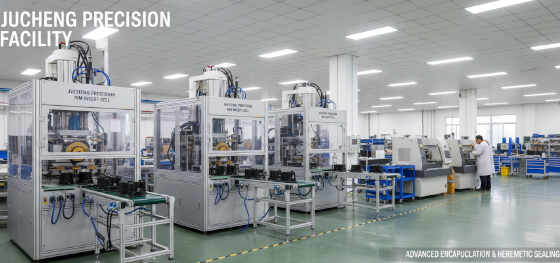
Dominating the large-format hardware market requires a partner that doesn't just mold plastic, but integrates complex systems. Jucheng Precision operates with a 24/7 manufacturing mindset in our Shenzhen precision manufacturing hub, delivering high-tolerance Insert molding and encapsulation in RIM results with industry-leading speed. Jucheng Precision provides a bridge to production that allows a transition from a single hand-fitted Alpha unit to a commercial deployment of 5,000 Beta robots with consistent metallurgical and chemical quality. Jucheng Precision has No MOQ, allowing clients to source 1 to 10 units for high-stakes sensor trials without the crushing cost of mass-production tools.
Integrating structural design with Jucheng Precision’s expertise ensures that hardware survives the first-field contact and moves into mass adoption. Jucheng Precision offers a free DFM analysis in 24 hours, identifying potential air-pockets or thermal-bottlenecks in a design before they become field failures. Whether building an autonomous medical assistant or a heavy-duty industrial mobile base, Jucheng Precision provides the rigid, precise, and integrated foundations that keep innovation moving through the high-speed cycles and the years of hard labor.
The facility is equipped with dedicated high-pressure RIM assembly cells and dedicated ISO 13485 and ISO 14001 quality labs, allowing Jucheng Precision to manage the entire hardware lifecycle in one location. Jucheng Precision manages the complexity of multi-material bonding and automotive-grade finishing so the engineering team can focus on the motion control and the AI. By combining speed with industrial-grade material verification and global quality standards, Jucheng Precision remains the preferred partner for the world's most aggressive Polyurethane Molding Services challenges. Contact the Shenzhen hub today to start a project.
FAQ: risposte reali per la protezione elettronica e la sicurezza degli inserti
Can a standard PCB be encapsulated without a custom housing?
Yes. RIM allows for potting logic where the resin becomes the permanent structural housing for the board itself.
What is the maximum torque an encapsulated insert can handle?
Encapsulated M8 steel inserts in Jucheng Precision rigid PU typically handle over 40 Nm of torque without loosening or spinning.
Does the RIM process damage electronic components?
No. The low-pressure and moderate-temperature cure (below 60°C) is safer for electronics than any other molding process.
How is the hermetic seal verified after molding?
Jucheng Precision perform vacuum leak testing and submerged pressure testing to ensure zero-porosity seals for critical modules.
What is the lead time for an encapsulated Beta prototype?
Aluminum rapid tooling and the first set of encapsulated parts are typically delivered in 15 to 20 business days.
Sensor failure and loose anchors are absolute project killers for clinical and industrial robotics. Partnering with Jucheng Precision ensures that functional iterations are built with the unyielding polyurethane reaction injection molding and specialized Insert molding and encapsulation in RIM techniques the industry demands. Reach out to the Shenzhen manufacturing hub today for a complete DFM review and build the unyielding foundation an autonomous fleet requires.

