


Surgical-grade medical instruments, high-voltage EV connectors, and critical aerospace brackets must survive severe physical loads and extreme thermal gradients during field operations. Engineering teams cannot rely on basic computer renders to predict micro-deflections or localized material failures under real mechanical stress. Integrating comprehensive engineering design and rapid prototyping methodologies allows mechatronics groups to execute physical structural validations and verify assembly kinematics realistically. Sourcing production-representative materials ensures the physical mockups match intended mechanical performance criteria perfectly.
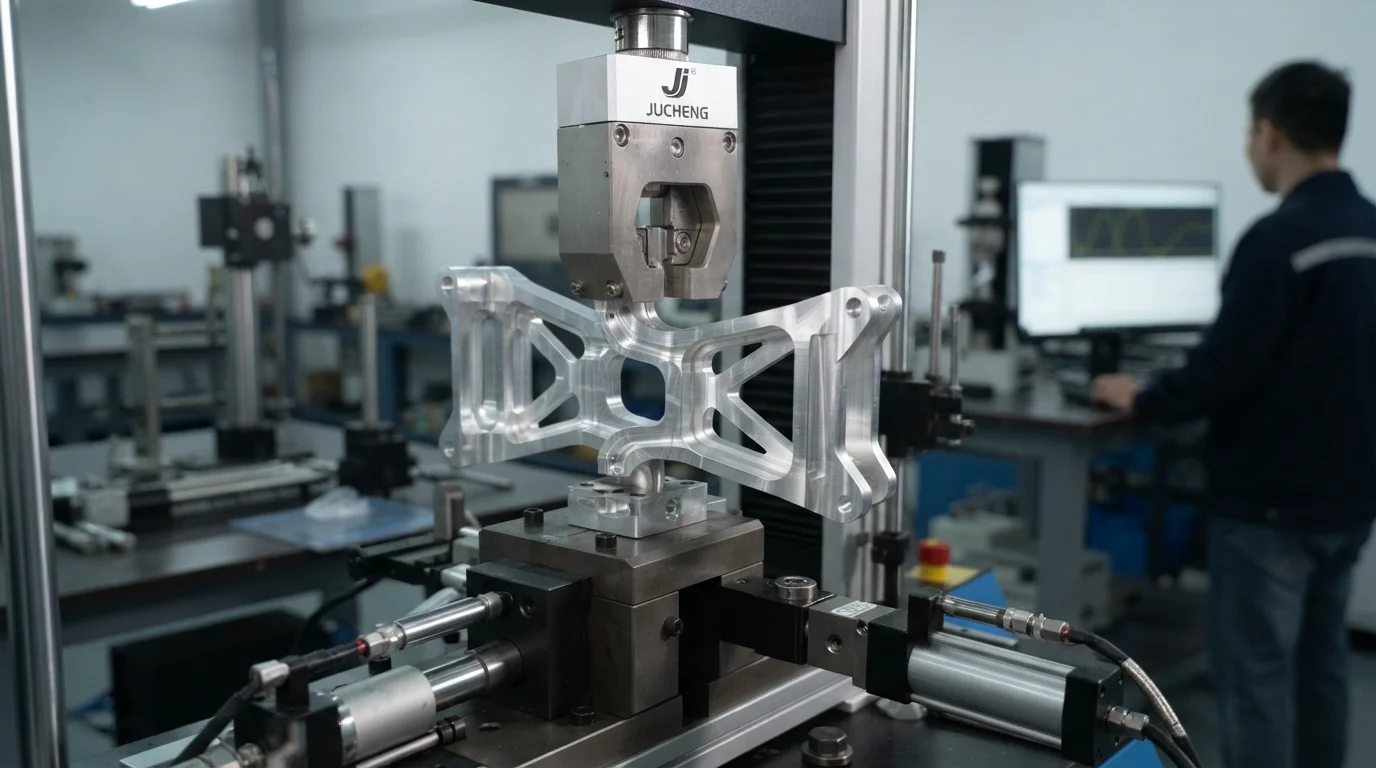
Selecting fragile additive polymers for high-stress evaluations remains a leading cause of premature prototype failure and misaligned design expectations. Functional verification requires functional mockups machined from solid engineering plastics or high-yield structural alloys that resist dynamic fatigue. Product designers collaborate with manufacturing engineers during early developmental phases to identify stress concentrations and prevent dimensional clearance conflicts. Meticulous physical stress cycles validate joint stiffness and fastening safety margins before initiating mass-production tooling.
Indice
1. Aesthetic Validation vs Functional Verification
2. Structural Testing for Thermal, Load, and Stress Capacities
3. Subtractive Machining of Real Engineering Plastics and Metals
4. High-Speed CNC Capacities for Rigid Mechanical Assemblies
Aesthetic Validation vs Functional Verification
Question: Why is cosmetic testing insufficient for load-bearing components? Visual prototypes simulate color and shape but fail to reproduce the mechanical fatigue limits and tensile strength of real structural resins.
Sleek cosmetic mockups serve an important role during industrial design reviews and UX focus group evaluations. Handheld ergonomics and surface aesthetics are easily validated using SLA resin models or fine-sanded vacuum castings. Dynamic assemblies, however, demand functional verification to ensure linkages rotate without bending under dynamic torque load parameters. Swapping fragile visual polymers for structural engineering resins prevents catastrophic failure during early lab assemblies.
Executing physical stress sweeps reveals underlying structural weaknesses that digital finite element analysis (FEA) models frequently fail to capture. Product developers utilize meticulous progettazione rapida di prototipi practices to identify thin stress zones and optimize boss wall dimensions early. Adjusting draft angles and filleted corners ensures structural integrity while paving a smooth pathway toward high-volume injection molding. Early structural feedback protects development schedules and minimizes downstream redesign costs.
Structural Testing for Thermal, Load, and Stress Capacities
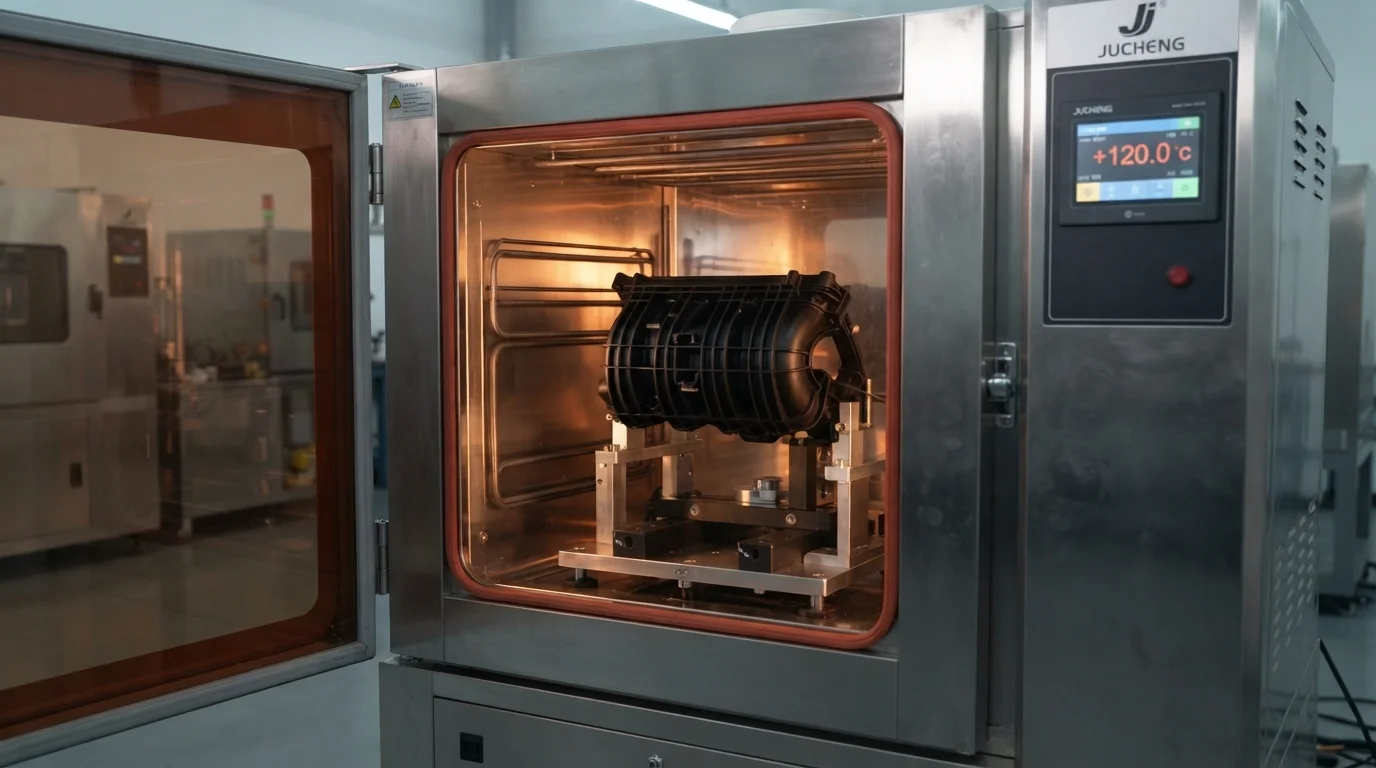
Domanda: Come vengono convalidate le fughe termiche e i carichi strutturali? I componenti prototipo vengono sottoposti a cottura in camera climatica e a scansioni dinamiche di tensione a trazione per mappare la deformazione fisica del materiale.
I componenti automobilistici sottocofano e gli alloggiamenti per elettronica di potenza devono mantenere la stabilità dimensionale a temperature superiori a 120°C. Le parti funzionali sinterizzate o fresate vengono cotte all'interno di camere termiche ambientali per verificare i coefficienti di espansione fisica e prevenire perdite di fluido. I supporti strutturali portanti vengono sottoposti a test di trazione idraulica per determinare i limiti di snervamento massimi prima della deformazione. La scelta di materiali appropriati garantisce che l'assieme sopravviva in sicurezza a forti vibrazioni stradali o pressioni atmosferiche.
Il successo dell'esecuzione di progetti di ingegneria e prototipazione rapida si basa sull'abbinamento delle proprietà fisiche grezze con i requisiti di test dinamici. Gli ingegneri esaminano il carico di snervamento, le temperature di deformazione termica (HDT) e i limiti di impatto Izod per restringere le opzioni dei materiali. Questa tabella tecnica confronta le proprietà fisiche dei principali materiali strutturali utilizzati durante le prove di validazione funzionale:
| Scelta del Materiale | Resistenza a Trazione | HDT (a 1,82 MPa) | Vantaggio meccanico principale |
|---|---|---|---|
| Alluminio 6061-T6 | 276 MPa | 160°C | Elevata resistenza specifica, eccellente dissipazione termica |
| PEEK (non riempito) | 97 MPa | 152°C | Resistenza chimica estrema, elevata stabilità in autoclave |
| Nylon 6 (PA6-GF30) | 110 MPa | 185°C | Eccezionale assorbimento degli urti, rigidità strutturale |
La valutazione dei cedimenti strutturali sotto carico dinamico simulato rivela se l'allineamento dei grani del materiale influisce sulla vita a fatica del componente. Il ritiro anisotropo e le limitazioni di adesione degli strati nella produzione additiva spesso causano cedimenti prematuri sotto sforzo di taglio cross-assiale. I progettisti strutturali specificano bramette metalliche fresate multiasse per mantenere proprietà isotrope del materiale lungo i percorsi di carico critici.
Lavorazione per Sottrazione di Plastiche e Metalli Ingegneristici Reali
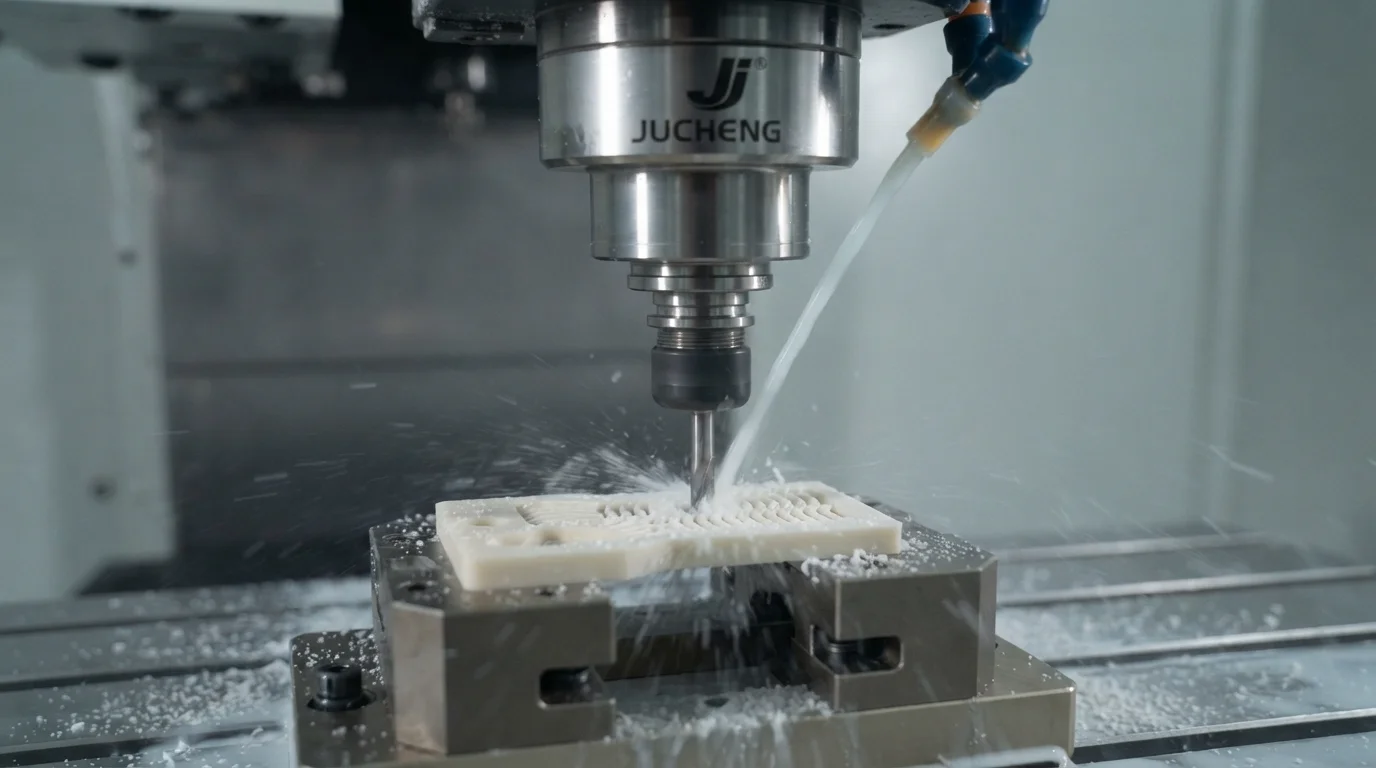
Domanda: Perché la lavorazione CNC deve essere utilizzata per gli snap-fit funzionali? Plastiche ad alte prestazioni come Delrin e Nylon possiedono il recupero elastico e i limiti di resistenza a fatica da impatto necessari per cicli di scatto continui.
SLA and SLS printing resins provide fast concept models but exhibit high brittleness under tension, causing snap-fit tabs to break instantly. Subtractive CNC milling from extruded bars of Delrin (POM), Nylon 66, or Polycarbonate delivers functional snap-fits matching production-grade molded mechanics. Machined engineering plastics recover their shape completely after deflection, allowing designers to perform accurate assembly checks. Machining operators configure feed rates precisely to avoid thermal melting along thin rib edges.
High-performance PEEK is selected for specialized surgical devices undergoing cyclic steam autoclaving and biological exposure. Cutting tough, abrasive engineering plastics requires carbide-coated micro-cutters and rigid clamping configurations to prevent tool deflection. Finished assemblies undergo micro-metrology checks to confirm critical sealing surfaces maintain a pristine flat finish.
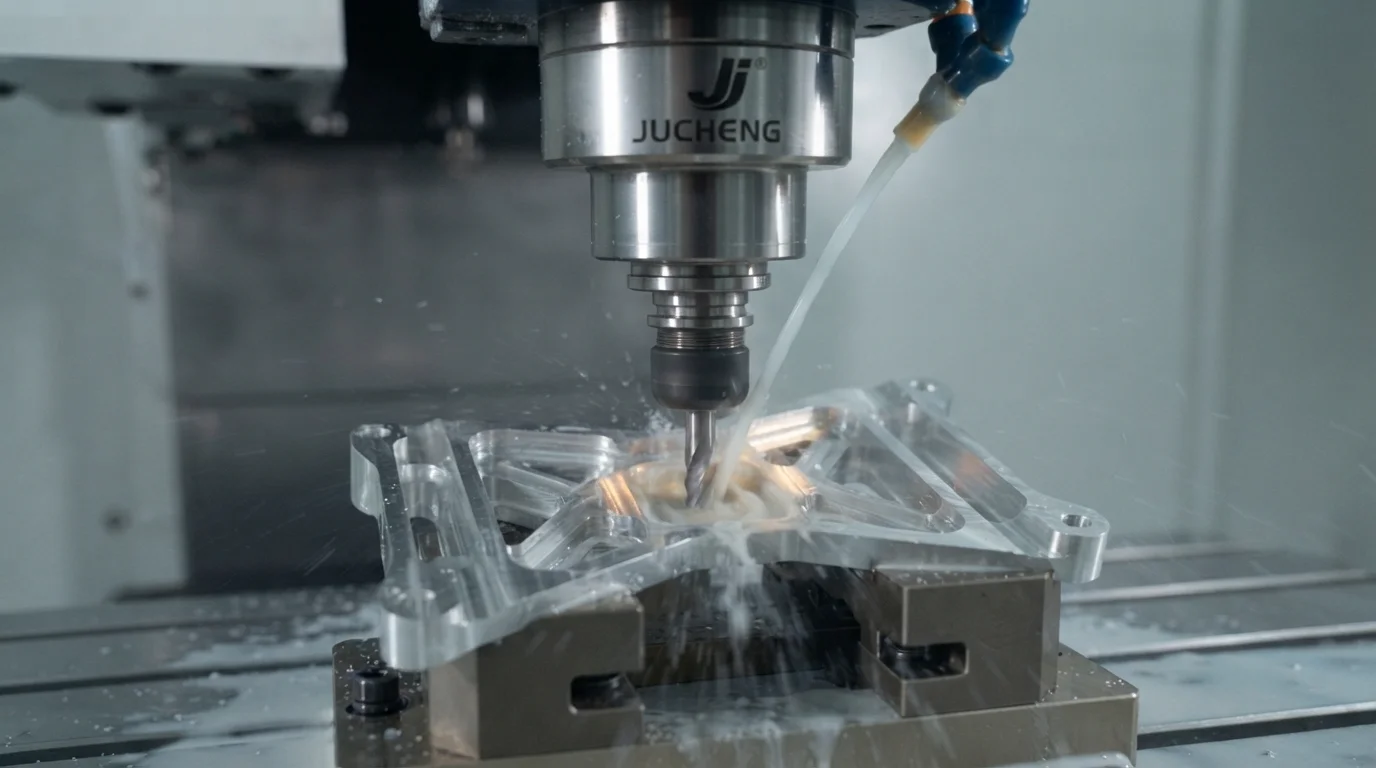
Metal structures like steering knuckles, landing gear fittings, and pump impellers are milled from raw billet blocks of aluminum Al7075-T6 or stainless steel 316L. Solid billet machining preserves the authentic metal grain structures, eliminating internal porosity defects inherent in metal casting or sintering. Finished components undergo chemical passivation or anodization to maximize resistance to humid environmental corrosion.
High-Speed CNC Capacities for Rigid Mechanical Assemblies

Question: How is turnaround time accelerated for high-precision metal parts? Leveraging a massive multi-axis CNC milling fleet allows manufacturers to eliminate multiple setups and deliver machined assemblies in days.
Sourcing reliable machining services is crucial when running complex engineering design and rapid prototyping schedules with tight launch deadlines. Jucheng Precision operates a fully-integrated manufacturing workspace featuring 150+ CNC machines, including 25 high-precision Haas/Mazak a 5 assi milling centers. Advanced simultaneous multi-axis milling cuts intricate undercut geometries and angled holes in a single physical clamping setup. Eliminating human setup interventions secures micron-level coordinate repeatabilities across every prototype batch.
Technical specialists provide exhaustive revisioni DFM gratuite 24 ore su 24 engineering reviews to optimize draft heights, wall margins, and internal fillet radii before cutting core metal. Enforcing strict ISO 9001 quality guidelines ensures full material traceability and part dimensional repeatability. Flexible manufacturing programs with no minimum order requirements allow product developers to refine custom hardware over multiple small-batch evaluations.
Domande Frequenti (FAQ)
What is the tightest tolerance possible for functional metal prototypes?
Simultaneous multi-axis CNC milling centers achieve pristine tolerances down to ±0.01 mm in aluminum and stainless steel. Specialized micro-machining setups maintain micro-tolerances for critical bearing bores and internal gear threads easily.
Can engineering plastics be ultrasonic welded during development?
Thermoplastics like polycarbonate, ABS, and acrylic undergo secure ultrasonic welding to join multi-part enclosures seamlessly. Joint energy directors are optimized during DFM sweeps to ensure uniform thermal melting and leak-proof seals.
Are SLA resins suitable for load-bearing mechanical tests?
Standard photopolymer resins exhibit low elongation-at-break and high brittleness, making them unsuitable for dynamic load or high-impact testing. Engineers specify CNC machined ABS, Nylon, or Polycarbonate to conduct functional mechanical validation safely.

