


Contents
Define the Role of E-Coat
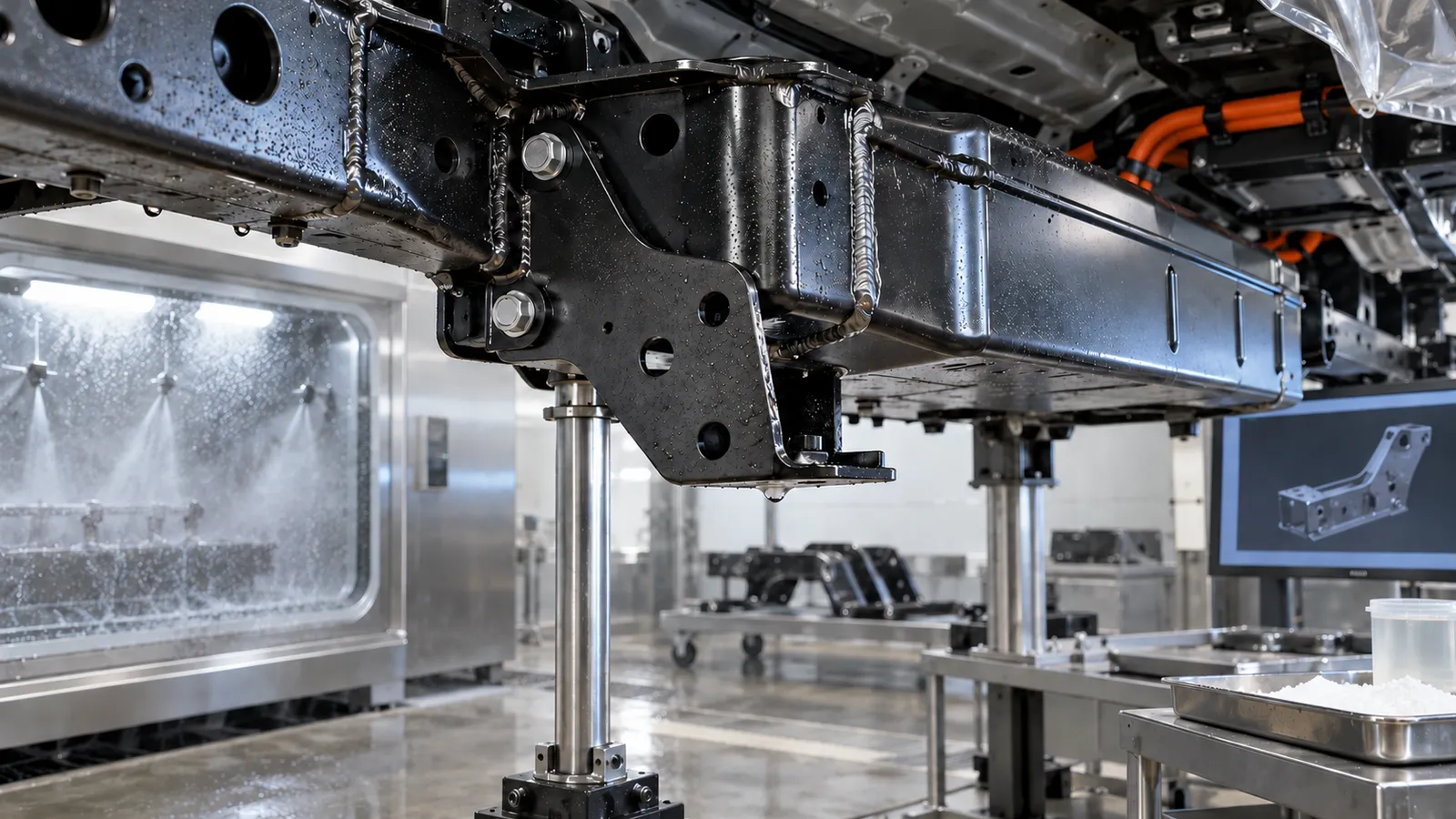
E-coat is commonly used as a corrosion-protection layer or primer for metal components. It can support consistent coverage on brackets, housings, frames, and complex fabricated parts before additional paint or powder coating. The exact role should be stated: primer, final protective layer, conductive isolation, or part of a multi-coat system. The required performance depends on exposure. Underbody parts, hidden brackets, battery-adjacent structures, and exterior components may face different combinations of salt, humidity, impact, heat, and chemicals. Define the target surface, edge areas, drain paths, mating interfaces, and any areas that must stay bare. This prevents a generic e-coat specification from being applied to the wrong component.
| Part condition | E-coat planning issue |
|---|---|
| Complex hollow section | Drainage, venting, and bath access |
| Welded fabrication | Heat-affected areas and weld contamination |
| Cast metal | Porosity, outgassing, and surface preparation |
| Mating assembly | Masking, thickness, and contact resistance |
Pretreatment Determines Adhesion
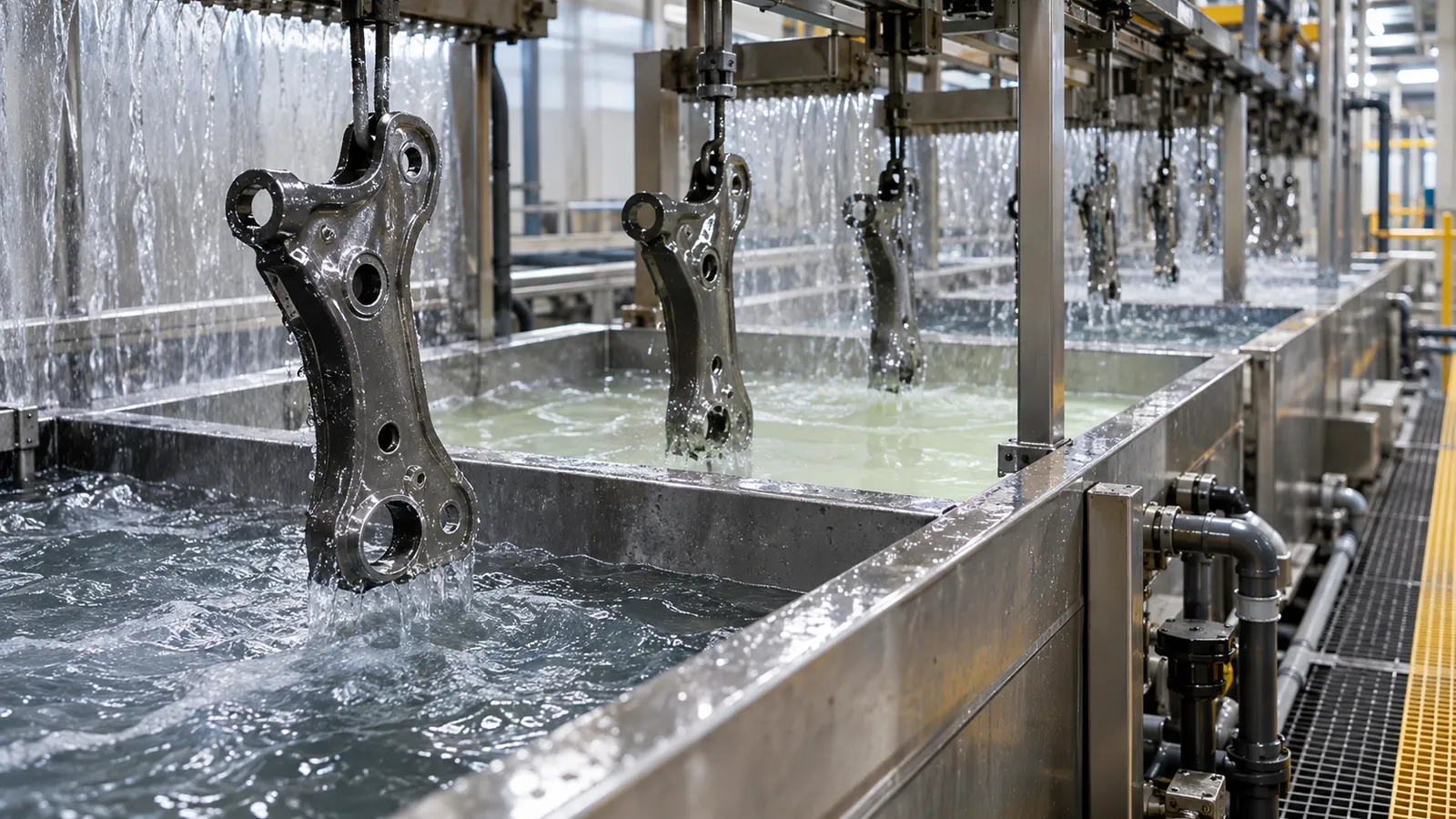
Cleaning and pretreatment prepare the metal for a stable coating interface. Oils, oxides, weld residues, shop dirt, and moisture can reduce adhesion or create defects. The pretreatment route should be chosen for the substrate and monitored as a process, not assumed from a standard work instruction written for another alloy. Rinsing and drying deserve attention because residues can travel into the coating bath or remain trapped in seams. Parts should move through the process with controlled handling so that prepared surfaces are not touched or contaminated before coating. When corrosion testing is important, retain enough process data to connect a test result with the actual pretreatment condition and material lot.
- Match chemistry and cleaning to the actual substrate.
- Control water quality, rinsing, and drying where specified.
- Remove weld scale, burrs, and trapped contamination before coating.
- Protect prepared surfaces from handling damage before immersion.
Use the Bath to Reach Difficult Geometry
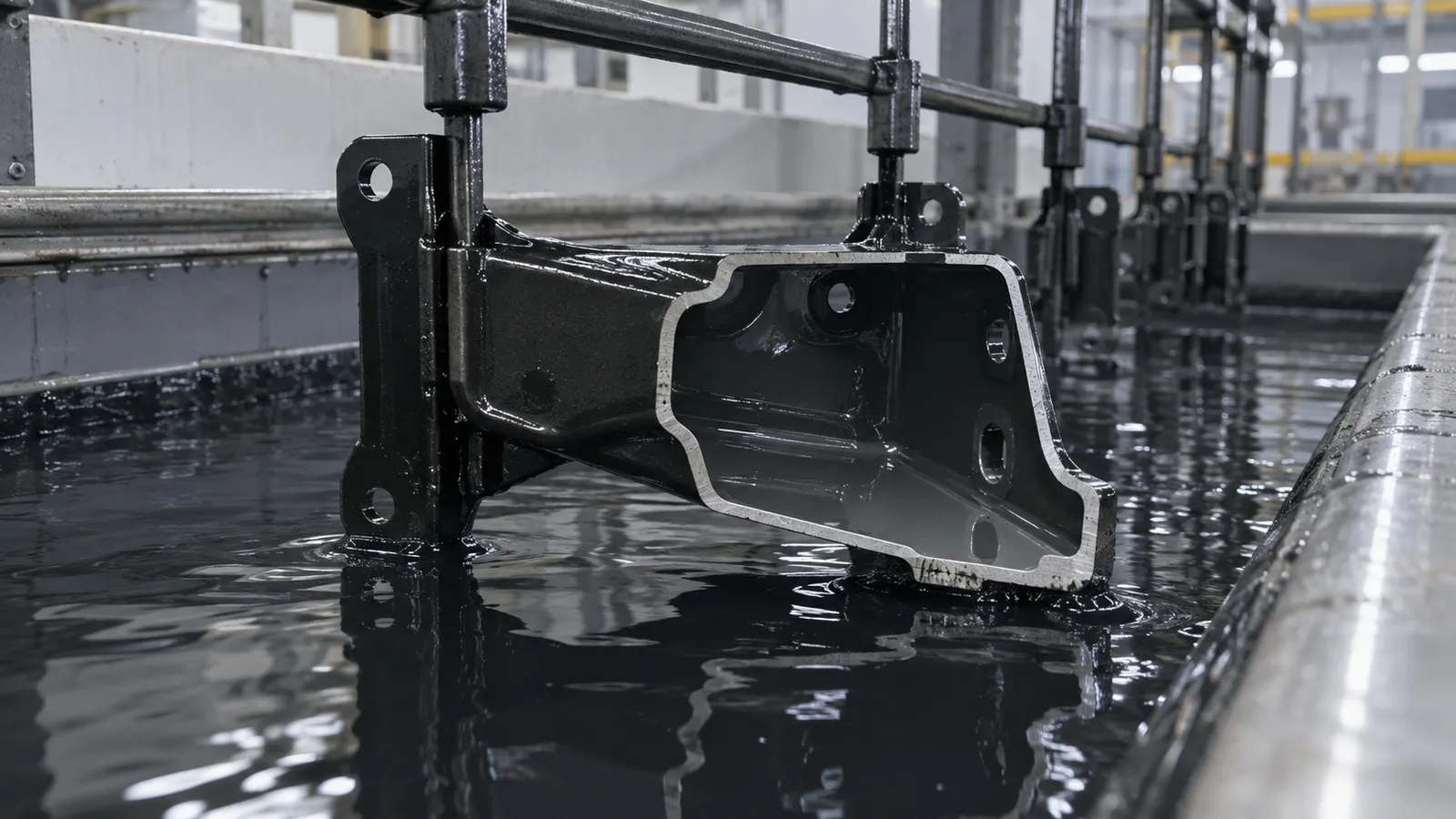
Electrocoat can reach internal and recessed areas because the coating is deposited electrically, but coverage still depends on electrical paths, bath access, drainage, and part orientation. Hollow sections need openings or controlled vents and drains. Deep pockets can trap solution or create uneven film if the rack position is wrong. The engineering review should consider how the part enters, exits, and drains through every step. Electrical contact must be reliable and located where the mark or contact area is acceptable. Poor contact can create bare spots, inconsistent deposition, or unstable process behavior. Rack design is therefore part of product quality. A supplier should define contact points, allowable marks, rack loading, and how contact wear is monitored.
| Geometry feature | Rischio | Control |
|---|---|---|
| Closed cavity | Poor bath exchange or trapped fluid | Add drain/vent strategy or redesign opening |
| Deep recess | Uneven deposition | Review orientation and electrical field |
| Thin edge | Coverage or handling damage | Control edge condition and film target |
| Rack contact | Bare mark or unstable current | Define contact location and maintenance |
Protect Interfaces and Contacts
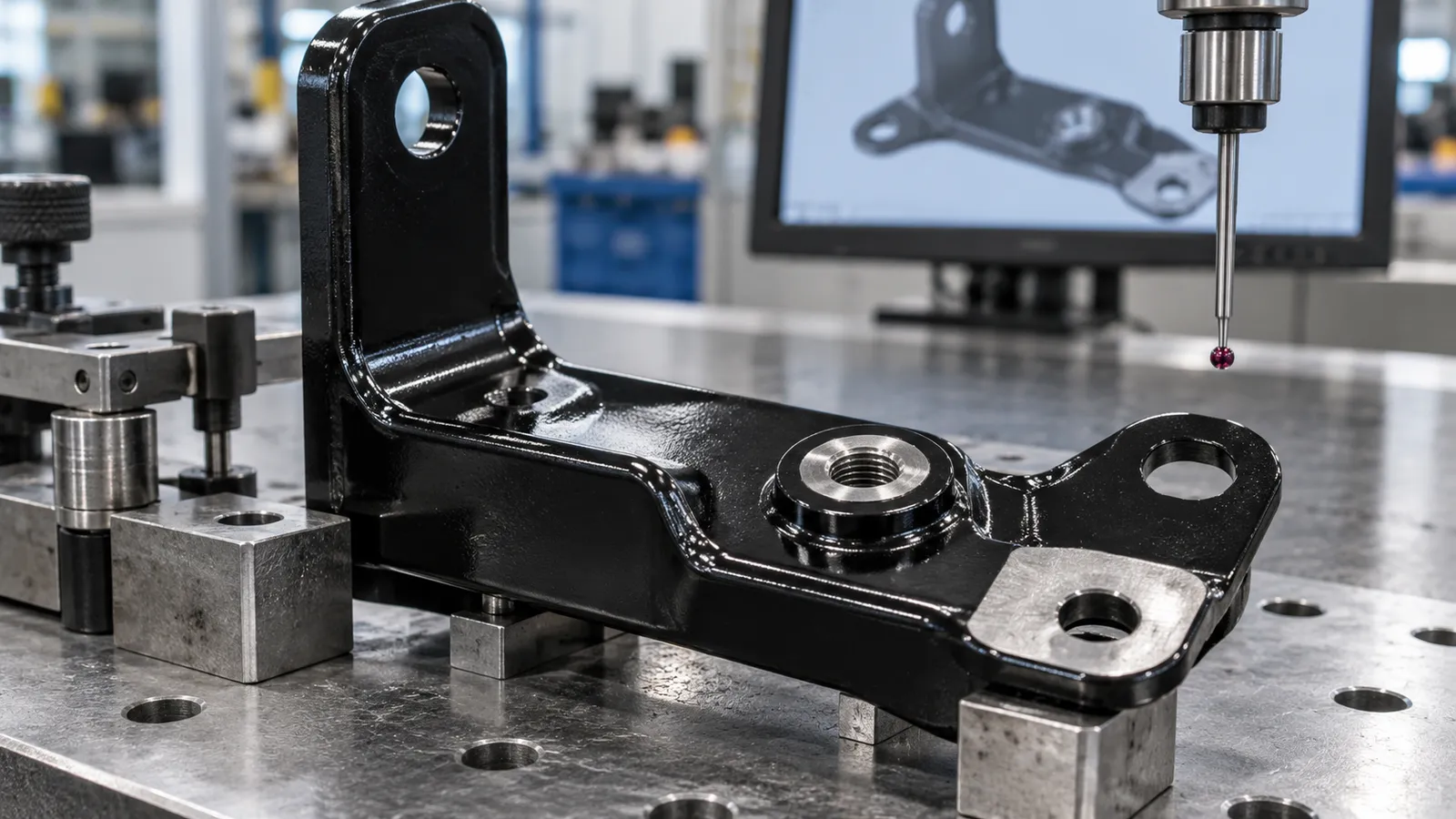
E-coat build can interfere with threads, grounding points, sealing faces, press fits, and precision bores. Masking or post-coat machining may be needed. The right option depends on tolerance, volume, part geometry, and the coating system. Mask boundaries should be shown on drawings or process documents rather than left to operator interpretation. Some parts require controlled electrical contact after coating, while others need isolation. Make that distinction explicit. A component that must ground through a clean metal pad cannot be treated like a fully insulated bracket. After coating, verify the contact resistance or assembly function where that interface is safety- or performance-critical.
- Map all no-coat areas and acceptable rack marks.
- Define whether masking occurs before immersion or removal after cure.
- Check threads, seals, and bores with functional gauges.
- Confirm grounding or isolation requirements with the assembly team.
Cure the Film Without Distorting the Part
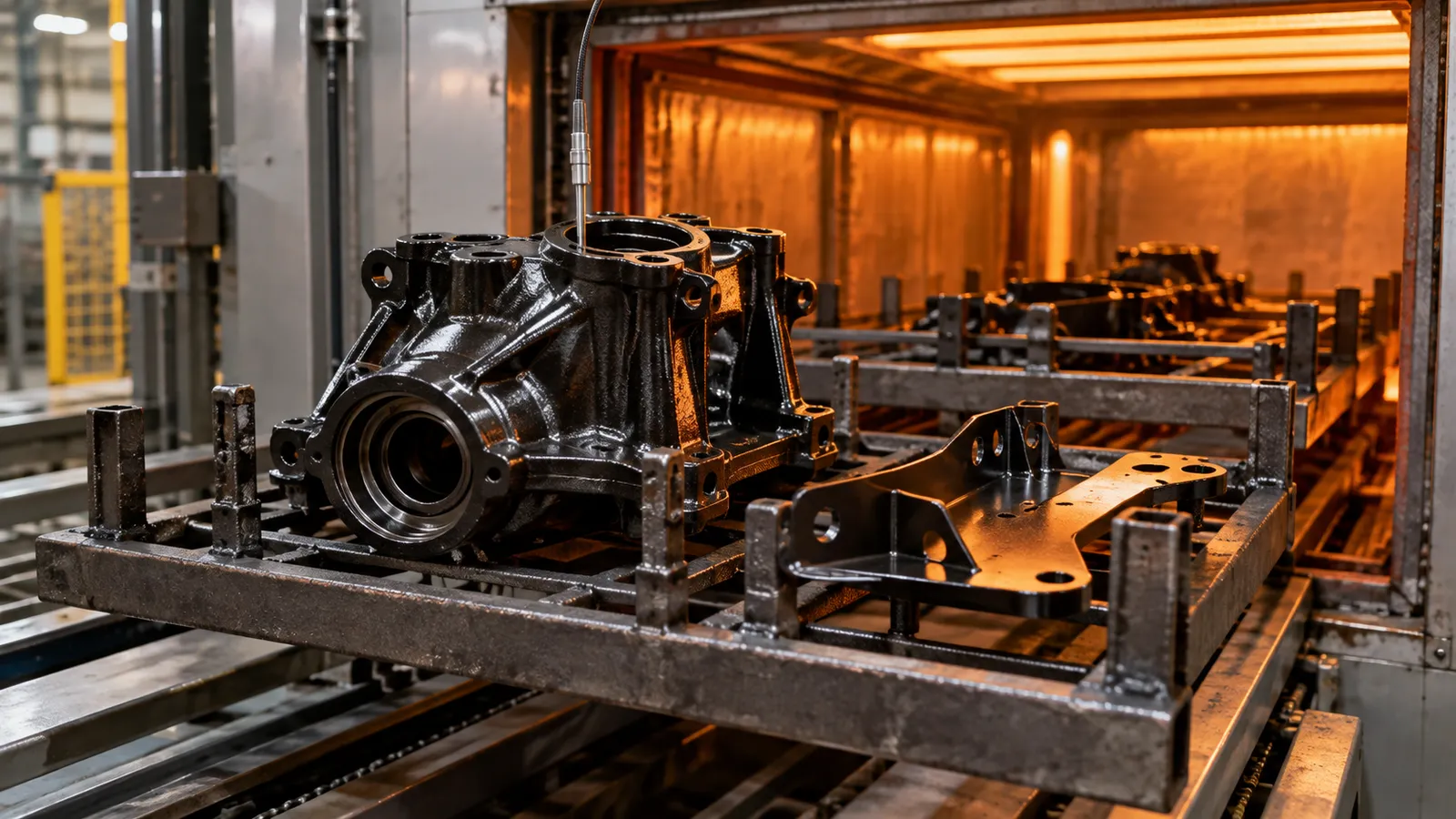
The e-coat film must reach its cure window to develop adhesion and corrosion performance. Part mass, thickness, oven loading, airflow, and line speed influence the actual metal temperature. A heavy casting and a thin sheet-metal bracket may not reach the same temperature at the same time. Cure profiles should be validated on representative components, especially after rack or batch changes. Cure also affects dimensional and material risks. Thin parts can distort if thermal support is poor. Sensitive inserts, seals, or temporary fixtures may not tolerate the process. Review the full temperature path with the manufacturer and verify that the final coating remains compatible with later paint, powder, adhesive, or assembly operations.
| Cure control | Reason |
|---|---|
| Part-metal temperature | Confirms the film reaches the required cure |
| Oven load | Prevents hidden batch-to-batch variation |
| Part support | Reduces distortion during heating |
| Post-cure compatibility | Protects later coating or assembly steps |
Connect Testing to Corrosion Risk
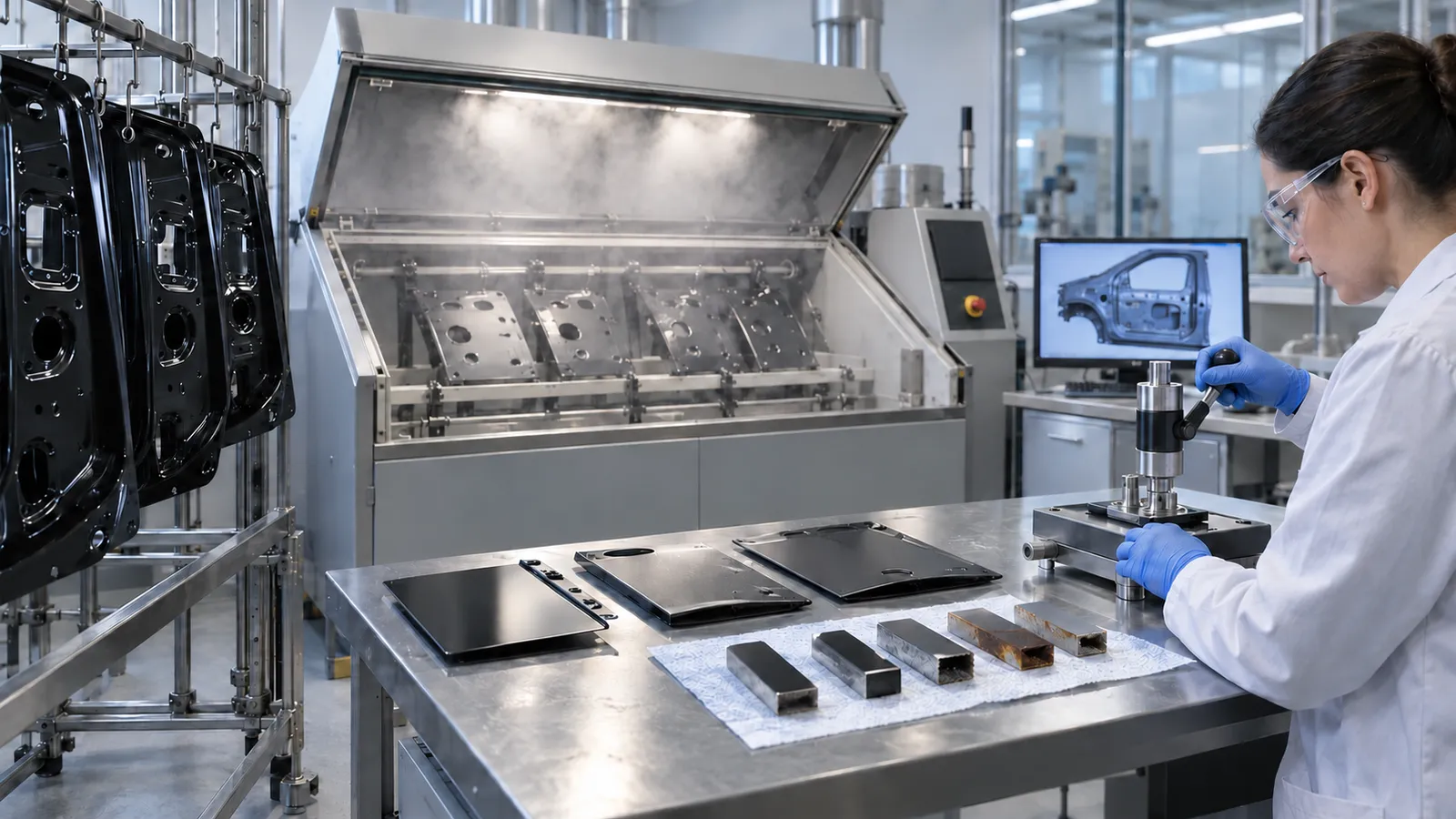
Testing should reflect the part’s role. Visual inspection and film thickness are basic controls, while adhesion, humidity, cyclic corrosion, or salt-spray testing may be appropriate for exposed or safety-relevant components. The test method, panel or part geometry, scribe condition, exposure time, and acceptance criteria should be agreed before production release. Do not use a test result as a substitute for process control. A passing sample can hide a recurring pretreatment or drainage problem if the production route is not monitored. Combine test evidence with bath records, cure profiles, coating thickness, and inspection of difficult features. That combination gives the purchasing and engineering teams a more defensible release decision.
- Choose tests around exposure and failure consequences.
- Inspect edges, seams, drains, and contact zones—not only broad faces.
- Retain bath, rack, cure, and material records for traceability.
- Revalidate when substrate, coating system, rack, or cure conditions change.
Automotive e-coat performs best when it is treated as a complete manufacturing route rather than a generic dip coating. The substrate, pretreatment, rack design, electrical path, masking, cure, and corrosion test must all support the same protection objective.

