


Progettazione di un robot prototipo o di una console diagnostica per un ospedale moderno nel [2026] ti mette di fronte alla barriera legale più rigida nell'hardware: la sicurezza antincendio. In ambienti medici e IT ad alto rischio, un involucro che si scioglie o gocciola durante un cortocircuito elettrico è una responsabilità che può far fallire un'azienda. Mentre il processo di stampaggio a iniezione reattiva è apprezzato per la sua capacità di creare parti strutturali massicce, il poliuretano standard è naturalmente infiammabile. Raggiungere lo standard d'oro della conformità UL94 V-0 richiede sistemi specializzati Sistemi RIM in Poliuretano Ignifugo che fermano il fuoco sul nascere senza trasformare le tue parti in plastica fragile e di bassa qualità.
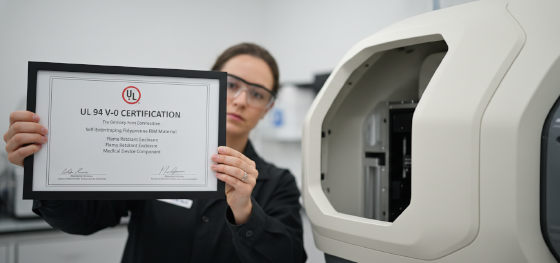
La conformità alla sicurezza nella Prototipazione di Dispositivi Medici non significa solo spuntare una casella; significa proteggere il paziente e la costosa elettronica AI all'interno del guscio. Le plastiche ignifughe tradizionali spesso sacrificano la resistenza all'impatto per ottenere classificazioni antincendio, portando a involucri che si rompono durante il semplice trasporto. Jucheng Precision affronta questi compromessi ingegneristici fornendo sistemi Servizi di Stampaggio in Poliuretano di alto livello che utilizzano tecnologia additiva in fase liquida. Forniamo hardware che è sia "Antincendio" che "Robusto sul Campo", garantendo che la tua flotta Beta superi i più severi audit di sicurezza UL e CE al primo tentativo.
Operando nel polo di produzione di precisione di Shenzhen, JUCHENG funge da partner normativo per gli OEM globali. Trasformiamo requisiti ingegneristici complessi in hardware certificato e ignifugo in appena 15 giorni lavorativi. Questa guida è uno sguardo pratico su come otteniamo le classificazioni UL94 V-0, quali additivi funzionano meglio per parti di grandi dimensioni e come mantenere l'integrità meccanica nei sistemi RIM in Poliuretano Ignifugo per garantire che la tua innovazione sia legale, sicura e inflessibile sul campo.
contenuto:
Norme di Sicurezza: Perché UL94 V-0 è l'Unica Scelta per il MedTech?
Dati Tecnici: Confronto tra Classificazioni Antincendio e Tassi di Gocciolamento dei Materiali
Segreti di Formulazione: Come Ottenere Protezione Antincendio nelle Resine Liquide?
Controllo Meccanico: L'Ignifugazione Rende Fragili le Tue Parti?
Hub JUCHENG: Validazione dei tuoi involucri resistenti al fuoco a Shenzhen
FAQ: Risposte reali per classificazioni antincendio e logistica di sicurezza
Norme di Sicurezza: Perché UL94 V-0 è l'Unica Scelta per il MedTech?
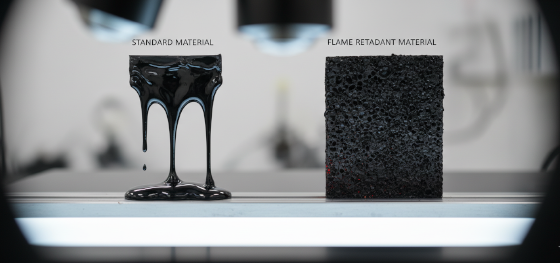
Se il tuo scanner diagnostico medico si trova in una stanza d'ospedale, è legalmente richiesto che sia un dispositivo "Autoestinguente". Nel contesto di Sistemi RIM in Poliuretano Ignifugo, la classificazione UL94 V-0 è il parametro di riferimento definitivo. Questo test prevede l'applicazione di una fiamma verticale; affinché un componente superi il test V-0, deve smettere di bruciare entro 10 secondi e, cosa più importante, non deve produrre gocce infiammate che potrebbero incendiare il pavimento dell'ospedale. Il poliuretano RIM standard brucia come una candela, ma le formulazioni V-0 di JUCHENG creano uno "Strato di Carbonizzazione" istantaneo—una barriera di carbonio che soffoca il fuoco e protegge il nucleo strutturale del componente.
Qual è la differenza tra le classificazioni V-0 e V-2?
V-0 richiede che il fuoco si fermi istantaneamente e vieta le gocce infiammate, mentre V-2 permette alcune gocce, che spesso rappresentano un fallimento di sicurezza per gli involucri di apparecchiature mediche.
Il "Fattore Goccia" è il guasto più pericoloso negli incendi di plastica. Quando le termoplastiche standard si sciolgono, diventano fuoco liquido, diffondendo il disastro alle apparecchiature vicine o ai pazienti. I Servizi di Stampaggio in Poliuretano di JUCHENG risolvono questo problema attraverso la chimica dei termoindurenti. Poiché i componenti RIM sono reticolati a livello molecolare, non si sciolgono tornando allo stato liquido quando riscaldati. Invece, subiscono pirolisi, trasformandosi in un carbone solido stabile. Questo comportamento fisico è il motivo per cui il RIM è spesso preferito all'ABS stampato a iniezione per grandi componenti di rack server e basi di robot chirurgici dove il rischio di arco elettrico ad alta tensione è potenziale nel [2026].
Il controllo normativo è in aumento per la robotica dei data center e della logistica. Poiché queste macchine trasportano enormi pacchi batterie agli ioni di litio, il rischio di "Fuga Termica" è reale. JUCHENG integra ritardanti di fiamma senza alogeni nelle nostre formulazioni RIM per soddisfare questi standard di sicurezza in evoluzione. Questi additivi reagiscono al calore rilasciando vapore acqueo e gas inerti, "annegando" efficacemente il fuoco alla fonte. Fornendo hardware con "Firewall Integrati", aiutiamo i nostri clienti a ottenere le certificazioni di sicurezza necessarie per operare in ambienti ad alta densità umana come magazzini e cliniche.
Dati Tecnici: Confronto tra Classificazioni Antincendio e Tassi di Gocciolamento dei Materiali

Scegliere la giusta classificazione antincendio per la tua prova Beta dipende dalla densità di potenza dei tuoi componenti elettronici interni. Un modulo sensore a bassa tensione potrebbe aver bisogno solo della classificazione HB (Combustione Orizzontale), ma un telaio di calcolo principale richiede V-0. Jucheng Precision fornisce consulenze tecniche per aiutarti a navigare questi livelli di sicurezza. La tabella seguente confronta le metriche di prestazione essenziali di Sistemi RIM in Poliuretano Ignifugo rispetto alle plastiche industriali standard per il mercato [2026].
| Norma di Sicurezza | PU RIM Standard | JUCHENG V-0 FR-RIM | Impatto ingegneristico |
|---|---|---|---|
| Classificazione UL94 | HB (Flammable) | V-0 (Self-Extinguishing) | Mandatory for Medical/IT |
| Max Extinguish Time | > 60 Seconds | < 10 Seconds | Prevents Fire Spread |
| Drip Characteristic | High (Flaming Drips) | Zero Drip | Safe for Carpet/Floors |
| Smoke Toxicity | Moderata | Low (Halogen-Free) | Safe for Confined Spaces |
The "Halogen-Free" standard is the secondary requirement for modern Prototipazione di Dispositivi Medici. Older flame retardants used bromine or chlorine, which release toxic, acidic smoke during a fire. JUCHENG utilizes phosphorus-based and mineral-based additives that are significantly safer for human respiration. This level of chemical foresight ensures that even in the unlikely event of a hardware fire, the smoke produced will not damage the sensitive lungs of patients or the delicate optics of nearby robotic surgical systems in your Shenzhen-tested Alpha units.
Segreti di Formulazione: Come Ottenere Protezione Antincendio nelle Resine Liquide?
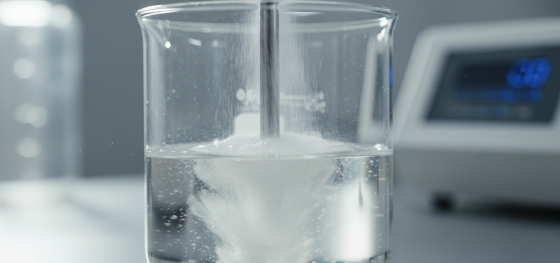
Unlike solid plastics that are hard to modify, Sistemi RIM in Poliuretano Ignifugo allow JUCHENG to "pre-mix" safety directly into the liquid Side B (Polyol). This is the "formulation secret" that allows us to maintain high surface quality. We utilize liquid-phase flame retardants that stay in suspension during the high-pressure impingement mix. This ensures that every square millimeter of a 1.5-meter long MRI shell has the exact same fire rating. In traditional molding, additives often "clump," creating areas that are fire-rated and areas that are not. JUCHENG’s automated mixing heads eliminate this "Safety Lottery."
Can I add fire protection to any RIM material?
Yes. We can formulate both rigid structural RIM and flexible elastomeric RIM to meet UL94 standards, protecting everything from hard consoles to soft robotic bumpers.
Intumescent additives are the second secret of JUCHENG’s high-performance hardware. These chemicals respond to extreme heat by expanding into a thick, insulating foam. When a fire hits a JUCHENG-molded part, the surface "puffs up," creating a thermal barrier that prevents the heat from reaching the internal electronics for several minutes. This extra time is critical for autonomous drones or robots to execute an emergency shutdown and for human staff to respond, providing a "Mechanical Grace Period" that can save millions of dollars in technology assets.
Synergistic mineral fillers like Alumina Trihydrate (ATH) are used for heavy-duty enclosures that require both fire protection and increased rigidity. These minerals release water vapor when heated, physically cooling the part down. JUCHENG utilize specialized high-abrasion pumps in our Shenzhen hub to handle these mineral-loaded resins. By combining fire safety with structural reinforcement, we deliver parts that act as both a skeleton and a firewall, simplifying your robot prototipo design and reducing the total part count for mass production in [2026].
Controllo Meccanico: L'Ignifugazione Rende Fragili le Tue Parti?
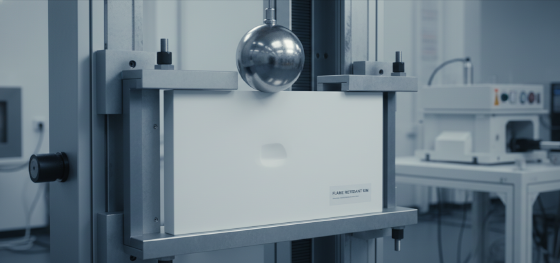
The biggest fear for engineers in Sistemi RIM in Poliuretano Ignifugo is "Additive Embrittlement." In cheap fire-rated plastics, the high concentration of powder additives ruins the polymer chain’s flexibility, leading to parts that shatter like glass during a drop test. JUCHENG addresses this by utilizing "Reactive Flame Retardants"—molecules that don't just sit in the plastic, but actually become part of the polyurethane chain. This molecular integration ensures that your fire-rated medical housing maintains 90% of the impact toughness of a non-rated part, providing the "Drop-Proof" reliability needed for mobile hospital equipment.
How to ensure parts don't crack during field trials?
Utilize reactive chemistry rather than dry fillers to ensure the polymer matrix remains ductile and absorbs energy during a collision.
Surface finish is the secondary victim of fire-proofing additives. Standard flame retardants often create a "grainy" or "matte" surface that is impossible to paint. JUCHENG’s Servizi di Stampaggio in Poliuretano include a specialized "Skinning" cycle, where the liquid polymer forms a dense, smooth outer layer while the fire-rated additives congregate in the core. This results in an enclosure that is UL94 V-0 safe on the inside but possesses a Class-A automotive finish on the outside. You get the safety of an industrial component with the beauty of a high-end consumer product, which is vital for winning market share in [2026].
Dimensional stability is the final mechanical win. Because JUCHENG’s fire-rated RIM parts cure at low pressures and moderate temperatures, they possess zero internal stress. Unlike high-pressure fire-rated injection molding, which often warps due to the high filler content, our RIM parts stay perfectly flat. This ensures that the intricate snap-fits and gasket seals of your diagnostic console remain airtight and aligned, preventing the "Seam-Gaps" that can compromise both the aesthetics and the EMI shielding of your device. By delivering hardware that is "Statistically Stable," JUCHENG allows your assembly team to focus on the high-value AI integration.
Hub JUCHENG: Validazione dei tuoi involucri resistenti al fuoco a Shenzhen
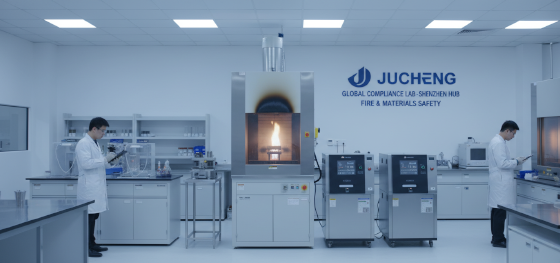
Dominating the large-format hardware market requires a partner that doesn't just promise safety, but proves it. Jucheng Precision operates with a 24/7 manufacturing mindset in our Shenzhen precision manufacturing hub, delivering high-tolerance Sistemi RIM in Poliuretano Ignifugo and structural parti per robot industriali with industry-leading speed. We provide a "Bridge to Production" that ensures your innovations move from a CAD file to a safety-certified Beta fleet of 1,000 units with consistent chemical and mechanical quality.
Integrating your secure design goals with JUCHENG’s expertise ensures that your hardware survives the "Regulatory Audit Season" and moves into mass adoption. We offer comprehensive DFM reviews within 24 hours, identifying potential fire-trap zones or "mechanical weak spots" in your design before they become field failures. Whether you are building an autonomous blood-analyzer or a multi-part MRI housing, Jucheng Precision provides the rigid, precise, and *fire-safe* foundations that keep your innovation moving through the high-stakes cycles and the years of hard labor.
Our facility is equipped with 150+ CNC machines and dedicated ISO 13485 certified quality labs, including a vertical burn chamber for in-house UL-pre-testing. We manage the complexity of fire-rated chemistry and structural integrity so your engineering team can focus on the clinical outcomes and the AI. By combining Shenzhen's speed with industrial-grade material verification and global quality standards, JUCHENG remains the preferred partner for the world's most aggressive MedTech hardware challenges. Contact us today to start your next project.
FAQ: Risposte reali per classificazioni antincendio e logistica di sicurezza
Can JUCHENG provide a UL yellow card for the material?
Yes. We work with certified material suppliers and provide full documentation for the resins used in your production run.
Does fire protection increase the lead time for parts?
No. Because we mix the additives in-house, the manufacturing cycle remains the same as our standard RIM process.
What is the typical thickness required for a V-0 rating?
Most of our fire-rated RIM formulations achieve V-0 at a wall thickness of 3.0mm to 4.0mm.
Is the fire protection permanent or does it wear off?
The protection is a permanent chemical part of the polymer matrix; it will not leach out or lose effectiveness over time.
Can fire-rated RIM parts be painted?
Yes. Our FR-RIM parts possess excellent adhesion for automotive-grade 2K paints, even with high additive loads.
Fire failure in a clinical or industrial setting is an absolute innovation killer. Partnering with Jucheng Precision ensures that your functional iterations are built with the self-extinguishing processo di stampaggio a iniezione reattiva e le tecniche specializzate Sistemi RIM in Poliuretano Ignifugo the industry demands. Reach out to our Shenzhen manufacturing hub today for a complete DFM review and build the safe, unyielding foundation your autonomous fleet requires.

