

Parti per Robot Industriali: RIM in Poliuretano Rigido vs Flessibile
Visualizzazioni: 1 Autore: Allen Xiao Data di pubblicazione: 2026-04-24


Selezionare la durezza corretta per un contenitore lungo 2 metri nel [2026] rivela il dibattito più frequente nel processo di stampaggio a iniezione reattiva: hai bisogno che la parte stia in piedi come un muro o agisca come uno scudo? Scegliere tra RIM in Poliuretano Rigido vs Flessibile non riguarda solo la "sensazione" della plastica; riguarda come il materiale dissipa l'energia quando un veicolo autonomo colpisce una scaffalatura di magazzino o un tecnico medico urta uno scanner da milioni di dollari. Se il materiale è troppo rigido, si frantuma; se è troppo morbido, non riesce a proteggere lo stack di calcolo AI interno. Padroneggiare questa selezione è fondamentale per la sopravvivenza a lungo termine di hardware di alto valore.

Le moderne Parti per Robot Industriali richiedono un livello di prestazioni che le termoplastiche tradizionali come ABS o PP spesso non possono raggiungere in formati sovradimensionati. Mentre le parti stampate a iniezione soffrono di stress interno e modalità di rottura fragile, Servizi di Stampaggio in Poliuretano consentono agli ingegneri di "calibrare" l'esatta personalità meccanica di una parte regolando la reticolazione chimica. Jucheng Precision affronta questi dilemmi di selezione fornendo una gamma di Materiali Resistenti agli Impatti, da telai strutturali duri come il vetro a paraurti elastomerici che possono assorbire un colpo di mazza e tornare alla loro forma originale in pochi secondi.
Operando nel polo di produzione di precisione di Shenzhen, JUCHENG agisce come partner di intelligenza meccanica per OEM globali. Trasformiamo la chimica liquida grezza in involucri strutturali validati che proteggono la tua tecnologia dal caos del campo. Questa guida esplora gli standard essenziali di durezza Shore, i dati di allungamento a rottura e la logica applicativa necessaria per decidere tra RIM in Poliuretano Rigido vs Flessibile per garantire che la tua prossima flotta di macchine autonome sia costruita su una base di affidabilità incrollabile.
PU Rigido: Quando il Tuo Hardware Necessita di Rigidità Assoluta?
Dati Tecnici: Confronto tra Specifiche Meccaniche Rigide vs Flessibili
RIM Flessibile: Usare gli Elastomeri per Risolvere la Crisi degli Impatti
Il punto di equilibrio semi-rigido: il meglio di entrambi i mondi?
JUCHENG Hub: ti aiuta a mettere a punto il tuo materiale a Shenzhen
FAQ: risposte reali per scegliere la giusta durezza del materiale
PU Rigido: Quando il Tuo Hardware Necessita di Rigidità Assoluta?
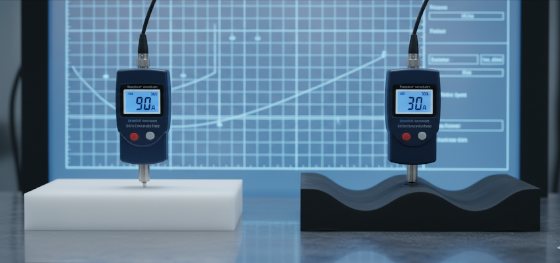
La rigidità assoluta è il requisito principale per console diagnostiche mediche su larga scala e telai strutturali di robot. Nella battaglia tra poliuretano RIM rigido e flessibile, il lato "rigido" imita il comportamento di plastiche ingegneristiche ad alte prestazioni come ABS e policarbonato, ma con una rigidità a flessione molto maggiore per parti di grandi dimensioni. Se il tuo involucro deve sostenere il peso di un touch screen da 24 pollici o ospitare sensori LiDAR ad alta precisione che non tollerano un micron di movimento, il PU rigido è l'unica scelta. Le formulazioni rigide di JUCHENG raggiungono livelli di durezza Shore D di 85+, fornendo una base solidissima che previene il "Ghost Jitter" che rovina gli algoritmi di autonomia.
Una parte rigida si romperà se cade?
A differenza delle resine fragili stampate in 3D, i materiali RIM rigidi di JUCHENG sono reticolati chimicamente per fornire un'elevata tenacità all'impatto, il che significa che si ammaccano o "si ammaccano" prima di rompersi.
La stabilità termica è un vantaggio silenzioso del lato rigido. Nella produzione elettronica del [2026], gli stack di calcolo interni generano un calore enorme. Il PU RIM rigido ha una temperatura di distorsione al calore (HDT) più elevata rispetto alla sua controparte flessibile, garantendo che l'involucro rimanga dimensionalmente perfetto anche quando le temperature interne raggiungono gli 80°C. JUCHENG utilizza polioli specializzati "ad alta viscosità" per creare una rete molecolare densa che resiste allo scorrimento termico, garantendo che le giunzioni e le guarnizioni del tuo scanner medico rimangano ermetiche durante un turno di 24 ore in un reparto non climatizzato.
L'estetica superficiale è un altro motivo per cui gli ingegneri scelgono il RIM rigido per i loro robot prototipo build. Poiché il materiale è duro, può essere levigato e lucidato fino a ottenere una finitura automobilistica Classe A. JUCHENG applica rivestimenti uretanici 2K ad alta lucentezza su questi gusci rigidi, creando un aspetto pronto per la vendita al dettaglio essenziale per demo fieristiche e presentazioni a venture capital. Questa combinazione di "spina dorsale strutturale" e "perfezione visiva" è ciò che rende JUCHENG un partner preferito per le aziende di robotica globali che devono trasmettere maturità tecnica ed eccellenza progettuale.
Dati Tecnici: Confronto tra Specifiche Meccaniche Rigide vs Flessibili
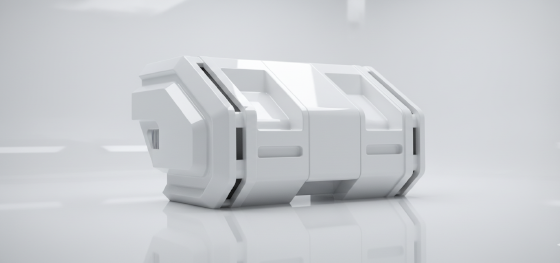
Comprendere i dati alla base del poliuretano RIM rigido vs flessibile è l'unico modo per evitare un guasto hardware sul campo. Mentre il tuo designer industriale potrebbe volere una sensazione "soft-touch", il tuo ingegnere meccanico deve sapere se la parte si affloscerà sotto il suo stesso peso. Jucheng Precision fornisce registri completi di lotto chimici e fisici per aiutarti a convalidare i tuoi progetti. La tabella seguente confronta le metriche di prestazione essenziali per le nostre formulazioni standard rigide e flessibili nel mercato del [2026].
| Metrica | RIM rigido (strutturale) | RIM flessibile (elastomerico) | Impatto ingegneristico |
|---|---|---|---|
| Durezza (Shore) | 80 - 85 D | 40 - 90 A | Determines Dent vs. Bounce |
| Modulo a Flessione (psi) | 250,000 - 320,000 | 5,000 - 50,000 | Rigidity for Enclosures |
| Allungamento a Rottura | 5% - 15% | 150% - 400% | Critical for Crash Zones |
| Specific Gravity | 1.05 - 1.15 | 0.95 - 1.05 | Weight and Buoyancy |
The "Elongation at Break" is the key differentiator for Materiali Resistenti agli Impatti. In a flexible RIM part, the material can stretch up to four times its original length before it tears. This allows JUCHENG to manufacture robotic "skins" and bumpers that act like airbags for the robot’s skeleton. By contrast, the low elongation of the rigid side ensures that mounting points remain geometrically constant, even when subjected to the high-torque vibrations of large-scale motor reversals.
RIM Flessibile: Usare gli Elastomeri per Risolvere la Crisi degli Impatti
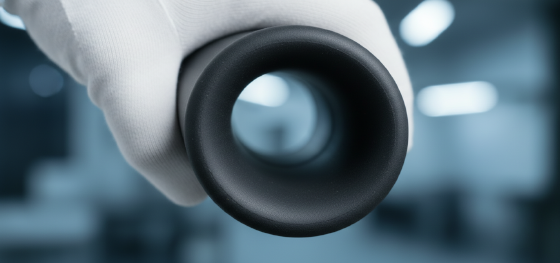
Collision events are non-negotiable for autonomous mobile robots (AMRs). No matter how advanced the AI, a robot will eventually strike an obstacle. In RIM in Poliuretano Rigido vs Flessibile, the "Flexible" side provides the ultimate defensive hardware. JUCHENG’s elastomeric RIM materials are engineered to absorb the kinetic energy of an impact through molecular deformation. This means that instead of the force being transmitted directly into the expensive parti per robot industriali (like the LiDAR or the gearbox), the flexible bumper "soaks up" the energy. This "Bionic Dampening" is essential for robots operating in shared human workspaces like fulfillment centers or hospital corridors.
Can a flexible part be used for structural mounting?
Generally no. Flexible RIM is designed to be a "protective skin" or bumper; it lacks the stiffness needed to hold tight tolerances for motor or sensor alignment.
Vibration isolation is a secondary superpower of flexible RIM. By overmolding a flexible polyurethane layer onto a rigid chassis, JUCHENG creates a monolithic part with integrated dampening features. This "Soft-on-Hard" architecture is a core competency of our Servizi di Stampaggio in Poliuretano. It allows us to protect delicate electronics from the high-frequency vibrations of the drivetrain, effectively extending the mean-time-between-failures (MTBF) of the entire robot. In our Shenzhen hub, we use specialized bonding agents to ensure the flexible and rigid layers never delaminate, even after millions of flex cycles.
Comfort and ergonomics are the final drivers for the flexible side. In collaborative robotics (cobots), the machine must be "safe to touch." JUCHENG utilizes flexible RIM to produce "soft skins" that cover the metallic joints of the robot. This reduces the risk of pinching injuries for human operators and makes the robot feel more like a tool and less like a threat. By achieving a "Warm-Touch" surface finish on these elastomeric parts, we help our clients pass human-factors testing and increase the user-acceptance of their automation solutions in the [2026] market.
Il punto di equilibrio semi-rigido: il meglio di entrambi i mondi?
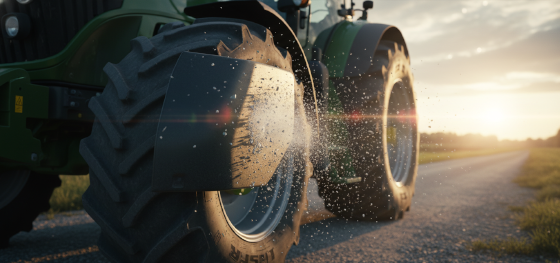
Sometimes, your hardware needs the stiffness of a shell but the impact resistance of a tire. This is where the "Semi-Rigid" category of RIM in Poliuretano Rigido vs Flessibile wins the day. JUCHENG specializes in semi-rigid formulations (Shore D 60-70) that offer "Ductile Toughness." These materials are favored for parti per robot industriali like fenders and side-skirts on autonomous tractors or mining robots. A semi-rigid part will flex significantly under a direct rock-strike, absorbing the energy without shattering, but will snap back to its original shape perfectly once the load is removed.
Is semi-rigid cheaper than rigid PU?
The material cost is similar, but the ROI is often higher because semi-rigid parts survive the "Rough-Handling" of shipping and installation better than ultra-rigid alternatives.
Thickness management is the key to semi-rigid success. JUCHENG’s DFM team helps you optimize the wall thickness to achieve the desired "Spring Effect." By thickening the ribs and thinning the aesthetic faces, we can create a part that feels rigid when handled but behaves like a spring during a crash. This variable mechanical behavior is unique to the processo di stampaggio a iniezione reattiva and is impossible to replicate with traditional injection molding or 3D printing. We provide 100% density in these parts, ensuring no internal air pockets can become starting points for cracks.
Dimensional stability in semi-rigid parts is maintained through the low-pressure RIM cycle. Unlike traditional high-impact plastics that want to warp as they cool, JUCHENG’s semi-rigid PU cures in a relaxed state. This ensures that large tractor fenders or robot battery covers fit the steel chassis perfectly with zero "forced assembly." In the fast-moving Shenzhen hub, we deliver these "High-Forgiveness" parts to global clients who need hardware that can survive the transition from the lab to the mud without a single field recall, ensuring a zero-defect launch in the [2026] season.
JUCHENG Hub: ti aiuta a mettere a punto il tuo materiale a Shenzhen
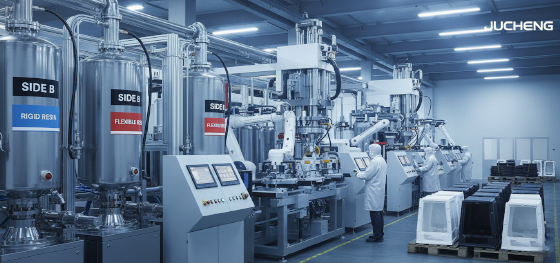
Dominating the hardware market requires a partner that doesn't just sell one process, but understands the chemistry of survival. Jucheng Precision operates with a 24/7 manufacturing mindset in our Shenzhen precision manufacturing hub, delivering high-tolerance RIM components and structural parti per robot industriali con velocità leader del settore. Forniamo un "Ponte verso la Produzione" che consente di passare da un singolo prototipo colato a mano a una distribuzione commerciale di 5.000 unità con qualità chimica e dimensionale costante.
Integrando il vostro progetto strutturale con l'esperienza di JUCHENG si garantisce che la vostra RIM in Poliuretano Rigido vs Flessibile decision is based on data, not guesswork. We offer comprehensive DFM reviews within 24 hours, identifying potential impact risks or thermal-expansion bottlenecks in your design before they become field failures. Whether you are building an autonomous vineyard scout or a multi-part surgical robot, Jucheng Precision provides the rigid, precise, and *chemically optimized* foundations that keep your innovation moving through the high-stakes cycles and the years of hard labor.
Our facility is equipped with 150+ CNC machines and dedicated high-pressure RIM assembly cells, allowing us to manage the entire material and part lifecycle in one location. We manage the complexity of multi-material bonding and custom polyol blending so your engineering team can focus on the motion control and the AI. By combining Shenzhen's speed with industrial-grade material verification and global ISO 13485 standards, JUCHENG remains the preferred partner for the world's most aggressive Materiali Resistenti agli Impatti challenges. Contact us today to start your next project.
FAQ: risposte reali per scegliere la giusta durezza del materiale
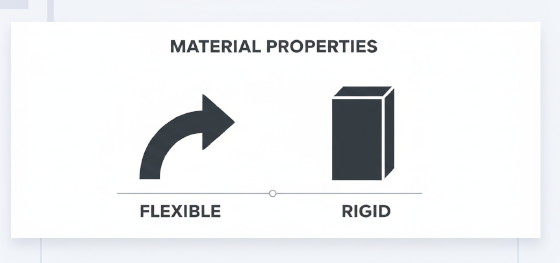
What is the typical hardness of a rigid medical enclosure?
We recommend Shore D 80 to 85. This provides the stiffness of ABS but with much better durability for large parts.
Can I overmold a flexible bumper onto a rigid frame?
Yes. We specialize in dual-durometer RIM molding where an elastomeric layer is permanently bonded to a rigid skeleton.
Which material is best for high-vibration environments?
Semi-rigid PU (Shore D 65) is ideal because it possesses enough internal dampening to protect sensitive sensors.
Is flexible RIM resistant to chemical wipe-downs?
Yes. We utilize specialized polyols that are chemically inert to hospital disinfectants and agricultural fertilizers.
What is the maximum part size JUCHENG can mold in flexible PU?
We regularly produce flexible bumpers and protective skins up to 2,000mm in length.
Brittle fractures and heavy vibration are absolute innovation killers for large-scale robotics. Partnering with Jucheng Precision ensures that your functional iterations are built with the precision-balanced processo di stampaggio a iniezione reattiva e le tecniche specializzate RIM in Poliuretano Rigido vs Flessibile techniques the industry demands. Reach out to our Shenzhen manufacturing hub today for a complete DFM review and build the unyielding foundation your autonomous fleet requires.

ㆍPrivacy: Rispettiamo la tua privacy. Qui puoi trovare un esempio di accordo di non divulgazione. Inviando questo modulo, accetti i nostri termini e condizioni e la politica sulla privacy.