


Start with the enclosure’s job
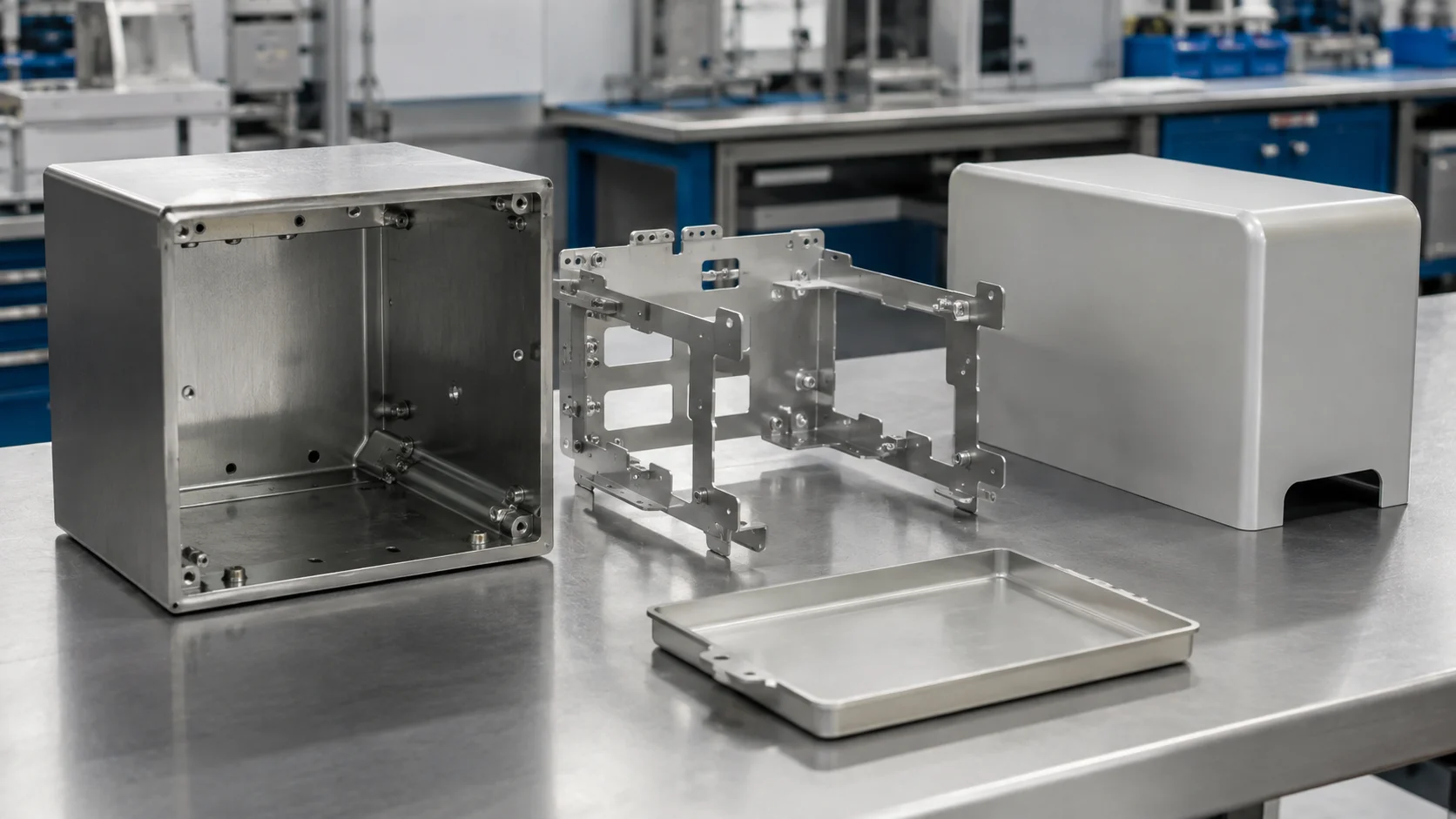
A sheet metal part may be structural, protective, cosmetic, or all three. A diagnostic-equipment chassis may need stiffness and service access. A cart panel may need folded edges that remove sharp exposed corners. A small instrument cover may be judged primarily by fit, appearance, cleanability, and the way it accepts fasteners. Defining that job first prevents an attractive but unsuitable material or finish from driving the design.
| Part role | Typical design priority | Questions for the RFQ |
|---|---|---|
| Equipment enclosure | Protection, access, cleanability | Where are doors, seams, vents, and service panels? |
| Internal bracket | Stiffness, datum control, assembly | Which faces locate sensors or boards? |
| Tray or support | Load, drainage, handling | Will liquids, sterilants, or repeated cleaning be involved? |
| Cosmetic cover | Appearance, edge quality, finish | Which surfaces are visible after assembly? |
Flat patterns are where manufacturability begins
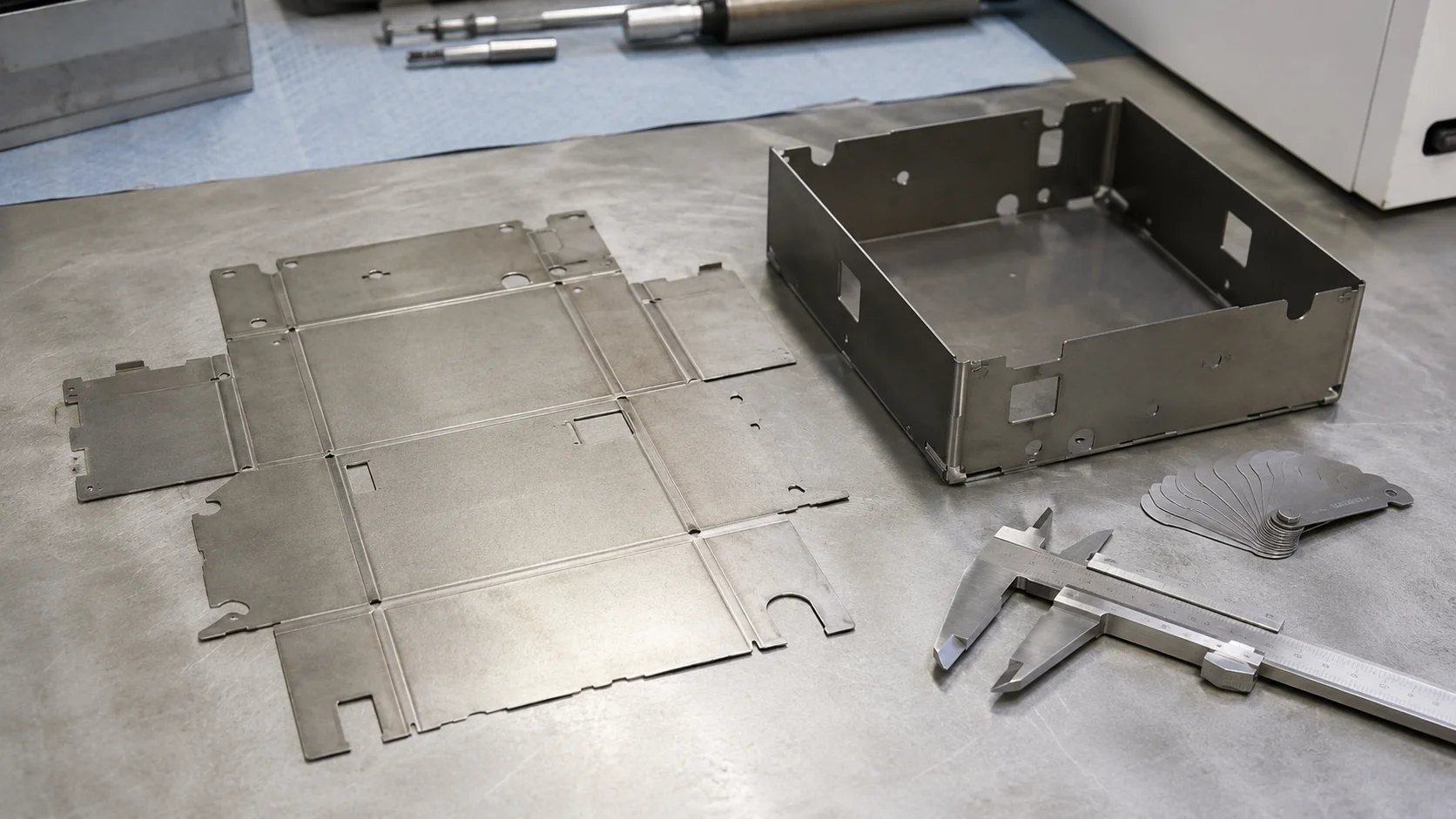
Before a brake press or laser cutter is selected, the 3D model must be translated into a realistic flat pattern. Bend radii, bend deductions, material thickness, grain direction, hole-to-bend distances, and tool access all affect the final shape. A design that looks correct in CAD can still produce distorted holes, surface marks, or interference at the corner if those relationships are not reviewed.
Keep critical holes away from bend lines whenever possible, and identify which dimensions are functional rather than cosmetic. If a hole locates a connector or sensor, its relationship to the assembly datum deserves tighter control than a nonfunctional outer edge. For early prototypes, a short design review around the flat pattern often saves more time than changing the cutting method later.
Choose the route by quantity and evidence
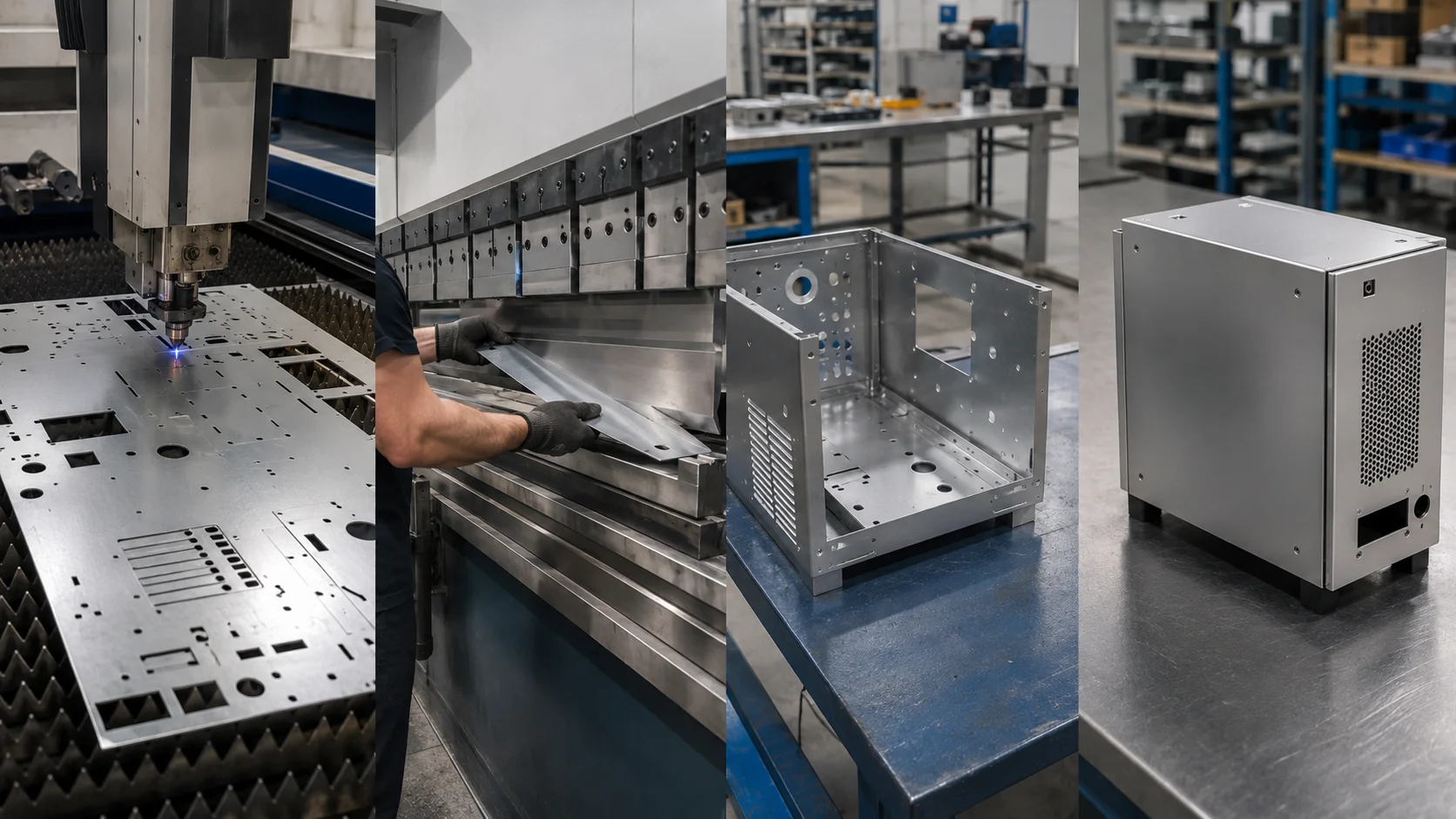
Laser cutting and CNC punching are useful for creating precise profiles and openings. Press-brake forming then establishes the three-dimensional structure. Welding, PEM hardware, riveting, or mechanical fastening can complete the assembly, depending on the service requirement and the need for disassembly. For early design checks, fabbricazione della lamiera can provide a direct way to validate fit, access, and mounting without committing to production tooling.
| Project stage | Useful route | What it proves |
|---|---|---|
| Appearance or fit study | Cut and formed prototype | Envelope, access, edge relationships |
| Functional prototype | Formed parts with hardware and finish | Mounting, stiffness, serviceability |
| Pilot build | Repeatable cutting, forming, joining | Process stability and assembly time |
| Higher volume program | Validated fabrication route or dedicated tooling | Cycle consistency and cost model |
Material and finish must be selected together
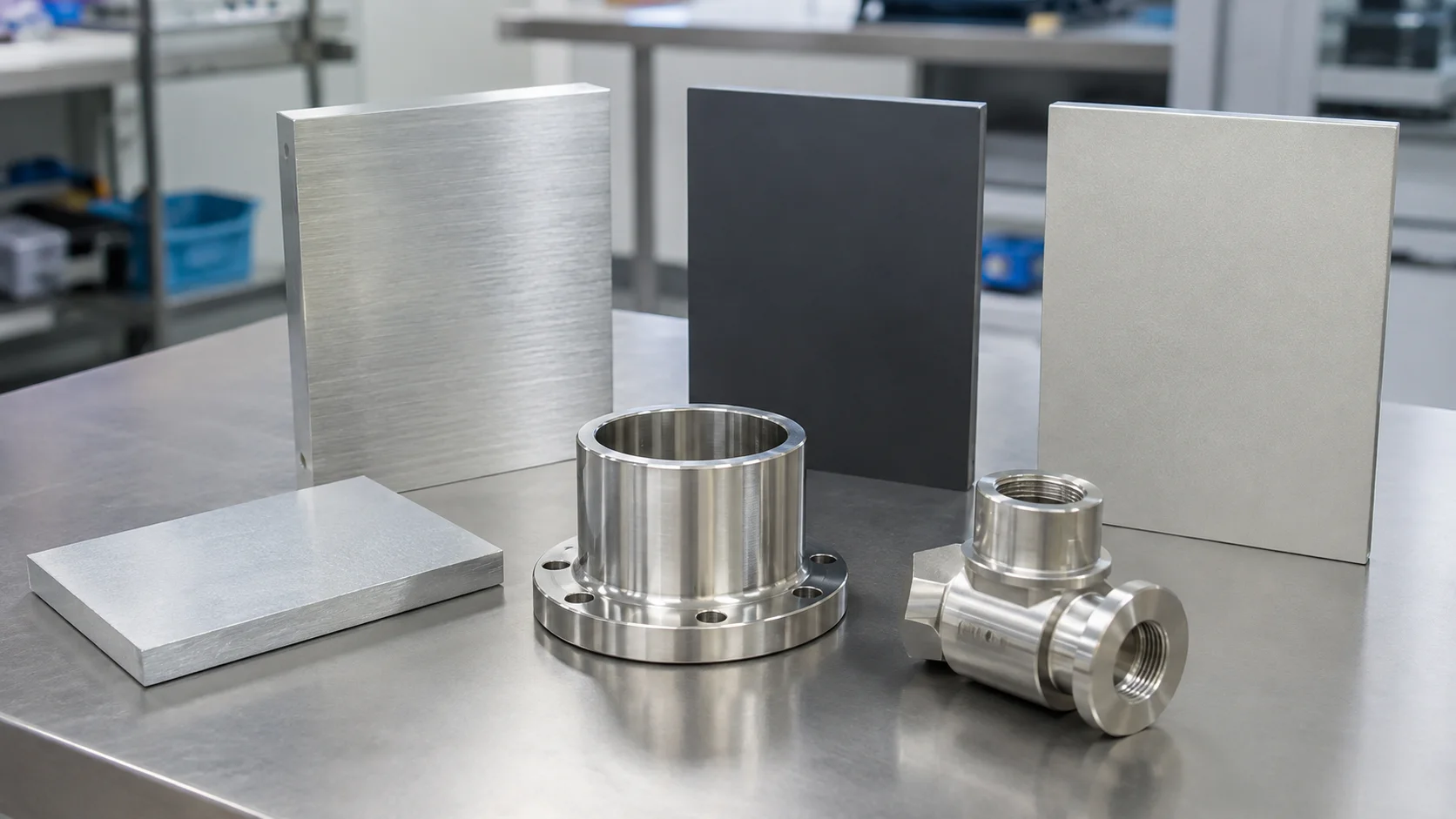
Aluminum can reduce weight and support corrosion-resistant applications, while stainless steel may be preferred when durability, cleanability, or chemical exposure dominates. Mild steel can be useful for structural prototypes when the finish and corrosion protection are defined clearly. The material decision should include thickness, temper or grade, visible-surface requirements, joining method, and the environment rather than relying on a material name alone.
Finishing is part of the functional design. Deburring reduces handling risk, while brushing, bead blasting, powder coating, anodizing, or passivation can change appearance, corrosion behavior, surface feel, and dimensional condition. Ask the supplier which surfaces are masked, how edges are treated, and whether the finish is applied before or after hardware installation. Our surface finishing services page provides a starting point for comparing post-processing options.
Control the details that cause assembly rework
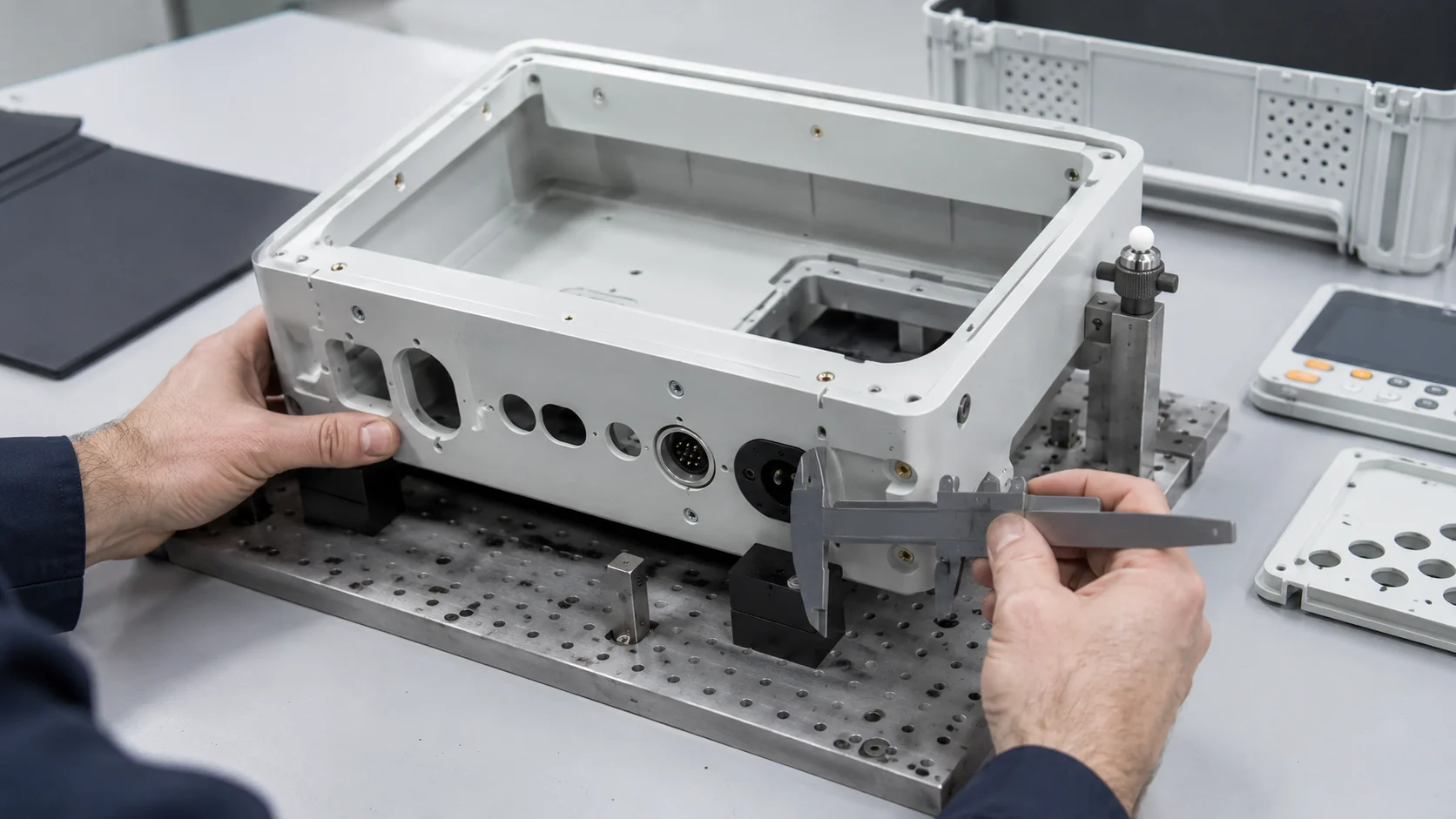
Medical equipment often combines sheet metal with machined parts, molded housings, displays, cables, seals, and fasteners. The part should therefore be inspected in the same way it will be used: against assembly datums, with representative hardware, and with attention to access for tools and operators. A flat pattern may be accurate while the completed enclosure still fails because a flange, PEM nut, or cable opening is in the wrong relationship.
- Mark primary datums and identify the mating parts.
- Separate critical dimensions from general cosmetic tolerances.
- Check hole position after forming, not only before forming.
- Specify edge condition, burr limits, and visible-surface expectations.
- Request photos or samples of the first completed assembly when appearance matters.
For a mixed-process device, it is useful to review the fabricated enclosure beside the machined or printed components before approving a pilot batch. That comparison reveals stack-up, access, and finish issues earlier than a drawing-only review.
What to send with a medical sheet metal RFQ
A useful RFQ package contains the native or neutral CAD file, 2D drawing, material and thickness, finish, hardware list, quantity by phase, critical dimensions, inspection expectations, and photographs or sketches of the assembled device. State whether the part is for appearance review, functional testing, a pilot build, or an ongoing production program. The same geometry can require different process controls at each stage.
Also identify information that is not yet decided. A supplier can then return assumptions instead of silently choosing them. Ask for a clarification list covering bend radii, corner relief, welded seams, finish masking, hardware installation, packaging, and any cleaning or environmental exposure that affects the part.
Frequently Asked Questions
What parts are commonly made with medical sheet metal?
Common examples include equipment enclosures, chassis, brackets, trays, access panels, covers, carts, and mounting frames. The best route depends on the part’s structural role, required finish, quantity, assembly method, and cleaning environment.
Is stainless steel always the best choice?
No. Stainless steel may suit demanding durability or cleanability requirements, but aluminum, coated steel, and other materials can be appropriate when weight, cost, forming, appearance, or magnetic behavior matters. The decision should be tied to the actual use conditions.
How can a sheet metal prototype reduce risk?
A prototype can verify enclosure fit, connector access, mounting locations, bend behavior, edge treatment, finish appearance, and assembly sequence before a larger commitment. It is most useful when the prototype is inspected against the same functional datums used for the final device.
Conclusione
Good medical sheet metal design connects enclosure function, flat-pattern accuracy, forming, joining, finishing, inspection, and assembly. Start with the evidence the part must provide, then select a route that can repeat those conditions at the intended volume. A clear RFQ and an early first-article review usually create more value than adding complexity to the process after production begins.

