
Pagina dei materiali per materie plastiche tecniche (PA, PC, POM, PET, PMMA)
Le materie plastiche tecniche sono un gruppo di materiali termoplastici robusti che possiedono proprietà meccaniche e termiche superiori rispetto alle materie plastiche comuni come PE o PP. Sono progettate per resistere a stress meccanici, alte temperature ed esposizione chimica, rendendole la scelta preferita per componenti industriali strutturali e applicazioni di sostituzione dei metalli. In JUCHENG, abbiamo una vasta esperienza nello stampaggio di questi materiali ad alte prestazioni. Il nostro impianto è dotato di essiccatori deumidificanti specializzati e controllori di temperatura dell'olio per lavorare resine sensibili all'umidità come Nylon (PA) e PET, garantendo che ogni pezzo soddisfi tolleranze dimensionali e criteri di prestazione rigorosi.
Materiali per stampaggio a iniezione di materie plastiche tecniche
Capacità di JUCHENG per le materie plastiche tecniche
La lavorazione delle resine tecniche richiede un controllo di processo più stretto rispetto alle materie plastiche standard. JUCHENG offre:
- Utensileria di precisione: Costruiamo stampi in acciaio temprato in grado di mantenere tolleranze strette (+/- 0,02 mm) richieste per assemblaggi tecnici come ingranaggi e connettori.
- Gestione dell'umidità: Materiali come Nylon e PET sono igroscopici. Utilizziamo essiccatori a setaccio industriale per garantire che il contenuto di umidità sia inferiore allo 0,02% prima dello stampaggio, prevenendo idrolisi e difetti superficiali.
- Stampaggio ad alta temperatura: Le nostre macchine sono attrezzate per gestire le temperature di fusione più elevate e le temperature dello stampo (fino a 140°C) richieste per le materie plastiche tecniche cristalline.
- Rinforzo con fibre: Siamo specializzati nello stampaggio di varianti riempite con vetro (GF) di Nylon e PET, ottimizzando le posizioni dei punti di iniezione per ridurre al minimo le deformazioni e massimizzare la resistenza dell'orientamento delle fibre.
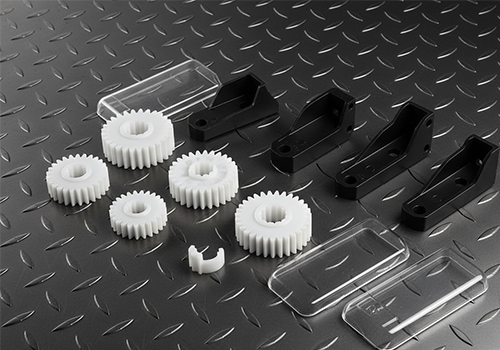
Profili dettagliati dei materiali
Forniamo e stampiamo l'intero spettro di termoplastici tecnici:
1. Poliammide (PA / Nylon)
- DescrizioneUn materiale plastico semicristallino noto per la sua tenacità e resistenza all'usura. Offriamo PA6 (buona finitura superficiale, tenace) e PA66 (maggiore resistenza al calore, più rigido).
- Vantaggi principaliEccezionale resistenza a fatica, basso coefficiente di attrito, elevata resistenza chimica (oli/carburanti). I gradi caricati con vetro offrono rigidità simile al metallo.
- Applicazioni IdealiParti automobilistiche sottocofano, ingranaggi, cuscinetti, alloggiamenti di utensili elettrici, fascette fermacavi.
- DescrizioneUn termoplastico tecnico amorfo caratterizzato da elevata resistenza all'impatto e trasparenza ottica.
- Vantaggi principaliResistenza all'impatto praticamente infrangibile, elevata temperatura di deformazione (circa 135°C), opzioni trasparenti disponibili. Buona stabilità dimensionale.
- Applicazioni IdealiCaschi di sicurezza, lenti per fari automobilistici, laminati per vetri blindati, finestre per display elettronici.
- DescrizioneUn polimero altamente cristallino spesso chiamato "il metallo delle plastiche". Colma il divario tra le proprietà del metallo e della plastica.
- Vantaggi principaliEccellente lubrificità (basso attrito), elevata rigidità, basso assorbimento di umidità ed eccellente stabilità dimensionale in ambienti umidi.
- Applicazioni IdealiIngranaggi di precisione, assemblaggi a scatto, cuscinetti scorrevoli, maniglie per porte, componenti idraulici.
- DescrizioneUn termoplastico trasparente utilizzato come alternativa leggera e resistente alla rottura al vetro.
- Vantaggi principaliMassima chiarezza ottica (trasmissione luminosa 92%), eccellente resistenza ai raggi UV (non ingiallisce), elevata durezza superficiale (resistente ai graffi).
- Applicazioni Ideali: Fanali posteriori per auto, guide luminose, barattoli cosmetici, pannelli di visualizzazione, lenti.
- Descrizione: Qui ci riferiamo al PET di grado tecnico (spesso caricato con vetro), non al grado per bottiglie. È un poliestere semi-cristallino.
- Vantaggi principali: Rigidità e resistenza estremamente elevate quando rinforzato, eccellente isolamento elettrico, basso assorbimento di umidità (rispetto al nylon), elevata stabilità dimensionale.
- Applicazioni Ideali: Connettori elettrici per auto, bobine per avvolgimenti, alloggiamenti strutturali, bracci tergicristallo.
Linee guida per la progettazione di materie plastiche tecniche
- Nervature: Essenziali per parti strutturali (PA, PBT, PET) per prevenire deformazioni, ma devono essere <60% dello spessore della parete per evitare segni di ritiro.
- Angoli di Sformo:
PC/PMMA: Minimo 1° - 2° (i materiali amorfi tendono ad attaccarsi).
- Raggi: Evitare spigoli vivi! Le materie plastiche tecniche (soprattutto PC e POM) sono sensibili alle intagli. Utilizzare raggi generosi per distribuire lo stress.
- Posizione del punto di iniezione: Critica per materiali caricati con vetro per nascondere le linee di saldatura e garantire la resistenza nella direzione di carico.
Tabella comparativa completa
Confronto delle proprietà fisiche delle materie plastiche tecniche:
| Proprietà | Poliammide 66 (PA66) | Policarbonato (PC) | POM (Acetale) | PMMA (Acrilico) | PET (30% GF) | Unità |
| Struttura | Semi-cristallino | Amorfo | Semi-cristallino | Amorfo | Semi-cristallino | - |
| Densità | 1.14 | 1.20 | 1.41 | 1.18 | 1.56 | g/cm³ |
| Ritiro | 1.0 - 2.0 | 0.5 - 0.7 | 1.8 - 2.2 | 0.2 - 0.6 | 0.2 - 0.9 | % |
| Resistenza a Trazione | 80 | 65 | 70 | 70 | 140 | MPa |
| Modulo a flessione | 2,900 | 2,300 | 2,600 | 3,000 | 9,000 | MPa |
| Resistenza all'Impatto | Alta | Molto alto | Media | Basso | Media | - |
| Deformazione termica (0,45 MPa) | 200 | 135 | 160 | 95 | 225 | °C |
| Chiarezza Ottica | Opaco | Trasparente | Opaco | Eccellente | Opaco | - |
FAQ: Materie plastiche tecniche
D: Perché il Nylon (PA) necessita di condizionamento?
R: Il nylon appena stampato è secco e fragile. Assorbe l'umidità dall'aria (condizionamento) per raggiungere la sua tenacità finale di equilibrio.
D: Il PC può essere utilizzato in ambienti chimici?
R: Il PC è sensibile ai solventi e alla cricca da stress. Per la resistenza chimica, raccomandiamo materiali semi-cristallini come POM o PA.
D: Differenza tra PMMA e PC?
R: Il PMMA è più trasparente e più stabile ai raggi UV ma fragile. Il PC è molto più resistente (resistenza all'impatto) ma si graffia più facilmente ed è meno stabile ai raggi UV.
R: Il nylon appena stampato è secco e fragile. Assorbe l'umidità dall'aria (condizionamento) per raggiungere la sua tenacità finale di equilibrio.
D: Il PC può essere utilizzato in ambienti chimici?
R: Il PC è sensibile ai solventi e alla cricca da stress. Per la resistenza chimica, raccomandiamo materiali semi-cristallini come POM o PA.
D: Differenza tra PMMA e PC?
R: Il PMMA è più trasparente e più stabile ai raggi UV ma fragile. Il PC è molto più resistente (resistenza all'impatto) ma si graffia più facilmente ed è meno stabile ai raggi UV.

Richiedi il tuo DFM e Preventivo – Carica i tuoi Disegni
ㆍInserisci i tuoi requisiti e carica il tuo file 2D e 3D, ti forniremo il preventivo e il DFM entro 24 ore.ㆍTipi di file: STEP, STP, IGES, IGS, SLDPRT, 3DM, SAT, X_T, DWG, DXF, STL, PDF, ZIP e altri. Dimensione file: < 128 MB Dimensione pezzo: < 1500*1500*1500 mm
ㆍPrivacy: Rispettiamo la tua privacy. Qui puoi trovare un esempio di accordo di non divulgazione. Inviando questo modulo, accetti i nostri termini e condizioni e la politica sulla privacy.
ㆍPrivacy: Rispettiamo la tua privacy. Qui puoi trovare un esempio di accordo di non divulgazione. Inviando questo modulo, accetti i nostri termini e condizioni e la politica sulla privacy.
